Peanut Sauce: 15-Minute Creamy Balanced Recipe

- Mastering The Ultimate 15 Minute Creamy Peanut Sauce
- Decoding the Perfect Balance: The Four Essential Flavor Anchors
- Essential Pantry List for Homemade Dipping Sauce
- How to Whip Up Rich and Bold Peanut Sauce (The Method)
- Troubleshooting and Expert Secrets for a Flawless Sauce
- Shelf Life and Preservation: Storing Your Homemade Condiment
- Beyond Satay: Creative Uses for This Versatile Sauce
- Recipe FAQs
- 📝 Recipe Card
Mastering The Ultimate 15 Minute Creamy Peanut Sauce
You know that deep, complex aroma that hits you when you walk into a great Thai spot? That smoky, sweet, salty cloud? Nine times out of ten, that magic comes from an unbelievably good Peanut Sauce .
Forget the pale, sticky stuff in a jar; we are going to make a vibrant, complex, and intensely creamy version that takes less time than arguing about what to order for takeout. This is your new kitchen superpower.
This sauce is an absolute lifesaver because it’s so ridiculously cheap and fast. It transforms boring leftover rice, stale veggies, or even just plain toast into something genuinely exciting.
When you realize you can whip up restaurant quality dressing in 15 minutes flat using stuff you already have in the back of your pantry, your weeknight dinners will change forever. It's truly an Easy Peanut Sauce .
I’ve made this recipe hundreds of times, tweaking it endlessly after running into every possible mistake (yes, I once burned the ginger into charcoal, don't ask). What you have here is the streamlined, foolproof method.
Let’s learn exactly how to make peanut sauce that achieves that addictive balance of rich sweetness, bright acidity, and powerful savory depth.
Decoding the Perfect Balance: The Four Essential Flavor Anchors
The best Peanut Sauce isn't just peanut butter mixed with water. It's a careful dance of opposing flavors salty, sweet, sour, and spicy all anchored by the satisfying richness of the peanuts.
If you understand the logic behind these four anchors, you can tweak this recipe forever to suit anything you’re dipping or dressing.
The Southeast Asian Flavor Profile (Thai & Indonesian Influence)
This particular recipe is heavily influenced by the creamy, savory styles found in both Thailand and Indonesia, often associated with Satay skewers. It means we want richness, but we also demand brightness.
A heavy, gloppy sauce is a failure; a smooth, pourable, balanced Thai Peanut Sauce is the goal.
Quick Prep vs. Deep Flavor: Why 15 Minutes is Enough
How do we get hours of flavor in only 15 minutes? We skip boiling and focus on blooming the aromatics. We use heat to release the essential oils from the curry paste, ginger, and garlic, making them taste complex and cooked, not raw and biting.
Trust me, the first two minutes of sautéing are the most important part of making this Creamy Peanut Sauce .
The Secret to Perfect Satay Style Texture
The key to that velvety smooth texture isn’t magic; it’s fat, starch, and temperature control. We use natural peanut butter (which has separated oils) combined with coconut milk. When you simmer this mixture gently, the fats emulsify and the natural starch from the peanuts thickens the liquid perfectly.
The biggest tip here: always add the thinning liquid (hot water) at the end, slowly, to customize the thickness.
Achieving Umami Depth (Soy Sauce, Fish Sauce, Peanuts)
Umami, that savory, fifth taste, is non-negotiable in great Southeast Asian cooking. We rely on good quality soy sauce for foundational saltiness and depth. I strongly recommend adding a tiny dash of fish sauce if you’re not strictly vegetarian, as it provides a mineral, aged flavor that elevates the whole dish. If you need a fully vegan option, you can definitely use more soy sauce, or perhaps check out my guide on making a Vegan Fish Sauce: The Ultimate Umami Brine Recipe to inject that savory backbone without the animal products.
Balancing Acidity and Sweetness: Lime vs. Brown Sugar
The sauce needs sugar to counteract the saltiness and lime juice to cut through the richness of the peanuts. If your final Peanut Sauce tastes heavy or dull, you need more lime. If it tastes too sharp, you need a pinch more brown sugar.
We add the sugar early (to dissolve it) and the lime late (to keep its fresh, bright flavour).
Adjusting the Heat Level Safely
This recipe calls for red curry paste or sambal oelek. Start small, maybe a half teaspoon, and taste before adding more. It’s always easier to add heat than to take it away. Remember that the perceived heat intensity will decrease slightly once the fat and sugar are added, but be cautious!
Essential Pantry List for Homemade Dipping Sauce
A truly great Peanut Sauce is built on specific ingredients, but since we are home cooks, we need substitutions! Here is the breakdown of what you need and what you can swap out without compromising the quality of your sauce.
| Ingredient | Why We Use It | The Viable Substitution |
|---|---|---|
| Creamy Peanut Butter | Provides the core structure and fat. | Almond Butter or Cashew Butter. If allergic to all nuts, use SunButter (sunflower seed butter), but expect a flavor change. |
| Light Coconut Milk | Adds creaminess and necessary moisture. | Chicken broth, vegetable broth, or even just hot water. Broth offers more flavor depth. |
| Low-Sodium Soy Sauce | Salt and Umami. | Tamari (for gluten-free) or Coconut Aminos (less salty, adjust measurement). |
| Brown Sugar | Deep, molasses rich sweetness. | Honey, Maple Syrup, or Agave Nectar. Use equal parts. |
| Red Curry Paste | Heat and complex background spices. | Sriracha or Sambal Oelek. If using sriracha, reduce the liquid slightly. |
| Rice Vinegar | Mild, necessary acidity. | Apple Cider Vinegar (use slightly less, as it's stronger) or Lime Juice (only if you don’t have enough for the end). |
Choosing Your Peanut Butter: Creamy vs. Natural
I am super opinionated about this: use a natural, unsweetened creamy peanut butter. The kind where the oil separates? That’s the good stuff. It emulsifies beautifully when heated and doesn't contain the thick stabilizers that can make your Peanut Sauce gritty or difficult to whisk smoothly.
If you must use crunchy PB, blitz the finished sauce briefly in a blender.
dairy-free Liquids: Water, Coconut Milk, or Broth?
We use canned coconut milk because it adds depth and richness without feeling heavy, maintaining that classic Thai Peanut Sauce profile. If you don't have coconut milk, hot water is fine, but you lose some body.
Broth (vegetable or a neutral stock) is the next best choice, lending a savory complexity that plain water lacks.
Fresh vs. Jarred Aromatics (Ginger and Garlic)
Please, please, please use fresh garlic and fresh ginger. I know it’s tempting to grab the jarred minced stuff, but this is a 15 minute sauce, so spend the 60 seconds on grating the ginger and mincing the garlic. The flavor payoff in your Creamy Peanut Sauce is monumental.
Chef’s Note: The ginger should be grated on a microplane. You want a paste, not chunky pieces. Chunky ginger is just sad and chewy in a smooth sauce.
How to Whip Up Rich and Bold Peanut Sauce (The Method)
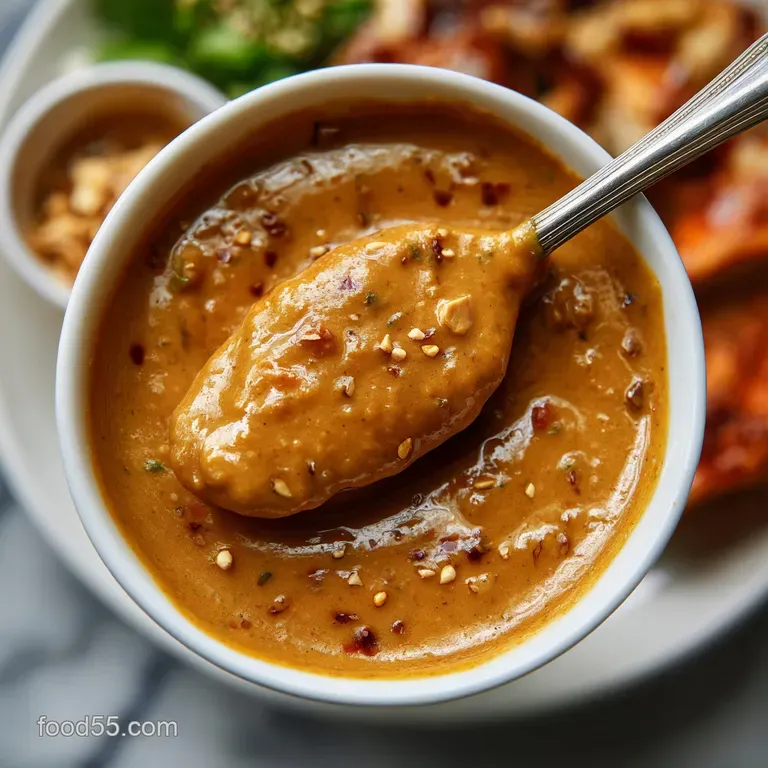
Ready to make peanut sauce? Here is the rapid fire method for the richest, boldest flavor possible.
Sautéing the Aromatics (The crucial first step for depth)
Heat your vegetable oil in a small saucepan over medium heat. When the oil shimmers, add the minced garlic, the grated ginger, and the red curry paste. Sauté this mixture for about one to two minutes. Listen for the gentle sizzle and smell your kitchen instantly transform!
You want the garlic to be fragrant, not brown. If the garlic burns, you must start over it will taste bitter.
Melting the Base: Combining Liquids and Peanut Butter
Reduce the heat to low. Add the soy sauce, fish sauce (if using), and the brown sugar. Stir constantly until the sugar dissolves completely; this takes maybe 30 seconds and creates a glossy, dark base. Next, scrape in the peanut butter, coconut milk, and rice vinegar.
Whisk everything vigorously until the mixture is smooth. It will look ridiculously thick and slightly oily at this stage.
The Simmer and Thicken Process
Turn the heat back up to medium low. Allow the sauce to come to a gentle simmer we’re looking for soft bubbles around the edges, not a rolling boil. Simmer for three to five minutes, stirring frequently. This is when the magic happens: the sauce thickens and the flavors marry together.
If it gets too thick while hot, don’t panic! Just keep the hot water ready.
Final Taste Test and Consistency Adjustments
Remove the pan from the heat entirely. Stir in the fresh lime juice. This is a non-negotiable step because the acid brightens everything beautifully. Now, taste it. Does it feel flat? Add a pinch more salt (soy). Too sweet? More lime. Too tart? More sugar.
If it’s too thick, whisk in the hot water, one tablespoon at a time, until you reach your desired consistency. Remember to make peanut sauce slightly thinner than you want it, because it tightens up significantly as it cools.
Troubleshooting and Expert Secrets for a Flawless Sauce
Nobody wants a gloppy, separated sauce! Learning how to make peanut sauce perfectly means knowing how to fix it when it goes sideways.
Fixing a Sauce That Is Too Thick or Too Thin
If your finished sauce is too thick (Peanut Concrete Syndrome), whisk in a tablespoon of hot water or broth at a time until it's pourable. If it is too thin (Peanut Water Syndrome), put it back on low heat and simmer gently for another two to three minutes.
Alternatively, you can dissolve a tiny pinch of cornstarch (1/2 tsp) in cold water and whisk that slurry into the simmering sauce.
Preventing Separated or Oily Sauce
Separation usually happens when the temperature is too high, or you’re using very fatty, unstable peanut butter. If your Peanut Sauce separates, remove it from the heat and whisk it aggressively for about 30 seconds.
If that fails, pour the whole mixture into a high speed blender or food processor and blend until silky smooth. The sheer force often fixes the emulsion immediately.
Maximizing Flavor Extraction: Toasting the Peanuts
If you are feeling extra ambitious and have the time, toast the peanut butter slightly before adding the liquid. Just put the peanut butter alone in the warm pan and stir it on medium heat for 60 seconds until it smells intensely nutty. This deepens the flavor profile immensely.
Shelf Life and Preservation: Storing Your Homemade Condiment
One of the great joys of making this homemade Peanut Sauce Recipe is batch prepping it. It keeps fantastically well.
Refrigeration Guide: How Long Will It Last?
Store your finished, cooled Peanut Sauce in an airtight container in the refrigerator for up to seven days. The sauce will become very thick almost fudgy when fully chilled. This is normal.
Freezing Instructions for Long Term Prep
But does it freeze well? You bet it does! Pour the cooled sauce into freezer safe containers, leaving a little headspace. It will keep well for up to three months. Freezing is an excellent idea if you want a reliable batch of Peanut Sauce for Noodles ready anytime.
Reconstituting Cold Sauce (Bringing it back to life)
To use cold sauce, do not microwave it unless you plan on blending it afterwards, as microwaves often cause separation. The best way to reconstitute it is to place the desired amount in a small saucepan over very low heat. Add a splash of hot water or milk, and whisk constantly until it is smooth and warmed through.
It comes back to life perfectly, regaining that signature creamy texture.
Beyond Satay: Creative Uses for This Versatile Sauce
This homemade Peanut Sauce is too good to limit to just dipping skewers! It’s one of the most versatile things you can keep in your fridge.
- Ultimate Noodle Toss: Warm it slightly and toss it with cold vermicelli, shredded cabbage, carrots, and bell peppers for an unbeatable chilled peanut noodle salad.
- A Salad Dressing Game Changer: Thin it out with a little extra lime juice and water, and drizzle it over simple iceberg lettuce or blanched broccoli.
- Sandwich Spread: Swap out mayo for a dollop of thick Creamy Peanut Sauce on turkey or veggie wraps.
- Savory Swirls: I sometimes use a bit of this sauce in place of heavy cream in other creamy sauces, just for a fun twist. It doesn't quite replace the depth of something like my Heavy Cream Pasta: The Ultimate Creamy Garlic Sauce , but it offers a fantastic savory kick.
Seriously, this recipe is a must have. Once you realize how simple it is to make peanut sauce this good, you’ll never buy a bottle again. Go forth and enjoy this powerful, bold, and utterly delicious Peanut Sauce !
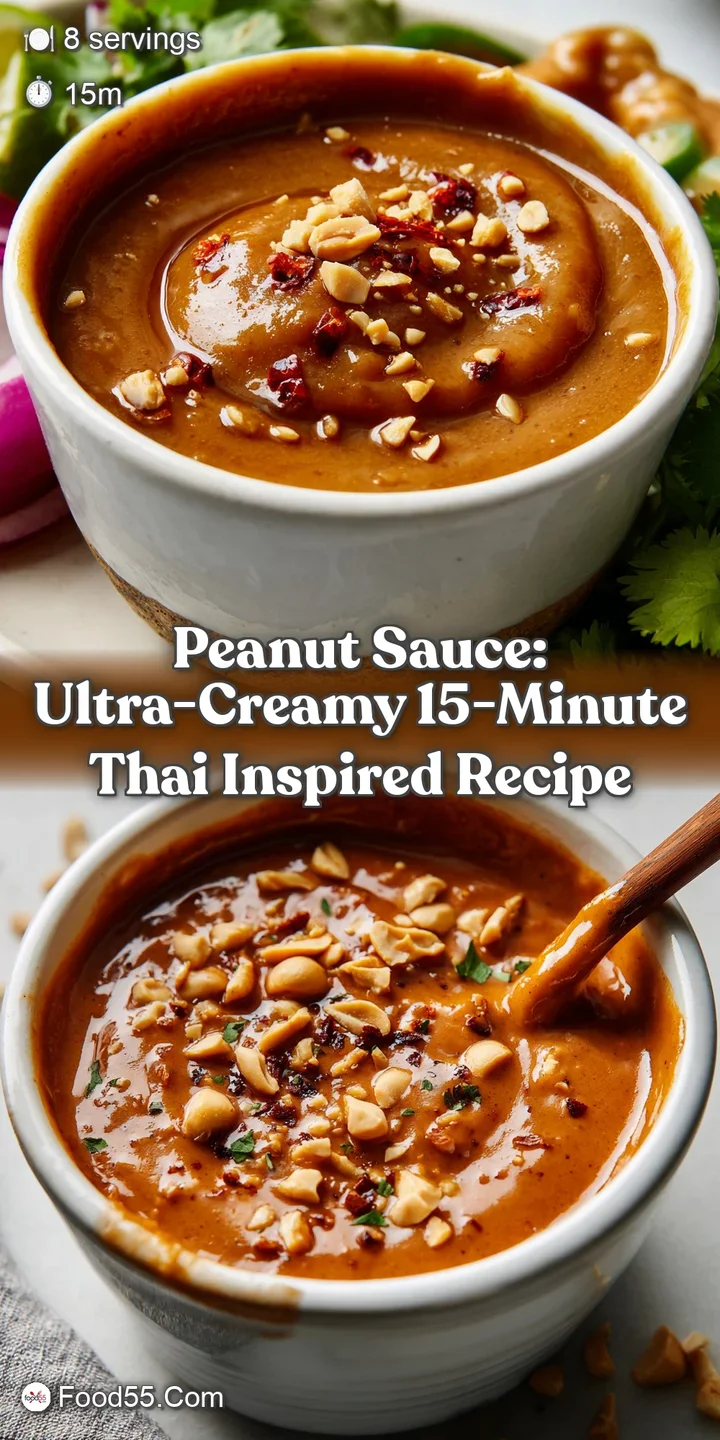
Recipe FAQs
Why is my peanut sauce too thick or too thin?
Thickness is easily corrected by gradually adding liquid, such as warm water, coconut milk, or even extra lime juice, until the desired smooth, drizzly consistency is achieved. If your sauce is too thin, try gently simmering it for a minute or two to evaporate some moisture, or whisk in an extra spoonful of peanut butter to thicken it naturally.
Can I use natural (oil-separated) peanut butter instead of commercial creamy?
Yes, but you must mix the natural peanut butter thoroughly before measuring it, as it tends to make the final sauce much thicker than commercial varieties. You may need to increase the amount of liquid (water or coconut milk) slightly to compensate for the drier texture and achieve the ultimate creamy texture.
Ensure you taste and re-season once the consistency is set.
How can I make this recipe vegan or gluten-free?
To make the sauce vegan, substitute the fish sauce (if your version includes it) with a savory umami replacement such as extra soy sauce or a dash of mushroom seasoning powder. For a gluten-free adaptation, simply ensure you swap the regular soy sauce for certified gluten-free tamari or coconut aminos.
How should I store leftover peanut sauce, and can it be frozen?
Store leftover peanut sauce in an airtight container in the refrigerator for up to 5 days, noting that it will thicken significantly when chilled. Freezing is possible, but the sauce may separate or become slightly granular upon thawing due to the oil and liquid content.
To refresh refrigerated or thawed sauce, vigorously whisk in a tablespoon of hot water to re-emulsify the ingredients.
My sauce tastes gritty or the oil is separating. How do I fix this?
Grittiness often means that the sweetener, such as brown sugar, has not fully dissolved, or you might have used crunchy peanut butter. To resolve separation (breaking), try vigorously whisking the sauce while very slowly drizzling in a teaspoon of hot water or hot coconut milk.
This introduces heat and helps the fats and liquids re-emulsify.
How do I adjust the spice level after the sauce is complete?
If the sauce is too spicy, immediately balance the flavor by adding more acid (lime juice) and sweetness (sugar or honey) to cut through the heat. If you require more spice, gradually mix in a few drops of quality chili oil, Sriracha, or a small pinch of cayenne pepper until the desired heat profile is achieved.
What are the best culinary applications for this versatile peanut sauce?
While the sauce is the perfect companion for grilled satay skewers (chicken, beef, or tofu), its uses extend far beyond dipping. It serves as an exceptional dressing for cold noodle salads, a rich marinade for poultry before grilling, or a flavor packed drizzle over steamed vegetables like green beans and broccoli.
15 Minute Creamy Peanut Sauce
Ingredients:
Instructions:
Nutrition Facts:
| Calories | 308 kcal |
|---|---|
| Protein | 13.9 g |
| Fat | 22.1 g |
| Carbs | 18.0 g |
