Autumnal Hug Boneless Stuffed Turkey Breast with Sage Butternut Squash
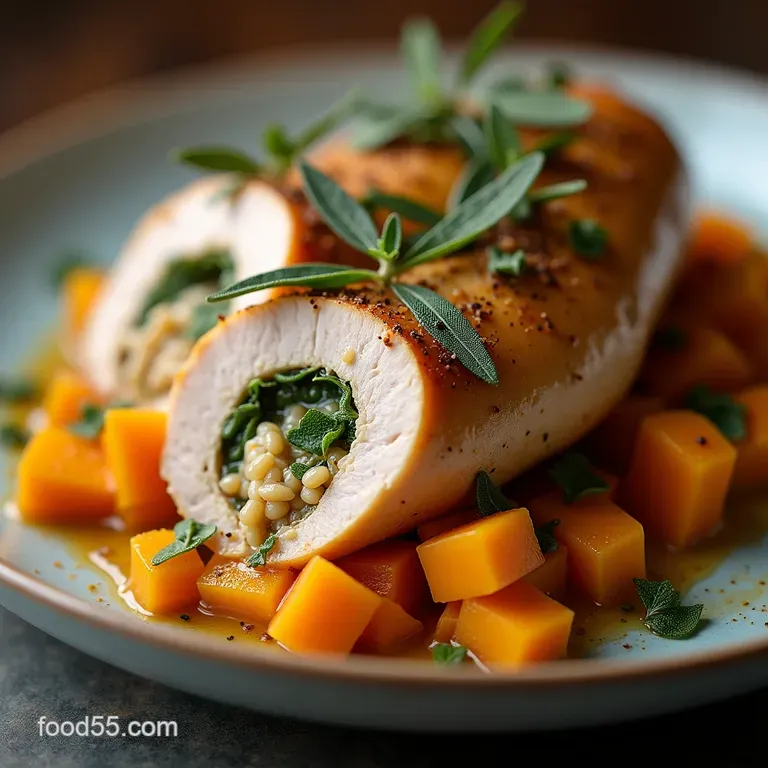
- Why This Stuffed Turkey Breast with Butternut Squash Replaces Your Holiday Centerpiece
- The Sophisticated Twist: Pairing Poultry Perfection with Seasonal Sweetness
- Assembling Your Butternut Squash & Sage Filling Components
- The Art of Butterflying and Stuffing Your Turkey Breast
- Achieving Golden-Brown Glory: Roasting Techniques for Succulent Results
- Troubleshooting and Flavor Variations for Next Time
- Recipe FAQs
- 📝 Recipe Card
Why This Stuffed Turkey Breast with Butternut Squash Replaces Your Holiday Centerpiece
Forget the dry, intimidating whole turkey! For years, holiday meals have been synonymous with endless hours of roasting and the inevitable anxiety over perfectly cooked white meat.
This recipe, Stuffed Turkey Breasts with Butternut Squash , offers a sophisticated yet incredibly manageable alternative. We move away from the mammoth bird and focus instead on tender, boneless turkey breasts beautifully butterflied and generously filled with a vibrant, slightly sweet stuffing.
It bakes up gorgeously golden, slicing cleanly to reveal that stunning, colourful interior. This dish transitions effortlessly from an elegant centerpiece for a smaller gathering to a satisfying, high-quality Sunday roast.
It’s truly an autumnal hug served straight from the oven, proving that a Light Turkey Dinner doesn't mean sacrificing depth of flavour.
The Sophisticated Twist: Pairing Poultry Perfection with Seasonal Sweetness
The beauty of this preparation lies in the contrast. We take lean, mild turkey breast and pair it with the deep, earthy sweetness of roasted squash. This creates a Gourmet Turkey Dish that feels special without requiring complex sauces or hours of basting.
Our filling leverages the very best of Winter Cooking Recipes , marrying textures and tastes for a harmonious bite every time.
Slicing Through Tradition: The Boneless Advantage
One of the biggest hurdles in cooking large poultry is ensuring even heat distribution. By using a large, butterflied boneless turkey breast, we solve this problem instantly. It cooks faster and more predictably than a whole bird, allowing us to focus our attention on stuffing and presentation.
This method ensures that every slice of your Roast Turkey Breast is equally succulent and packed with flavour right up to the edges.
Capturing Autumn's Essence: Beyond the Standard Stuffing Mix
Our interior component moves far beyond traditional, heavy bread stuffing. We are crafting a filling that is moist, slightly sweet, and wonderfully aromatic. The combination of roasted butternut squash, earthy sage, crunchy toasted pecans, and the subtle tang of creamy goat cheese creates a complex profile.
This Butternut Squash Stuffed Turkey filling is what elevates this recipe from standard fare to something truly memorable.
A Lighter Roast Without Compromising Comfort
Many look for a Healthy Turkey Breast Recipe , and this delivers. By ditching heavy fats and excessive bread, we achieve a dish that satisfies that deep craving for comfort food while remaining relatively light.
It’s a brilliant choice for those seeking a Healthy Roast Turkey that still impresses guests with its presentation and flavour complexity.
Assembling Your Butternut Squash & Sage Filling Components
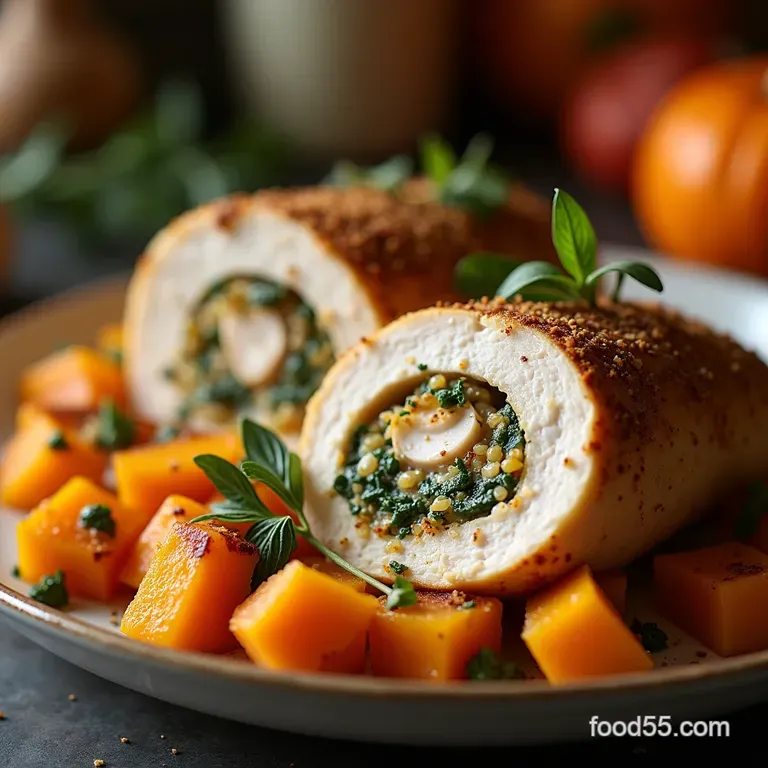
Creating the delicious filling requires two distinct preparatory steps: roasting the squash to concentrate its sweetness and toasting the nuts for textural contrast. We start by taking one small butternut squash (about 1.5 lbs), peeling, seeding, and dicing it into appealing half inch cubes.
These cubes are tossed simply with a drizzle of olive oil, a pinch of salt, and pepper, then roasted in a 400° F ( 200° C) oven for about 20 to 25 minutes until they are fork tender and showing hints of caramelization.
Once cooled slightly, these sweet jewels form the foundation for our stuffing.
Essential Pantry Provisions for Perfect Stuffed Turkey Breasts
The supporting ingredients must be high-quality to balance the squash perfectly. We fold the roasted squash together with finely chopped fresh sage leaves (about 2 tablespoons), a third of a cup of roughly chopped and lightly toasted pecans, 2 ounces of crumbled goat cheese (chèvre), a quarter cup of Panko breadcrumbs to absorb a touch of moisture, and one minced clove of garlic.
This mixture is gently combined we want the squash structure mostly intact, not fully mashed.
Selecting the Ideal Turkey Cut for Even Cooking
For this undertaking, you need one large, boneless turkey breast , ideally weighing between 2.5 and 3 pounds. Whether you opt for skin-on or skinless depends on your preference for final crispness, but skinless is often easier to manage when rolling.
The crucial step here is ensuring the breast is pounded or butterflied to an even three quarters of an inch thickness. This uniformity is the secret weapon that guarantees the Stuffed Turkey cooks evenly without any dry edges.
The Sweet Earthiness: Prepping Your Butternut Squash Base
The roasting of the squash is non-negotiable. If you try to cook the squash raw within the breast, it will release too much water, resulting in a soggy interior, or worse, it won't cook through before the turkey is done. Roasting first ensures the squash is concentrated, sweet, and ready to meld with the herbs.
Optional Flavor Boosts: Incorporating Hints of Caramelized Onion
If you desire an extra layer of savoury depth, take the time to slowly caramelize a small yellow onion before adding it to the squash mixture. Sauté it low and slow until it is deeply brown and jammy.
This sweetness complements the inherent flavour profile of the Spinach Butternut Squash elements beautifully, adding an almost meaty undertone to the filling.
Related Recipes Worth Trying
- Spaghetti Squash Primavera with LemonHerb Vinaigrette — Ditch the heavy cream This easy Spaghetti Squash Primavera recipe tosses light squash noodles with crisp spring vegetables and a zesty vinaigrette Healthy...
- Rich Chocolate Mummy Cupcakes with Creamy Filling Halloween Goodies — Bake our foolproof Chocolate Mummy Cupcakes Deep chocolate cake hiding a cream cheese centre perfect for your next Halloween party
- PubStyle Loaded Nacho Chicken Tostadas with Chipotle Crema — Upgrade your weeknight meal with these epic Loaded Nacho Chicken Tostadas Crispy shells packed with spicy chicken and tangy crema Get the easy recipe now
The Art of Butterflying and Stuffing Your Turkey Breast
Once your turkey breast is lying flat, it needs a light seasoning barrier before the filling goes on. We mix 1 tablespoon of Dijon mustard with 1 teaspoon of fresh thyme leaves. This tangy spread is brushed evenly over the entire flattened surface of the turkey, leaving a clear 1 inch border along the long edges.
This mustard layer adds a wonderful tang that cuts through the richness and helps bind the meat. Next, evenly distribute your prepared squash filling across the surface. Beginning from one long side, roll the breast up tightly into a neat, compact log.
This requires gentle but firm pressure to ensure there are no air pockets.
Achieving Golden Brown Glory: Roasting Techniques for Succulent Results
The final structure is secured using kitchen twine. Cut lengths of twine, spacing them about an inch and a half apart along the length of the roll, tying firm knots to hold the shape.
This mechanical support is vital; it prevents the roll from unwinding during cooking, ensuring a beautiful cross section when slicing later.
step-by-step: Creating the Savory Squash Interior
As outlined previously, the interior itself is built upon the roasted squash base, enhanced by sage, pecans, and goat cheese. The key here is gentle folding. We are aiming for a rustic texture, not a smooth purée, so handle the roasted squash with care as you incorporate the other ingredients.
Securing the Roll: Tying Your Stuffed Turkey Breast for Uniformity
Tying is more than just aesthetics; it’s crucial for proper heat transfer. A well tied roast cooks more evenly from edge to center. Imagine creating segments along the length of the log; each segment should be relatively the same size, ensuring that when you carve your Stuffed Turkey Breasts with Butternut Squash , every slice is identically stuffed and cooked.
Monitoring Temperature: Ensuring Juicy Perfection in Your Stuffed Turkey Breasts with Butternut Squash
While the exterior can be beautifully browned, the interior dictates success. Preheat your oven to 375° F ( 190° C). For an added flavour boost, you can lightly sear the tied breast in a hot, oiled skillet on all sides before transferring it to a roasting pan.
Brush the entire exterior liberally with 2 tablespoons of melted unsalted butter mixed with a touch of salt and pepper. Insert a reliable meat thermometer into the thickest part of the roast.
We are aiming for an internal temperature of 160° F ( 71° C) when it comes out of the oven.
The Critical Rest Period: Maximizing Juiciness Post Oven
Once 160° F is registered, immediately remove the roast from the oven. Place it on a cutting board, tent it loosely with foil, and let it rest for a full 10 to 15 minutes.
During this rest, carry over cooking will safely bring the internal temperature up to the required 165° F ( 74° C), and most importantly this resting time allows the muscle fibers to relax and reabsorb all those precious juices, ensuring every slice of your Butternut Squash Stuffed Turkey is exceptionally moist.
Troubleshooting and Flavor Variations for Next Time
If your roast finishes slightly under the target temperature, simply return it to the 375° F oven for short bursts of 5 minutes until the 160° F mark is hit.
If, conversely, the exterior browns too quickly before the center is done, loosely tent the entire breast with aluminum foil until the internal temperature is reached.
Serving Suggestions: Perfect Pairings Beyond Traditional Sides
This dish shines when paired with complementary seasonal flavours. Instead of heavy gravy, consider a light drizzle of the pan juices mixed with a splash of apple cider vinegar for brightness.
Making Ahead: Storage Tips for Leftover Stuffed Delights
Any leftover Stuffed Turkey slices can be stored in an airtight container in the refrigerator for up to four days. For reheating, place slices in a baking dish with a tablespoon of chicken broth, cover tightly with foil, and warm gently in a 325° F ( 160° C) oven until just heated through.
Adapting the Filling: Swapping Squash for Pumpkin Textures
If you find yourself with leftover pumpkin puree instead of fresh squash, you can adapt. Roast or steam the pumpkin flesh, ensuring it is quite dry before mixing it with the sage and pecans.
The texture will be slightly smoother, leaning closer to a savory pâté than a chunkier stuffing, but the flavour remains fantastic in this Healthy Roast Turkey preparation.
Preventing Dryness: Secrets to Moist Leftovers (If You Have Any!)
The resting period is the primary defence against dryness, but if you are intentionally making extra, make sure to slice the leftovers thinly against the grain. Thin slices require less reheating time, minimizing moisture loss.
Elevating the Plate: A Rich Gravy or Cornbread Crust Companion
While we champion lighter sauces, an elegant option is to create a simple gravy thickened slightly with cornstarch (using the drippings from the roasting pan). Alternatively, a small topping of crumbled, buttered cornbread sprinkled over the roast during the final 10 minutes of cooking adds a delightful, crisp, textured cap to your Stuffed Turkey Breasts with Butternut Squash .
Recipe FAQs
How can I ensure my Stuffed Turkey Breasts with Butternut Squash don't turn out dry?
The secret to moist turkey breast lies in two main steps: Firstly, make sure you pound the breast to an even thickness before rolling so it cooks uniformly. Secondly, and most crucially, use a meat thermometer and pull the turkey out when it hits 160°F (71°C) before letting it rest for 10 15 minutes; this resting period allows the temperature to safely climb to 165°F while the juices redistribute.
Can I prepare this Stuffed Turkey Breast recipe ahead of time?
Absolutely! You can prepare the entire stuffed and tied turkey breast up to 24 hours in advance. Just cover it tightly with cling film and keep it in the fridge; remember to let it sit on the counter for about 30 minutes before roasting to take the chill off.
If you are prepping the filling further ahead, keep the squash mixture separate until just before assembly.
My turkey breast isn't uniform in shape; what should I do before stuffing?
That’s very common! To get that neat, sliceable log, lay the turkey breast skin side down and use a meat mallet or a heavy rolling pin to gently pound the thicker sections until the entire piece is roughly ¾ inch thick.
This process, called butterflying and leveling, is key for even cooking and a successful roll.
What’s the best way to store leftovers, and how long are they good for?
Once cooled, slice the leftover turkey and store it in an airtight container in the fridge; it should keep beautifully for 3 4 days. For reheating, the best method is to gently warm slices in a covered dish with a splash of broth or water in a moderate oven to prevent drying out a quick blast in the microwave tends to make it rubbery.
I don't like goat cheese; what’s a good substitute for the stuffing?
Not a fan of chèvre? No worries, you have plenty of options! For a creamy texture, try using crumbled feta or a soft, mild Brie (rind removed). If you prefer something richer, some smoked Gouda crumbled into the filling offers a lovely depth that complements the squash wonderfully.
Butternut Squash Stuffed Turkey
Ingredients:
Instructions:
Nutrition Facts:
| Calories | 1614 kcal |
|---|---|
| Protein | 32.4 g |
| Fat | 84.6 g |
| Carbs | 83.5 g |
| Fiber | 32.2 g |
| Sodium | 611 mg |
