The Golden Crown Jewel Classic Honey and Walnut Baklava
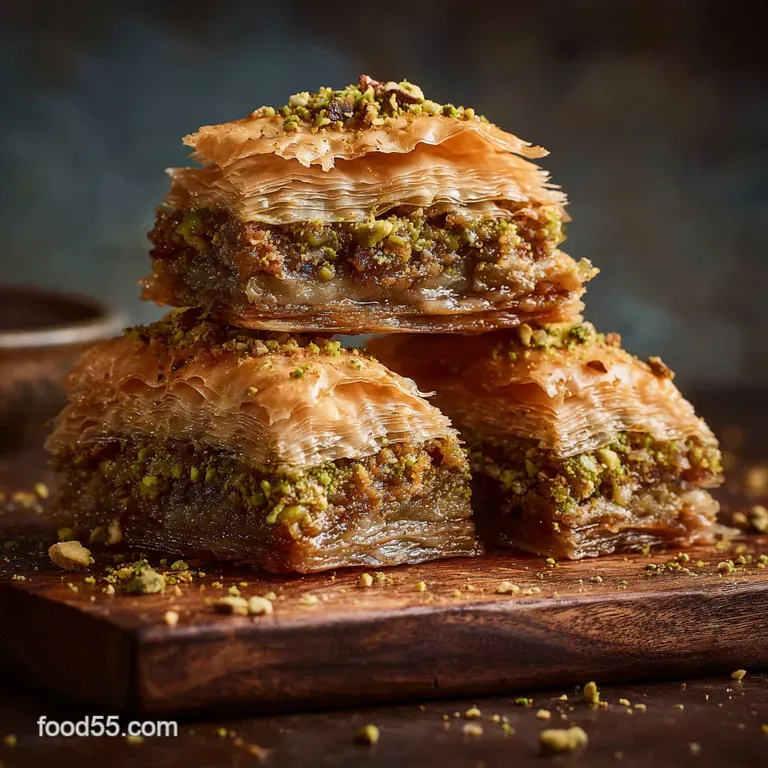
- Crafting Culinary Architecture: Why Baklava Demands Patience
- Sourcing the Essentials: Components of Perfect Baklava
- Kitchen Gear Requirements for Baklava Assembly
- From Sheet to Shine: The Detailed Process of Baklava Creation
- Achieving the Golden-Brown Pinnacle
- Troubleshooting Common Baklava Pitfalls
- Exploring Baklava Variations and Dietary Swaps
- Recipe FAQs
- 📝 Recipe Card
Crafting Culinary Architecture: Why Baklava Demands Patience
Making true Homemade Baklava Preparation is a rewarding process that requires focus, but it is far from difficult. We aren't just making a dessert; we are constructing culinary architecture built on thin, delicate layers.
The patience required during the layering and, crucially, the resting period is what distinguishes an average sweet from a truly magnificent one.
The Enduring Legacy of This Layered Dessert
The history of Baklava stretches back centuries, with claims of origin spanning the Ottoman Empire to modern day Turkey and Greece. This intricate, layered pastry has always symbolized celebration and hospitality across the Mediterranean and Middle East.
It is truly a global staple, transcending borders with its universal appeal of crunch and sweetness.
What Makes This Honey Drenched Treat Irresistible?
The irresistible quality of Baklava lies in the contrast between its components. You experience the shattering crispness of over twenty five layers of phyllo dough against the moist, warmly spiced walnut filling.
The final, fragrant coating of honey lemon syrup binds everything together, delivering that perfect balance of sweet and textural complexity. This creation consistently acts as a stunning Showstopper Dessert.
Sourcing the Essentials: Components of Perfect Baklava
Achieving perfection in this step-by-step Baklava Recipe begins long before the oven is turned on, starting with premium quality Baklava Ingredients. We rely on three distinct elements that must be prepared separately before assembly: the intensely fragrant spice and-nut filling, the tissue thin phyllo pastry, and the rich, clarified butter.
Using high-quality honey and fresh spices is non-negotiable here.
Kitchen Gear Requirements for Baklava Assembly
While you do not need highly specialized equipment for this recipe, having the right tools makes the layering process seamless. A 9x13 inch (23x33 cm) Baklava In Baking Dish is the standard size, providing the ideal surface area for cutting into diamond shapes.
A good quality pastry brush is essential, allowing you to quickly and evenly apply the clarified butter to those delicate sheets.
The critical pieces of equipment needed are simple yet essential:
- A small saucepan dedicated to boiling the syrup, which must then be thoroughly chilled.
- A very sharp chef's knife or pizza cutter for precise pre-baking cuts.
- Crucially, a clean, lightly damp kitchen towel to protect the phyllo from drying out during assembly.
Selecting and Preparing the Aromatic Nut Blend
Our classic Baklava Recipe uses four cups of walnuts combined with a specific blend of warm spices. We incorporate cinnamon and cloves, alongside a half cup of sugar, into the nut mixture for enhanced depth of flavour.
The key here is to roughly chop the nuts, ensuring they retain texture rather than grinding them into a fine, oily paste.
Balancing the Sweetness: Syrup Ingredients and Spice Infusion
The syrup serves two crucial roles: flavour and structure; it is not simply sweet water. We combine granulated sugar and water, enriching it with a generous half cup of quality honey for its floral notes.
The addition of lemon juice is vital as it prevents the sugar from crystallizing, keeping the final syrup smooth and pliable.
Taming the Tissue Thin Pastry: Handling Phyllo Dough
Phyllo dough is notoriously fragile and requires gentle handling and proper preparation to ensure a flaky result. The one-pound package should be thawed slowly in the refrigerator overnight, then allowed to rest at room temperature for one hour before opening.
Once unwrapped, keeping the sheets covered with a lightly damp towel and plastic wrap is absolutely non-negotiable for success.
Clarifying Butter for That Signature Crisp Finish
Clarifying the butter is arguably the most important preparation step for superior texture. This process involves gently melting the one cup of butter and skimming off the white milk solids that float to the top.
Using clarified butter (ghee) ensures that the phyllo layers crisp up beautifully without becoming sodden, contributing to better shelf stability.
Related Recipes Worth Trying
- My Gooey Golden Baklava Recipe Showstopper Dessert — Fancy a proper Baklava Recipe This homemade version with flaky philo dough and nutty filling is a showstopper Easy enough for a novice baker Get the recipe
- This Baklava recipe is a Dream HoneyKissed Perfection — This Baklava recipe is a showstopper Layered flaky pastry spiced nuts and honey syrup create an authentic Middle Eastern delight Get my easy tips for a
- Glorious Golden Baklava Recipe A Taste of the Silk Road — Fancy a proper treat This baklava recipe is layers of nutty buttery syrupsoaked filo perfection Easy enough for a weeknight showstopper Get the recipe
From Sheet to Shine: The Detailed Process of Baklava Creation
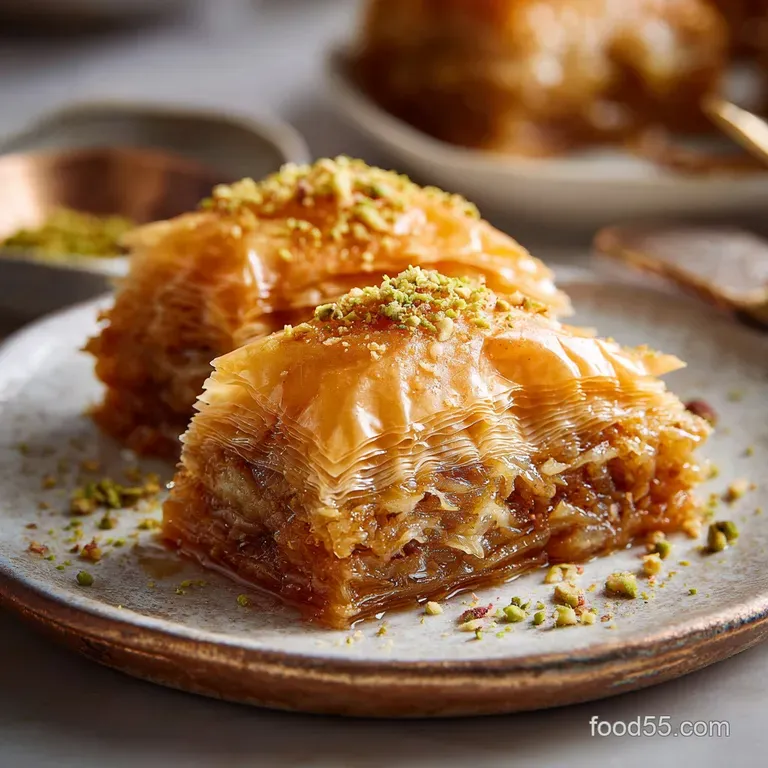
Once all your Baklava Ingredients are prepped, the assembly begins; this is where speed is an advantage, though precision is paramount. We begin by establishing a robust base of eight to ten buttered phyllo sheets in the prepared dish.
Following the base, the layers are built systematically, alternating between smaller stacks of three to four buttered sheets and liberal sprinkles of the spiced walnut mixture until the filling is fully incorporated.
Achieving the Golden Brown Pinnacle
Perfect Baklava baking requires a dual temperature approach to ensure the centre cooks through without burning the delicate top layers. We start the Homemade Baklava Preparation at a moderate 325°F (160°C) for the initial thirty minutes.
The temperature is then dropped to 300°F (150°C) for the final twenty five to thirty minutes, resulting in that hallmark deep, rich golden brown colour.
Step 1: Simmering the Syrup to Perfection
The syrup preparation must be completed hours before the layering begins because it absolutely must be cold when poured. Combine the water, sugar, and cinnamon stick in a saucepan, bringing them to a gentle boil until the sugar dissolves completely.
After simmering for ten minutes, remove it from the heat, stir in the honey and lemon, and transfer it immediately to the refrigerator to chill for at least four hours.
Mastering the Layers: Buttering and Spreading the Nut Filling
The layering structure is key to achieving optimal height and crunch in the Homemade Baklava In Baking Dish. Start with a solid foundation of eight to ten thoroughly buttered sheets to prevent the bottom from sticking or becoming soggy.
The walnut filling is then divided into four equal parts, with each quarter separated by three to four additional buttered phyllo sheets.
Precision Cutting Before the Bake: Diamond Patterns Explained
Cutting the pastry completely through before baking is one of the most essential Baklava Baking Tips and must never be skipped. This pre-cutting allows the butter to penetrate deeply into the layers, creating steam pockets that lift and crisp the pastry during the bake.
To achieve the classic look, first cut the pastry into long strips, then cut diagonally across those strips to form the traditional diamond shapes.
The Critical Soak: Transforming Baked Baklava with Cold Syrup
The transformation occurs immediately upon pulling the hot, golden Baklava from the oven. The extremely cold syrup is slowly and evenly poured over the entire hot surface, creating an audible sizzle due to the temperature shock.
This thermal contrast locks in the moisture and ensures the top layers remain beautifully flaky and crisp, rather than turning chewy or soggy. After this application, the dessert must rest undisturbed, ideally overnight, to fully absorb the liquid.
Troubleshooting Common Baklava Pitfalls
Even experienced bakers encounter challenges when making this intricate dessert. If the phyllo layers appear overly dry and brittle during assembly, it usually means the dough was not properly protected with the damp towel.
Uneven browning typically results from hot spots in the oven or inadequate buttering of the corners and edges of the pan.
Expert Tip: If the edges start to brown too quickly while the center is still pale, gently cover the edges of the pan with strips of aluminum foil for the remainder of the Baklava Baking Tips time.
Exploring Baklava Variations and Dietary Swaps
While the classic walnut version remains a favourite, this step-by-step Baklava Recipe is highly adaptable to personal preferences and dietary needs. The richness of the clarified butter can be substituted with a high-quality vegan butter or refined coconut oil for a dairy-free dessert.
For those seeking non-traditional flavours, adding a teaspoon of rose water or orange blossom water to the syrup introduces a wonderful Levantine aroma.
Preventing the Dreaded Soggy Bottom Layer
The key to preventing a soggy bottom lies in two primary preventative measures employed during the Homemade Baklava Preparation. First, using clarified butter ensures no residual milk solids turn mushy under heat.
Second, establishing a robust base layer of eight to ten generously buttered phyllo sheets acts as an impenetrable barrier against the soaking syrup.
Long Term Storage and Freezing Guidance
Finished Baklava stores extremely well at cool room temperature in an airtight container for up to two weeks, preserving its crisp texture. Because of the high sugar content, refrigeration is not necessary and can actually cause the sugar to crystallize, resulting in a slightly grainy texture.
While unfrozen Baklava is best, you can freeze individual cut pieces for up to three months if tightly wrapped.
Caloric Breakdown and Serving Size Considerations
This recipe yields twenty four standard diamond cut servings when prepared in a 9x13 inch dish, making it perfect for feeding a crowd. Given the complexity of the Baklava Ingredients, which include ample butter, nuts, and syrup, each serving typically ranges between 280 and 320 calories.
Due to its richness, a single piece makes for a satisfying and substantial sweet course.
Nut Alternatives: Pistachio, Almond, or Mixed Nut Blends
If walnuts are not preferred, excellent results can be achieved by substituting them with a blend of other nuts for your Homemade Baklava In Baking Dish. A luxurious variation involves using two cups each of ground pistachios and blanched almonds for the four cup total.
Pistachios offer a vibrant green colour and a subtler flavour, while almonds provide a slightly denser, creamier texture profile.
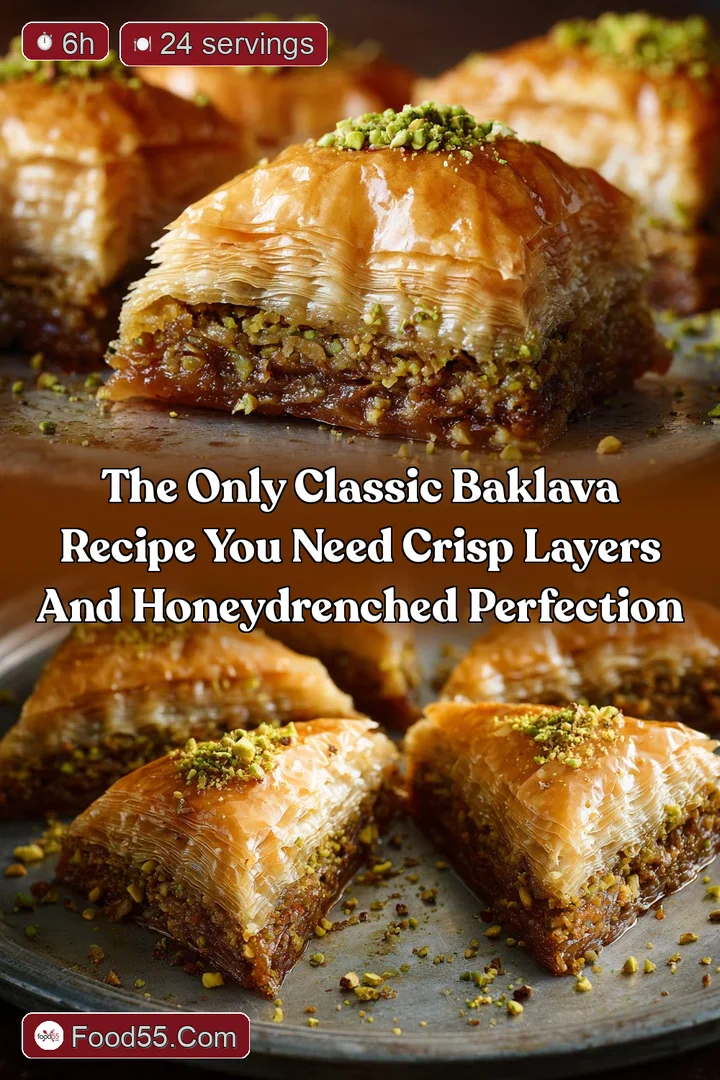
Recipe FAQs
How do I stop my homemade Baklava from turning into a soggy mess?
The secret is temperature shock: the Baklava must be piping hot straight out of the oven, and the syrup must be completely chilled, or you’ll end up with a watery base. Also, clarify your butter (making ghee) beforehand, as the milk solids left in regular butter can hasten sogginess.
I'm new to this is working with phyllo dough really as tricky as everyone makes out?
Phyllo is delicate, but easy if you treat it right; the main faff is that it dries out faster than a forgotten scone, so keep the unused stack meticulously covered with a sheet of plastic wrap and a lightly damp kitchen towel at all times.
Can I use a mix of different nuts, or do I have to stick to walnuts for this Baklava?
Absolutely not walnuts are classic, but for a wonderful variation, swap them for a finely chopped mix of pistachios and almonds, and you can also add a hint of rose water to the syrup for an authentic Levantine flavour.
How should I store the finished dessert, and how long will the Baklava keep?
Baklava stores brilliantly at cool room temperature in an airtight container for up to two weeks, but you must resist the urge to refrigerate it, as the moisture and cold temperature will completely destroy the delicate layers and crispness.
This looks like a proper indulgence; what’s the nutritional damage, and how should I serve it?
While it is certainly a treat (around 280-320 kcal per diamond cut serving), Baklava is typically enjoyed in very small portions; serve it with a strong, unsweetened Turkish coffee or mint tea to properly cut through the richness and sweetness.
Classic Walnut Baklava Recipe
Ingredients:
Instructions:
Nutrition Facts:
| Calories | 695 kcal |
|---|---|
| Protein | 8.0 g |
| Fat | 42.5 g |
| Carbs | 37.2 g |
| Fiber | 3.0 g |
| Sugar | 9.4 g |
| Sodium | 142 mg |
