Hash Brown Crusted Quiche Recipe with Bacon
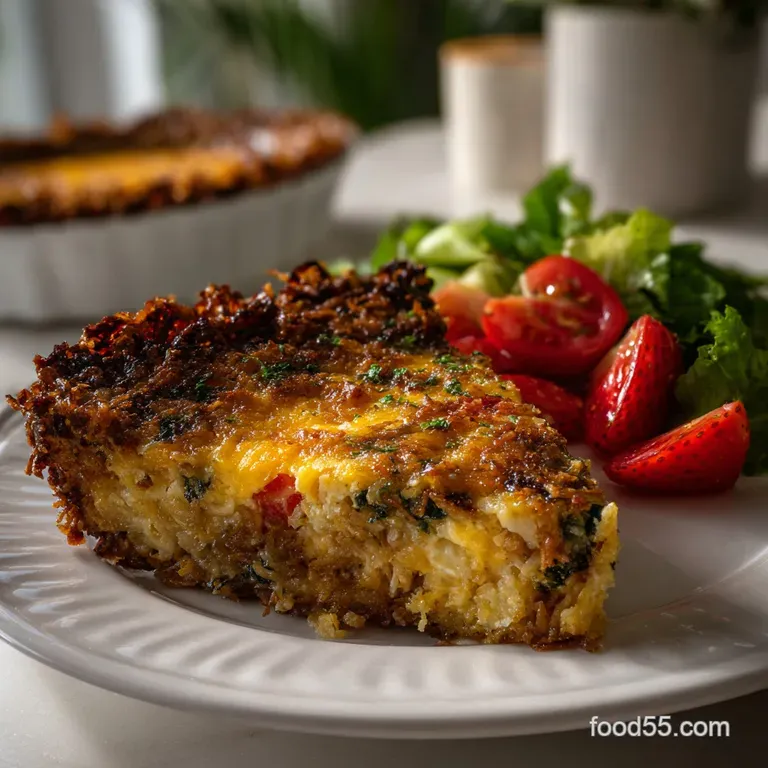
- Effort/Time: 1 hour 15 minutes of moderate, focused preparation.
- Flavor Hook: Smoky bacon and sharp cheddar suspended in a nutmeg-scented, silk-like emulsion.
- Perfect for: Shared-meals, holiday brunches, or a high-protein, make-ahead weekday breakfast.
- The Molecular Harmony of This Hash Brown Crusted Quiche Recipe
- Precision Logistics and Production Metrics
- The Alchemy of Umami: Selecting Your Elements
- Technical Instruments for Structural Integrity
- The Thermal Transformation Protocol: Executing Your Quiche
- Diagnostic Protocols for Common Culinary Deviations
- ⚗️ The Scaling Lab: The Physics of Quantity
- Common Myths
- Preservation Physics and Reheating Dynamics
- The Sensory Contrast of Communal Breakfast
- Recipe FAQs
- 📝 Recipe Card
There is nothing more disheartening than spending forty dollars on premium thick cut bacon and heavy cream only to pull a quiche from the oven that has a gray, sodden bottom. I have sat at many tables where a beautiful looking pie was served, only for the first bite to reveal a crust that had the consistency of wet cardboard rather than a crisp, mahogany colored snap.
That texture failure isn't just a culinary disappointment; it’s a waste of high-quality ingredients and the time you spent hoping to bring people together over a special meal.
I’ll be the first to admit that I destroyed at least three batches of this Hash Brown Crusted Quiche Recipe before I understood the physics of moisture. In my early attempts, I rushed the thawing process and ignored the liquid pooling at the bottom of the bowl, thinking the oven’s heat would simply evaporate it.
Instead, that trapped steam turned my potato base into a mushy mash, preventing the Maillard reaction from ever occurring and leaving the custard weeping.
The scientific revelation came when I treated the potatoes like a structural element rather than just a side dish. By applying osmotic pressure salting the thawed potatoes to draw out deep seated moisture and then using a binder, we create a thermal barrier that stays crisp even after the custard is poured.
This creates a shattering crust that provides a rhythmic contrast to the velvety, protein rich center, resulting in a savory brunch centerpiece that fosters genuine connections across the table.
The Molecular Harmony of This Hash Brown Crusted Quiche Recipe
To achieve the desired results, we must look at how the ingredients interact under high temperature conditions.
- Starch Retrogradation: Chilling and then reheating frozen hash browns helps the starches realign, creating a sturdier structure that resists becoming gluey.
- Maillard Reaction: The combination of melted Kerrygold Unsalted Butter and high heat (200°C) browns the potato sugars, creating hundreds of new flavor compounds.
- Protein Coagulation: Eggs and dairy form a delicate 3D network; using heavy cream ensures the fat molecules get between the protein strands, preventing a rubbery texture.
- Lipid Emulsification: Whisking the milk and cream into the eggs creates a stable emulsion that suspends the bacon and chives evenly throughout the quiche.
Precision Logistics and Production Metrics
This Hash Brown Crusted Quiche Recipe requires strict adherence to thermal timing to ensure the crust remains a structural marvel.
| Metric | Value |
|---|---|
| Total Prep Time | 20 minutes |
| Total Cook Time | 55 minutes |
| Total Thermal Duration | 1 hour 15 minutes |
| Recipe Yield | 8 Servings |
| Internal Temp Target | 77°C (170°F) |
The Alchemy of Umami: Selecting Your Elements
Selecting the right components is the difference between a standard breakfast and a Masterclass level Hash Brown Crusted Quiche Recipe.
- 24 oz (680g) McCain Frozen Shredded Hash Browns, thawed: Why this? Pre-shredded potatoes have a higher surface area-to-volume ratio for maximum crisping.
- 3 tbsp (42g) Kerrygold Unsalted Butter, melted: Why this? High butterfat content aids in the golden brown Maillard transformation of the crust.
- 1 large Egg, beaten: This acts as the "glue" or binder for the potato shards.
- 1 tsp (6g) Diamond Crystal Kosher Salt: Essential for drawing out moisture through osmosis.
- 6 large Eggs (Filling): Provide the structural protein network for the custard.
- 1 cup (240ml) Heavy Cream: Why this? High fat prevents the egg proteins from over bonding and becoming tough.
- 1/2 cup (120ml) Whole Milk: Provides hydration without the heaviness of pure cream.
- 1.5 cups (170g) Tillamook Sharp Cheddar Cheese, freshly shredded: Freshly shredded cheese lacks the cellulose coating of pre-bagged versions, ensuring a smoother melt.
- 6 slices Thick Cut Bacon, cooked and crumbled: Adds smoky depth and textural variety.
- 2 tbsp Fresh Chives, finely chopped: Provides a bright, onion forward aromatic lift.
- 1/4 tsp Ground Nutmeg: Why this? Nutmeg contains myristicin, which chemically enhances the savory notes of dairy.
Ingredient Chemistry Breakdown
| Ingredient | Chemical/Physical Role (Science) | The Pro Secret (Why This Matters) |
|---|---|---|
| Heavy Cream | Lipid interference in protein bonding | Keeps the quiche "velvety" instead of "rubbery" |
| Kosher Salt | Osmotic moisture extraction | Essential for a shatter crisp crust; removes steam causing water |
| Sharp Cheddar | Fat-based flavor carrier | Provides acidic tang to balance the rich, fatty custard |
| Ground Nutmeg | Aromatic synergy | Bridges the gap between the sweet potato notes and savory eggs |
Ingredient Substitution Table
| Original Ingredient | Substitute | Why It Works |
|---|---|---|
| Bacon (6 slices) | Smoked Tempeh (150g) | Provides similar smoky notes; maintain salt levels |
| Heavy Cream (1 cup) | Full fat Coconut Milk | Similar fat ratio; will add a distinct nutty/tropical profile |
| Sharp Cheddar (1.5 cups) | Gruyère (1.5 cups) | Superior melting point; adds a sophisticated, earthy funk |
Technical Instruments for Structural Integrity
- Lodge Cast Iron Pie Pan (9 inch/23cm): The high thermal mass of cast iron ensures the potato crust sears from the bottom up.
- KitchenAid Balloon Whisk: Essential for incorporating air and creating a homogenous egg-milk emulsion.
- Cheesecloth or Lint free Kitchen Towel: This is the most important tool for squeezing every drop of water out of your thawed potatoes.
- Microplane Grater: For fresh nutmeg and chives to maximize essential oil release.
The Thermal Transformation Protocol: Executing Your Quiche
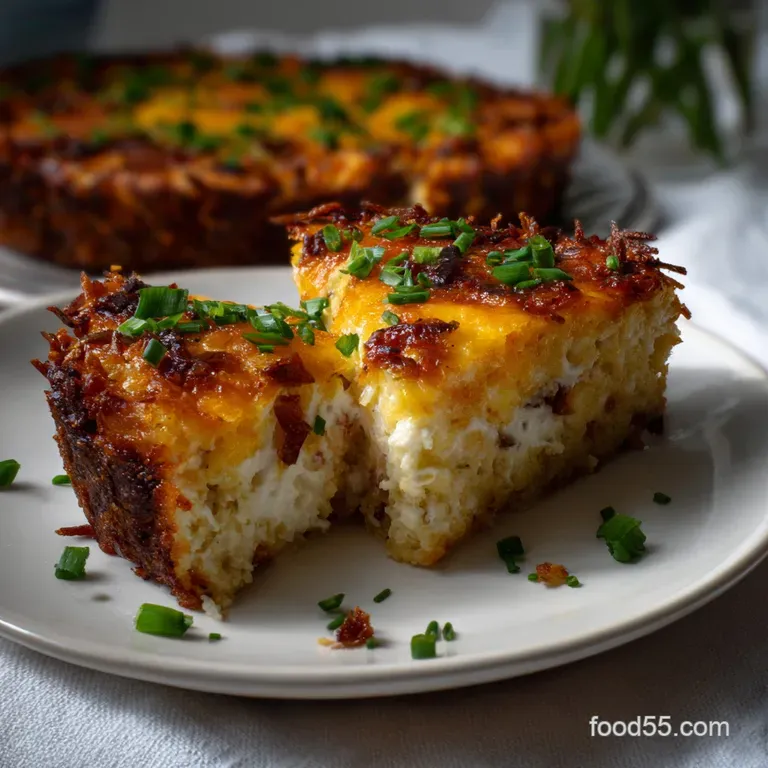
Follow these steps exactly to ensure your Hash Brown Crusted Quiche Recipe maintains its structural integrity.
- Thaw potatoes completely.Note: Frozen crystals will steam and ruin the crust's crispness.
- Squeeze potatoes in cheesecloth. Do this until no more liquid escapes. Checkpoint: 24 oz (680g) of potatoes should lose about 1/2 cup of water.
- Combine crust elements. Mix the dry potatoes with melted Kerrygold Butter, 1 egg, 1 tsp salt, onion powder, and black pepper.
- Press into Lodge Pie Pan. Ensure the potatoes go up the sides and are packed tightly to prevent the custard from leaking through.
- Blind bake at 200°C (400°F). Bake for 20 minutes until the edges are deep golden and the smell is reminiscent of fried hash browns.
- Prepare the custard. Whisk the 6 filling eggs with heavy cream, whole milk, chives, nutmeg, and remaining salt.
- Layer the inclusions. Spread the crumbled bacon and half the Tillamook Cheddar across the bottom of the hot crust.
- Pour the liquid. Gently pour the egg mixture over the bacon, then top with the remaining cheese.
- Lower oven to 190°C (375°F). Bake for 30 35 minutes until the edges are set and puffy, but the center still has a slight, gelatinous jiggle.
- Rest for 10 minutes. This allows the residual heat to finish the carryover cooking process for a clean slice.
Diagnostic Protocols for Common Culinary Deviations
Why Your Quiche Crust is Soft
The most common failure in any Hash Brown Crusted Quiche Recipe is the "soggy bottom." This is caused by starch gelatinization occurring in the presence of excess water before the Maillard reaction can take place. If the potatoes aren't dry, they steam instead of fry.
| Problem | Root Cause | The Fix | Pro Protocol |
|---|---|---|---|
| Soggy Base | Residual moisture in potatoes | Squeeze harder with cheesecloth | Salt the potatoes 10 mins before squeezing to draw out water via osmosis |
| Leaking Filling | Holes in the potato crust | Pack potatoes tighter during prep | Use the back of a measuring cup to compress the crust into the pan |
| Separated Custard | Overcooking (Protein Syneresis) | Reduce oven temp immediately | Pull the quiche when the internal temp hits 74°C; it will rise to 77°C while resting |
Why the Custard is Rubbery
When egg proteins are heated too quickly or for too long, they bond too tightly (syneresis), squeezing out the water and creating a rubbery, weeping texture. The heavy cream acts as a lubricant, but temperature control is the ultimate master.
Ensure you are using a lower temperature (190°C) for the filling stage compared to the crust stage.
⚗️ The Scaling Lab: The Physics of Quantity
When you are hosting a larger group and need to double this quiche, you cannot simply double the variables.
- The Evaporation Paradox: If you use a larger, deeper pan to double the recipe, the surface area ratio decreases. This means the center will take significantly longer to set while the edges might overcook. Fix: Use two separate 9 inch pans rather than one giant one.
- Flavor Saturation: Scale spices (nutmeg, onion powder) to 1.5x, not 2x. Concentrated aromatics become overwhelming in larger volumes.
- Thermal Mass: Doubling the cold custard mass in one oven will drop the oven's ambient temperature. Pre-heat your oven for an extra 20 minutes to ensure the walls of the oven are fully saturated with heat before the pans go in.
- Batch Cooking: Always cook the bacon in batches. Crowding 12 slices of bacon into one pan will cause them to steam in their own rendered fat rather than achieving that shattering crispness needed for the quiche.
Common Myths
Myth: You can use fresh potatoes for the crust. Truth: While possible, fresh potatoes have unpredictable starch and moisture levels. Frozen hash browns have been blanched, which pre-gelatinizes the starch, making them more reliable for a crisp crust in this quiche recipe.
Myth: Adding more eggs makes it "sturdier." Truth: More eggs without a corresponding increase in fat (cream) actually makes the quiche tougher and more prone to weeping liquid. The 6 egg-to-1.5 cup-dairy ratio is the gold standard for a velvety mouthfeel.
Preservation Physics and Reheating Dynamics
This dish is a champion of shared meals because it actually tastes better the next day as the flavors have time to meld and the connections between the ingredients deepen.
- Fridge: Store in an airtight container for up to 4 days. The crust will lose some snap but the flavor remains vibrant.
- Freeze: You can freeze the baked quiche for up to 2 months. Thaw in the fridge overnight before reheating.
- Reheating: Avoid the microwave it turns the potato crust into a rubbery sponge. Reheat in a 175°C (350°F) oven for 15 minutes to re-crisp the base.
💡 ZERO WASTE PHILOSOPHY: Don't discard the bacon fat! Transform: Use the rendered fat to sauté greens or even grease the pie pan for extra flavor. Science: Bacon fat has a high smoke point and carries fat-soluble flavor compounds that butter alone lacks.
The Sensory Contrast of Communal Breakfast
Serving this quiche is all about celebrating the joy of the table. Because it is so rich and savory, you want to pair it with something that provides a bright, acidic counterpoint.
A Classic Pea Salad Recipe offers a cool, crisp texture that cleanses the palate between bites of the rich cheddar custard. Alternatively, a simple arugula salad dressed with The Balsamic Vinaigrette recipe provides a sharp, peppery bite that cuts through the lipid heavy heavy cream and bacon.
- If you want a shattering crust
- Squeeze the potatoes until the towel is bone dry.
- If you want a silky center
- Do not overbake; pull it while it still has a "jiggle."
- If you want maximum flavor
- Use "Sharp" or "Extra Sharp" cheddar; mild cheese disappears into the cream.
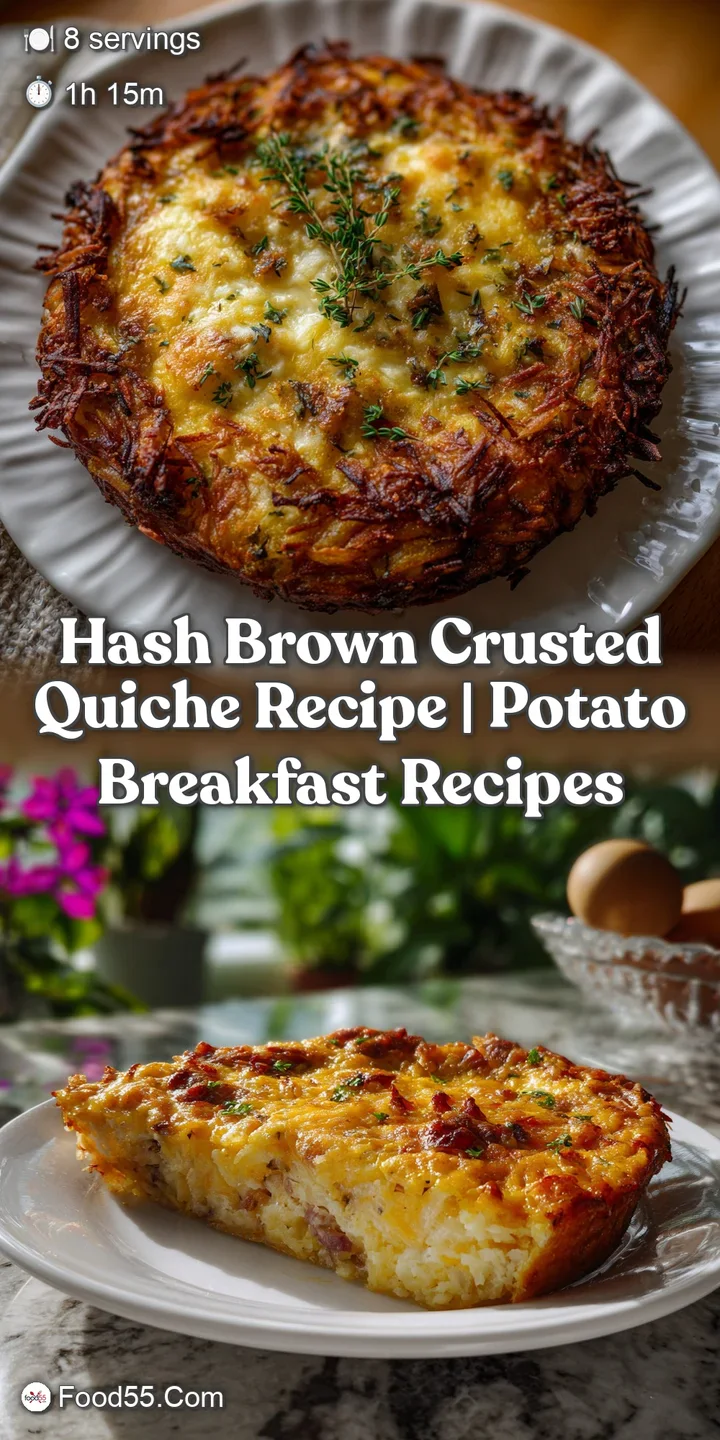
This Hash Brown Crusted Quiche Recipe is more than just a meal; it's a way to foster genuine connections through the shared experience of a perfectly executed, textural masterpiece. Enjoy the sizzle of the bacon, the aroma of the nutmeg, and the inevitable "shatter" of that first golden bite.
Recipe FAQs
how to make hash brown crust for quiche?
Squeeze thoroughly, then blind bake until edges are dark brown. Thawed hash browns must be salted to draw out water via osmosis, then squeezed aggressively using cheesecloth to prevent steam pockets from forming during baking.
The initial high heat bake creates the necessary thermal barrier against the custard filling.
- Salt potatoes 10 minutes prior to squeezing
- Bind with one egg and melted butter
- Press firmly into a cast iron pan
Can I substitute heavy cream with a lighter dairy product?
No. Fat ratio is critical for texture stabilization. Decreasing the fat content below 35% (heavy cream) leads to faster protein coagulation, resulting in a tough, rubbery custard structure. Lighter products cause the egg proteins to over bond as the water content evaporates prematurely.
Myth: You can use fresh potatoes for the crust.
Myth: You can use fresh potatoes for the crust. Truth: While possible, fresh potatoes have unpredictable starch and moisture levels. Frozen hash browns have been blanched, which pre-gelatinizes the starch, making them more reliable for a crisp crust in this quiche recipe.
What temperature should the oven be when adding the egg filling?
Lower the heat from 400°F to 375°F. The initial high heat sets the potato crust structure, but the slower, moderate heat prevents the egg proteins from setting too rapidly and weeping. If you enjoyed mastering the thermal control for the crust, see how the same principle of staged temperature applies when balancing acid and sweetness in our Mint Sauce for Lamb: The Essential Pungent British Recipe.
Should I use salted or unsalted butter for the crust?
Unsalted butter for precision control. Salted brands vary widely in sodium content, making consistent seasoning impossible when balancing the salt already added to the potatoes. Unsalted butter allows exact measurement of salt based on the cheese and bacon inclusions.
Myth: Adding more eggs makes it sturdier.
Myth: Adding more eggs makes it sturdier. Reality: More eggs without a corresponding increase in fat (cream) actually makes the quiche tougher and more prone to weeping liquid. The optimal 6 egg-to-1.5 cup-dairy ratio ensures a velvety mouthfeel.
Why did my custard separate and become rubbery?
Overcooking causes irreversible protein denaturing and moisture expulsion. Excessive heat causes the egg proteins to tighten their matrix structure (syneresis), squeezing out the trapped fat and water.
- Check the internal temperature at 30 minutes
- Ensure cream-to-milk ratio is respected
- Use residual heat for final setting
Hash Brown Crusted Quiche
Ingredients:
Instructions:
Nutrition Facts:
| Calories | 398 kcal |
|---|---|
| Protein | 15.9 g |
| Fat | 30.2 g |
| Carbs | 17.4 g |
| Fiber | 1.2 g |
| Sugar | 1.9 g |
| Sodium | 845 mg |
