Short Rib Ragu: Slow-Braised Sunday Supper
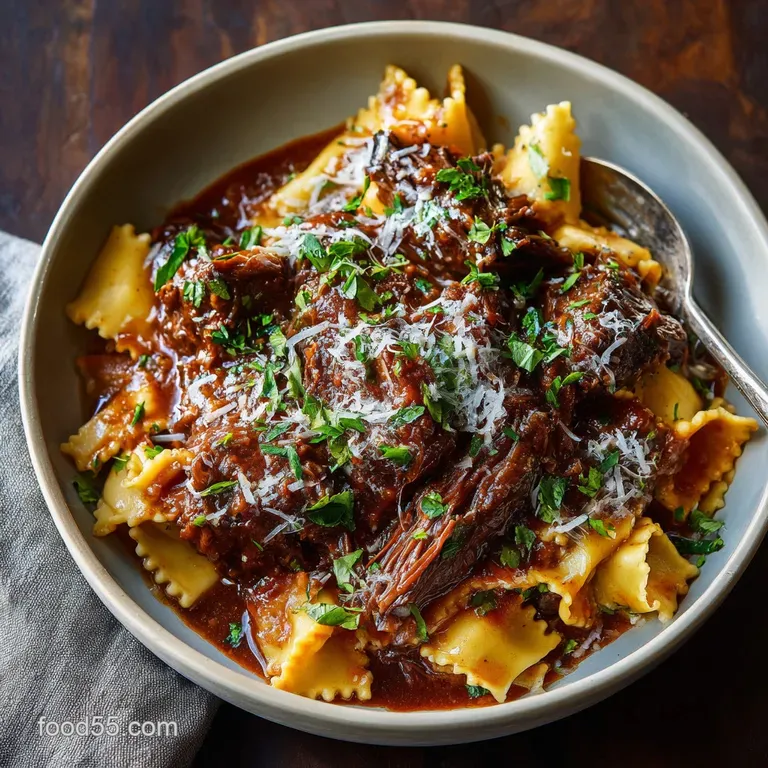
- The Ultimate Slow-Braised Short Rib Ragu: Defining a Sunday Classic
- Essential Ingredients for a Rich and Robust Short Rib Sauce
- Mastering the Slow-Cook Method: A Step-by-Step Guide
- The Science Behind Fork-Tender Braised Short Ribs
- Troubleshooting and Expert Secrets for Perfect Ragu
- The Perfect Pairings for Hearty Short Rib Ragu
- make-ahead Strategy and Long-Term Storage
- Recipe FAQs
- 📝 Recipe Card
The Ultimate Slow Braised Short Rib Ragu: Defining a Sunday Classic
Have you ever walked into a kitchen where something truly magical is happening? That rich, meaty, deeply savory scent that clings to the air, promising hours of low, slow dedication? That is the aroma of this short rib ragu .
It smells like comfort, like grandma’s house, and honestly, like pure, unadulterated victory. This ragu isn't just a sauce; it's an experience built on patience and deep, foundational flavor.
I know what you're thinking: Short ribs? That sounds like a big deal. But I promise you, this specific recipe is my secret weapon for entertaining or surviving a chilly Sunday.
While it takes time, 90% of that is hands off oven time, leaving you free to catch up on laundry or, more likely, binge watch bad reality TV. It’s an easy investment for a payoff that tastes like a million bucks.
Let’s crack on and transform some tough cuts into the silkiest, most soul satisfying short rib ragu you have ever encountered. This isn’t a quick weeknight sauce, but it is guaranteed to become your defining classic.
Defining the Ragu: More Than Just a Meat Sauce
A ragu is fundamentally a meat based sauce that is gently cooked over many hours, usually featuring a whole muscle or bone-in cut broken down into the sauce itself. What separates this short rib ragu from your average Sunday sauce is the combination of the high fat and collagen content of the ribs.
That marbling melts down into the sauce, giving it an unmistakable, velvety body that no ground meat could ever replicate.
This technique transforms the short ribs from chewy, stubborn cuts into tender, fork shreddable delights, which then thicken the entire sauce. We aren't just adding meat to tomato sauce; the meat is the sauce.
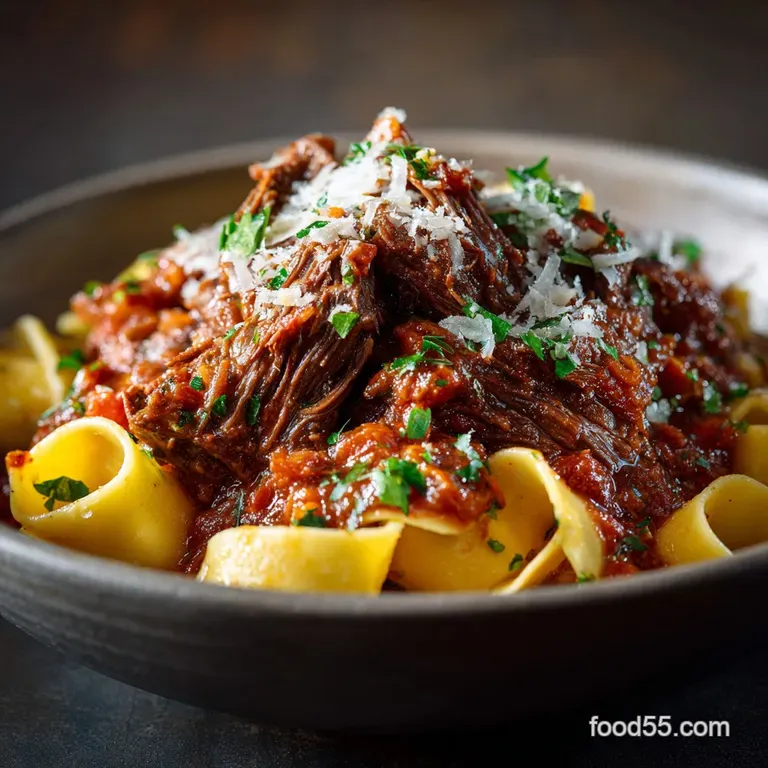
If you want a ragu that truly clings to pappardelle like glue, you need the richness only braised short rib ragu provides.
Essential Equipment for Deep Flavour (Dutch Oven Technique)
You absolutely need a heavy bottomed pot for this preferably a trusty 5.5 quart enamel coated Dutch oven. Why? Because the heat retention of cast iron is unparalleled, guaranteeing an even, gentle simmer in the oven for those crucial 3.5 to 4 hours.
If your pot has hot spots, the bottom of the sauce will scorch, and we cannot have that.
If you don't own a Dutch oven, use the heaviest, thickest pot you possess with a tight fitting lid, but be warned that you might need to check on the liquid level a little more often. This deep dive into flavour starts with a perfect sear, and that sear requires consistent, fierce heat only heavy equipment can provide.
Time Commitment: How Long Does Authentic Braising Take?
Patience is the secret ingredient in any phenomenal Italian dish, and especially with this short rib ragu . We are looking at a commitment of about 4 hours, start to finish. Yes, that is a long time.
However, the active cooking time the chopping, the searing, and the soffritto —is only about 45 minutes.
The rest is the oven doing the heavy lifting, working its slow cook magic. If you try to rush it, you will end up with tough, chewy ribs, and that simply defeats the entire purpose of a glorious short rib ragu .
Think of it as a low-stress project; start it right after lunch, and it will be perfect by dinnertime.
Essential Ingredients for a Rich and Robust Short Rib Sauce
Remember, we are building depth here, layer by layer, so quality ingredients really do matter. Do not skimp on the tomato quality, and please, use fresh herbs.
Sourcing the Beef Short Ribs: Bone-In vs. Boneless Cuts
When buying ribs for this short rib ragu , you generally have two choices: bone-in or boneless. I am always going to lean towards bone-in short ribs. That bone provides extra depth, collagen, and flavour during the long braise, resulting in a more complex, richer ragu.
Yes, you have to discard the bones later, but trust me, the flavour transfer is worth the effort.
If you are intimidated by bones or simply prefer ease, boneless short ribs work perfectly fine and are easier to shred. Just ensure they are well marbled; fat equals flavour, and we need that fat to melt down into the sauce.
Ask your butcher to trim off any huge chunks of external fat but leave the good marbling intact.
| Ingredient | My Recommendation | Quick Substitution |
|---|---|---|
| Short Ribs | Bone-in, well marbled | Boneless (for ease) or Chuck Roast (cut into large cubes) |
| Dry Red Wine | Merlot, Chianti, or Cabernet | Additional Beef Stock + a splash of Balsamic Vinegar |
| Crushed Tomatoes | Canned San Marzano Style | Whole Peeled Tomatoes (crushed by hand) or Passata |
| Beef Stock | Low-Sodium Bone Broth | Chicken Stock (less flavour depth) or Water + Better Than Bouillon |
| Butter | Unsalted | Olive Oil or Ghee |
Selecting the Best Red Wine for Braising
Braising wine should be dry, robust, and something you actually enjoy drinking. Since the alcohol evaporates and the flavour concentrates, a good quality, moderately priced Merlot, Cabernet Sauvignon, or Chianti is perfect for this short rib ragu .
Please avoid anything labeled "cooking wine" it’s usually full of salt and junk.
If you are cooking for a crowd who doesn't drink, or if you simply prefer non-alcoholic alternatives, use dark grape juice mixed with a generous splash of balsamic vinegar. The goal is to provide deep, tannic acidity, which is essential for tenderizing the ribs and balancing the richness of the tomatoes.
Why Crushed Tomatoes Offer Superior Texture
I insist on canned crushed tomatoes for this particular short rib ragu recipe . They provide a texture that is rustic and chunky without being annoyingly watery.
While whole peeled tomatoes are great, they take longer to break down completely; diced tomatoes tend to stay too firm and interrupt the velvetiness we are going for.
San Marzano style crushed tomatoes are always my go-to because they have lower acidity and superior sweetness, giving the ragu a beautiful, well rounded taste. When you introduce the acidity and fat from the short rib ragu , this tomato base provides perfect harmony.
Aromatics: Building the Perfect Soffritto Foundation
The soffritto —the mixture of finely diced onion, carrot, and celery is the literal soul of this Italian ragu. If you don't do this step right, the whole sauce will suffer.
We are not browning the vegetables; we are gently sweating them over low heat until they are completely translucent and soft, which takes a full 8 to 10 minutes.
This slow sweat releases their natural sugars, creating a subtle sweetness that balances the intense savoriness of the braised short rib ragu . Don’t forget the tomato paste, which needs a minute or two of cooking time with the garlic to deepen its umami richness this is called "pursing the paste" and it’s non-negotiable!
Mastering the Slow Cook Method: A step-by-step Guide
Sear, Sauté, and Deglaze: Building Initial Depth of Flavor
The first step is arguably the most crucial flavour builder. You must sear the short ribs until they are dark brown almost mahogany on all sides. Do not rush this. Trust me. This intense browning is the Maillard reaction in action, creating hundreds of complex, savory compounds.
Make sure your pot is ripping hot and work in small batches so the temperature doesn't drop, which would lead to steaming instead of searing. Once you remove the ribs, you are left with beautiful browned bits, the fond , stuck to the bottom of the pot.
We use the wine to deglaze, scraping all that sticky goodness up, integrating it directly into the sauce. This fond is where the epic flavour of your short rib ragu resides.
Simmer Time: Achieving Fall Apart Tenderness
Once the short ribs are nestled back in the aromatic liquid, cover that Dutch oven tightly. We’re aiming for a consistent, gentle heat, and the oven at 325°F (160°C) is far more stable than your stovetop. The temperature needs to be just hot enough to bubble gently, not furiously boil.
The moment the braising liquid reaches that gentle simmer, the magic begins. Over the next three and a half to four hours, the connective tissue (collagen) in the short ribs breaks down into gelatin, resulting in that signature silky mouthfeel we demand from the best short rib ragu .
Don't peek too often; every time you lift the lid, you drop the internal temperature.
Shredding and Finishing the Sauce Consistency
When the ribs are done when they truly fall apart with the lightest touch of a fork carefully lift them out and set them aside. Discard the herb stems and bay leaf. Now, look at your sauce. It will likely be a little thin, even after all that cooking.
Return the pot to the stovetop and let it simmer uncovered over medium high heat. This is the reduction phase, where you achieve your desired thickness. If the sauce is too thick , you can add a splash of reserved pasta water later; if it’s too thin , reduce it until it coats the back of a spoon.
Finally, shred the short ribs and stir them back into the luxurious, thickened sauce. You’ve successfully made a heavenly batch of short rib ragu !
The Science Behind Fork Tender Braised Short Ribs
Why do these tough cuts become so meltingly soft? It’s all about the transformation of collagen. Short ribs, like all cuts that benefit from low and slow cooking, are rich in collagen, which is the structural protein that makes meat tough.
When held between 160°F and 205°F (71°C and 96°C) for several hours, this collagen slowly dissolves and hydrates, changing into luscious, liquid gelatin. That gelatin is the secret to the body of the sauce and the tenderness of the ribs.
This is precisely why we braise; if you tried to rush it, you would simply cook all the moisture out and the ribs would be dry and stringy.
The Maillard Reaction: Browning for Maximum Umami
I mentioned the Maillard reaction earlier, and it’s worth reiterating: the deep, dark sear is flavour fundamental. This complex chemical reaction occurs when amino acids and reducing sugars react at high heat.
That brown crust isn’t just texture; it’s a concentration of intense, savory, nutty, and slightly sweet compounds that form the bedrock of flavour for the whole short rib ragu .
The Role of Acidity in Tenderizing Meat
Using dry red wine and tomatoes isn't just for taste; the gentle acidity helps the breakdown process. Acidity slightly denatures (unravels) the muscle fibers, allowing the heat to penetrate and the collagen conversion to happen more effectively.
This balance is key; too much acid and the meat stiffens, but the measured amount in this recipe works alongside the long braise to ensure incredible results.
Troubleshooting and Expert Secrets for Perfect Ragu
Skimming the Fat: When and Why it Matters
Short ribs are fatty, and that rendered fat will sit on top of the sauce when the braise is done. While fat equals flavour, too much fat can make the sauce greasy and heavy. I always recommend skimming the fat after the braise.
Chef's Note: The easiest, cleanest way to skim is to chill the finished short rib ragu overnight. The fat will solidify into a hard disk on the surface, which you can easily lift off and discard before reheating. This results in a cleaner, richer, more refined sauce texture.
Common Mistake: Rushing the Braising Process
I made this mistake when I first started: thinking I could shave off an hour by turning the heat up. Do not do this! If you raise the temperature too high, the muscle fibers contract quickly, pushing out moisture, resulting in dry, tough meat.
A fast boil leads to evaporation, not collagen breakdown. A true, tender short rib ragu requires a low, slow, gentle process. If the ribs aren't easily yielding to a fork, put the lid back on and give it another 30 minutes.
The Perfect Pairings for Hearty Short Rib Ragu
This sauce is intensely rich, which means it needs strong partners that can stand up to its depth. The best short rib ragu needs a solid foundation beneath it.
Choosing the Right Pasta: Pappardelle vs. Rigatoni
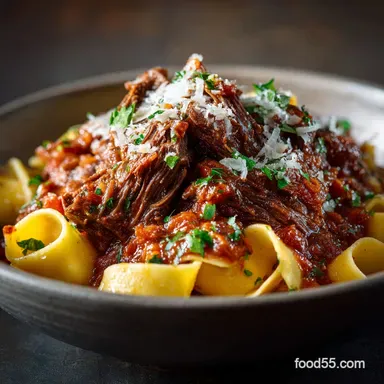
You need a wide, sturdy pasta to handle this heavy sauce. I overwhelmingly favor Pappardelle. Its wide, ruffled surface area is perfect for catching all those shreds of meat and the thick sauce.
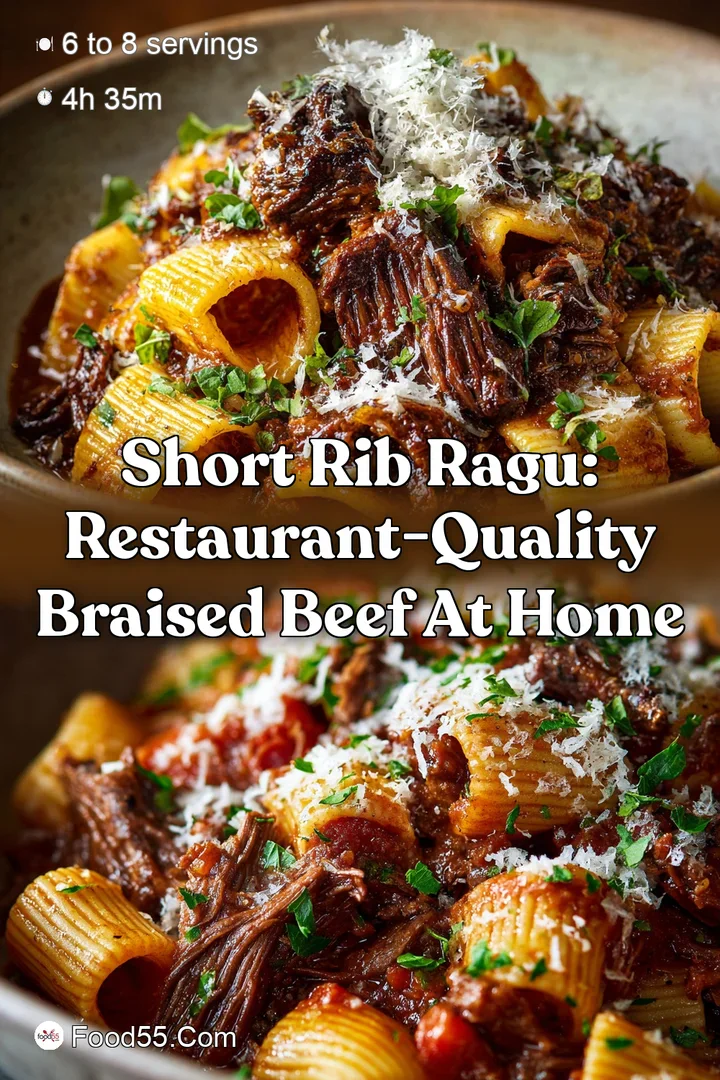
Other great options include thick Tagliatelle, or perhaps a hearty Rigatoni or Paccheri, which allow the sauce to fill the tubes.
Avoid light, delicate pastas like angel hair or spaghetti, which will get completely overwhelmed. If you're looking for another epic pasta dish, you might also like my recipe for Baked Spaghetti: The Best Cheesy Casserole with Ricotta Ragu , though that's a completely different vibe!
Serving Over Creamy Polenta or Mashed Potatoes
Sometimes, pasta just isn't what the doctor ordered, and that is where creamy polenta comes in. Serving your luscious short rib ragu over a bed of warm, slightly loose polenta is pure decadence. The polenta acts like a sponge, soaking up every last drop of the rich sauce.
Similarly, a mountain of rich, buttery mashed potatoes is an equally fantastic canvas. Don't forget a simple side salad; something tart and sharp, like my Burrata and Roasted Asparagus and Tomato Salad: Easy Seasonal Recipe , provides a necessary, bright contrast to cut through the richness.
make-ahead Strategy and Long Term Storage
One of the greatest joys of making this short rib ragu is that it is truly better the next day. As the sauce cools, the flavors meld and deepen, becoming exponentially more complex. This makes it the ultimate make-ahead dinner party star.
You can cook the entire ragu (Steps 1 through 5) a day or two ahead of time. I highly recommend doing this so you can chill it and skim the solidified fat easily. Just store the finished ragu in an airtight container in the fridge for up to 4 days.
Reheating is simple: warm it gently on the stovetop over low heat until simmering, then toss with your freshly cooked pasta. Freezing a batch of this short rib ragu is also mandatory meal prep.
Store cooled ragu in freezer safe bags or containers, leaving a little headspace, and it will keep beautifully for up to 4 months. To thaw, just let it sit in the fridge overnight. This is the ultimate comfort food reserve.
You absolutely need this incredible short rib ragu in your life, trust me!
Recipe FAQs
Why are my short ribs tough even after long braising?
Toughness usually means they haven't cooked long enough or the temperature was not consistently low enough. Short ribs require a low, slow temperature (around 325°F or 160°C) and must reach an internal temperature high enough to dissolve all the connective tissue.
If they resist shredding with a fork, cover the pot and continue braising until they yield effortlessly.
I don't want to use red wine. What is an acceptable substitute?
The red wine provides crucial depth, complexity, and balancing acidity essential for cutting through the richness of the meat. A suitable non-alcoholic substitute is beef stock mixed with a tablespoon of balsamic vinegar to replicate the acidic profile.
Alternatively, you can use extra beef stock, ensuring you add a small splash of sherry or red wine vinegar toward the end of cooking.
Can I make this ragu ahead of time?
Yes, this ragu is significantly better when made one or two days in advance, as resting allows the complex flavors to fully meld and deepen overnight. Additionally, cooking ahead allows the fat to solidify on the surface in the refrigerator, making it easy to skim off before reheating for a lighter sauce.
What cut of short ribs should I use for the best results?
Look for bone-in, English cut short ribs, which are thick, meaty squares cut parallel to the bone. The bone adds significant collagen, richness, and depth of flavor to the sauce during the long braise. Boneless short ribs can be substituted, but they may cook slightly faster and yield a marginally less flavorful sauce.
The recipe calls for braising in the oven. Can I use an Instant Pot or Slow Cooker instead?
Absolutely, both appliances are excellent for slow cooked ragu, though the timing varies significantly. A slow cooker requires 7 8 hours on low, closely mimicking the oven’s slow gentle heat.
If using an Instant Pot, pressure cook the ribs for 45 60 minutes after browning, ensuring you use a natural pressure release for maximum tenderness.
My sauce is too thin after shredding the meat. How can I thicken it?
After removing the meat and defatting the sauce, you can thicken it by simmering the liquid uncovered over medium high heat until it naturally reduces to your desired consistency, usually taking about 15 20 minutes.
Alternatively, stir in a cornstarch slurry (1 tablespoon cornstarch mixed with 2 tablespoons cold water) and simmer for one minute until the sauce coats the back of a spoon.
How should I store leftover ragu, and can it be frozen?
Store leftover ragu in an airtight container in the refrigerator for up to 4 days; always ensure the meat is fully submerged in the sauce. This dish freezes exceptionally well; cool it completely before transferring it to freezer safe bags or containers, where it will remain high-quality for up to 3 months.
Thaw overnight in the refrigerator before reheating gently on the stovetop.
Slow Braised Short Rib Ragu
Ingredients:
Instructions:
Nutrition Facts:
| Calories | 580 kcal |
|---|---|
| Protein | 42.7 g |
| Fat | 24.2 g |
| Carbs | 40.4 g |
