Brown Sugar: Easy Homemade Sweetener
- Time: Active 5 minutes, Passive 0 minutes, Total 5 minutes
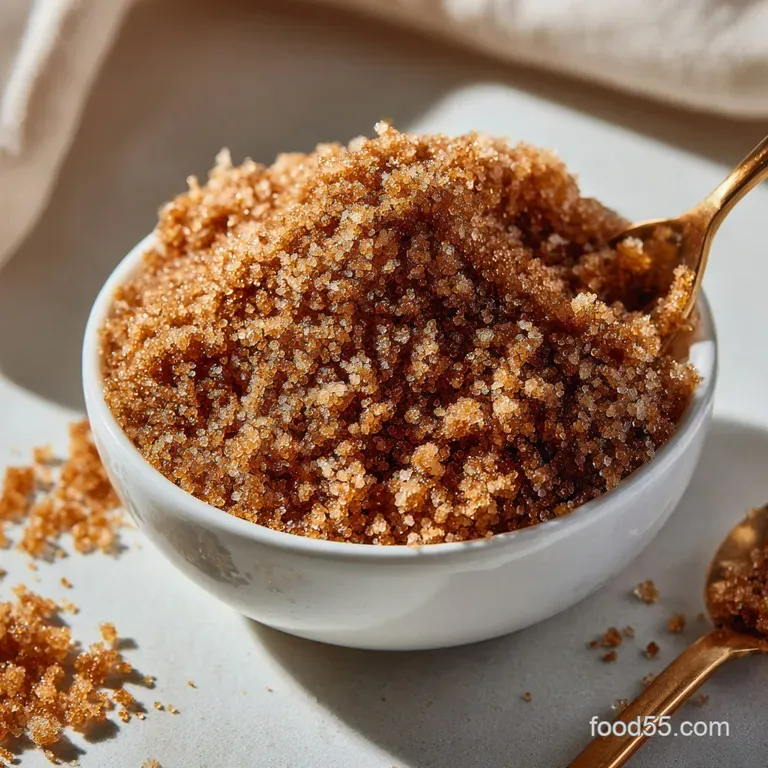
- Flavor/Texture Hook: Damp, sandy, and deeply aromatic
- Perfect for: Emergency baking substitutions, holiday prep, and controlling molasses intensity
- How to Make Brown Sugar in Minutes
- The Chemistry of Sticky Textures
- Essential Recipe Timing and Yield
- Simple Pantry Ingredients You Need
- The Best Tools for Mixing
- Easy Steps for Perfect Blending
- Avoiding Common Mixing Mistakes
- Flavor Variations and Ingredient Swaps
- Storage and Reducing Kitchen Waste
- Delicious Pairings for Your Sugar
- Brown Sugar FAQs
- 📝 Recipe Card
How to Make Brown Sugar in Minutes
The sharp, metallic snap of a molasses jar lid opening always takes me back to my grandmother's kitchen in mid December. I remember the frantic realization that the big yellow bag of sugar was empty, right when the butter and granulated sugar were already swirling in the mixer.
She didn't panic; she just reached for that dark, glass bottle and told me we were going to create a little pantry magic.
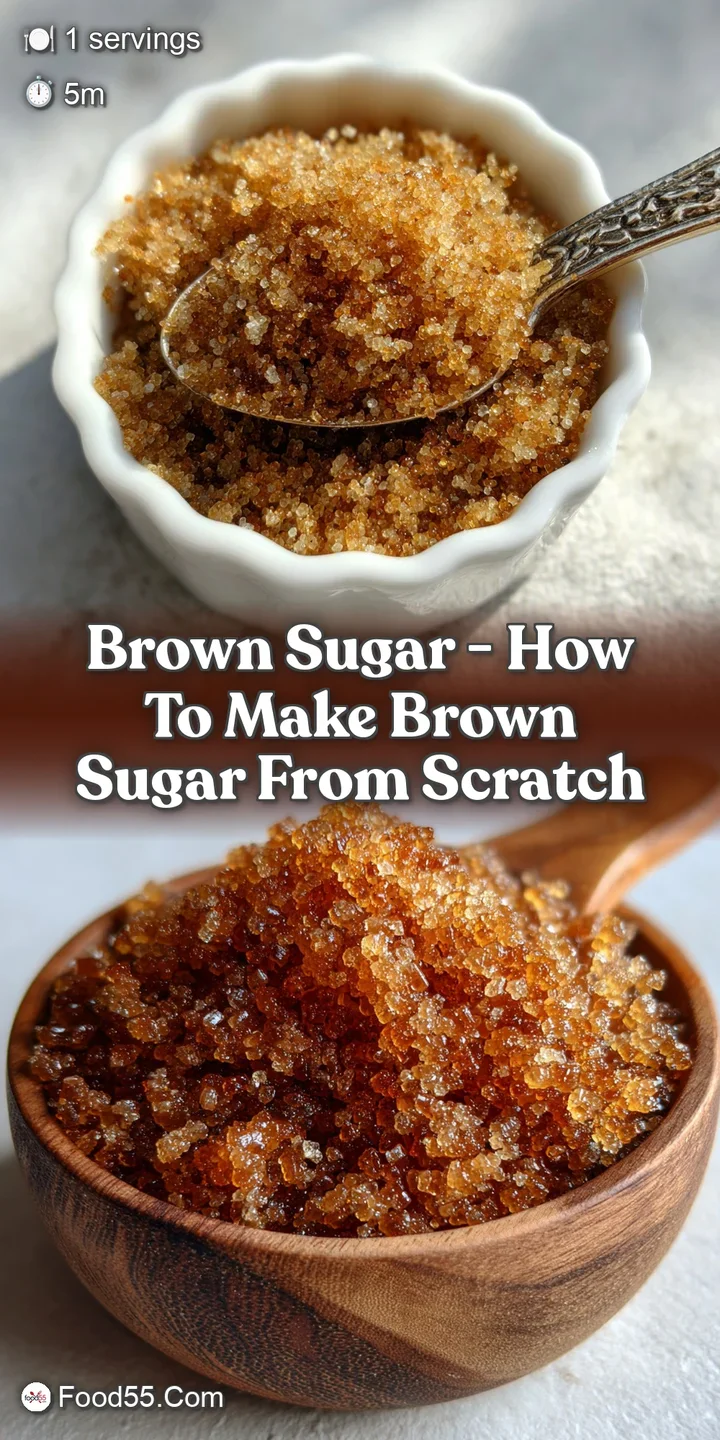
Learning how to make brown sugar at home isn't just a survival skill for when you're halfway through a cookie craving. It's about that specific, heady aroma of fresh molasses hitting white crystals, turning them into something resembling damp, golden sand.
It feels like a secret handshake between you and your ingredients, and honestly, the flavor is so much more vibrant than anything that's been sitting in a plastic bag on a shelf for six months.
Once you realize you can toggle between light and dark varieties with a simple flick of a spoon, you'll never look at store-bought the same way again. It's about that velvety texture and the way it packs into a measuring cup with a satisfying "thump." Trust me, once you see how easy it is to make brown sugar from scratch, you'll feel like the most prepared person in the kitchen.
The Chemistry of Sticky Textures
The Science of the Coating: Molasses acts as a humectant, meaning it physically binds to the surface of white sugar crystals to provide consistent moisture. This specific homemade brown sugar recipe relies on the hygroscopic nature of sugar to keep your baked goods soft and chewy.
1. The Power of Hygroscopy
Sugar naturally attracts water, but when we add molasses, we are introducing invert sugars. These sugars prevent crystallization in your cookies, which is why a recipe using this mix will result in a more flexible, fudgy crumb than one using plain white sugar.
2. PH Levels and Leavening
Molasses is slightly acidic. When it hits baking soda in a dough, it triggers a chemical reaction that produces carbon dioxide. This is what gives your gingerbread and chewy cookies that distinctive lift and airy internal structure.
| Mixing Method | Time | Texture | Best For |
|---|---|---|---|
| Hand Whisking | 5 minutes | Slightly coarse | Small batches, rustic bakes |
| Food Processor | 2 minutes | Uniform and fine | Large batches, delicate cakes |
| Stand Mixer | 3 minutes | Fluffy and aerated | Cookies where creaming is key |
Choosing the right method depends on your patience. If you're making my SafetoEat Cookie Dough recipe, the food processor method ensures a silky mouthfeel that won't feel gritty on the tongue.
Essential Recipe Timing and Yield
This process is lightning fast because we aren't actually "cooking" anything. We are performing a mechanical emulsion of a liquid into a solid. It's one of those rare kitchen tasks where the effort to reward ratio is massively skewed in your favor.
| Component | Measurement | Science Role | Pro Secret |
|---|---|---|---|
| White Sugar | 200g (1 cup) | Structural base | Use extra fine for faster blending |
| Molasses | 20g (1 tbsp) | Flavor and moisture | Spray your spoon with oil first |
Simple Pantry Ingredients You Need
To make brown sugar, you only need two components, but their quality matters. Avoid using "Blackstrap" molasses unless you want an intensely bitter, medicinal flavor that will overpower your sweets.
- 1 cup (200g) granulated white sugar: This provides the crystalline structure. Why this? It offers a neutral canvas for the molasses to shine.
- 1 tbsp (20g) unsulphured molasses: This is the soul of the recipe. Why this? Unsulphured is sweeter and cleaner than its harsher counterparts.
Chef's Tip: If your molasses is too thick to pour, pop the jar in a bowl of warm water for 2 minutes. It will flow like silk, making measurement much more accurate.
The Best Tools for Mixing
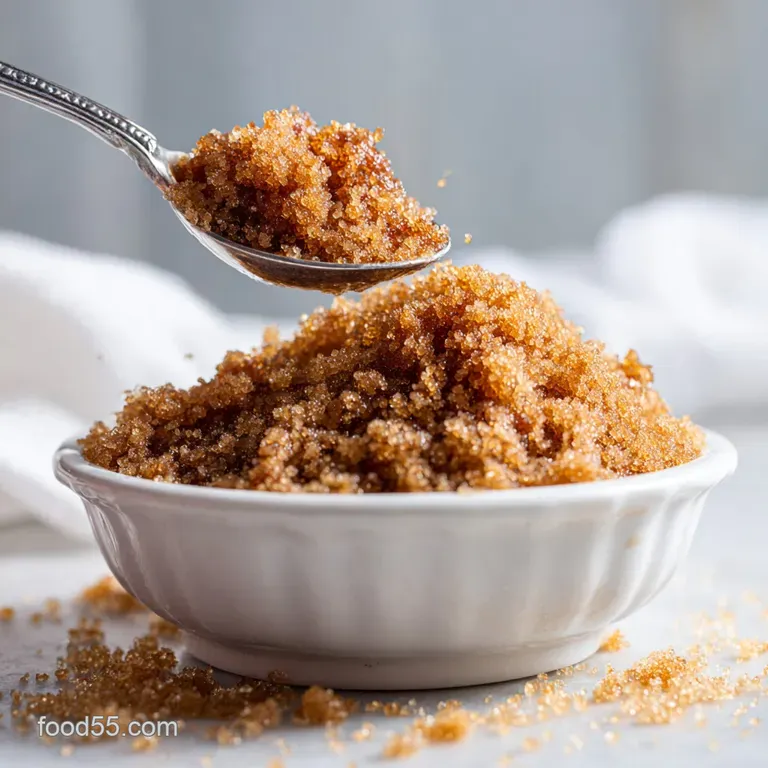
You don't need a high tech lab to do this. A simple stainless steel bowl and a sturdy fork will get the job done, though a food processor is the gold standard for high volume baking. The friction of the blades helps to make brown sugar with molasses much more efficiently by breaking down any stubborn syrup clumps.
If you are a fan of precision, a digital scale is your best friend here. It’s much easier to weigh out 20 grams of molasses directly into the sugar bowl than it is to scrape a sticky tablespoon clean. This ensures your cookies, like those in my Classic Chewy Chocolate recipe, have the exact moisture content intended for that perfect "shatter" on the edges.
Easy Steps for Perfect Blending
- Measure 200g granulated white sugar into a medium mixing bowl. Note: Use a bowl larger than you think you need to prevent sugar flying everywhere.
- Drizzle 20g molasses over the center of the sugar.
- Incorporate using a fork, pressing the molasses into the crystals until the mixture looks like wet sand.
- Scrape the bottom of the bowl frequently to ensure no white pockets remain.
- Check for "molasses pearls" tiny dark beads that need to be crushed.
- Switch to a whisk if you want a lighter, fluffier texture until the color is completely uniform.
- Sift the mixture through your fingers to feel for any lingering hard bits.
- Store immediately in an airtight container to prevent the air from stealing the moisture.
Avoiding Common Mixing Mistakes
The biggest hurdle most people face is the "spotting" effect. This happens when the molasses isn't fully distributed, leading to dark, bitter spots in your finished cake. It’s not just an aesthetic issue; those spots can cause uneven rising.
Why Your Sugar Stays Clumpy
If your molasses is cold, it won't coat the grains easily. It stays in thick globules rather than spreading. It's like trying to mix cold butter into flour it takes way more work than it should.
| Problem | Root Cause | Solution |
|---|---|---|
| Streaks of White | Under mixing the base | Use a rubbing motion with your fingertips |
| Hard Dark Lumps | Cold molasses | Gently warm the molasses before adding |
| Damp/Sticky Mess | Too much molasses | Add 1 tablespoon of white sugar at a time |
✓ Always use unsulphured molasses for a balanced, sweet profile. ✓ Mix until the aroma is consistent across the entire bowl. ✓ Use a food processor if you're making more than 3 cups at once. ✓ Press out any lumps against the side of the bowl with a spatula.
✓ Keep the bowl and tools completely dry to avoid dissolving the sugar.
Flavor Variations and Ingredient Swaps
While the standard recipe is a classic, you can play with the "darkness" of your sugar by simply adjusting the ratios. This is the easiest way to customize your bake's chewiness and color.
| Original Ingredient | Substitute | Why It Works |
|---|---|---|
| Molasses (1 tbsp) | Maple Syrup | Lighter flavor. Note: Less acidic, so cookies may rise less |
| Molasses (1 tbsp) | Honey | Adds floral notes. Note: Browns much faster in the oven |
| White Sugar | Monk Fruit | Keto friendly. Note: Cooling sensation might be present |
1. The Instant Brown Sugar Glaze Recipe Twist
If you want to use this for a ham or vegetable glaze, whisk in a teaspoon of vanilla extract during the mixing phase. The alcohol in the vanilla helps the molasses penetrate the sugar even faster, creating a fragrant paste.
2. The Bourbon Infusion
For a sophisticated holiday version, add half a teaspoon of bourbon to your molasses before mixing. It adds a smoky, charred oak depth that is incredible in pecan pies or topped on oatmeal.
Storage and Reducing Kitchen Waste
The enemy of brown sugar is air. If you leave your homemade brown sugar recipe out on the counter, it will turn into a brick within hours. The molasses loses its moisture to the atmosphere, and the sugar crystals lock together.
Storage: Keep in a glass jar with a tight sealing lid for up to 6 months. To keep it soft, add a terracotta sugar saver (soaked in water) or even a simple piece of bread to the jar. The sugar will pull the moisture from the bread, keeping it velvety and soft.
Zero Waste: If you have the dregs of a molasses jar that you can't quite scrape out, pour your white sugar directly into the jar! Shake it vigorously like a maraca. The sugar acts as an abrasive, cleaning the jar while picking up every last drop of that liquid gold.
Delicious Pairings for Your Sugar
Now that you've mastered the mix, it’s time to use it. This fresh version is particularly good in recipes where the sugar isn't fully dissolved, like a crunchy crumble topping for muffins. The flavor of the molasses is much more "forward" when it hasn't been sitting in a warehouse.
You can also use this technique to make brown sugar syrup for your morning coffee. Simply simmer equal parts of your new sugar and water until dissolved. It’s a game changer for lattes.
If you're looking for a cozy breakfast, try sprinkling a heavy hand of this over a bowl of hot grains or using it as the base for a rich butterscotch sauce.
Scaling Your BatchDOWN (½ cup): Use 100g sugar and 1.5 teaspoons of molasses. UP (2x-4x): Increase molasses to 1.5x only if you want "Light" sugar, or keep the 1:1 ratio for "Dark." For large batches, use a stand mixer to save your wrists!
Kitchen Myths "You can't make brown sugar without molasses." Actually, you can use maple syrup or sorghum, but the flavor profile will shift. Molasses is the only thing that provides that specific, traditional "brown sugar" taste we all crave.
Another myth is that brown sugar is healthier than white nutritionally, they are nearly identical; we use it for the texture and the soul satisfying flavor!
Brown Sugar FAQs
How to make brown sugar at home?
Combine granulated sugar and molasses. In a bowl, mix 1 cup (200g) of granulated white sugar with 1 tablespoon (20g) of unsulphured molasses. Stir vigorously with a fork or whisk until the mixture resembles wet sand and is uniformly colored. This process takes about 5 minutes, and the key is to ensure no white pockets of sugar remain, similar to the emulsification technique used in our Classic Whipped Honey Butter My GoTo Silky Spread for Biscuits.
Can you make brown sugar without molasses?
No, not true brown sugar. While you can substitute maple syrup or sorghum for a similar sweet flavor and moisture, molasses is what provides the distinct taste and color of traditional brown sugar. These substitutes will alter the final flavor profile of your baked goods.
Can you make brown sugar out of regular sugar?
Yes, with molasses. Regular granulated white sugar is the base for homemade brown sugar. You simply need to incorporate molasses into it to achieve the characteristic moisture and flavor.
How to make 1 cup of brown sugar?
Measure 1 cup granulated sugar and 1 tablespoon molasses. Combine 1 cup (200g) of granulated white sugar with 1 tablespoon (20g) of unsulphured molasses in a bowl. Mix thoroughly with a fork until the color and texture are uniform, resembling damp sand. This method is quick and perfect for emergency baking needs, much like quickly preparing dough for Cinnamon Roll Bites: The Ultimate Sticky, Gooey, Homemade Dessert.
How much molasses do I need for light brown sugar?
Use less molasses. For light brown sugar, use about 1-2 tablespoons of molasses per cup of granulated sugar. The key is to achieve a subtle color and moisture boost without an overwhelming molasses flavor.
How much molasses do I need for dark brown sugar?
Use more molasses. For dark brown sugar, you'll want to use approximately 2-4 tablespoons of molasses per cup of granulated sugar. This higher ratio provides a deeper color, richer flavor, and more intense moisture.
Can I use dark brown sugar instead of light brown sugar?
Generally, yes, but with caveats. Dark brown sugar has more molasses, meaning a stronger flavor and higher moisture content, which can affect the texture and taste of your baked goods. For recipes where the brown sugar flavor is prominent, like in my Classic Chewy Chocolate Chip Cookies, a substitution might be noticeable; for less pronounced uses, it's usually fine.
Brown Sugar
Ingredients:
Instructions:
Nutrition Facts:
| Calories | 52 kcal |
|---|---|
| Protein | 0g |
| Fat | 0g |
| Carbs | 13.4g |
| Fiber | 0g |
| Sugar | 13.4g |
| Sodium | 1mg |
