Fudge Stripe Cookies: Crisp Shortbread Glossy Chocolate
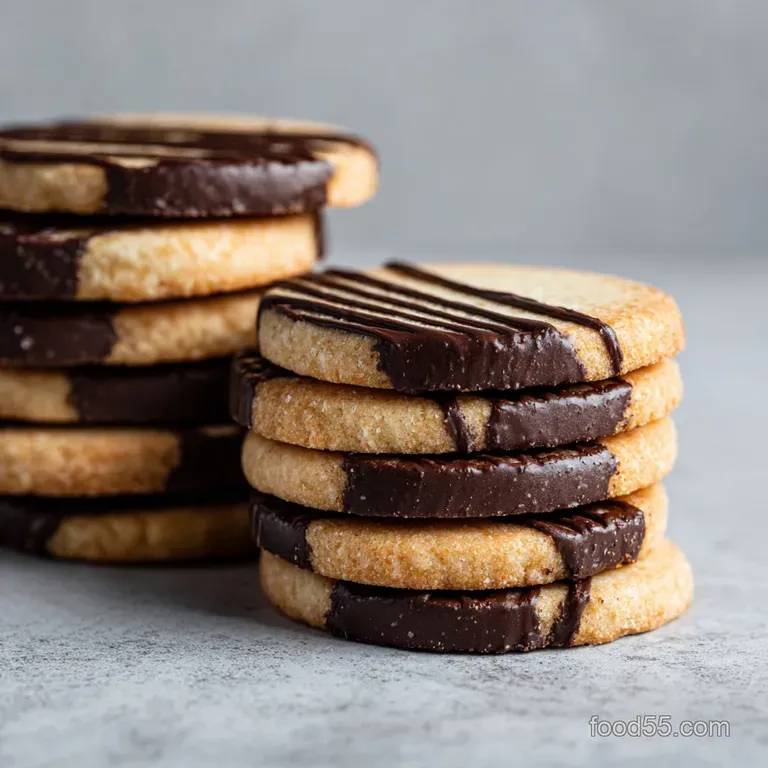
- Capturing the Comfort of Homemade Fudge Stripe Cookies
- The Science of the Perfect Shortbread Snap
- Essential Components for the Classic Fudge Stripe
- Rolling, Baking, and Striping the Cookies
- Troubleshooting and Expert Advice
- Maximizing Freshness and Shelf Life
- Creative Ways to Enjoy Your Chocolate-Striped Biscuits
- Recipe FAQs
- 📝 Recipe Card
Capturing the Comfort of Homemade Fudge Stripe Cookies
That smell. Oh, that deeply comforting aroma of vanilla laced butter hitting the heat is enough to make any day better. Then you add that glossy, dark chocolate coating, and suddenly you are back in fourth grade, trading treats in the lunch line.
We all love the classic version, but let's be honest: the store-bought ones are often too waxy and lack that satisfying snap . This recipe for Fudge stripe cookies changes everything.
It’s a simple, robust shortbread base paired with a professional looking, set chocolate coating. It looks fancy, but the process is straightforward, fast, and unbelievably cheap compared to buying gourmet biscuits.
I am absolutely evangelical about making these yourself. Trust me on this once you taste these buttery, homemade Fudge stripe cookies , you will never look back. Let’s ditch the waxy nostalgia and bake something truly spectacular.
The Science of the Perfect Shortbread Snap
Why spend the extra time making these when you can grab a bag off the shelf? Because quality matters, my friend. We are focusing on fat and temperature to create the most tender, crisp, and perfect Fudge stripe cookies imaginable.
The Difference Between store-bought and Scratch Made
The foundational difference lies entirely in the butter. store-bought biscuits rely heavily on shelf stable oils and shortenings for their uniform texture. That's why they often taste a bit flat.
We are using cold, high-quality butter, which, when minimally mixed, guarantees a crumbly, melt-in-your mouth texture that no mass produced cookie can replicate. This depth of flavor is what elevates these homemade Fudge stripe cookies .
A Look at the Cookie's Distinctive Shape
The ring shape isn’t just decorative; it’s structural genius. Punching out the center ensures the shortbread bakes evenly. It also gives the chocolate coating a clear path to cover the entire base without running over the top edges.
Plus, it gives us that lovely, exposed shortbread ring for applying those iconic chocolate stripes later on.
Tools Needed for Baking Success
You need a couple of key items that make this process cleaner. A stand mixer is fantastic for getting the shortbread mixed just right, without overworking the gluten. You also absolutely need two round cutters: one 2.5 inch cutter for the main cookie, and a 1 inch cutter for the center hole.
Pro Tip: If you lack a 1 inch cutter, use the wide end of a sturdy metal piping tip. It makes a perfect, clean punch out for the center of these Fudge stripe cookies .
Achieving the Buttery, Crisp Texture
Shortbread requires cold fat. We are creaming the cubed, cold butter with the sugar, mixing only until just combined. This minimizes air incorporation. Too much air means fluffiness, and we want a snappy, sandy crumb.
Chilling the dough also allows the flour to fully hydrate and the butter to firm up again, making the dough incredibly stable before it hits the heat.
Why We Temper the Fudge Coating
Okay, "tempering" is a fancy word for what we are doing, but the principle is the same: we want glossy, solid chocolate. The real trick here is the addition of coconut oil. It makes the melted chocolate incredibly fluid and easy to dip, and crucially, it helps the fudge set hard and shiny at room temperature.
No waxy, smeared coating here! You want that perfect snap when you bite into these exceptional Fudge stripe cookies .
The Importance of Resting the Dough
I know, chilling time is annoying. I really do get it. But if you try to roll this shortbread dough without chilling it for a full 60 minutes, it will be sticky, soft, and guaranteed to spread into unfortunate blobs when baked. Don't waste your precious ingredients.
Pop the wrapped disks into the fridge, set a timer, and go do the dishes. The wait is essential for maintaining the crispness and the distinctive shape of these mini Fudge stripe cookies .
Essential Components for the Classic Fudge Stripe
Getting the ingredients right prevents so many headaches down the line. We are baking classic shortbread, which relies on a few high-quality basics. If you are going to make the effort for homemade Fudge stripe cookies , make sure your ingredients are top-notch.
Selecting the Right Type of Cocoa Powder
We aren't actually adding cocoa powder to the shortbread base itself we want a clean, pale butter flavor there. However, the quality of the chocolate we use for the coating is critical. Opt for a dark or semi sweet chocolate, 60 70% cacao.
This provides a needed counterpoint to the sweetness of the shortbread, making these better than any commercial Fudge stripe cookies you’ve had. If you prefer a milder chocolate flavor, however, stick closer to 40% cacao, but make sure it’s high-quality baking chocolate.
Flour Options: Achieving the Shortbread Crumb
This is a critical area for shortbread failure. You need all-purpose flour, and you need to measure it correctly. Seriously, spoon the flour into your measuring cup and level it off. If you scoop directly from the bag, you will compact it, adding too much flour.
This results in dry dough that cracks when you roll it and ultimately gives you dense, tough biscuits.
| Ingredient | Role in Shortbread | Substitution Advice |
|---|---|---|
| Cold Butter | Flavor, richness, and structure. | Vegan butter sticks (ensure they are 80% fat). |
| Caster Sugar | Tenderizer; dissolves easily for a fine crumb. | Granulated sugar, pulsed once or twice in a food processor to fine up the crystals. |
| Egg Yolk | Binder; adds richness; prevents the need for excess liquid. | 1 tablespoon full fat cream cheese, softened. |
| Vanilla Extract | Essential flavor base. | Maple syrup (1:1) for a slightly different richness. |
Dairy Details: Butter Temperature Matters
As mentioned before, cold butter is the golden rule for shortbread and making crispy Fudge stripe cookies . Do not let your butter sit on the counter until it's softened, like you would for a chewy chocolate chip cookie. Keep it cold, cubed, and quickly mixed into the sugar.
This ensures that when the dough hits the oven, those tiny pockets of cold butter melt, releasing steam and creating that signature delicate structure.
Optional Extracts and Flavor Boosters
While vanilla is essential, you can definitely play around with other extracts. A touch of almond extract (about 1/4 teaspoon) is gorgeous and complements the deep chocolate flavor.
If you want to make a holiday version, try 1/4 teaspoon of pure peppermint extract, which pairs beautifully with the dark fudge coating for these specific Fudge stripe cookies .
Rolling, Baking, and Striping the Cookies
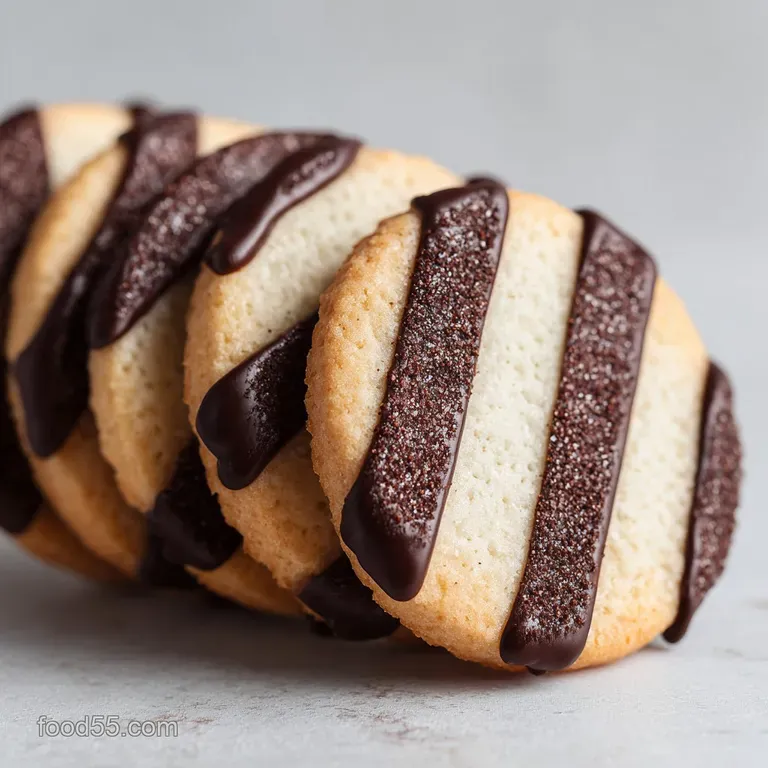
We're in the home stretch! This stage is all about precision and patience. Don't rush the cutting, and definitely don't rush the setting of the fudge.
Preparing the Dough for Uniform Rolling
I always roll my shortbread dough between two sheets of parchment paper. It's a lifesaver! It stops the dough from sticking to the pin and eliminates the need for excess flour on your work surface, keeping your finished biscuits tender. Roll it consistently to 1/4 inch thickness.
If some areas are thicker, they will take longer to bake and you'll end up with unevenly baked Fudge stripe cookies .
The Cold Bake Method for Crisp Edges
After cutting your rings and punching out the centers, arrange them on your parchment lined baking sheets. Now, put the sheets back in the fridge for 10 minutes. This is non-negotiable!
Starting the baking process with cold dough is the absolute best way to prevent spreading and maintain those sharp, clean edges. Bake them until the edges are just barely turning golden brown, about 10– 12 minutes.
Mastering the Chocolate Ring and Stripe Application
Make sure your cookies are completely cool before starting this part. Melt your chocolate and coconut oil until perfectly glossy. Pour half into a shallow dipping bowl, and reserve the rest in your piping bag. Take each ring and dunk the entire bottom surface in the fudge.
Place them fudge side down on a wire rack to set. Once the base is partially set (it should no longer be sticky), flip the Fudge stripe cookies over. Now use the piping bag to quickly and confidently pipe 5 7 straight lines across the shortbread surface. The key is swift, even pressure.
Cooling and Setting the Fudge Coating
Resist the urge to stack these immediately. The fudge needs to set fully we are talking rock hard. You can speed this up by placing the coated cookies on the wire rack in a cool area of your kitchen or the fridge for 5– 10 minutes.
Just don't forget them in the fridge, or they'll start absorbing moisture! Once set, the chocolate on your homemade Fudge stripe cookies should snap when you break them.
Chef's Note: If you are having trouble getting straight lines, practice piping onto a sheet of parchment paper first. It helps build confidence! You can easily scrape that practice chocolate back into the bag.
Troubleshooting and Expert Advice
I've had batches of these melt into amorphous blobs, and I've also had batches where the chocolate looked like a crack mosaic. Learn from my mistakes so your first batch of amazing Fudge stripe cookies is perfect!
Why Your Dough Is Crumbly (And How to Fix It)
Crumbly dough usually means too much flour or not enough mixing time. Shortbread dough doesn't need much mixing, but it does need to come together fully. If it’s dry and refusing to hold a shape, add a tiny splash (1/2 teaspoon) of cold milk or heavy cream. Mix until it just forms a cohesive ball.
If you already baked a crumbly batch, pivot and crush them up to make a crust for a cheesecake!
Preventing the Chocolate Stripe From Cracking
The crack is usually caused by the chocolate cooling down and setting too rigidly while the cookie is still warm and contracting. By using coconut oil, we add flexibility. Also, make sure the cookies are completely cool before dipping.
If the shortbread base is warm, the chocolate will instantly melt a bit into the crumb, making it brittle.
Cutting the Signature Center Hole
Use a clean, sharp cutter for the center hole. A dull or warm cutter will drag the dough, misshaping the cookie. If you notice the dough sticking to the cutter, dip the cutter in flour before punching the next hole.
This guarantees clean edges for your final batch of perfect Fudge stripe cookies .
Maximizing Freshness and Shelf Life
Homemade treats are best when fresh, but these shortbread biscuits keep surprisingly well. These Fudge stripe cookies are sturdy travelers!
Storing Baked Cookies vs. Coated Cookies
Store your finished, fully set Fudge stripe cookies in an airtight container at room temperature. Because they contain almost no moisture, they retain their crispness for a good 5 to 7 days.
If you keep them too cold, condensation will form, leading to soggy shortbread and dull, spotty chocolate. That’s a tragedy we want to avoid.
Freezing the Unbaked Cookie Dough Logs
This is the ultimate convenience trick. Shape your chilled dough disks into 1.5 inch diameter logs. Wrap them tightly in cling film, then foil, and freeze them. They last up to three months! Whenever a craving for homemade Fudge stripe cookies hits, just pull out a log, let it sit for five minutes so it’s sliceable, slice into 1/4 inch rounds, punch the centers, and bake. It’s almost faster than microwaving popcorn. This is a game changer for spontaneous baking, just like my method for quick Strawberry Cake Mix Cookies: Seriously Soft Crinkle Recipe .
The Ideal Beverage Pairings
What do you pair with a cookie this perfect? You need something that can stand up to the dark chocolate and the buttery richness. Skip the lukewarm tea. A strong, dark roast coffee, perhaps an espresso based drink like a Cortado, is ideal.
If you're going non-caffeinated, a cold glass of milk (whole milk is the best) is the classic pairing that truly showcases these buttery, crisp Fudge stripe cookies . (Trust me, the combination is pure bliss.)
Creative Ways to Enjoy Your Chocolate Striped Biscuits
I know, they are perfect as they are. But if you’ve doubled the batch (smart move!), you can get creative.
First, try crushing up any broken Fudge stripe cookies and using them as a crunchy topping for ice cream or yogurt parfaits. It adds amazing texture and that intense chocolate hit.
Second, if you’re a fan of decoration, the shortbread base is super stable. You could use this recipe structure to create shapes for decorating, similar to my steps for making perfectly stable Cut Out Sugar Cookies: The Definitive No-Spread Recipe for Decorating .
These classic shortbread biscuits, enhanced with that glossy, sophisticated fudge stripe, are just better than the store version in every measurable way. They are the perfect embodiment of nostalgia, upgraded.
Go bake a batch of these wonderful Fudge stripe cookies —you deserve that perfect snap!

Recipe FAQs
Why did my shortbread cookies come out soft instead of crisp?
This is usually due to either overmixing the dough, which develops too much gluten, or insufficient baking time. Ensure you bake them until the edges are lightly golden, and allow them to cool completely on a wire rack to promote maximum crispness.
Using high-quality, high fat butter also significantly aids in achieving the desired snap.
My fudge stripe coating looks streaky or dull after setting. What went wrong?
This suggests the chocolate coating was not melted smoothly or was not tempered properly, resulting in cocoa butter separation known as "bloom." To prevent this, ensure absolutely no water contacts the melting chocolate, and melt it slowly over low heat, maintaining a stable temperature for maximum shine.
A tiny bit of coconut oil can also stabilize the melt.
How do I ensure the distinctive ring center doesn't bake closed?
After cutting your rings and punching the center holes, it is crucial to briefly chill the raw dough rounds for 15 to 20 minutes before baking. This rapid chilling helps set the butterfat, preventing excessive spreading in the oven and keeping the center hole perfectly defined.
Additionally, avoid overcrowding your baking sheets.
What is the best way to store these Fudge Stripe Cookies for maximum freshness?
Store the fully cooled and coated cookies in an airtight container at room temperature, making sure the chocolate has hardened completely before stacking. Because they rely on a crisp shortbread base, they should be kept away from excessive humidity or heat.
Stored correctly, they maintain their excellent flavor and crispness for up to 5 to 7 days.
Can I use milk chocolate or white chocolate for the stripes instead of dark fudge?
Absolutely, but be aware that milk and white chocolates contain more sugar and milk solids, making them slightly softer and harder to work with when melted. If substituting, add 1 teaspoon of neutral oil (such as canola or refined coconut oil) per cup of melted chocolate to ensure a smooth, flowing consistency for clean dipping and striping.
Can I prepare the shortbread dough ahead of time and freeze it?
Yes, the dough freezes exceptionally well. Shape the dough into a tight log, wrap it thoroughly in plastic wrap, followed by a layer of aluminum foil, and freeze for up to three months. When you are ready to bake, thaw the log in the refrigerator overnight before slicing and baking as directed.
Can I substitute margarine or a non-dairy butter alternative for the high fat butter?
While possible, traditional shortbread relies heavily on the low water content and high fat of quality butter for its signature crispness and rich flavor. Margarine typically contains more water, which can lead to a puffier or softer cookie texture.
If you must substitute, choose a high-quality vegan butter stick that is specifically designed for baking and has a lower moisture content.
Classic Fudge Stripe Cookies Recipe
Ingredients:
Instructions:
Nutrition Facts:
| Calories | 160 calories |
|---|---|
| Fat | 10 g |
| Fiber | 1 g |
