Johnny Cakes: the Traditional Cornmeal Recipe
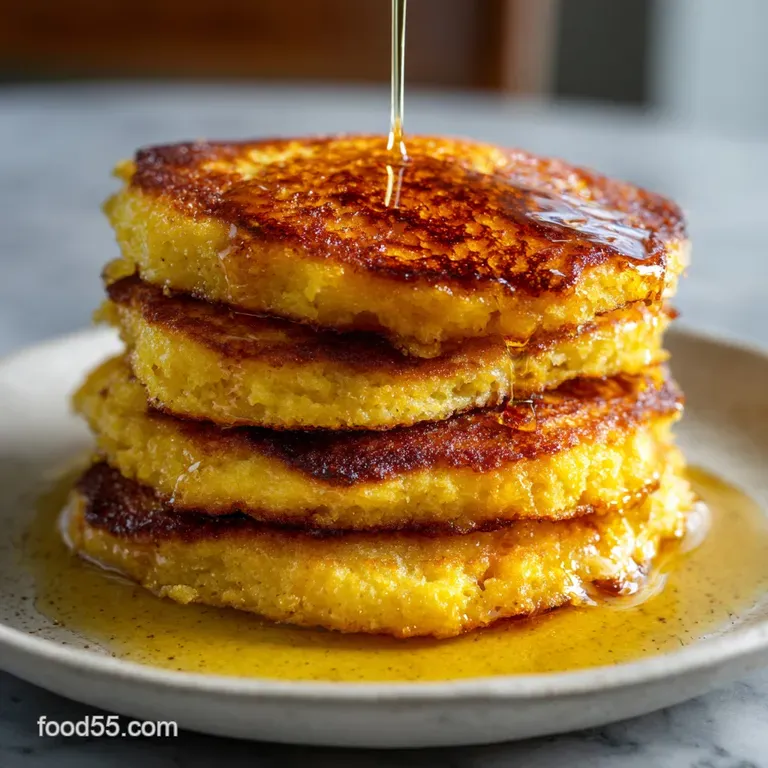
- The Proper Johnny Cakes: Golden Cornmeal Griddle Perfection
- The Science of the Perfect Griddle Cake Texture
- Essential Components and Expert Substitutions
- Mastering the Method: Step-by-Step Guide
- Troubleshooting and Expert Cooking Secrets
- Practical Guide to Storing Leftover Cornmeal Cakes
- Traditional and Modern Pairings for Johnny Cakes
- Recipe FAQs
- 📝 Recipe Card
The Proper Johnny Cakes: Golden Cornmeal Griddle Perfection
That moment when the butter hits the hot griddle and the rustic, nutty aroma of cornmeal starts to fill your kitchen? That’s pure culinary bliss. We’re not talking about those sickly sweet, fluffy breakfast discs today. We are talking about genuine, traditional Johnny Cakes .
These golden flatbreads offer a beautiful, satisfying chew and crispy edges that are absolutely incomparable.
Look, life is busy, but good food doesn't need to be complicated or expensive. This classic recipe, sometimes called the "hoecake," uses pantry staples and minimal effort, giving you a beautiful result whether you need a fast breakfast or a simple, savory side dish for supper.
Trust me, learning how to make Johnny Cakes properly is a skill you won't regret acquiring.
I’ve been making these for years, sometimes failing spectacularly by rushing the process, but I’ve finally nailed the perfect texture. So let's skip the gritty, crumbly failures and get straight to the crisp edged, tender centered griddle cakes that make the best foundation for truly great maple syrup.
This Johnny Cakes recipe is going to change your breakfast game forever.
The Science of the Perfect Griddle Cake Texture
This recipe works because we treat cornmeal like the starchy grain it is, not just like flour. The secret to phenomenal Johnny Cakes isn’t in mixing power or magic leavening; it’s hydration.
What Exactly Is a Hoecake and Why Is It Unique?
A hoecake is essentially a historical name for a type of cornmeal flatbread cooked on a griddle or, originally, on the blade of a hoe over a fire. Johnny Cakes are distinct because they rely heavily on the scalding process.
Unlike standard pancakes which use cold or room temperature liquids to activate baking powder, these need hot liquid to partially cook and soften the cornmeal before they ever hit the pan.
This step is what separates a truly great, smooth Caribbean Johnny Cake Recipe from a disappointing, sandy one.
Why Simple Ingredients Demand Patience and Precision
When you only have four or five core ingredients, every single one matters, and so does the technique. If you try to rush the process of making these particular Johnny Cakes , the cornmeal won’t have time to absorb the liquid fully.
The result is a gritty interior that feels like you’re chewing sand definitely not the goal! You need to allow the starches to swell completely.
Achieving the Tender Interior Through Hydration
The initial boiling liquid we add creates a slurry, often called mush or pone batter . By immediately covering and resting this mixture, we force the cornmeal particles to draw in moisture evenly.
When the batter is properly hydrated, you can add the remaining milk and egg without risking a gritty texture. This process guarantees your Johnny Cakes stay tender on the inside, even with those irresistible crispy edges.
The Maillard Reaction for Golden Edges
The sugar content in this recipe is crucial, not just for flavor, but for achieving that deep, golden brown crust. When the surface of the Johnny Cakes meets the hot fat (butter and oil) on the griddle, the sugars and proteins react, creating that beautiful Maillard reaction.
This is the source of the incredible nutty flavor and the signature snap of perfectly cooked Johnny Cakes .
Essential Components and Expert Substitutions
I know you sometimes find yourself mid-recipe and realize you’re missing one crucial item. Don’t panic! Here are the core needs and the substitutions I actually use.
| Ingredient | My Recommendation | Expert Substitution |
|---|---|---|
| Cornmeal | Fine, white or yellow stone ground meal. | Medium ground cornmeal (polenta may work, but texture will be rougher). |
| Boiling Liquid | Whole Milk (for richness) | Boiling Water (Traditional, produces a crisper cake). |
| Final Liquid | Buttermilk (for tang) | Whole milk, Oat milk, or Soy milk. |
| Fat (In Batter) | Melted Unsalted Butter | Neutral Oil (like canola or avocado). |
| Sweetener | Granulated Sugar | Maple syrup or honey added to the wet ingredients. |
Grinding Grades: Selecting Your Cornmeal Base
The type of cornmeal you choose drastically affects your Johnny Cakes . You absolutely must avoid coarse polenta or coarse stone ground grits unless you’re intentionally going for a much rougher, more rustic texture.
For the classic, smooth Johnny Cakes often associated with New England, look for fine cornmeal. It absorbs the scalding liquid faster and results in a lighter final cake.
The Role of Hot Liquid in Batter Hydration (Water vs. Milk)
You have a choice for the initial scald: boiling water or boiling milk. Using milk, particularly whole milk, yields a richer, slightly creamier batter and a softer final cake. If you want the most historically accurate, thin, and crispy result, boiling water is the way to go.
Either way, that liquid must be boiling —not just hot to truly scald the meal.
Fat Selection for Frying: Butter, Oil, or Lard?
If you are cooking the classic way, lard is actually phenomenal, providing incredible richness and a high smoke point. But for the modern kitchen, I use melted unsalted butter mixed with a splash of neutral oil for frying.
The oil prevents the milk solids in the butter from burning quickly, giving you gorgeous, consistent browning on your Johnny Cakes .
Mastering the Method: step-by-step Guide
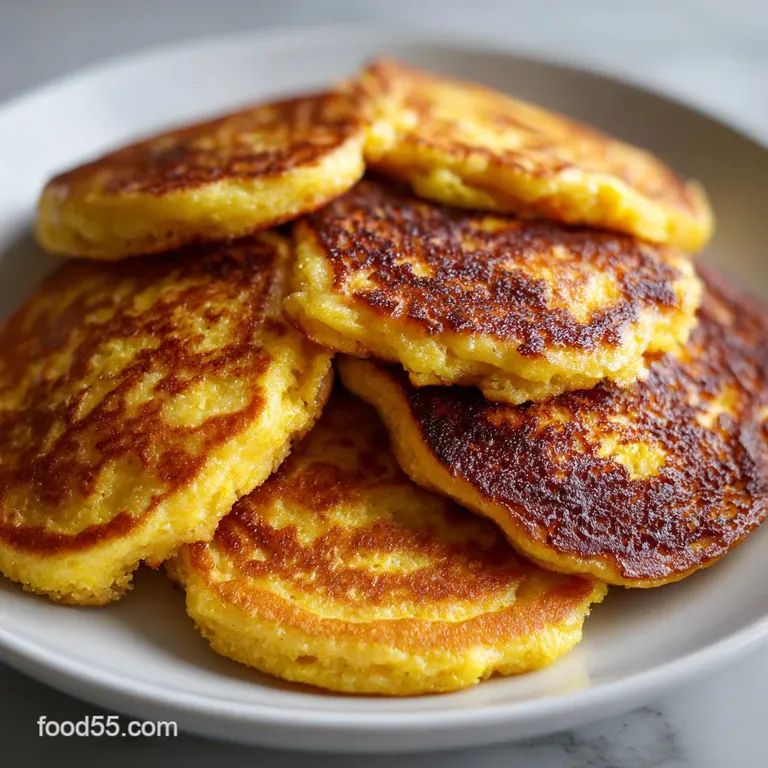
Don't skip the resting step! That is my most important advice for this entire process.
The Critical Batter Resting Phase
This is where most people fail when attempting their first Traditional Johnny Cake Recipe . Once you pour the boiling liquid over the dry ingredients, you’re creating a thick paste. Cover it and walk away for 30 minutes, minimum. Go load the dishwasher, or maybe browse my recipe for Fluffy Whole Wheat Pancakes Recipe A Wholesome Breakfast Staple for next week’s brunch. The point is: let the cornmeal drink! When you come back, the mixture should be cool enough to touch and significantly thicker and softer.
Prepping the Pan and Assessing Temperature
You need a heavy bottomed pan. Cast iron is the gold standard because it holds heat so consistently. Place your pan over medium low heat. The biggest mistake is having the pan too hot. If you drop a tiny bit of batter in and it sizzles violently and browns immediately, the pan is too hot.
You need a gentle, consistent heat that allows the dense Johnny Cakes to cook all the way through before the exterior burns.
Forming and Flipping the Rustic Flatbreads
I use a standard ¼-cup measure to scoop the batter. Unlike standard pancakes that spread on their own, the cornmeal batter is quite stiff. Once you drop the batter onto the oiled griddle, immediately use the back of your spoon or measuring cup to gently push and spread the batter into a thin, rustic oval shape, about ⅛-inch thick.
Keep them thin! These are meant to be dense and crisp, not puffy.
Knowing When They Are Truly Done
You won't see dramatic bubbling like you do with fluffy pancakes. Instead, look for two things: First, the edges of the Johnny Cakes will set and begin to look dry and slightly rough.
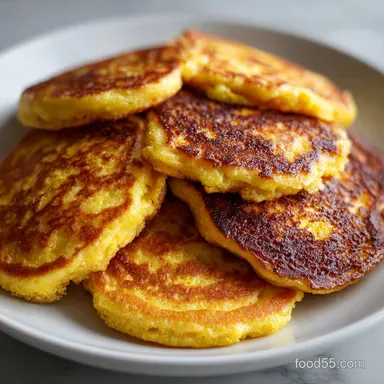
Second, when you peek underneath (after about 3- 4 minutes), the underside should be a deep, beautiful golden brown. Flip them gently; they are denser and less fragile than flour based pancakes. They are done when both sides are deeply browned and the cakes feel firm to the touch.
Troubleshooting and Expert Cooking Secrets
I’ve made every blunder possible with these. I once tried to use coarse grits because I was too lazy to go to the store, and the result was inedible. Learn from my pain!
Fixing a Crumbling or Too-Thick Batter
If you’ve added all the liquid and your batter still seems stiff, crumbly, or won't spread on the griddle, it usually means your cornmeal was either too coarse or you didn't allow enough rest time. Don't worry.
Simply add warm milk (or water) one tablespoon at a time, mixing gently, until the batter is smooth enough to scoop but still holds its shape slightly. It should look like a thick, smooth milkshake before pouring.
Why Your Cakes Are Sticking to the Griddle
They stick for one of two reasons: either your pan wasn't hot enough when the batter went down, or you didn't use enough fat. Don't be shy with the butter/oil mixture. The crisp crust is dependent on the cakes gently frying, not just searing. Always refresh the fat between batches.
The Importance of Even Heat Distribution
If you find that the Johnny Cakes in the middle of your pan are burning while the outer ones are still pale, your pan has hot spots. This is common if you are using a cheaper pan or cooking over a gas flame that’s too high. The fix?
Lower the heat significantly and rotate the cakes halfway through the cooking time for the first side. This ensures that every cake achieves that perfect, deep color.
Practical Guide to Storing Leftover Cornmeal Cakes
Best Practices for Freezing Cooked Cakes
But does it freeze well? You bet. If you find yourself with extra Johnny Cakes (a rare occurrence in my house), they are perfect candidates for freezing. Let them cool completely on a wire rack.
Layer them between sheets of parchment paper and store them in a freezer safe zip-top bag or airtight container. They will last beautifully for upgto three months.
Reheating Without Drying Them Out
The key to reheating without losing that crucial crispness is avoiding the microwave, which turns them into sad, damp little hockey pucks.
Chef's Note: For the best results, reheat Johnny Cakes in a 350°F (175°C) oven for about 8- 10 minutes, or toast them in a dry skillet over medium heat until they are warmed through and the edges regain their snap. This method works perfectly, whether they came from the fridge or the freezer. These reheated cakes are just as fantastic as a side for leftover stew or maybe alongside my Golden Crusted Oven Baked Mashed Potato Cakes Easy Leftover Dish if you're doing an all-carb evening!
Traditional and Modern Pairings for Johnny Cakes
Historically, these were a necessity, often served with whatever meat was available or simply molasses. Today, they are a delicacy that can be dressed up or kept simple.
The Essential Syrup: Maple or Molasses?
While pure maple syrup is the modern classic pairing, if you want a true taste of colonial history, you must try these with good quality, robust molasses. The bitterness and deep flavor of the molasses cut beautifully through the slight sweetness and rich butteriness of the Johnny Cakes .
You can also mix half maple syrup and half molasses for a complex, balanced topping.
Other Serving Ideas
- Savory Suppers: If you make the savory variation, serve them immediately alongside a hearty bowl of chili, thick soup, or any slow cooked pulled meat. The crunch and density of the cake stands up wonderfully to wet dishes.
- Fruit Toppings: A classic choice is pairing these with seasonal fruit. We love them with a simple warm apple topping, though they’d also be stunning alongside a small plate of berries, especially if you are also serving something like my Apple Crisp Mini Cheesecakes: Easy, Individual Fall Dessert Recipe later!
- The Jamaican Influence: If you're exploring the regional variations like the Jamaican Johnny Cakes , remember they are often slightly softer and richer, sometimes fried more like a doughnut or served with saltfish.
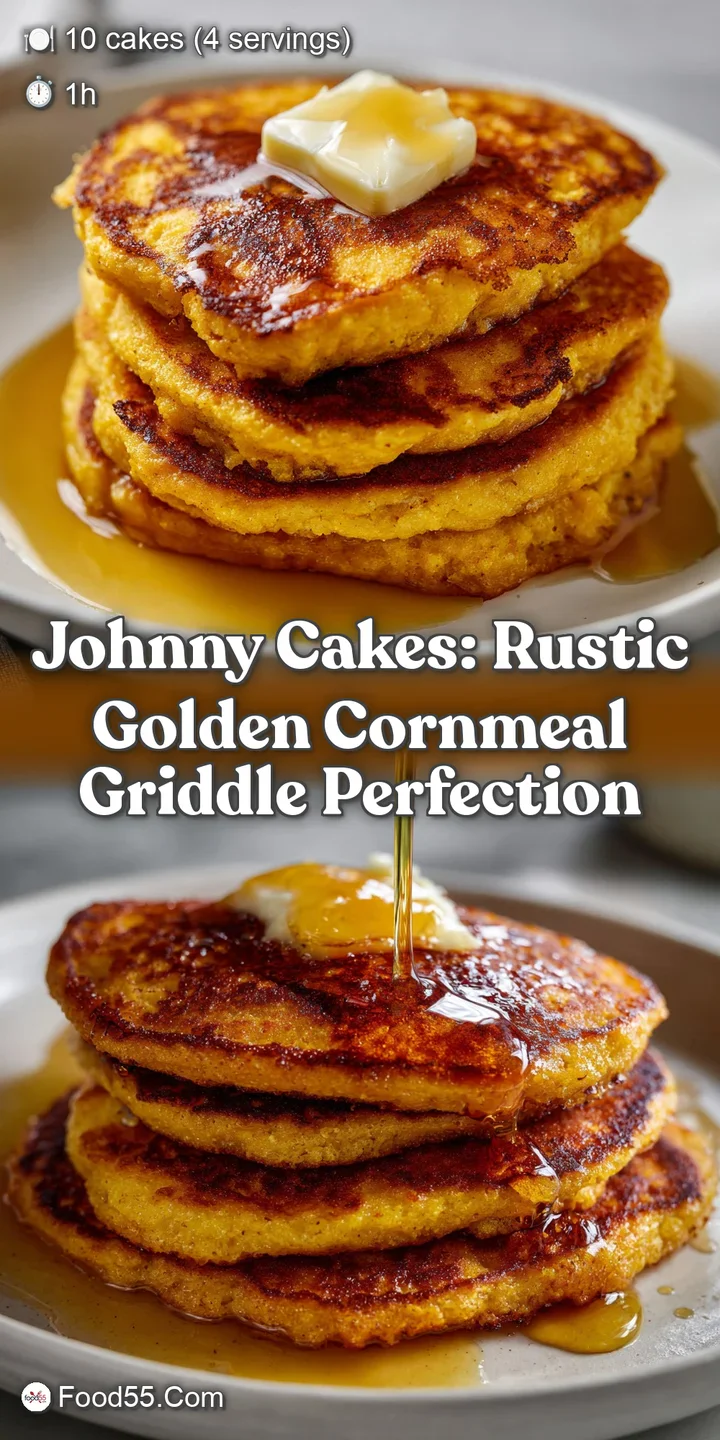
- Butter is Mandatory: Seriously, don't skimp on the butter. A thick pat melting into the porous surface of the hot Easy Johnny Cake Recipe is necessary for peak enjoyment.
I hope you ditch the thick, spongey pancakes just for a day and give these historic, beautifully simple, crispy edged Johnny Cakes a try. They are honest food at its very best. Happy cooking, my friend!
Recipe FAQs
Why are my Johnny Cakes grainy or crunchy instead of tender?
This is usually due to insufficient soaking time, which is crucial when working with cornmeal. Cornmeal needs at least 10 15 minutes, or up to 30 minutes for coarse grinds, to fully hydrate in the liquid before cooking.
Ensure you allow the batter to rest before pouring it onto the griddle to achieve that characteristic tender crumb.
My Johnny Cakes are burning on the outside before the center cooks. What's the best cooking temperature?
Your griddle temperature is likely too high; Johnny Cakes require a lower, slower cook than traditional flour pancakes. Cook them on medium low heat (around 300°F/150°C) to allow the internal structure to set without scorching the exterior.
This slow cooking method ensures they achieve a beautiful, even golden brown color.
Can I use regular all-purpose flour instead of cornmeal in this recipe?
No, substituting flour for cornmeal would change the dish entirely. The signature rustic texture, subtle sweetness, and historical essence of Johnny Cakes come solely from the cornmeal base. Using only flour would result in a standard, modern pancake instead of the flatbread staple this recipe intends to create.
What is the best way to store or freeze leftover Johnny Cakes?
Allow the cakes to cool completely, then stack them with small squares of parchment paper between each one to prevent sticking. They will store well in an airtight container in the refrigerator for 3 4 days.
For longer storage, freeze them for up to 2 months and reheat them gently in a toaster oven or on a lightly oiled skillet until warmed through.
How can I make this recipe completely vegan or dairy-free?
Making them dairy-free is quite simple: substitute standard cow's milk with an unsweetened plant milk, such as oat or soy, or even just hot water, which is common in older recipes. Ensure you replace any butter used in the batter or for griddling with a neutral vegetable oil or vegan margarine.
My batter seems too thick to spread thinly. How should I adjust the consistency?
The batter should be slightly runnier than standard pancake batter, thin enough to spread easily into a flat circle when poured. If the mixture is too thick, simply add liquid (milk or water) one tablespoon at a time until the desired, pourable consistency is reached.
Remember that coarse cornmeal will always absorb more liquid than fine cornmeal.
What are some traditional or non-traditional flavor variations I can try?
Traditionally, Johnny Cakes were savory, often served with meat or soup; you can add a pinch of salt and pepper for a rustic meal accompaniment. For modern sweet variations, try adding a tablespoon of maple syrup to the batter, or mix in finely grated lemon zest or a handful of dried cranberries for brightness.
Classic Golden Johnny Cakes Recipe
Ingredients:
Instructions:
Nutrition Facts:
| Calories | 153 kcal |
|---|---|
| Protein | 3.3 g |
| Fat | 9.2 g |
| Carbs | 13.6 g |
