Thanksgiving Stuffing: the Ultimate Sourdough, Sage, and Sausage Casserole
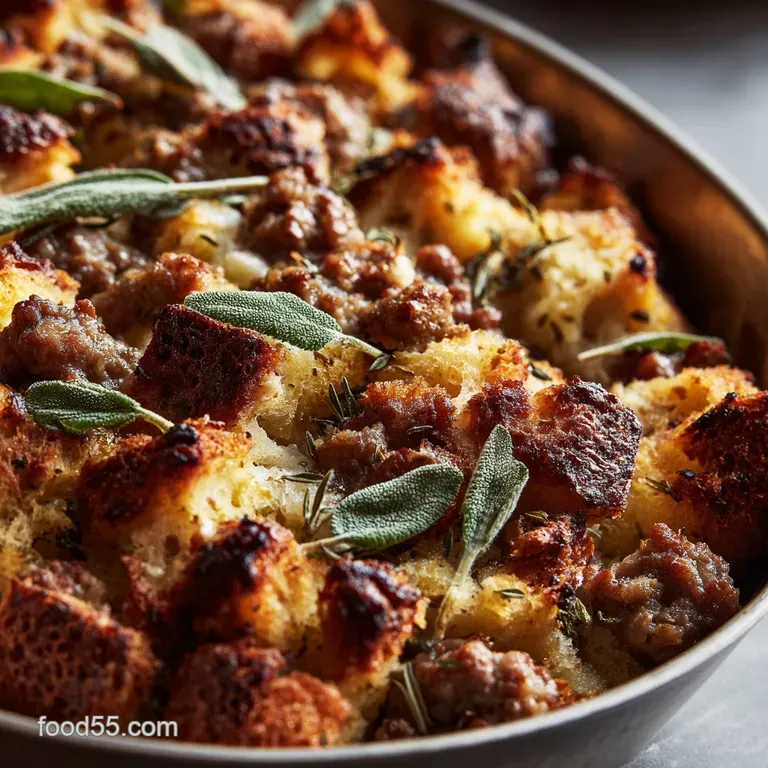
- The Ultimate Sourdough Stuffing: Perfecting Your Thanksgiving Side Dish
- The Science of Sourdough Stuffing: Texture and Flavor Layers
- Ingredients List and Essential Prep Notes
- Chef's Method: Making the Best Thanksgiving Stuffing
- Troubleshooting and Expert Advice for Perfect Stuffing
- Make-Ahead, Storage, and Reheating Guide
- Pairing Your Classic Sage and Sausage Stuffing
- Recipe FAQs
- 📝 Recipe Card
The Ultimate Sourdough Stuffing: Perfecting Your Thanksgiving Side Dish
Is there anything better than the smell of baking Thanksgiving stuffing hitting you when you walk in the door? That rich, savory aroma of sage and browned butter is, in my opinion, the true star of the holiday.
We’re talking about a golden, crunchy crust giving way to a deeply moist, flavour packed interior. Forget the turkey; this side dish is where the magic happens.
For years, I made dry, dusty, flavorless stuffing, trying to cram too many things into the mix. This recipe is the antidote to all that stress, proving that the best stuffing recipes for Thanksgiving don’t need to be complicated.
It’s fast, forgiving, incredibly budget friendly, and perfect for making ahead which, trust me, is a complete lifesaver when the big day rolls around.
I’m going to share all my hard won secrets, from drying the bread properly to achieving that glorious crispy top every single time. Stop stressing about soggy stuffing casserole this year.
Let’s make the absolute best classic thanksgiving stuffing recipe with sausage you’ve ever tasted.
The Science of Sourdough Stuffing: Texture and Flavor Layers
This isn't just about mixing ingredients; this is about intentionally building layers that play off each other. The key to a truly fantastic thanksgiving stuffing recipe lies in understanding what creates texture versus what locks in moisture. We want both!
Why We Bake Stuffing Outside the Bird
Listen up: we are making stuffing, not dressing, but we are definitely baking it in a casserole dish. Baking stuffing outside the bird is crucial for food safety reasons, yes, but mostly for quality.
Baking it separately means you get an edge-to-edge, crispy golden crust that just isn't possible when it steams inside the turkey cavity. Who wants mushy bread? Not me.
The Importance of the Sourdough Base
Using sourdough bread changes the game entirely. Its sturdy, slightly chewy crumb stands up beautifully to the heavy moisture of the stock and butter, preventing that dreaded "bread pudding" texture.
The natural tang also cuts through the richness of the sausage and butter, giving the final stuffing casserole a complex, sophisticated flavor profile.
Achieving the Golden Crust and Moist Interior
We use a two-stage cooking process here. First, we bake the stuffing covered with foil to trap steam and ensure every single piece of bread is hydrated and soft on the inside. Then, we yank that foil off for the last 15 minutes, allowing the top layer to crisp up and brown dramatically.
Don't skip the foil step! It’s non-negotiable for success.
The Maillard Reaction: Browning the Sausage
We are not just cooking the sausage; we are intentionally browning it deeply. That gorgeous caramelization the Maillard reaction creates hundreds of complex, savory flavor compounds that form the foundation of this dish.
Scraping up the browned bits (the fond ) from the pan after cooking the sausage is where all the deep umami flavor lives.
Mastering Moisture Retention with Stock
The amount of stock you use is the single most critical factor in texture. Too little and it’s dusty; too much and it’s soup. I always start with three cups, toss vigorously, and then use the last cup only if the mixture looks dangerously dry.
The bread should be moist when squeezed, but never dripping.
The Role of Fresh Sage in Complexity
Fresh sage is the quintessential Thanksgiving herb, period. Its earthy, slightly peppery aroma permeates the entire dish and pairs perfectly with the fatty pork sausage. Skip the dried stuff if you can; the fresh leaves make all the difference in achieving that signature, festive fragrance.
Ingredients List and Essential Prep Notes
A great recipe starts with great ingredients, but I always have alternatives ready in case you're short on time or specific items. This is your shopping list for the best thanksgiving stuffing around.
Choosing the Right Sausage Variety
I recommend using a good quality mild Italian sausage or breakfast sausage labeled "Sage." That keeps the flavor classic and hearty.
| Ingredient | Substitution | Why it Works |
|---|---|---|
| Mild Italian Sausage | Chorizo or Andouille (Reduce added salt) | Adds a lovely heat and strong flavor backbone. |
| Fresh Sourdough Loaf | Ciabatta, Challah, or French Baguette | Needs a sturdy bread with structure to resist mushing. |
| Unsalted Butter | Duck Fat or high-quality Olive Oil | Provides rich flavor and the fat necessary for the aromatics. |
| Fresh Sage | Dried Thyme (Use 1/3 the amount) | Offers an earthy counterpoint, but fresh is better here. |
| Chicken Stock | Vegetable Broth or Turkey Neck Broth | Any quality liquid will work, but savory stock is essential for depth. |
Sourdough Preparation: Staling vs. Drying
I’ll be honest, simply letting the bread sit out overnight usually isn't enough, especially if you live somewhere humid. You need to properly dry your bread cubes in a low oven.
This transforms the bread into little sponges ready to soak up all that buttery, herby liquid without dissolving. Toast those cubes!
Chef's Note: If you try to toast the bread the same day you cook, crank your oven to 300°F (150°C) and bake the cubes for 45– 60 minutes, rotating them halfway through. They should feel hard and light, like giant croutons.
Aromatic Breakdown: Onion, Celery, and Butter Ratios
We use an outrageous amount of butter here, and that’s the secret sauce. The butter serves two purposes: carrying the flavor of the sage, thyme, onion, and celery, and coating the bread cubes to prevent drying out. Don't be shy with the aromatics; they melt down into pure flavor.
Stock Versus Broth: Why the Difference Matters
While both work, stock usually contains gelatin and has been cooked longer, giving it a much richer mouthfeel and deeper savoriness than simple broth. If you’ve got homemade stock, use it! It genuinely transforms the final texture and flavor of your thanksgiving stuffing .
Chef's Method: Making the Best Thanksgiving Stuffing
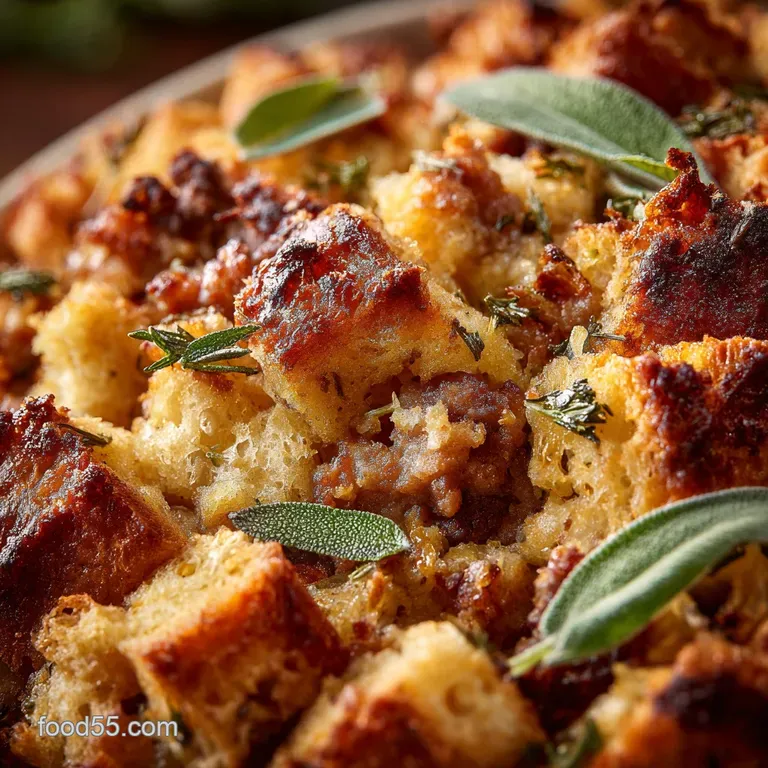
Ready to crack on? This recipe follows a logical flow: dry, sauté, mix, and bake. We’re aiming for maximum flavor impact with minimum effort.
Step 1: Building the Sausage and Aromatic Foundation
First, grab your big skillet and melt a couple tablespoons of butter. Toss in your sausage, breaking it up completely as you go, and let it brown deeply until it’s beautifully crisp.
Pull the sausage out and dump it right into your mixing bowl leave that gorgeous fat and those browned bits (the fond ) right in the pan. Now, melt the rest of the butter and sauté the diced onion and celery until they are completely softened and translucent.
This takes about 8– 10 minutes, but don't rush it. Stir in your fresh sage, thyme, and garlic right at the end; cook just until you smell them (about 60 seconds), then immediately combine this mixture with the sausage in the bowl.
Step 2: Combining and Integrating the Liquids
Add your thoroughly dried sourdough cubes to the sausage mixture. Toss everything really well so the butter and herbs coat the bread evenly. Next, pour the lightly whisked eggs over the top and toss again; the eggs are our main binding agent. Finally, drizzle in the warm stock, starting with three cups.
Toss, toss, toss! The trick is to ensure every piece is moistened, but the bottom of the bowl shouldn't have a puddle of liquid. If you squeeze a handful and it doesn't hold its shape, add the remaining stock bit by bit.
Step 3: Oven Temperature and Baking Time
Preheat your oven to 375°F (190°C). Lightly grease a 9x13 baking dish and scoop the stuffing mixture in. Crucially, do not pack it down. We want it loose and fluffy so steam can circulate. Cover the dish tightly with foil and bake for 30 minutes.
Then, remove the foil and bake for another 15– 20 minutes until the top is crunchy and a gorgeous deep golden brown.
Troubleshooting and Expert Advice for Perfect Stuffing
I’ve ruined enough batches to know exactly where things go wrong, so here are my top tips for dodging disaster. If you are looking for a completely stress free day, I highly recommend checking out my tips for MakeAhead Thanksgiving Dressing for a Stress Free Holiday Feast .
How to Prevent a Soggy Bottom
The soggy bottom is the enemy, right? It happens because the bread wasn't dry enough or you added too much stock. The Fix: If you realize your mixture is too wet before baking, spread it out on a baking sheet and bake it for 10 minutes to dry it slightly.
Alternatively, stir in an extra handful of toasted, dried bread cubes to absorb the excess moisture before baking.
Achieving Maximum Crust Crispiness
If your stuffing is perfectly cooked but the top is still pale, your oven temperature might be a bit low, or you didn't leave it uncovered long enough. The Fix: Turn the heat up to 400°F (200°C) for the last 5– 7 minutes.
If your top is browning too fast but the interior isn't warm, cover it loosely with foil until the internal temperature reaches 165°F (74°C).
Adjusting Seasoning Before Baking
People often forget to taste the mixture before it goes in the oven! Since we are using raw eggs, only taste a small amount of the dry mixture and the liquid separately, or gently cook a spoonful of the combined mixture in a pan first.
The Fix: If it tastes bland, it needs more salt. If it tastes dull, add a dash of black pepper or a pinch of finely grated lemon zest to brighten the herbs.
make-ahead, Storage, and Reheating Guide
Thanksgiving is chaotic enough, so let this dish do some heavy lifting. Prep is your friend!
Safely Preparing Stuffing 24 Hours Ahead
You can easily assemble the entire thanksgiving stuffing with sausage mixture and put it right into the baking dish up to a full day ahead of time. Just make sure you cover it tightly and refrigerate it.
Crucially, add 1/4 cup extra stock right before covering it, as the bread will soak up more moisture while chilling. Bake cold stuffing covered for 40 minutes instead of 30, and then finish uncovered.
Freezing Cooked Stuffing for Later Use
Yes, this freezes beautifully! Let the cooked stuffing casserole cool completely. You can freeze it right in the casserole dish (if oven safe) or portion it into airtight containers. It lasts perfectly well for up to three months. Thaw it overnight in the fridge before reheating.
Revitalizing Leftovers in the Oven
Microwaving stuffing turns it rubbery and sad. We don't want that! The best way to enjoy leftovers is to cut the stuffing into thick squares, place them on a baking sheet, and drizzle them lightly with extra stock or melted butter.
Bake at 350°F (175°C) for 10– 15 minutes until crispy on the edges and heated through. You can also form them into thanksgiving stuffing balls and bake them until golden!
Pairing Your Classic Sage and Sausage Stuffing
This is a rich, hearty, deeply savory dish. It needs something bright and sharp to balance it out.
Ideal Sauces and Gravies
A thick, homemade turkey gravy is mandatory. The creamy, rich texture blends perfectly into the stuffing's crispy crust. For something sharp, a tart homemade cranberry sauce provides a necessary acidic contrast.
Beyond Thanksgiving: Roast Dinner Pairings
While this is the ultimate Thanksgiving stuffing recipe , it works year round. It’s fantastic alongside roast chicken or a pork loin. For other delicious side ideas that really stand up to the richness of this stuffing, consider my recipe for Thanksgiving Side Dishes: Crispy Maple Glazed Sprouts with Pancetta — that sweet and salty crunch is incredible with the sage. If you prefer an entirely different bread base, you might love my Stuffing Recipe: Sourdough with Deep Caramelized Onions instead!
Recipe FAQs
Why did my stuffing come out dry and crumbly instead of moist?
Dryness is usually caused by insufficient liquid or inadequate soaking time before baking. Ensure the bread cubes are completely saturated by the stock; they should feel moist but not dripping wet before the pan goes into the oven.
If it appears dry when mixing, whisk in an additional half cup of warmed chicken or vegetable stock.
Can I prepare this stuffing mixture ahead of time?
Yes, you can prepare the stuffing mixture completely up to 24 hours in advance. Combine all the solids (bread, sausage, aromatics) and refrigerate them in the baking dish, covered tightly.
Wait to add the stock until about 30 minutes before you plan to bake it, as adding the stock too early can result in a soggy final texture.
Is it safe to bake this Sourdough Stuffing inside the turkey?
While this recipe is designed for superior crispness when baked outside the bird, you can stuff the turkey if desired. If baking inside, ensure that the stuffing’s internal temperature reaches 165°F (74°C) before serving to eliminate the risk of foodborne illness.
Note that stuffing baked inside the turkey will be much softer and denser.
What is the best way to substitute the sausage for a vegetarian version?
To maintain the savory, meaty depth without using sausage, sauté a generous mix of wild mushrooms (such as shiitake, cremini, or portobello) with the onions and celery. Ensure you cook the mushrooms long enough to release all their moisture and achieve a lovely brown caramelization before adding them to the bread mixture.
Always use vegetable stock for vegetarian preparation.
I don't have sourdough. Can I use a different type of bread?
Absolutely; any hearty, day-old bread works well, such as ciabatta, challah, or brioche. If you use a lighter, softer bread, you must reduce the amount of stock, as these breads absorb liquid much faster and can quickly become mushy.
Make sure to cut the bread cubes to the size specified and thoroughly dry or toast them first.
How do I achieve that beautiful, golden, crunchy crust on top?
The crust is achieved by baking the final 10 to 15 minutes uncovered and ensuring there is enough fat used in the recipe. If the top begins to brown too quickly, you can loosely tent the dish with foil.
For extra richness and crunch, you can dot the top surface with a tablespoon or two of extra butter before the final uncovered bake time.
How should I store and reheat leftover stuffing?
Store leftovers in an airtight container in the refrigerator for up to four days. To reheat, the best method is to cover the stuffing tightly with foil and bake at 300°F (150°C) until thoroughly heated, which usually takes 20 to 30 minutes. Remove the foil for the last five minutes to refresh the crust.
Classic Sourdough Thanksgiving Stuffing
Ingredients:
Instructions:
Nutrition Facts:
| Calories | 400 kcal |
|---|---|
| Fat | 20 g |
| Fiber | 4 g |
