Rich Cookie Dough Cheesecake Project
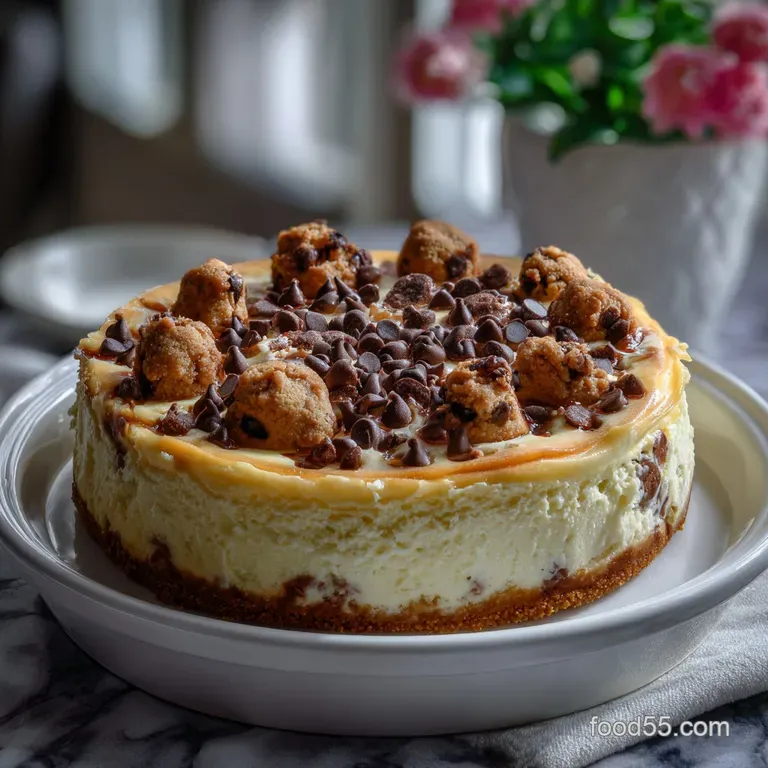
- Effort/Time: Intermediate skill level; 1 hour 55 mins total (plus overnight chill).
- Flavor Hook: Malty brown sugar dough meets tangy, high-fat cream cheese and a cocoa-rich cookie shatter.
- Perfect for: High-stakes birthdays, holiday showstoppers, or a make-ahead weekend indulgence.
- The Ultimate Cookie Dough Cheesecake (Cheesecake Factory Style)
- Why This Works: Balancing Richness and Texture
- The Science of Why it Works
- Essential Ingredients and Smart Substitutions
- Step-by-Step Instructions for a Perfect Cookie Dough Cheesecake
- Expert Tips and Common Mistakes to Avoid
- Storage and Freezing Guidelines
- Serving Suggestions for a Stunning Presentation
- Recipe FAQs
- 📝 Recipe Card
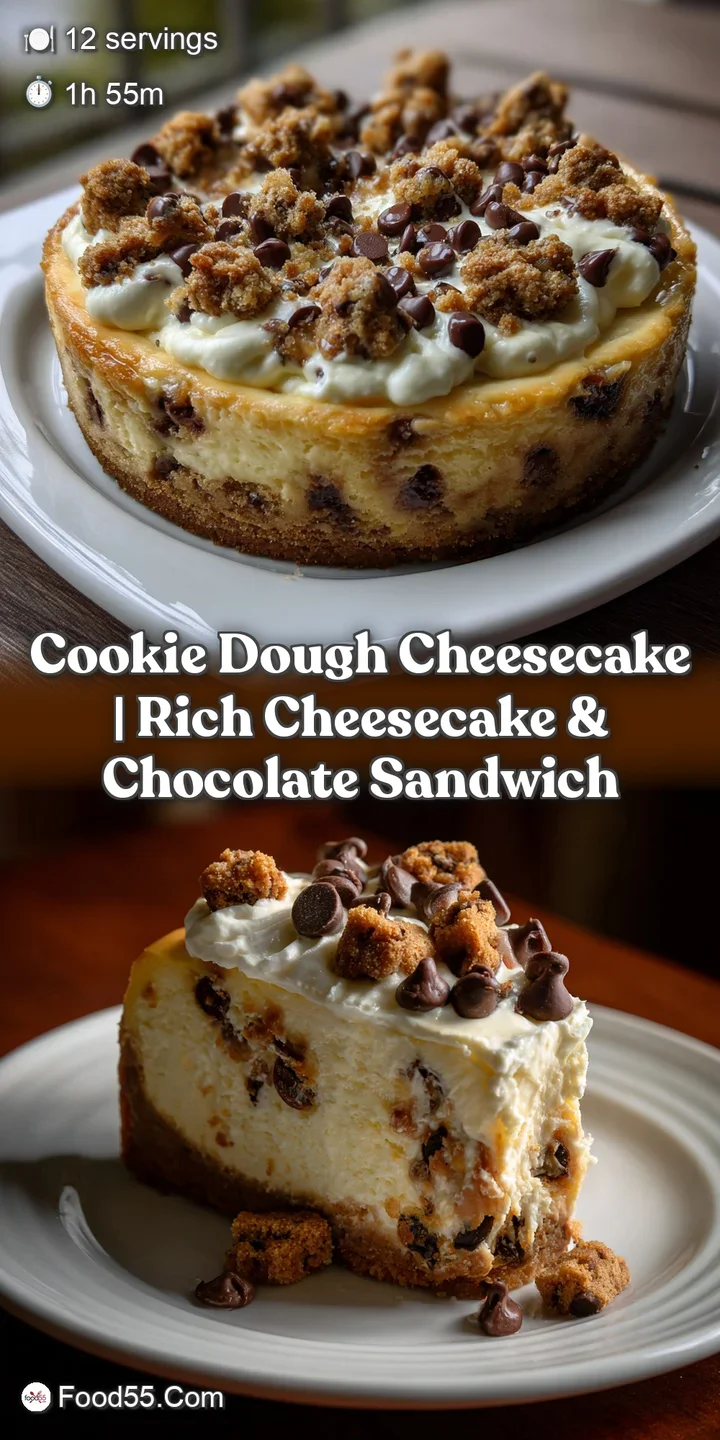
The Ultimate Cookie Dough Cheesecake (Cheesecake Factory Style)
Nothing ruins a mood faster than a Cookie Dough Cheesecake that looks like a tectonic map of the San Andreas Fault. I’ve been there pulling a beautiful cake out only to watch it split down the middle because I rushed the cooling process.
It's heartbreaking to waste 32 oz of premium cream cheese on a dessert that ends up dry and grainy.
I spent years obsessing over the physics of the "jiggle." We’re looking for a center that wobbles like Jell-O but doesn't ripple like water. By mastering the water bath and the exact temperature of your dairy, you’ll achieve a Cookie Dough Cheesecake Recipe that rivals any professional bakery.
The secret isn't just in the sugar; it’s in the science of protein denaturation. We’re going to build a stable emulsion that suspends chocolate chips without them sinking to the bottom of the pan. Let's get into the technicals so your next bake is a guaranteed win.
Why This Works: Balancing Richness and Texture
Recreating the Iconic Restaurant Flavor Profile
Most homemade versions fail because they lack the acidity to cut through the heavy fats. We utilize 1 cup of full fat sour cream to introduce lactic acid, which breaks down the heavy richness of the 32 oz of cream cheese.
This creates a balanced "tang" that prevents the Cookie Dough Cheesecake from feeling cloying after three bites.
The edible dough chunks are specifically engineered without eggs to remain soft even after the second bake. By using heat treated all-purpose flour, we ensure a safe, grittiness free texture that mimics the raw dough experience.
This contrast between the silky custard and the chewy dough is what defines the Cookie Dough Cheesecake Factory Recipe.
The Physics of a Perfect New York Style Base
A "Masterclass" level cheesecake depends on the structural integrity of the egg proteins. When you beat 4 large eggs into the batter, you’re creating a network that traps fat and moisture.
If you overbeat them, you incorporate too much air, leading to a "soufflé" effect where the cake rises and then collapses.
To achieve that dense, creamy mouthfeel, we mix on low speed only. This prevents the protein web from becoming too elastic. By adding 1/4 cup of all-purpose flour to the final batter, we provide just enough starch to "grab" onto the moisture, preventing the Cookie Dough Cheesecake from weeping or becoming soggy during the 1 hour 15 mins cook time.
Why the Chocolate Sandwich Cookie Crust is Essential
The crust isn't just a container; it's a structural foundation. We use 24 Chocolate Sandwich Cookies (like Nabisco Oreos) because the cocoa heavy wafers have a lower moisture content than Graham crackers. This results in a "shatter" texture that stands up to the heavy filling.
When mixed with 5 tbsp of melted unsalted butter, the sugars in the cookie cream and the fats in the butter create a moisture barrier. This prevents the cheesecake batter from soaking into the base, ensuring the crust remains crisp even after 48 hours in the fridge. For a similar cocoa based experience, you might also love my Oreo Cheesecake: The Best Classic Baked Showstopper Dessert Recipe.
The Science of Why it Works
- Emulsification Strategy: Room temperature fats (70°F) allow the lecithin in the 4 large eggs to bond water and oil molecules into a singular, velvety liquid.
- Starch Gelatinization: The 1/4 cup of flour in the batter absorbs excess moisture as it heats, preventing "weeping" (syneresis) during the cooling phase.
- Maillard Reaction: Heat treating the 1 cup of flour for the dough at 350°F for 5 minutes slightly toasts the starches, deepening the nutty flavor profile.
The Science Behind Philadelphia Cream Cheese
- What It Does
- Acts as the primary structural and flavor base for the custard.
- The Chemistry
- As a lactic acid-set cheese, its high fat-to-protein ratio allows for a stable emulsion when heated slowly.
- Why This Matters
- Using full fat varieties ensures a higher "slip" on the palate and prevents the graininess common in low-fat substitutes.
The Science Behind Diamond Crystal Kosher Salt
- What It Does
- Enhances the perception of sweetness and suppresses the bitterness of the chocolate chips.
- The Chemistry
- Salt ions bridge the gap between sugar molecules and taste receptors, amplifying flavor signals to the brain.
- Why This Matters
- It prevents the Cookie Dough Cheesecake from tasting one-dimensional, making the chocolate "pop."
The Science Behind Heat Treated Flour
- What It Does
- Provides the safe-to-eat bulk for the Cookie Dough Cheesecake Bites hidden inside the cake.
- The Chemistry
- Heating flour to 160°F denatures enzymes and eliminates potential pathogens like E. coli.
- Why This Matters
- It ensures the "raw" dough chunks are biologically safe while maintaining a soft, non-gritty texture within the baked cake.
Essential Ingredients and Smart Substitutions
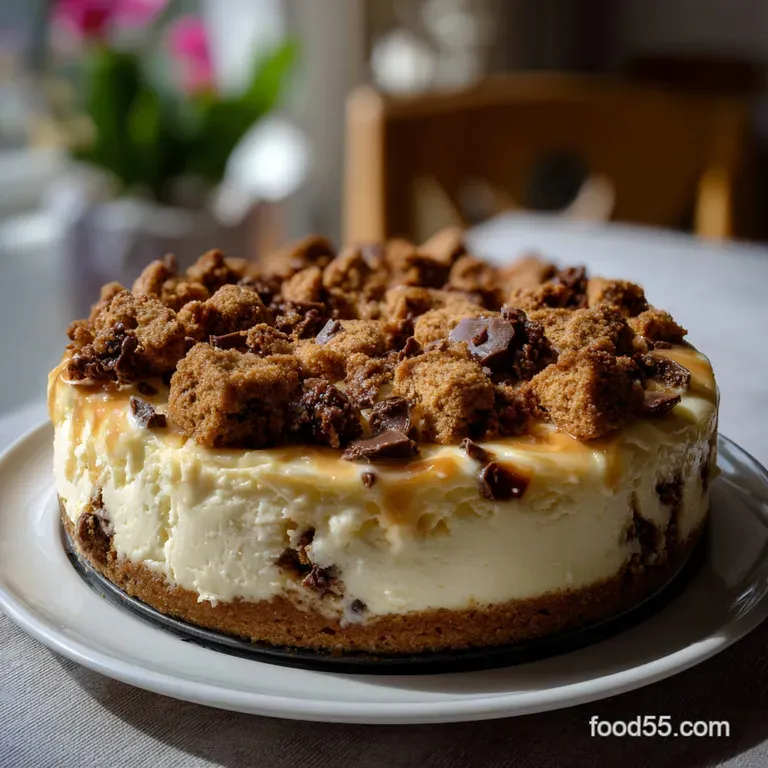
Choosing the right brands, like Ghirardelli Mini Semi Sweet Chocolate Chips, ensures the chocolate melts at the correct rate. The "mini" size is non-negotiable larger chips carry too much mass and will sink through the batter before it sets, leaving you with a naked top and a cluttered bottom.
| Original Ingredient | Substitute | Why It Works |
|---|---|---|
| 32 oz Full fat Cream Cheese | Neufchâtel Cheese | Same texture, slightly lower fat; results in a lighter, less "heavy" mouthfeel. |
| 1 cup Full fat Sour Cream | Plain Greek Yogurt | High protein and acidity mimic the tang and structure of sour cream perfectly. |
| 5 tbsp Unsalted Butter | Salted Butter | Adds a savory depth; omit the 1/2 tsp salt in the dough if using this. |
| 24 Chocolate Sandwich Cookies | Chocolate Teddy Grahams | Similar cocoa profile; use 260g by weight for a moisture rich, denser crumb than cookies. |
Crafting Heat Treated Edible Cookie Dough Chunks
To make the dough for this Cookie Dough Cheesecake Recipe, start by toasting 1 cup of AP flour in the oven at 350°F for 5 minutes. Let it cool completely. Cream 1/2 cup softened unsalted butter with 1/2 cup brown sugar and 1/4 cup granulated sugar.
This high ratio of brown sugar adds molasses notes and keeps the dough moist.
Stir in 2 tbsp whole milk, 1 tsp vanilla extract, and 1/2 tsp salt. Fold in 3/4 cup mini semi sweet chocolate chips. Roll these into small, marble sized balls and freeze them for at least 30 minutes.
Freezing the dough prevents it from dissolving into the cheesecake batter, maintaining those distinct "bites" of Dough Cheesecake.
Choosing High Fat Cream Cheese for Maximum Creaminess
The 32 oz of cream cheese must be "block" style, not the whipped tub variety. Whipped cream cheese contains extra air and stabilizers that will cause the cheesecake to puff and crack. I always reach for Philadelphia brand because its moisture content is consistent batch-to-batch.
Ensure the cheese is truly room temperature leave it on the counter for at least 2 hours. If it's cold, you'll end up with tiny lumps of un-emulsified fat that won't melt away in the oven. This is the #1 cause of a "grainy" Cookie Dough Cheesecake.
step-by-step Instructions for a Perfect Cookie Dough Cheesecake
- Pulse 24 Chocolate Sandwich Cookies in a food processor until fine crumbs form. Note: Fragmenting the cocoa wafers increases surface area for the 5 tbsp melted butter to coat, creating a sturdier base.
- Press crumbs into a 9 inch springform pan and bake at 350°F for 10 minutes. Note: Par-baking sets the butter/sugar bond, preventing a "soggy bottom" when the liquid filling is added.
- Beat 32 oz cream cheese and 1 cup sugar on low speed for 2 minutes until velvety. Note: Low speed prevents excess air incorporation, which is the primary cause of surface cracking.
- Whisk in 1 cup sour cream, 1 tbsp vanilla, and 1/4 cup flour until just combined. Note: Adding flour at this stage stabilizes the emulsion before the eggs are introduced.
- Add 4 large eggs one at a time, mixing only until the yellow disappears. Note: Over mixing eggs creates a leavening effect that ruins the dense New York style texture.
- Fold in the frozen cookie dough chunks gently by hand using a rubber spatula. Note: Hand folding prevents the dough from breaking apart and streaking the white batter with brown sugar.
- Pour batter over the crust and place the pan inside a larger roasting tray filled with 1 inch of hot water. Note: The water bath (bain marie) regulates temperature, ensuring the edges don't overcook before the center sets.
- Bake at 325°F for 1 hour 15 mins or until the edges are set but the center still jiggles. Note: The residual heat (carryover cooking) will finish the center as it cools slowly.
Chef’s Tip: To prevent the "Water Bath Disaster," wrap the bottom of your springform pan in two layers of heavy duty aluminum foil. For extra security, place the pan inside a slow cooker liner bag before putting it in the water.
Expert Tips and Common Mistakes to Avoid
The cooling process is just as important as the baking. If you take the Cookie Dough Cheesecake directly from the oven to the counter, the rapid temperature drop will cause the cake to shrink and crack. Turn off the oven, crack the door slightly, and let it sit inside for 1 hour.
This slow decline in temperature allows the protein structure to settle gently.
| Problem | Why It Happens | The Fix | Pro Protocol |
|---|---|---|---|
| Surface Cracks | Thermal shock or over mixing eggs. | Leave in oven with door cracked for 1 hour. | Use a Lodge Cast Iron Skillet on the rack below for better heat distribution. |
| Lumpy Batter | Cold cream cheese or eggs. | Ensure all dairy is 70°F before mixing. | Use a laser thermometer to verify ingredients are at room temp. |
| Sinking Dough | Chunks were too large or not frozen. | Roll dough balls to 1/2 inch and freeze 30 mins. | Toss frozen dough in a teaspoon of flour before folding into batter. |
Myth: You can speed up the chilling process in the freezer. Truth: Freezing a warm cheesecake disrupts the fat crystallization, leading to a "rubbery" texture. It must spend 6 8 hours in the fridge first.
Myth: The water bath is optional. Truth: Without a water bath, the dry heat of the oven will bake the outside faster than the inside, leading to a "browned" edge and a cracked top.
If you're short on time but still craving these flavors, you might want to try my No Bake Cookie Dough Cheesecake Triple Chocolate, No Oven Needed. It skips the water bath drama entirely.
Storage and Freezing Guidelines
Maintaining Freshness in the Refrigerator
Store your Cookie Dough Cheesecake in the refrigerator for up to 5 days. Keep it in the springform pan base and cover it tightly with plastic wrap or place it in an airtight cake carrier.
The fats in the cream cheese easily absorb fridge odors (like onions or garlic), so a tight seal is mandatory for preserving the vanilla aroma.
How to Properly Freeze and Thaw Individual Slices
This cheesecake freezes beautifully. To freeze individual Cookie Dough Cheesecake Bars, slice the chilled cake and place the pieces on a parchment lined tray in the freezer for 1 hour. Once firm, wrap each slice in plastic wrap, then a layer of aluminum foil.
- Freeze time: Up to 3 months. - Thawing: Transfer to the fridge 24 hours before serving. Do not thaw at room temperature, or the condensation will make the crust soggy.
Serving Suggestions for a Stunning Presentation
Preventing Lumps with Room Temperature Ingredients
If you forgot to take the eggs out, place them in a bowl of warm water for 10 minutes. For the cream cheese, you can microwave it on 10% power in 30 second bursts, but be careful not to actually melt it. The goal is "plasticity," where a finger press leaves a deep indentation without resistance.
Garnishing with Whipped Cream and Extra Chocolate
To get those clean, restaurant quality slices, use a thin bladed knife dipped in hot water. Wipe the blade clean after every single cut. Top the cake with a ring of stabilized whipped cream and nestle extra Cookie Dough Cheesecake Bites on top.
A drizzle of room temperature ganache adds a professional finish that hides any minor surface imperfections.
Whether you're making this as a full cake or cutting it into Cookie Dough Bars, the key is patience. This Cookie Dough Cheesecake is a labor of love that rewards you with every velvety, chocolate studded bite.
Trust the process, watch the jiggle, and get ready for the best dessert of your life. Every slice of this Cookie Dough Cheesecake is a testament to why we love baking precision, science, and a whole lot of chocolate.
Recipe FAQs
What specific type of cream cheese yields the best texture?
Full fat, brick style cream cheese. low-fat or whipped varieties introduce excess moisture and air, compromising the dense New York style base. Ensure bricks are softened completely before mixing to avoid lumps.
Must I use a water bath (Bain Marie) for this cheesecake?
Yes, water baths are mandatory for even cooking. The steam jacket maintains a consistent, gentle heat around the pan sides, preventing surface cracks and curdling. This technique is key for that velvet smooth custard.
Can I use pre-made grocery store cookie dough?
No, raw dough contains leavening agents. Commercial doughs use baking soda/powder which activate rapidly under heat, causing the dough chunks to rise and potentially deflate the cheesecake batter. For optimal flavor matching, use a recipe like our Classic Chewy Chocolate Chip Cookies My FailProof Recipe base.
Why did my cheesecake crack severely despite using a water bath?
Over baking caused excessive moisture evaporation in the custard. The proteins tightened too much, leading to structural failure when cooling rapidly. Try reducing the final bake time by 10 minutes next time.
- Cool oven door propped open slowly
- Chill for minimum 8 hours
- Check water level integrity mid-bake
Is using brown butter crucial for the cookie dough component?
Browned butter imparts a superior nutty depth. While regular melted butter works, browning creates Maillard reaction compounds that mimic the classic Cheesecake Factory profile. This complexity elevates it beyond standard homemade dough.
Myth: You must chill the cheesecake completely before topping it with dough.
Myth: You must chill the cheesecake completely before topping it with dough. Reality: Dough must be added just before the final bake; chilling solidifies the surface, preventing integration. The dough bakes directly into the custard layer.
Should I use springform pans or solid cake pans?
Springform pans are strongly recommended for clean release. Solid pans require inverting the delicate, heavy custard, risking breakage upon unmolding. Springform sides allow easy access, similar to how we manage delicate dough shells in recipes like Best Potato and Cheese Pierogi Recipe Tender Dough.
Cookie Dough Cheesecake Recipe
Ingredients:
Instructions:
Nutrition Facts:
| Calories | 747 kcal |
|---|---|
| Protein | 10g |
| Fat | 51g |
| Carbs | 66g |
| Fiber | 2g |
| Sugar | 48g |
| Sodium | 350mg |
