High Protein Cottage Cheese Pizza Crust
- Time: Active 5 minutes, Passive 25 minutes, Total 30 minutes
- Flavor/Texture Hook: Golden brown edges with a savory, herby finish
- Perfect for: High protein meal prep or a quick weeknight dinner fix
- Making The High Protein Cottage Cheese Pizza Crust
- The Science Behind Perfect Results
- Component Analysis And Role Deep Dive
- Specific Ingredients For This Recipe
- Essential Kitchen Tools To Use
- Bringing The Ingredients Together
- Solving Common Cooking Problems
- Serving Size And Adjustments
- Flavor Variations To Try
- Debunking Kitchen Myths
- Storage And Reheating Guidelines
- Beautiful Presentation Tips
- Recipe FAQs
- 📝 Recipe Card
Making The High Protein Cottage Cheese Pizza Crust
You know that feeling when you're craving a massive slice of pizza but your body is screaming for something a bit more substantial than just empty carbs? I've been there more times than I can count.
Last Tuesday, I stood in my kitchen staring at a tub of cottage cheese, wondering if the internet was lying to me about this "viral" trend. I'd tried the cauliflower versions before, and honestly, they always ended up as a soggy, sad mess that required a fork and a lot of imagination.
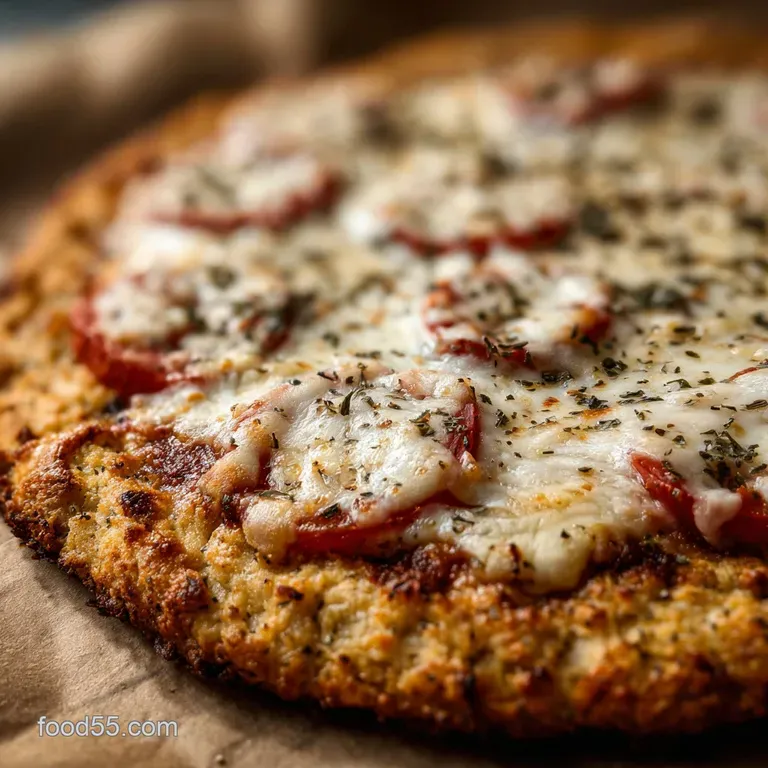
But then, the aroma of toasted garlic and Italian herbs started wafting from my oven. I heard that gentle sizzle as the edges of the cheese began to caramelize against the parchment paper. When I pulled it out, it didn't just look like a pizza base, it actually felt like one.
The edges were slightly crisp, the center was firm, and it didn't crumble under the weight of my favorite toppings. It was a revelation in my own kitchen, and I haven't looked back since.
Trust me on this one, we aren't just making a "substitute" here. We're creating something that stands on its own merits. Whether you're coming home from a heavy lifting session at the gym or just want a movie night meal that won't leave you in a food coma, this recipe is a total winner.
It’s a convivially shared meal that brings everyone to the table, even the skeptics who think cottage cheese belongs solely in a bowl with fruit. Let's get into the nitty gritty of why this actually works.
The Science Behind Perfect Results
The magic of this recipe lies in the way proteins behave under heat. When we blend the ingredients, we're creating a homogenous mixture that allows for even cooking and a consistent bite.
- Protein Denaturation: The proteins in the eggs and cottage cheese uncoil and then cross link during baking, forming a solid, structural lattice that holds the crust together.
- Maillard Reaction: The amino acids in the parmesan and cottage cheese react with the small amount of natural sugars when exposed to high heat, creating that deep savory flavor and golden brown color.
- Moisture Management: Coconut flour acts as a powerful desiccant, absorbing the excess whey from the cheese to prevent the base from becoming "weepy" or soft in the middle.
| Preparation Method | Total Time | Final Texture | Best For |
|---|---|---|---|
| High Speed Blender | 30 minutes | Perfectly smooth, thin, and very flexible | Traditional thin crust lovers |
| Hand Whisked | 35 minutes | Rustic, slightly chunky, and thicker | Those who like a bit of texture |
| Food Processor | 30 minutes | Uniform but slightly more aerated | Maximum crispiness at the edges |
If you find yourself missing the stretch of a gluten based dough, you might occasionally want to revisit the classics. For those days when protein isn't your main goal, I often suggest looking at my and Pizza Dough recipe for that traditional chewy bite we all know and love. But for today, we are focusing on the incredible power of dairy and eggs to give us that satisfied, full feeling.
Component Analysis And Role Deep Dive
Understanding what each piece of the puzzle does helps you become a better cook. We aren't just tossing things in a bowl, we are building a foundation.
| Ingredient | Science Role | Pro Secret |
|---|---|---|
| Cottage Cheese | Primary Protein Base | Use 2% fat for the best balance of moisture and structure |
| Large Eggs | Structural Binder | Ensure they are at room temperature for better emulsification |
| Coconut Flour | Moisture Absorber | A little goes a long way, it prevents a "soggy" center |
| Parmesan Cheese | Flavor and Crispiness | Use finely grated to help the crust brown evenly |
While this recipe is naturally lower in carbs, some people prefer a purely keto approach. If that's you, comparing this to a How to Make recipe for keto specific crusts can help you decide which texture you prefer for your lifestyle.
Specific Ingredients For This Recipe
- 1 cup (225g) cottage cheese, 2% fat: Why this? Provides the high protein bulk and creamy foundation for the entire base. (Substitute: Ricotta cheese for a milder, creamier flavor)
- 2 large eggs: Why this? Acts as the glue that keeps the crust from falling apart. (Substitute: 0.5 cup liquid egg whites for even higher protein)
- 1 tsp garlic powder: Why this? Adds a savory depth that masks the tang of the cheese. (Substitute: Onion powder)
- 1 tsp Italian seasoning: Why this? Gives that classic pizza parlor aroma and flavor profile. (Substitute: Dried oregano and basil mix)
- 0.5 tsp red pepper flakes: Why this? Provides a subtle back end heat to wake up the palate. (Substitute: Smoked paprika for a milder, woodsy heat)
- 0.25 cup (25g) finely grated parmesan cheese: Why this? Adds saltiness and helps create a crispy, golden exterior. (Substitute: Nutritional yeast for a nutty, dairy-free flavor boost)
- 2 tbsp (15g) coconut flour: Why this? Essential for soaking up moisture and adding structural integrity. (Substitute: Oat flour, though it adds more carbohydrates)
Essential Kitchen Tools To Use
You don't need a professional kitchen to make this work, but a few specific items make the process much smoother. I personally use a high speed blender because it makes the texture indistinguishable from a traditional flour based wrap or thin crust.
- Blender or Food Processor: Necessary to get that cottage cheese completely smooth.
- Baking Sheet: A standard rimmed sheet works best.
- Parchment Paper: This is non negotiable. Don't try to use foil or just grease the pan, it will stick.
- Silicone Spatula: Great for spreading the batter thin and even.
Chef Note: If you don't have a blender, you can whisk it by hand, but the "curds" will remain visible. It still tastes great, but the texture will be more like a dense omelet than a pizza crust.
Bringing The Ingredients Together
- Preheat your oven to 400°F. Note: A hot oven is crucial for immediate moisture evaporation.
- Add 1 cup cottage cheese and 2 large eggs into the blender.
- Add 1 tsp garlic powder, 1 tsp Italian seasoning, and 0.5 tsp red pepper flakes.
- Toss in 0.25 cup parmesan and 2 tbsp coconut flour.
- Blend on high for 45 seconds until the mixture is completely silky and pale yellow.
- Line a baking sheet with parchment paper. Note: Ensure the paper lays flat to prevent the batter from pooling.
- Pour the batter onto the center and spread with a spatula until it forms a 10 inch circle.
- Bake for 20 minutes until the edges are dark golden and the center feels firm.
- Remove from the oven and let it sit for 5 minutes. Wait until it settles and slightly hardens.
- Add your toppings and broil for 3 to 5 minutes until the cheese is bubbly and charred.
Solving Common Cooking Problems
Sometimes things don't go exactly as planned, especially when we are working with high moisture ingredients like cottage cheese. The most common heartbreak is the "soggy center." This usually happens if the crust is spread too thick or if the oven temperature isn't accurate.
Solving Soggy Center Issues
If your crust feels floppy or wet in the middle, it simply hasn't lost enough moisture. This can happen if you used fat free cottage cheese, which often has a higher water content than the 2% or 4% varieties.
To fix this, you can flip the crust over carefully and bake for an additional 5 minutes before adding toppings.
| Problem | Root Cause | Solution |
|---|---|---|
| Crust breaks when lifting | Too thin in the middle | Spread more evenly, keeping the center slightly thicker |
| Sticks to the paper | Didn't use parchment | Always use parchment paper, never foil or just oil |
| Too salty | Too much parmesan | Reduce parmesan by half and add a pinch of black pepper |
Common Mistakes Checklist
- ✓ Pat the cottage cheese with a paper towel if it looks very watery before measuring.
- ✓ Use a fresh sheet of parchment paper for every bake to ensure a non stick surface.
- ✓ Don't skip the 5 minute rest time after baking, it's vital for structural setting.
- ✓ Avoid using "wet" toppings like fresh tomatoes without deseeded them first.
- ✓ Preheat the baking sheet in the oven for a crispier bottom.
Serving Size And Adjustments
Scaling this recipe is fairly straightforward, but because it relies on the surface area of your baking sheet, you have to be careful not to overcrowd the pan.
- Scaling Down (1 serving): Use 1 egg and 0.5 cup cottage cheese. Use a small toaster oven tray and reduce baking time by 5 minutes.
- Scaling Up (4 servings): Double all ingredients but bake on two separate trays. Do not try to make one giant pizza, as the center will never get crispy enough to hold.
- Baking for Kids: Reduce the red pepper flakes and increase the parmesan for a more "cheesy bread" flavor that they will love.
| Servings | Cottage Cheese | Eggs | Pan Size |
|---|---|---|---|
| 2 People | 1 cup | 2 Large | 10x15 inch |
| 4 People | 2 cups | 4 Large | Two 10x15 inch |
| 6 People | 3 cups | 6 Large | Three 10x15 inch |
Adding a fresh element to the side can really bring the whole meal together. I love pairing this with a crisp salad or a light vegetable dish. It reminds me of the balance found in my My Family's Favorite recipe which, while much heavier, shares that same comforting cheese forward soul.
Flavor Variations To Try
Once you have the base method down, the world is your oyster. Or your pizza, rather.
The Mediterranean Twist
Swap the Italian seasoning for dried oregano and add a tablespoon of chopped kalamata olives directly into the batter before blending. Top with feta, spinach, and sun dried tomatoes for a bright, tangy experience.
The Nut Free Keto Swap
If you don't like coconut flour, you can use almond flour, but you'll need to double the amount to about 4 tablespoons. The texture will be slightly grainier but very savory and rich.
| Feature | Fresh Home Blend | store-bought Shortcut |
|---|---|---|
| Protein Content | ~25g per serving | ~5-8g per serving |
| Flavor Control | High (adjust spices) | Low (often bland) |
| Cost | Low (basic staples) | High (specialty item) |
Debunking Kitchen Myths
A lot of people think that cottage cheese will always taste like "diet food" or have a sour tang. This is a total myth. When baked at high heat with garlic and parmesan, the tanginess mellows out into a savory, umami rich profile that tastes remarkably like a toasted cheese cracker.
Another common misconception is that you can't get a "crispy" crust without flour. While this won't be as crunchy as a thin crust cracker, the edges become wonderfully "shatter crisp" while the center remains "chewy tender." It’s all about the moisture evaporation during that 20 minute bake time.
Storage And Reheating Guidelines
Storage: This crust keeps surprisingly well. You can store the naked, baked crust in the fridge for up to 4 days. Wrap it tightly in parchment paper and then plastic wrap to keep it from picking up fridge odors.
Freezing: Yes, you can freeze this! Bake the crust, let it cool completely, and freeze it flat between layers of parchment. It will stay good for up to 2 months. Bake directly from frozen at 400°F for 8 minutes before adding toppings.
Zero Waste: If you have leftover batter that isn't enough for a full pizza, pour it into a muffin tin to make high protein "egg bites" or savory breakfast discs. Also, don't toss the whey at the bottom of the cottage cheese container, you can add a splash to your morning smoothies for an extra protein kick.
Beautiful Presentation Tips
We eat with our eyes first, and a pale crust can look a bit unappealing.
The Fresh Finish
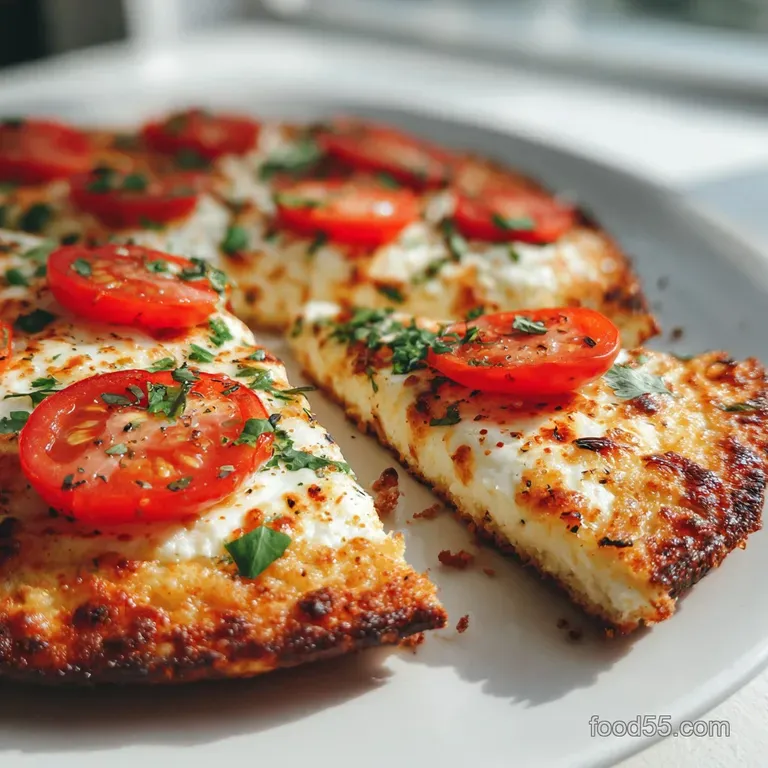
Always add a handful of fresh herbs like basil or parsley after the final broil. The bright green against the golden cheese makes the dish pop and adds a layer of freshness that cuts through the richness of the dairy.
The Uniform Slice
Use a very sharp pizza cutter or even a pair of kitchen shears. Because this crust is softer than traditional dough, a dull knife might tear the base. Cutting it into squares (party style) often provides better structural support for the slices than traditional triangles.
Decision Shortcut: If you want a sturdier slice, add an extra tablespoon of parmesan to the batter. If you want a crispier edge, brush the parchment paper with a tiny bit of olive oil before pouring the batter.
If you want a lighter texture, separate the egg whites, whip them to soft peaks, and fold them into the blended cheese mixture.

Recipe FAQs
Can I make this crust without cottage cheese?
No, cottage cheese is essential for the protein structure. While other creamy cheeses might offer a similar texture, cottage cheese provides the unique protein matrix that holds this crust together. You could explore Lasagna with Cottage Cheese: My Tangy Twist on a Classic for other ways cottage cheese shines.
How do I prevent the crust from being soggy?
Ensure adequate moisture evaporation during baking. Spread the batter thinly and evenly, and bake at a high enough temperature until the edges are deeply golden and the center feels firm. Using 2% or 4% cottage cheese also helps, as fat-free versions can be too watery.
Can I add other flours to the recipe?
Yes, but with adjustments. Coconut flour is very absorbent; if you swap it, you'll need to adjust the quantity significantly. For a different approach to dough, consider the techniques in My Quick Easy Pizza Dough Ready in 30 Minutes, though it's carb based.
How do I get crispy edges on my crust?
Preheating the baking sheet and spreading the batter thinly are key. A hot surface initiates crisping immediately. For extra crispiness, you can lightly brush the parchment paper with olive oil before adding the batter.
Can I make this crust ahead of time?
Yes, the baked crust can be stored or frozen. Bake the crust completely, let it cool, and then store it in an airtight container in the refrigerator for up to 4 days or freeze it for up to 2 months. Reheat thoroughly before topping.
What kind of cottage cheese is best for this recipe?
2% or 4% fat cottage cheese is ideal. These fat contents offer the best balance of moisture and protein for structural integrity. Fat-free versions can result in a soggier crust due to higher water content.
How do I achieve a smooth batter for the crust?
Use a high speed blender or a food processor. Blending for about 45 seconds until completely silky ensures that the cottage cheese is smooth and homogenous, which is crucial for an even, cohesive crust, much like mastering an emulsification in other recipes.
Cottage Cheese Pizza Crust
Ingredients:
Instructions:
Nutrition Facts:
| Calories | 252 kcal |
|---|---|
| Protein | 24.7 g |
| Fat | 11.5 g |
| Carbs | 10.8 g |
| Fiber | 2.8 g |
| Sugar | 3.4 g |
| Sodium | 615 mg |
