Scalloped Potatoes: Creamy and Cheesy
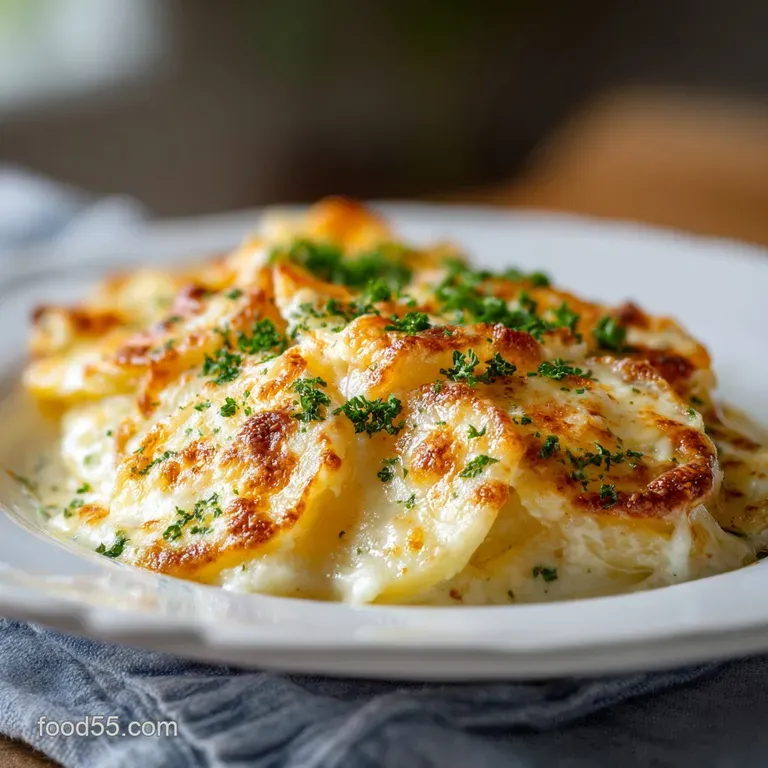
- Time: Active 25 minutes, Passive 75 minutes, Total 100 minutes
- Flavor/Texture Hook: A velvety, garlic scented interior protected by a golden, bubbling cheese crust that offers a satisfying shatter.
- Perfect for: Holiday centerpieces, Sunday family roasts, or whenever you need a hug in a casserole dish.
- Mastering the Best Creamy Scalloped Potatoes
- Science of the Creamy Layers
- Ingredient Deep Dive Analysis
- Selecting the Finest Ingredients
- Necessary Tools for Success
- Step by Step Guide
- Fixing Common Texture Issues
- Recipe Scaling and Adjustments
- Traditional Cooking Myths
- Storage and Leftover Tips
- Winning Serving Ideas
- Recipe FAQs
- 📝 Recipe Card
Mastering the Best Creamy Scalloped Potatoes
There is a specific moment in the kitchen, about forty five minutes after the tray hits the oven, where the air starts to change. It begins with the sharp, savory bite of minced garlic hitting its stride, quickly followed by the warm, woody scent of freshly grated nutmeg swirling through heavy cream.
I remember making these for the first time during a particularly brutal winter storm. The power was flickering, but the oven remained a steady 350°F (175°C), and the rhythmic swish swish of the mandoline became the soundtrack to our evening.
It was the kind of meal that didn't just fill our stomachs; it anchored us.
The real beauty of this dish lies in the contrast. You have these wafer thin slices of Russet potatoes that become incredibly tender, almost melting into one another, while the top layer transforms into a lacy, crispy canopy of sharp white cheddar and Parmigiano Reggiano.
I used to make the mistake of soaking my potatoes in water to keep them from browning, but I quickly learned that the starch on the surface is actually your best friend it's what binds the sauce together into a silky masterpiece rather than a watery mess.
We are going to build this layer by layer, ensuring every single potato round is coated in that garlic thyme béchamel. It’s not a difficult process, but it does require a bit of patience and a gentle hand with the whisk.
Once you pull that bubbling dish out of the oven and see the edges sizzling with clarified butter and browned cheese, you’ll understand why we never settle for the boxed stuff.
Science of the Creamy Layers
Understanding the physics of a potato casserole helps you avoid the common pitfalls of curdling or crunchiness. It is all about managing starch and fat.
- Starch Liquid Synergy: By avoiding the traditional water soak, the surface starch on the Russets acts as a natural thickener that stabilizes the heavy cream and milk as they heat up.
- Roux Stability: Cooking the flour and butter for exactly 2 minutes creates a pale roux that coats fat molecules, preventing the dairy from splitting under high heat.
- Thermal Gradience: Covering the dish with foil for the first 45 minutes creates a steam chamber that softens the cellulose in the potato centers before the top dries out.
- Enzymatic Browning Control: The immediate application of the warm cream sauce over the sliced potatoes prevents oxidation, keeping the interior a beautiful ivory color.
| Method | Time | Texture | Best For |
|---|---|---|---|
| Oven Bake | 1 hour 15 mins | Crispy top, tender layers | Holiday dinners and crowds |
| Stovetop Start | 45 minutes | Uniformly soft, no crust | Quick weeknight side dish |
| Slow Cooker | 4 hours | Extremely soft, very creamy | Saving oven space during parties |
Selecting the right method depends on how much you value that golden crust. While the stovetop is faster, it lacks the concentrated flavor development that occurs during a long, slow roast in the oven. For this recipe, we are sticking to the traditional oven method to maximize the "shatter" of the cheese topping.
Ingredient Deep Dive Analysis
Success begins with the raw materials. Not all potatoes are created equal, and the fat content of your dairy will determine whether your sauce is luxurious or thin.
| Ingredient | Science Role | Pro Secret |
|---|---|---|
| Russet Potatoes | High starch for thickening | Slice to exactly 1/8 inch for even cooking |
| Heavy Cream | High fat prevents curdling | Use room temperature cream to avoid roux shock |
| Nutmeg | Complements dairy proteins | Always grate fresh; pre ground loses its oils |
| Sharp Cheddar | Provides salt and fat | Hand grated melts smoother than bagged shreds |
Every component serves a specific purpose in the structural integrity of the dish. The Russets are the structural engineers, providing the starch needed to turn liquid milk into a thick, cohesive sauce. Without that starch, the heavy cream would simply pool at the bottom of the baking dish.
Selecting the Finest Ingredients
You’ll need 3 lbs Russet potatoes, peeled and ready for the mandoline. Russets are the gold standard here because their high starch content facilitates that velvety texture we’re after. If you try to use waxy red potatoes, the sauce won't cling nearly as well, and you'll end up with a soupier result.
For the sauce base, gather 4 tbsp unsalted butter and 1/4 cup all purpose flour. This creates our roux, the foundation of the béchamel. You will also need 2 cups whole milk and 1 cup heavy cream.
Why this? The 2:1 milk to cream ratio provides richness without being overwhelmingly heavy or cloying. For aromatics, have 3 cloves garlic, minced, 1 tsp fresh thyme leaves, and 1/4 tsp nutmeg, freshly grated.
Seasoning is simple: 1 tsp fine sea salt and 1/2 tsp freshly cracked black pepper.
Finally, the crown of the dish consists of 1.5 cups sharp white cheddar, shredded, and 1/4 cup Parmigiano Reggiano, finely grated. Why this? Cheddar provides the gooey melt, while Parmesan adds a salty, nutty bite that browns beautifully. If you find yourself wanting a different profile, you can swap the cheddar for Gruyère, which offers a more traditional French "gratin" feel with its earthy, nutty notes.
Necessary Tools for Success
A mandoline slicer is arguably the most important tool in this entire process. While you can certainly use a sharp chef's knife, achieving the uniform 1/8 inch thickness required for even cooking is incredibly difficult by hand.
If one slice is 1/4 inch and the next is paper thin, you’ll end up with a mix of mushy and crunchy potatoes that ruins the experience.
You will also need a 9x13 inch ceramic baking dish. Ceramic is preferred over metal because it retains heat more evenly and looks beautiful enough to go straight from the oven to the table. A heavy bottomed saucepan for the sauce and a sturdy whisk are essential for creating a smooth, lump free roux.
Finally, don't forget the aluminum foil it’s the secret to getting the potatoes cooked through before the cheese burns.
Precision Prep and Slicing
Consistency is king here. When using the mandoline, make sure you use the safety guard to protect your fingertips. As you slice the 3 lbs of potatoes, don't worry about them browning slightly; once they are submerged in the sauce, they will be fine. Just remember: do not wash them after slicing!
Building the Béchamel
The roux is a simple 1:1 ratio of fat to flour by volume. As you whisk the 4 tbsp of butter and 1/4 cup of flour, watch for the "pale roux" stage. It should look like wet sand and smell slightly nutty, but it shouldn't turn brown.
Slowly streaming in the 2 cups of milk and 1 cup of cream while whisking constantly ensures a silky texture.
step-by-step Guide
- Slice the potatoes. Peel the 3 lbs Russet potatoes and use a mandoline to slice them into uniform 1/8 inch rounds. Note: Do not soak these in water; the starch is essential for the sauce.
- Make the roux. In a saucepan over medium heat, melt 4 tbsp unsalted butter. Whisk in 1/4 cup all purpose flour and cook for 2 minutes until it smells nutty and looks like wet sand.
- Incorporate the dairy. Slowly whisk in 2 cups whole milk and 1 cup heavy cream. Note: Add the liquid in a thin stream to prevent any lumps from forming.
- Infuse the aromatics. Add 3 cloves minced garlic, 1 tsp thyme leaves, and 1/4 tsp freshly grated nutmeg. Simmer until the sauce is thick enough to coat the back of a spoon.
- Prepare the dish. Grease a 9x13 inch ceramic baking dish thoroughly with butter. Arrange one third of the potato slices in the dish, overlapping them slightly like shingles.
- Season and sauce. Sprinkle the layer with a portion of the 1 tsp salt and 1/2 tsp pepper. Pour over one third of the sauce, ensuring it seeps between the slices.
- Repeat the layers. Create two more layers with the remaining potatoes and sauce. Top the final layer with 1.5 cups shredded cheddar and 1/4 cup Parmigiano Reggiano.
- Cover and bake. Cover the dish tightly with foil. Bake at 350°F (175°C) for 45 minutes until the potatoes begin to soften and the sauce is bubbling.
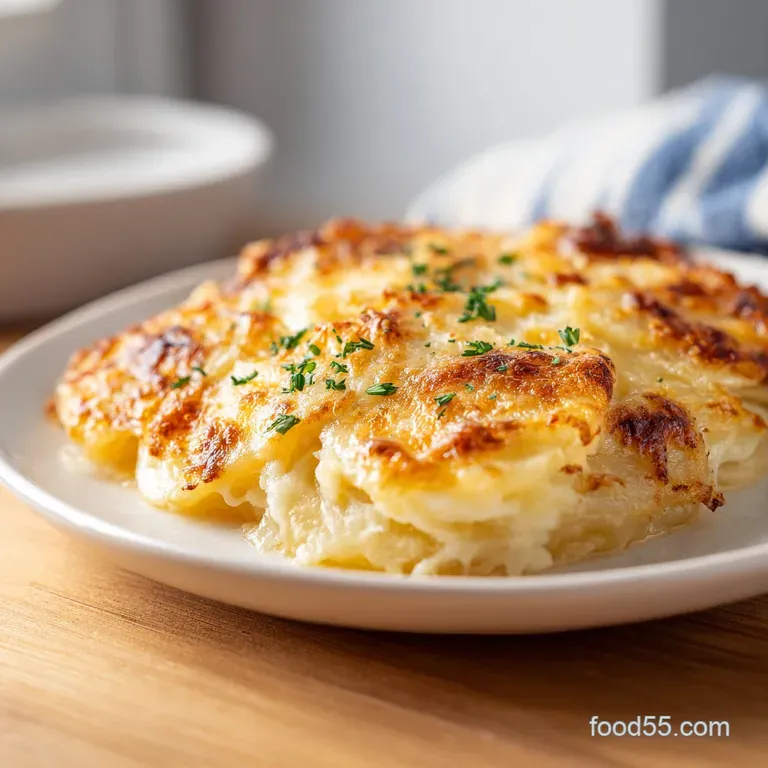
- Finish the crust. Remove the foil and bake for another 30 minutes until the cheese is deep golden brown and the edges are crackling.
- Rest the dish. Let the potatoes sit for 10 minutes before serving. Note: This allows the sauce to set so the layers don't slide apart when sliced.
Fixing Common Texture Issues
If you find that your sauce has "broken" or looks oily, it’s usually because the heat was too high or the dairy was too lean. Using heavy cream is a safety net; the high fat content acts as an emulsifier that holds the sauce together even if the oven fluctuates.
If the sauce looks grainy, it’s often a result of using pre shredded cheese that contains cellulose or potato starch to prevent clumping always grate your own cheese for the smoothest melt.
Potatoes Remaining Firm
Sometimes the center of the dish feels crunchy while the edges are perfect. This happens if the slices are too thick or the dish wasn't covered tightly enough with foil. The steam trapped under the foil is what actually "boils" the potatoes in the cream; without it, the liquid evaporates too quickly, leaving the potatoes undercooked.
| Problem | Root Cause | Solution |
|---|---|---|
| Curdled Sauce | High heat or low-fat dairy | Use heavy cream and keep oven at 350°F |
| Hard Potatoes | Slices too thick | Use a mandoline for 1/8 inch precision |
| Soggy/Watery | Potatoes were soaked | Skip the water soak to keep the starch |
- ✓ Use a mandoline for perfectly uniform 1/8 inch slices
- ✓ Whisk the roux for a full 2 minutes to cook out the raw flour taste
- ✓ Hand grate your cheese to avoid the grainy texture of anti clumping agents
- ✓ Let the dish rest for 10 minutes after baking to allow the starch to set
- ✓ Cover tightly with foil to ensure even steaming of the center layers
Recipe Scaling and Adjustments
When you need to feed a larger crowd, doubling this recipe is straightforward, but you need to be mindful of the baking vessel. For a double batch (16 servings), use two separate 9x13 dishes rather than one deep dish.
A deeper stack of potatoes will take significantly longer to cook in the middle, often resulting in burnt edges before the center is tender.
If you are scaling down for a small family dinner, you can halve the ingredients and use an 8x8 inch square baking dish. Reduce the covered baking time by about 10 minutes, but keep the uncovered time the same to ensure you still get that beautiful golden crust. When halving the eggs in other recipes, you'd beat them and use half, but here, the dairy is easily divisible. For more inspiration on potato centric sides, you might enjoy my skinny potato gratin which uses a lighter sauce but similar layering techniques.
| Servings | Potato Weight | Pan Size | Total Bake Time |
|---|---|---|---|
| 4 People | 1.5 lbs | 8x8 inch | 1 hour |
| 8 People | 3 lbs | 9x13 inch | 1 hour 15 mins |
| 16 People | 6 lbs | Two 9x13 inch | 1 hour 15 mins |
Traditional Cooking Myths
One of the biggest misconceptions in the world of Scalloped Potatoes is that you must soak the potatoes to prevent them from turning gray. While oxidation is real, the graying only happens after long exposure to air.
If you slice your potatoes and immediately layer them with a warm, acidic, or fat heavy sauce, they will stay perfectly ivory. Soaking actually removes the very starch we need to make the sauce creamy.
Another myth is that you can't use milk and must use only heavy cream. While all cream versions (often called "Dauphinoise") are delicious, they can be incredibly heavy. A mix of whole milk and cream, stabilized by a roux, provides a much better balance of flavor and structural integrity.
The roux acts as a bridge, allowing the lighter milk to behave like a thicker cream.
Storage and Leftover Tips
Scalloped potatoes are actually one of those rare dishes that might be better the next day. As they sit in the fridge, the starches continue to settle and the flavors of the garlic and thyme deepen. You can store leftovers in an airtight container in the refrigerator for up to 4 days.
When reheating, I recommend the oven rather than the microwave. Place a portion in a small oven safe dish, add a splash of milk to loosen the sauce, cover with foil, and heat at 325°F (165°C) until bubbling.
Freezing is possible, though the texture of the potatoes can become slightly grainier upon thawing. If you must freeze them, do so after they have been fully cooked and cooled. Wrap the dish tightly in plastic wrap and then foil. To use your scraps and prevent waste, save the potato peels!
Toss them with a little olive oil and salt, and bake them at 400°F (200°C) until crispy for a quick kitchen snack.
Winning Serving Ideas
These potatoes are the ultimate wingman for a heavy protein. They pair beautifully with a garlic rubbed prime rib or a honey glazed ham. Because the dish is so rich and creamy, I usually like to serve it alongside something bright and acidic to cut through the fat a simple arugula salad with a lemon vinaigrette or some roasted balsamic Brussels sprouts work wonders.
If you're looking to create a full spread of textures, these creamy layers contrast perfectly with something crunchy. For another take on the humble spud, you should check out my crispy smashed potatoes which offer a completely different, rugged texture that complements a casual steak night. Whether it's a formal holiday or a cozy Tuesday, these potatoes have a way of making the table feel complete and everyone feel a little more connected.
Recipe FAQs
What are some common mistakes to avoid when making scalloped potatoes?
The biggest error is soaking your potato slices in water. You must retain the surface starch from the 1/8 inch rounds to properly thicken the sauce during the 75-minute total bake time.
What is the best liquid to use in scalloped potatoes?
A combination of whole milk and heavy cream is ideal. Using both provides the perfect balance of richness and body, ensuring the sauce coats the back of your spoon after simmering with the garlic and nutmeg.
What is the difference between scalloped potatoes and au gratin potatoes?
The presence of cheese is the primary differentiator. While both start with a creamy base, au gratin specifically includes a generous layer of sharp white cheddar and Parmigiano Reggiano on top. If you enjoy perfecting this cheesy crust technique, you can apply similar logic to our potato gratin recipe.
How to slice potatoes evenly for the best texture?
Use a mandoline set to exactly 1/8 inch. Uniform thickness is mandatory to ensure every layer reaches tenderness at the same rate during the 350°F baking process.
How to ensure the sauce doesn't clump when making the roux?
Add the milk and heavy cream in a thin, slow stream while whisking constantly. This process emulsifies the liquid into the butter and flour mixture, preventing lumps from forming as the sauce thickens.
How to reheat leftover scalloped potatoes without them drying out?
Place a portion in an oven safe dish and add a small splash of milk. Cover the dish with foil and heat at 325°F until the sauce bubbles and the potatoes are warmed through.
Is it true I should skip the foil cover to get a crispier top?
No, this is a common misconception. You must cover the dish tightly with foil for the first 45 minutes to steam the potatoes, then remove it for the final 30 minutes to achieve that signature golden brown cheese crust.
Creamy Scalloped Potatoes
Ingredients:
Instructions:
Nutrition Facts:
| Calories | 427 kcal |
|---|---|
| Protein | 12.1 g |
| Fat | 25.9 g |
| Carbs | 37.8 g |
| Fiber | 2.3 g |
| Sugar | 3.2 g |
| Sodium | 438 mg |
