Baked Beet Chips the Guide to Making Ultimate Crispy Healthy Chips
- Why Your Snack Drawer Needs These Baked Beet Chips
- Say Goodbye to Soggy: Achieving the Perfect Beetroot Crunch
- Gathering Your Arsenal: Simple Ingredients, Pro Results
- The Precision Cooking Process: From Slicing to Serving
- Step and by-Step Guide to Perfect Baked Beet Chips
- Common Challenges and Expert Recipe Notes
- Expanding Your Snack Repertoire: Pairing and Variations
- Recipe FAQs
- 📝 Recipe Card
Why Your Snack Drawer Needs These Baked Beet Chips
Right then, friend. We need to talk about your snack situation. Are you still buying those bags of highly processed, vaguely dusty potato crisps? Stop it. Just stop. Because I have cracked the code on something genuinely life and changing, something that gives you that serious, salty crunch satisfaction without the massive guilt trip.
I’m talking about Baked Beet Chips.
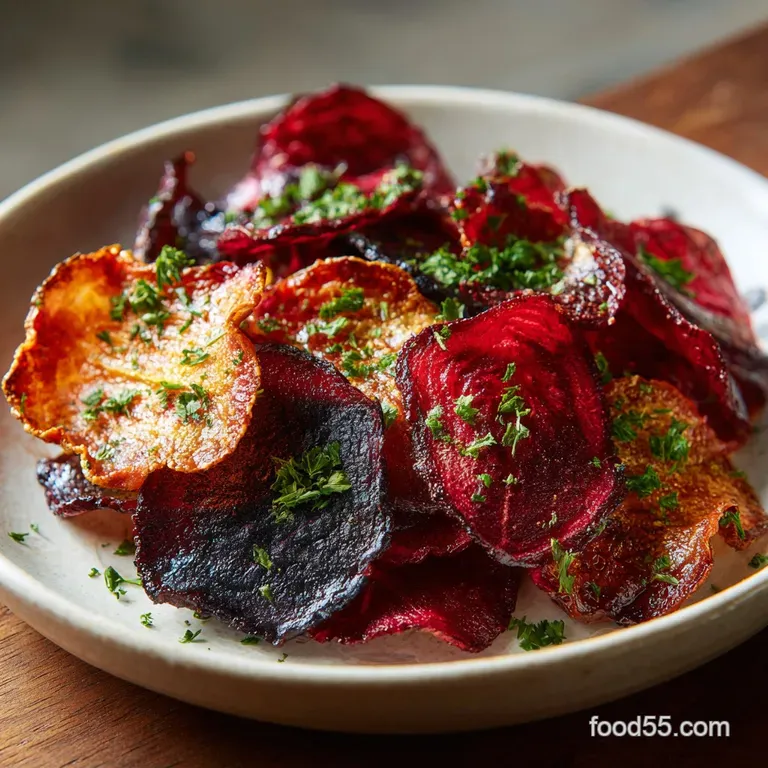
I know, I know. You're probably thinking, "Beets? Will they really get crispy?" Oh, they will. They absolutely will. Once you nail this simple process which focuses entirely on moisture removal —you get a vibrant, deep crimson chip that is earthy, naturally sweet, and incredibly crisp.
They look spectacular on a grazing board (hello, holiday parties!) and they scratch that itch when you need something crunchy with your sandwich. This Baked Beet Chips Recipe is hands and down the best healthy chips recipe I’ve ever developed. Let's crack on.
Say Goodbye to Soggy: Achieving the Perfect Beetroot Crunch
If you've tried making Oven Beet Chips before and ended up with sad, floppy, slightly chewy discs, you are not alone. I’ve been there. My first attempt looked like a tray of sticky, red leather circles. Gross. The mistake most people make is treating beets like potatoes.
They are mostly water, and that water needs to go. Fast.
The Secret to Shattering Crispness (It's All in the Prep)
The secret isn't in the oven temperature, and it’s certainly not in adding more oil. It’s all in the meticulous prep work before they even hit the baking sheet. We are literally wringing the moisture out of these poor root vegetables. Think of this process as gentle dehydration, not over high heat baking.
If you skip this step (which takes 30 minutes, minimum), you’ll just steam the chips in the oven, and steamed vegetables are never crunchy. Trust me on this.
Nutritional Powerhouse: Beets vs. Industrial Potato Crisps
Why bother with Baked Beetroot Chips when you could just grab a bag of salt and vinegar? Well, aside from the fact that industrial crisps are often fried in questionable oils and loaded with artificial flavour dust, beets actually give you something back.
They’re packed with folate and fibre, and baking them concentrates their natural sugars, so you get a satisfying sweet and salty hit. Plus, they look phenomenal. When comparing a homemade healthy crunchy snack to its deep and fried cousin, the difference is huge.
| Feature | Homemade Baked Beet Chips | Standard Fried Potato Crisps |
|---|---|---|
| Cooking Method | Baked, dehydrated, minimum oil | Deep and fried, high fat content |
| Fibre Content | High (around 3g per serving) | Low to negligible |
| Nutrients | Retains Folate, Manganese | Mostly empty calories |
Gathering Your Arsenal: Simple Ingredients, Pro Results
You don't need much, but the few things you do need must be chosen wisely.
Essential Shopping List: Choosing the Best Beetroot Variety
For this Beet Chips Baked recipe, go for standard red beets. Choose ones that are medium and sized, firm, and most importantly, uniform . If you have a few giants and a few tiny ones, they won't slice evenly, and they definitely won't cook evenly. We want tight, round, firm beets.
Skip the golden or striped varieties for now; we want that deep, saturated crimson colour.
Why a Mandoline is Non and Negotiable for Thin Slicing
I know some of you are eyeing your sharp chef’s knife thinking you can manage. You cannot. Sorry, but it’s true. The success of truly crisp Baked Beet Chips rests entirely on achieving an identical, wafer and thin slice (aim for 1mm to 1.5mm).
If one chip is 1mm and the next is 3mm, one will burn while the other is still soggy. A mandoline (and please, use the safety guard!) ensures that perfect consistency. It’s the single biggest investment you can make in your chip game.
Elevating Flavor: Creative Seasoning Blends for Your Chips
Since we use minimal oil (just enough to help the salt stick and prevent burning), the flavour needs to be punchy. Olive oil or avocado oil works best. Avoid coconut oil unless you want a distinctly tropical flavour.
Here are a few seasoning blends that work wonders:
- Classic Salty: Fine sea salt and a little cracked black pepper. Simple. Perfect.
- The Cheesy Dust: Nutritional yeast, garlic powder, onion powder, and fine salt. Gives a surprisingly cheesy flavour without dairy.
- Smoky Paprika Kick: Smoked paprika, a pinch of cayenne, and garlic powder.
- Herby Goodness: Dried dill and finely powdered dried rosemary (fresh rosemary burns too easily).
Related Recipes Worth Trying
- The Best Roasted Orange Beet Salad Sunshine Vinaigrette Goat Cheese — Earthy tender roasted beets meet bright oranges and creamy goat cheese in this easy orange beet salad Dressed with a vibrant honey vinaigrette A fresh salad...
- Golden Crusted Oven Baked Mashed Potato Cakes Easy Leftover Dish — Transform leftover mash into brilliant crispy Oven Baked Mashed Potato Cakes These are easy cheesy and achieve that perfect golden crust without frying No...
- Rustic Italian Baked Sausage and Potato Sheet Pan Dinner — The perfect weeknight solution This foolproof Baked Sausage and Potato Sheet Pan Dinner delivers crispy edges and minimal washing up An easy oven-roasted...
The Precision Cooking Process: From Slicing to Serving
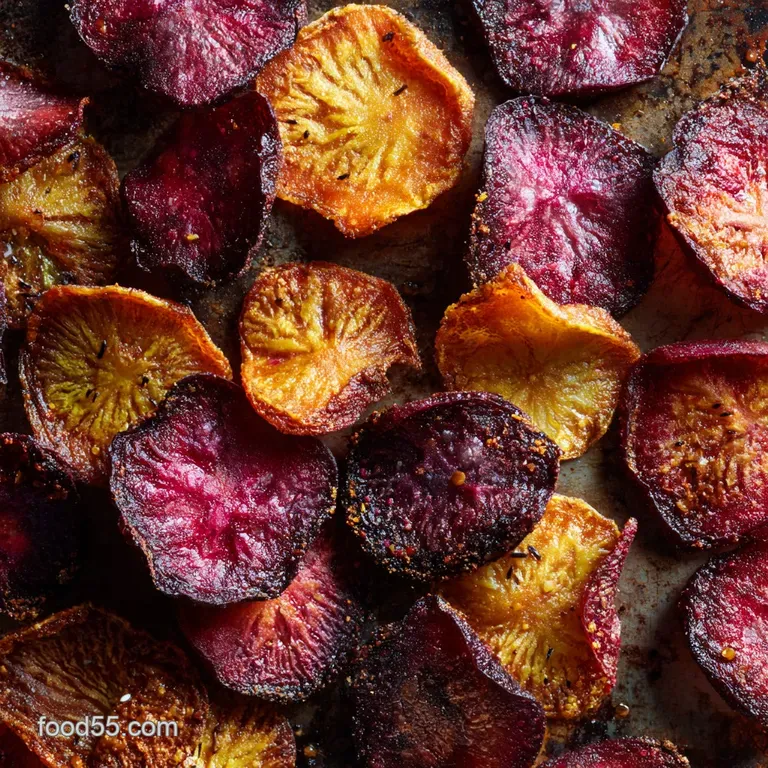
This is where we slow down and pay attention. We're not roasting, we're dehydrating. That means low temperature and long observation time. Prep takes 50% of the effort, but the oven management takes 100% of the focus towards the end. We're shooting for dryness, not caramelization.
Step and by-Step Guide to Perfect Baked Beet Chips
Remember to preheat your oven to 150°C / 300°F. Line two large, rimmed baking sheets with parchment paper.
Mastering the Slicer: Achieving Uniform Thickness
Wash and peel your beets. Wear gloves! I learned that the hard way one Sunday afternoon (my hands were pink until Tuesday). Now, grab that mandoline and slice the beets consistently to 1.5mm. Discard the first and last rounded slices; they won't cook properly.
The Dehydration Phase: Patting Down Moisture is Key
Spread those gorgeous crimson slices out on clean kitchen towels. Lay another towel over the top and press down firmly, leaning on it if you can. Repeat this process until the towels are wet and the beets look visibly dull and dry. Then let them sit out on dry towels for another 30 minutes.
CRUCIAL WARNING: Moisture is the enemy of the crunchy chip. If your beet slices still feel damp or sticky, they are not ready for the oil bath. Do not rush this air and drying stage.
Once dry, toss them gently with the 2 tablespoons of oil until lightly coated you want a thin sheen, not a dripping mess. Add your salt and preferred seasonings. Spread them onto your lined baking sheets in a single layer. Overlapping means steaming!
Oven Management: Setting the Temperature for Maximum Crunch
Bake for 25 minutes. Then, take both trays out, rotate them (move the bottom one up, the top one down), and carefully flip every single chip. This ensures even dehydration. Return to the oven for another 20 to 35 minutes.
Start checking them visually every 10 minutes after the 45 minute mark. They should look slightly shrivelled and have darkened edges, but shouldn't be black.
The Critical Cooling Stage: Do Not Rush the Rack
Remove the trays. The Baked Beet Chips will feel stiff, but they won't be fully crisp. Immediately transfer every chip to a wire cooling rack. This allows air to circulate entirely around them, completing the dehydration process.
They achieve their ultimate shatteringly crisp texture only after they have cooled completely (about 15– 20 minutes). Listen carefully; truly crisp chips make a slight crackling sound as they shrink and cool. It’s brilliant.
Common Challenges and Expert Recipe Notes
The biggest challenge is always the oven. Home ovens fluctuate wildly. If your chips are burning before they crisp up, your oven temperature is too high or uneven. If they are chewy after an hour, you either didn't slice them thin enough, or you didn't dry them enough before baking.
My personal note on this Baked Beet Chips No Oil variation: While you can make them without oil, they tend to stick aggressively to the parchment paper and often burn faster because they lack the slight protective layer the oil provides.
I recommend using the minimal amount listed (2 tablespoons total for 4 beets) for the best texture and release.
Expanding Your Snack Repertoire: Pairing and Variations
Troubleshooting Softness: When Patience Pays Off
Humidity is a killer for any healthy chips recipe. If you store your chips and they absorb moisture and soften a few days later, don't throw them out! Spread them back out on a tray and flash and bake them at a slightly higher temperature (180°C / 350°F) for just 5 minutes.
They will crisp right back up.
Storage Secrets: Maintaining the Crunch for Weeks
Once your chips are 100% cooled, they must go immediately into an airtight container. A Ziploc bag is fine, but a sturdy container with a clip and down lid is better. Store them at room temperature, away from the stove or sink, where humidity is highest.
They should easily last 1 2 weeks, provided you don't eat them all first (which you probably will).
Understanding the Nutritional Benefits of Beets
Beyond the flavour, these are genuinely good for you. Beets are a great source of natural nitrates (good for blood pressure) and manganese. You're consuming a fibre and rich vegetable in a fun, addictive form. This is snacking done right.
Beyond the Beet: Exploring Other Root Vegetable Chip Recipes
Once you master the art of the Oven Beet Chips, you can apply this dehydration technique to almost any root vegetable. Parsnips and sweet potatoes are next level. Just remember the thickness rules.
| Vegetable | Ideal Slicing Thickness | Flavour Notes |
|---|---|---|
| Beets | 1mm 1.5mm | Earthy, naturally sweet |
| Parsnips | 1mm 2mm | Nutty, slightly spicy |
| Sweet Potato | 1mm 1.5mm | Very sweet, requires higher salt/spice |
| Carrots | 1mm (must be thin) | Very sweet, great with ginger or curry powder |
Recipe FAQs
Why are my beet chips chewy and not shattering crisp like proper crisps?
Chewy chips mean there’s still moisture lurking about. Ensure you dry the slices meticulously for 30 minutes before baking and, crucially, remember they only fully crisp up once they’ve cooled completely on the wire rack patience is key here!
How should I store the Baked Beet Chips to keep them crunchy for later?
The secret is keeping moisture out! Store them in an absolutely airtight container at room temperature once fully cool; if they soften due to humidity, a quick 5-minute blast in a hot oven (180°C / 350°F) will easily revive that glorious crunch.
What’s a good savoury flavour variation if I fancy something other than just salt and pepper?
Absolutely! Try the Rosemary and Balsamic variation, where the fresh herb and tangy vinegar note work beautifully; it offers a sophisticated profile that pairs wonderfully with a mature Cheddar.
Is there a trick to stopping the vibrant beetroot from staining my hands and worktops?
Yes, the beetroot is a proper nightmare for staining! For serious preparation, treat it like a hazard and wear thin disposable gloves while peeling and slicing; otherwise, immediately scrub any surface with soap and cold water before the pigment sets.
I’m trying to cut down on fat. Can I skip the oil entirely?
While you can certainly reduce the oil to just a light spritz, skipping it entirely is a risk; the fat helps prevent sticking, promotes even browning, and is crucial for achieving that satisfying "crisp" texture, much like a proper potato snack.
Crispy Baked Beet Chips Recipe
Ingredients:
Instructions:
Nutrition Facts:
| Calories | 129 kcal |
|---|---|
| Protein | 2.4 g |
| Fat | 7.4 g |
| Carbs | 14.8 g |
