Crispy Sesame Balls (Jian Dui): the Dim Sum Classic Red Bean Dessert
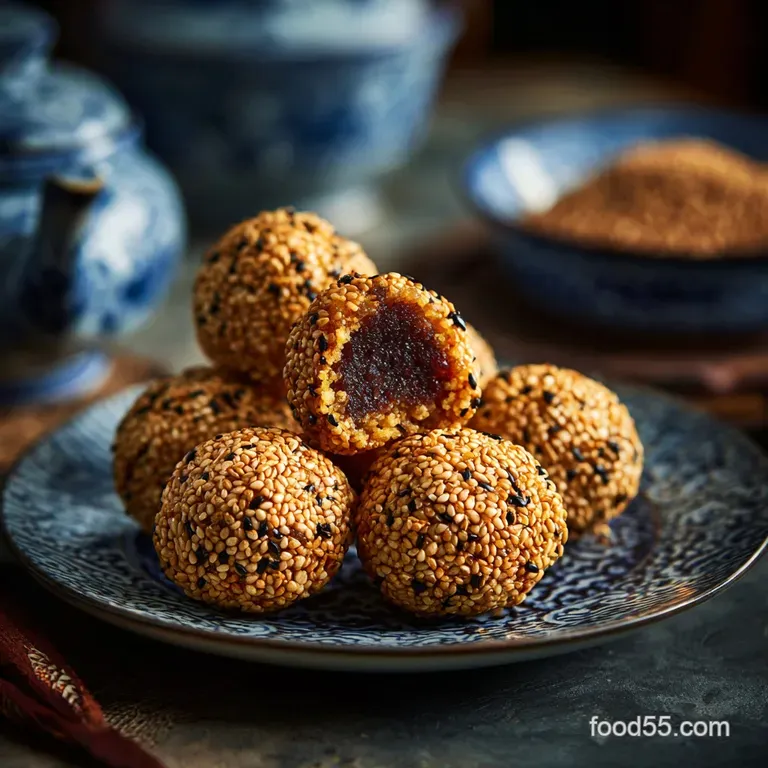
- Golden Crispy Sesame Balls (Jian Dui): A Dim Sum Classic
- Decoding Jian Dui: The Essential Guide to Crispy Sesame Balls
- The Science of Crisp: Why This Two-Stage Frying Method is Non-Negotiable
- Essential Components: Sourcing Ingredients for the Best Crispy Sesame Balls
- Mastering the Technique: Step-by-Step Assembly and Frying Guide
- Troubleshooting Your Sesame Balls: Preventing Common Issues
- Prep Ahead & Storage: Maximizing Freshness and Shelf Life
- Perfect Pairings: How to Serve Jian Dui
- Recipe FAQs
- 📝 Recipe Card
Golden Crispy Sesame Balls (Jian Dui): A Dim Sum Classic
Okay, friend, listen up. There is nothing in the world quite like biting into a perfect, freshly fried Crispy Sesame Ball (Jian Dui). That initial sound the crackle of the golden shell gives way to an impossibly chewy, hollow centre surrounding sweet, smooth red bean paste.
It’s pure textural magic, honestly.
Most people think these Dim Sum classics are impossibly complex or only available at high end restaurants. Nope. While they require a little focus on temperature (I'll get to that later, trust me), the ingredients are dirt cheap and super accessible, usually requiring just flour, sugar, and water.
It’s the perfect way to impress people without spending all day in the kitchen.
I've screwed up batches countless times, resulting in flat, greasy discs that just taste sad. But I finally cracked the code, realizing it’s all about a simple two-stage frying process that guarantees maximum puff. Let’s get these golden spheres happening!
Decoding Jian Dui: The Essential Guide to Crispy Sesame Balls
Jian Dui are more than just a sweet snack; they are a symbolic dish traditionally enjoyed during Lunar New Year, representing prosperity and family gathering. The hollow centre and the golden exterior are crucial features that define this iconic Asian dessert.
What Makes Jian Dui a Dim Sum Icon?
The allure is really simple: contrast. You have the sticky, sweet filling trapped inside a delightfully airy, chewy mochi like shell. That exterior is absolutely plastered in sesame seeds, which deepen the nutty flavor when fried. It's a powerhouse dessert that uses texture as its primary ingredient.
The Magic of the Hollow Center: Achieving Perfect Puffiness
The secret to that gorgeous hollow centre is steam pressure! We use boiling water to create an elastic, slightly cooked dough. When this dough hits the low-temperature oil, the residual moisture turns instantly to steam, stretching the flexible dough outwards.
This is why you absolutely cannot skip the over low heat frying stage.
Comparing Fillings: Red Bean Paste vs. Other Options
Traditional Jian Dui almost always features sweet red bean paste (Anko), which offers a lovely earthy sweetness and a thick, smooth texture. While I adore the classic, modern versions often use alternatives.
I know some of you will swap this out for sweet taro paste or even rich salted egg yolk custard for a savory kick.
The Role of Mochiko (Glutinous Rice Flour) in Texture
This ingredient is non-negotiable, seriously. Glutinous rice flour, sometimes called sweet rice flour or Mochiko, contains zero gluten but is full of amylase and amylopectin starches. This is what gives the dough its signature elasticity and chewiness.
Standard rice flour or regular wheat flour will simply result in dense, heavy hockey pucks.
Temperature Control: Ensuring the Puff and Preventing Collapse
Think of the frying process in two acts. Act One (300°F/150°C) is where the puff happens. The dough is tender, the steam is building, and you are gently pressing them to expand.
Act Two (350°F/175°C) is where the crisp sets in, ensuring the puffed shape locks in place before the internal steam pressure drops and they collapse.
The Secret to the Golden Brown Exterior
The golden color comes naturally from the sugar content in the dough and the caramelization that happens during the final over high heat fry. We want a vibrant, uniform gold not patchy brown, which indicates uneven cooking or oil that was too hot, too fast.
The Science of Crisp: Why This Two-Stage Frying Method is Non-Negotiable
This is the make-or-break section, darling. If you mess up the temperatures, you mess up the texture. The two-stage fry is a technique borrowed from the professional kitchens and it’s the only way to get those perfectly inflated, chewy crispy fried sesame balls.
We need low heat for expansion and high heat for setting the structure and color.
Essential Components: Sourcing Ingredients for the Best Crispy Sesame Balls
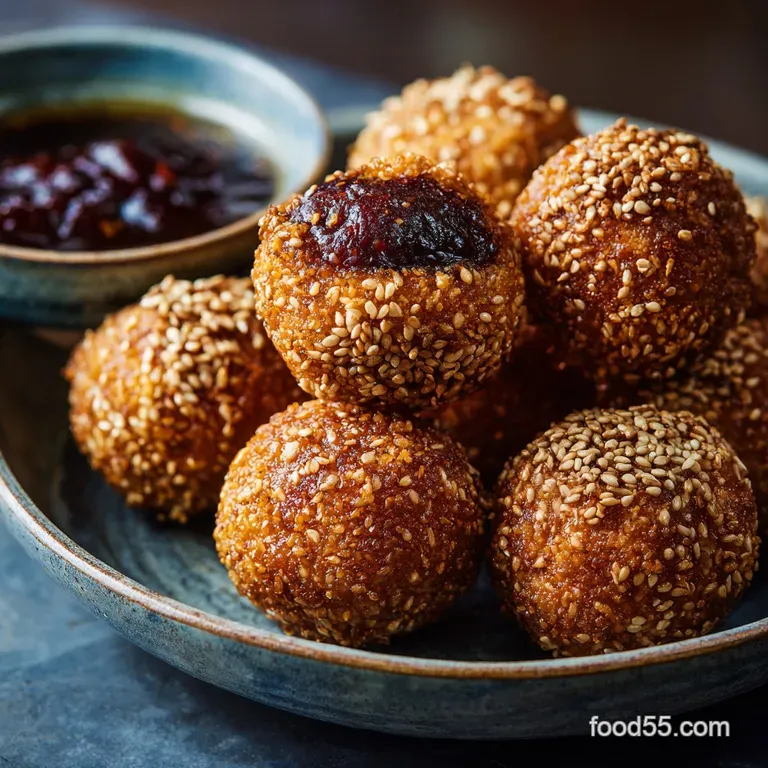
You don't need many ingredients, but the ones you choose truly matter for achieving the best flavor and texture.
| Ingredient | Role | Viable Substitution |
|---|---|---|
| Glutinous Rice Flour (Mochiko) | Provides necessary elasticity and chew. | NONE. Do not use standard rice flour, tapioca flour, or wheat flour. The recipe relies entirely on this specific starch. |
| Sweet Red Bean Paste | Classic, sweet, and smooth filling. | Sweet Taro paste or thick, sweet Salted Egg Yolk Custard . (Ensure substitution is chilled and firm.) |
| Granulated Sugar | Sweetness, color development, and dough stability. | Caster sugar or fine brown sugar (will slightly darken the dough). |
| Boiling Water | Gelatinizes starch for elasticity. | None (must be near boiling temperature). |
| Neutral Frying Oil | High smoke point fat for deep frying. | Canola, Vegetable, or Peanut Oil (all are neutral and have suitable smoke points). |
Glutinous Rice Flour (Mochiko) vs. Standard Rice Flour
I cannot stress this enough: they are not the same! Glutinous rice flour is sticky rice flour, and it is the only thing that delivers the essential chewiness we call Q in Asian cuisine. Standard rice flour just turns brittle and will crack when you try to expand it.
Preparing the Sweet Red Bean Filling: Smoothness is Key
If you buy store-bought paste, great just make sure it’s the smooth, dessert grade Anko . If you make it yourself, push it through a fine mesh sieve to remove any lumps. Crucially, the filling must be chilled and firm before you try to seal the dough around it.
Oil Selection: Choosing the Right Fat for Deep Frying
You need a neutral oil with a high smoke point that doesn't mess with the flavor. Canola, peanut, or plain vegetable oil are perfect. We need several inches of oil, so budget for about 4 6 cups, depending on your pot size. This prevents overcrowding, which is a major mistake.
Mastering the Technique: step-by-step Assembly and Frying Guide
This is where the magic happens. Pay close attention to the temperature changes!
Kneading the Dough: Achieving the Perfect Play Doh Consistency
Whisk your flour and sugar, then dump in the boiling water. Stir immediately until it's a shaggy mess. This initial heat "cooks" the flour and creates elasticity. Once it's cool enough, add the oil and knead it for about five minutes until it’s smooth and feels exactly like soft, pliable Play Doh.
Let it rest for 30 minutes.
Filling and Sealing the Balls: Preventing Blowouts During Frying
Divide the dough evenly. Roll your chilled filling into balls and encase it completely in the dough. Flatten the dough disc, wrap the filling, and pinch the seam shut tightly. The slightest gap will allow steam to escape and cause a blowout in the fryer.
Roll gently until the sphere is smooth and perfect.
The Initial over Low heat Fry: Starting the Puffy Transformation
Heat your oil to 300°F (150° C) . Drop your balls in (only 4 5 at a time) and let them fry for about 8- 10 minutes. They will sink, then float.
Chef's Note: As soon as they float, start gently pressing them with the back of a spider strainer against the bottom of the pot. Roll them around. This gentle agitation and pressure is what forces the dough to expand and ensures the hollow center forms properly.
The over High heat Finish: Sealing the Crisp and Achieving Golden Color
Once they’ve doubled in size and look pale and puffy, raise the heat to 350°F (175° C) . Continue frying for 2- 4 minutes, rotating constantly until they hit that gorgeous uniform golden brown color.
Remove them quickly and drain them on a wire rack not paper towels, which will steam them soft.
Troubleshooting Your Sesame Balls: Preventing Common Issues
I once tried to rush the over low heat phase because I was starving and ended up with hard, dense sesame balls that made me sad for a week. Learn from my mistakes!
Why Are My Sesame Balls Flattening? (Temperature Fixes)
If your balls flatten immediately upon removing them from the oil, it means your final temperature was too low, and the exterior crust didn't properly set. They are collapsing because the structure wasn't locked in place.
Solution: Ensure that final fry hits the required 350°F (175°C) to set the crust. If they flatten during the initial low-temp fry, your oil was too hot, causing them to set too quickly before they could expand.
How to Ensure Sesame Seeds Stick During Frying
The key is moisture and pressure. Lightly moisten the ball just before rolling it in the seeds, and then roll the ball vigorously, pressing the seeds firmly into the soft dough. If they are still falling off during frying, the oil might be too violently hot.
Dealing with Dough That Cracks While Shaping
Cracking usually means your dough is too dry. This happens if you add too much flour during the initial kneading, or if it rested uncovered. Fix it: Add a tiny splash of hot water (literally half a teaspoon) to the dough and knead until the cracks disappear and it's smooth again.
Prep Ahead & Storage: Maximizing Freshness and Shelf Life
These are best eaten immediately, but life happens! Here’s how to manage leftovers and prep.
Freezing Uncooked Sesame Balls Safely
Yes! This is the best way to prep ahead. Once the balls are shaped and completely coated in sesame seeds, arrange them on a baking sheet lined with parchment paper, ensuring they don't touch. Freeze solid, then transfer them to a zip-top freezer bag. They keep well for up to three months.
Do not thaw before frying; just drop them straight into the 300°F (150°C) oil and increase the initial fry time by about 2- 3 minutes.
Reheating Leftover Crispy Sesame Balls
Fried sesame balls lose their crispness quickly at room temperature. For reheating, the oven or the air fryer is your best friend. Toss them into a 350°F (175° C) air fryer for 4- 6 minutes , or pop them on a rack in a 350°F (175° C) oven for 8- 10 minutes .
This will bring back most of that exterior crispness. Stored in an airtight container, they last about 2 3 days in the fridge.
Perfect Pairings: How to Serve Jian Dui
These are the ideal end to a Chinese meal. Try serving them after something delicious, like my Baked or air-fried Sesame Chicken: Crispy Fakeaway Recipe . The sweet, crispy finish is just perfect after a savory main dish.
Traditional Beverage Pairings (Tea)
Always pair rich, fried treats with something acidic or clarifying. A pot of unsweetened Jasmine Green Tea or Oolong Tea is the classic choice. The tannins and light floral notes cut through the richness of the deep fried pastry beautifully. If you're building a full spread, the varying crispness achieved in this dish is similar to the texture of the incredible crispy shallots I use in my Green Bean Casserole from Scratch: Best Recipe with Crispy Shallots — texture is everything!
Recipe FAQs
Why didn’t my sesame balls puff up and achieve a hollow centre?
The key to puffing is temperature and agitation. You must start the frying at a low temperature (around 280°F/140°C) and continuously press and roll the balls gently against the side of the wok or fryer.
This constant pressure helps release the steam inside, encouraging the dough shell to expand evenly before the exterior sets.
Can I substitute regular rice flour for glutinous rice flour (Mochiko)?
No, glutinous rice flour (also called sweet rice flour) is absolutely essential for this recipe. It is the only flour that contains the high level of amylopectin needed to create the elastic, chewy texture and allows the dough to stretch and puff during frying.
Regular rice flour will result in a hard, brittle dough that will not expand properly.
My sesame seeds are falling off during frying. How do I make them stick better?
This happens when the surface of the dough is too dry when rolled. After forming the balls, lightly moisten them either by dipping them very quickly in a shallow bowl of water or brushing with egg white before firmly rolling them in the sesame seeds. Ensure they are well pressed into the dough surface.
Can I prepare the sesame balls ahead of time and freeze them before cooking?
Yes, sesame balls freeze wonderfully when raw. Place the formed balls on a tray, freeze until solid, and then transfer them to an airtight container for up to three months. Fry them directly from frozen, but extend the initial low-temperature frying phase by 3-5 minutes to allow them to thaw and warm through evenly.
What other fillings can I use besides sweet red bean paste?
Other popular traditional fillings include smooth lotus seed paste (Lian Rong), or a mixture of ground peanuts and sugar. For a modern twist, you could use a small square of molten chocolate or even a sweet taro paste, ensuring the filling is solid enough to roll into a ball before stuffing.
How do I reheat leftover sesame balls to restore their crispiness?
To prevent them from becoming overly chewy, avoid using the microwave for reheating. Place the leftovers in a toaster oven or air fryer set to 350°F (175°C) for about 4 to 6 minutes. This dry heat method evaporates moisture from the shell, helping restore that desirable crispy exterior.
Is the dough supposed to be difficult to work with, or should it be soft?
The dough should be soft, supple, and very pliable, almost like playdough, without being sticky. If your dough feels crumbly or dry, gradually incorporate a few drops of hot water until it comes together smoothly. Proper moisture is crucial for achieving an even, non-cracking surface when frying.
Crispy Sesame Balls With Red Bean Filling
Ingredients:
Instructions:
Nutrition Facts:
| Calories | 124 kcal |
|---|---|
| Protein | 2.0 g |
| Fat | 2.0 g |
| Carbs | 24.0 g |
