30 Effortless Recipes Ideas for Christmas | Low-Stress Holiday Feasts

- Effort/Time: 40 minutes total (High-impact, low-labor).
- Flavor Hook: Tangy-sweet cranberry-orange glaze with a rosemary-garlic aromatic base.
- Perfect for: Stress-free holiday hosting or a sophisticated Christmas Eve dinner.
- The Science of Succulence: Why These 30 Effortless Recipes Ideas for Christmas Succeed
- Precision Metrics and Thermal Protocols for Holiday Success
- The Chemistry of Flavor: Curating Elements for Your Festive Roast
- Essential Culinary Artillery for the Modern Christmas Kitchen
- Executing the Perfect Sear: A Technical Guide to Preparation
- Diagnostic Protocols for Rectifying Texture and Flavor Imbalances
- ⚗️ The Scaling Lab: The Physics of Quantity
- Flavor Architecture: Adapting Your Roast for Every Palate
- Common Culinary Myths
- Preserving Integrity: Molecular Stability During Storage and Rethermalization
- Aesthetic Presentation and Thematic Culinary Pairings
- Recipe FAQs
- 📝 Recipe Card
There is nothing more gut-wrenching than spending $30 on a premium cut of meat only to pull a gray, dry, cardboard textured slab out of the oven. Most home cooks treat lean pork like a thick steak, but without the fat marbling, it’s a recipe for expensive disappointment.
I’ve seen beautiful holiday dinners ruined because the meat was pulled five minutes too late, turning a centerpiece into a chore to chew.
I’ll admit, I destroyed three batches of pork tenderloin early in my career by underestimating the carryover cooking effect. I used to pull the meat when it looked "perfect" in the pan, forgetting that the internal thermal mass continues to rise once it hits the cutting board.
That lack of understanding of thermodynamic physics resulted in a rubbery texture that no amount of gravy could save. It was a humbling lesson in the necessity of a digital probe and patience.
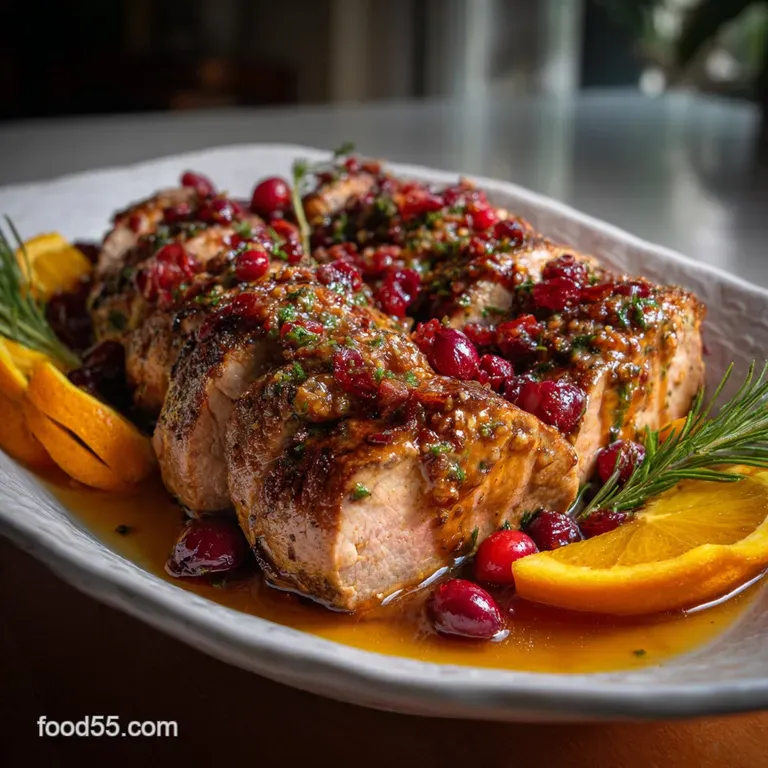
The secret to these 30 Effortless Recipes Ideas for Christmas isn't just the glaze; it’s the science of protein denaturation and hydration. By searing the pork to initiate the Maillard reaction and then finishing it in a concentrated cranberry orange reduction, we create a moisture barrier.
This process ensures a shattering, caramelized exterior while the interior remains at a precise, velvety 145°F. You aren't just making dinner; you’re managing heat transfer to ensure every slice is as vibrant as it is tender.
The Science of Succulence: Why These 30 Effortless Recipes Ideas for Christmas Succeed
- Maillard Reaction Optimization: The combination of honey and orange juice sugars undergoes rapid browning at 300°F+, creating complex flavor compounds and a mahogany visual.
- Enzymatic Tenderization: The citric acid in the orange juice slightly breaks down surface proteins, allowing the rosemary and garlic aromatics to penetrate deeper into the muscle fibers.
- Osmotic Equilibrium: Using Diamond Crystal Kosher Salt early in the process draws moisture out, dissolves the salt, and then reabsorbs the brine into the cells for deep seasoning.
- Thermal Buffer: The smashed garlic and rosemary sprigs act as a physical buffer between the direct heat of the Lodge Cast Iron Skillet and the meat, infusing oils without burning the protein.
Precision Metrics and Thermal Protocols for Holiday Success
When planning 30 Effortless Recipes Ideas for Christmas, timing is your primary tool. This recipe is engineered for a 40 minute window, balancing active searing with passive roasting.
We are targeting a specific internal temperature of 145°F (63°C) to ensure the pork remains safe yet succulent.
| Metric | Value | Technical Context |
|---|---|---|
| Prep Time | 15 minutes | Includes mise en place and meat tempering |
| Cook Time | 25 minutes | Total thermal exposure (sear + roast) |
| Yield | 5 servings | Based on 2 lbs of trimmed protein |
| Resting Time | 10 minutes | Mandatory for fiber relaxation and juice redistribution |
| Total Time | 40 minutes | From fridge to table |
The Chemistry of Flavor: Curating Elements for Your Festive Roast
Selecting the right components for 30 Effortless Recipes Ideas for Christmas requires an understanding of how fat, acid, and sugar interact under high heat. Using a heavy bottomed skillet like a Lodge Cast Iron Skillet is essential for maintaining constant thermal mass during the sear.
- 2 lbs Pork Tenderloin: Why this? Lean muscle with minimal connective tissue; cooks rapidly via conduction.
- 2 tbsp Extra Virgin Olive Oil: Used for over high heat conduction and lipid soluble flavor extraction.
- 1 tbsp Fresh Rosemary: Mincing breaks the trichomes, releasing volatile oils (piney/camphor) into the fat.
- 2 tsp Diamond Crystal Kosher Salt: Why this? Large crystal size allows for even coverage without over salting via volume.
- 1 tsp Cracked Black Pepper: Adds localized "heat" pops that contrast the sweet glaze.
- 3 cloves Garlic: Smashed to expose surface area without burning as quickly as minced garlic.
- 1 cup Fresh or Frozen Cranberries: Why this? High pectin content naturally thickens the sauce without flour.
- 1/2 cup Fresh Orange Juice: Provides the aqueous base for the reduction and essential citric acid.
- 1 tbsp Orange Zest: Contains the essential oils (limonene) for intense citrus aroma.
- 1/4 cup Honey: Why this? Fructose and glucose mix provides a lower caramelization point than sucrose.
- 2 tbsp Maille Dijon Mustard: Why this? Acts as an emulsifier to bind the honey and oil into a cohesive glaze.
- 1/4 tsp Red Pepper Flakes: Provides a subtle capsaicin kick to balance the 15g of sugar.
Ingredient Chemistry Breakdown
| Ingredient | Chemical/Physical Role (Science) | The Pro Secret (Why This Matters) |
|---|---|---|
| Pork Tenderloin | Protein denaturation and coagulation | Pull at 140°F; carryover heat hits 145°F for peak moisture. |
| Fresh Cranberries | Pectin based gelatinization | The berries "pop" and release pectin, creating a thick, glossy coat. |
| Dijon Mustard | Emulsification via mucilage | Keeps the honey and citrus from separating in the hot pan. |
Essential Culinary Artillery for the Modern Christmas Kitchen
For these 30 Effortless Recipes Ideas for Christmas, your equipment choice dictates the texture of the crust. A thin pan will lose temperature the moment the cold meat hits it, leading to steaming rather than searing. If you're looking for more inspiration, these techniques are similar to what I use in my Homemade Turkey Rub recipe to achieve that elite skin texture.
- Lodge 12 inch Cast Iron Skillet: Crucial for thermal retention and creating an even Maillard crust.
- Digital Instant Read Thermometer: The only way to guarantee a 145°F internal temperature.
- Microplane Zester: For the orange zest; you want the aromatic flavedo, not the bitter white albedo (pith).
- Stainless Steel Whisk: For emulsifying the Dijon, honey, and orange juice into a stable glaze.
Executing the Perfect Sear: A Technical Guide to Preparation
Follow these steps with precision. The goal is to manage the heat so the glaze thickens exactly as the pork reaches its target temperature. This is one of the most reliable 30 Effortless Recipes Ideas for Christmas because it uses the pan's residual heat to "bloom" the spices.
- Pat the pork dry.Note: Surface moisture causes steaming; dryness is required for the Maillard reaction.
- Season with Diamond Crystal Kosher Salt, pepper, and minced rosemary.Note: Press the aromatics into the meat to ensure contact.
- Heat oil in the Lodge Cast Iron Skillet over medium high heat until it shimmers.
- Sear the pork for 3 minutes per side until a mahogany crust forms. Note: Do not move the meat prematurely; wait for the protein to naturally release from the pan.
- Whisk orange juice, honey, Maille Dijon, and red pepper flakes in a small bowl.
- Add smashed garlic and cranberries to the skillet.Note: Sauté for 1 minute until the garlic is fragrant and cranberries begin to soften.
- Pour the honey orange mixture over the pork.Note: Deglaze the pan by scraping up the brown bits (fond) with a wooden spoon.
- Transfer the skillet to a 400°F (200°C) oven.
- Roast for 12–15 minutes until the internal temperature reads 140°F on a digital thermometer.Note: The glaze will become thick and syrupy, bubbling at the edges.
- Remove from the oven and spoon the glaze over the meat.Note: Allow to rest for 10 minutes; the internal temp will climb to 145°F.
Diagnostic Protocols for Rectifying Texture and Flavor Imbalances
Why Your Pork is Dry
Pork tenderloin is an extremely lean muscle. Once it passes 150°F, the protein fibers tighten and squeeze out all intracellular moisture, resulting in a "woody" texture.
| Problem | Root Cause | The Fix | Pro Protocol |
|---|---|---|---|
| Tough/Dry Meat | Overcooking past 150°F | Pull at 140°F precisely | Use a probe thermometer set to alert at 138°F. |
| Thin/Watery Glaze | Insufficient reduction | Simmer glaze on stovetop after removing meat | Remove pork to rest, then boil the sauce for 2 mins. |
| Burnt Garlic | Added too early | Add garlic only after the initial sear | Smash garlic cloves instead of mincing to slow burning. |
⚗️ The Scaling Lab: The Physics of Quantity
When doubling this recipe for 30 Effortless Recipes Ideas for Christmas, do not simply double every factor. Physics dictates that as volume increases, heat distribution becomes less efficient.
- The Square Cube Law: If you cook four tenderloins instead of two, the volume of meat increases, but the surface area in contact with the pan does not. Mandatory instruction: Sear in batches to avoid dropping the pan temperature below 300°F, which causes gray, steamed meat.
- The Evaporation Paradox: When doubling the orange juice and honey, the surface area for evaporation remains the same if using the same skillet. Reduce the added liquid by 15% or expect a longer reduction time to reach that "velvety" glaze consistency.
- Flavor Saturation: Scale spices to 1.5x rather than 2x. Rosemary and red pepper flakes can become overpowering when doubled linearly.
- Carry Over Dynamics: A larger mass of meat holds more energy. When cooking a larger batch, pull the meat at 138°F, as the collective thermal mass will cause a higher temperature spike during the rest.
Flavor Architecture: Adapting Your Roast for Every Palate
While the cranberry orange profile is a holiday staple, these 30 Effortless Recipes Ideas for Christmas can be adapted for different dietary needs or flavor preferences. If you're serving a traditional crowd, this roast pairs beautifully with my Christmas Pudding with recipe for a citrus themed finale.
- The Balsamic Fig Twist: Replace orange juice with balsamic vinegar and cranberries with dried figs. The acidity shifts from citric to acetic, providing a deeper, musty sweetness.
- Keto/Low-Carb Modification: Swap honey for a monk fruit based maple syrup and reduce the orange juice to 1/4 cup, supplementing with chicken bone broth.
- The Herb Swap: Use fresh thyme and sage instead of rosemary for a more "stuffing forward" aromatic profile.
Common Culinary Myths
- Myth: "You must cook pork until the juices run clear."
- Truth: This is a holdover from the era of trichinosis. Modern USDA guidelines state 145°F is safe, even if the meat remains slightly pink. Pink pork is juicy pork.
- Myth: "Searing 'seals in' the juices."
- Truth: Searing creates flavor via the Maillard reaction. It actually causes slight moisture loss on the surface. The juiciness comes from proper resting, not the sear itself.
Preserving Integrity: Molecular Stability During Storage and Rethermalization
If you have leftovers from your Effortless Recipes Ideas for Christmas Eve Dinner, storage is about preventing oxidation.
- Fridge: Store in an airtight container for up to 3 days. The honey in the glaze acts as a mild preservative, but the orange aromatics will fade over time.
- Freezing: Not recommended for the cooked pork, as the lean fibers become spongy upon thawing. However, you can freeze the glaze separately for up to 3 months.
- Reheating: Avoid the microwave. Reheat in a 300°F oven with a splash of orange juice to "re-emulsify" the glaze and prevent the meat from drying out.
💡 ZERO WASTE PHILOSOPHY
- Transform
- Simmer peels in equal parts sugar and water to create candied zest.
- Science
- The sugar replaces the water in the peel cells (osmosis), preserving the essential oils and creating a chewy, festive garnish.
- Transform
- Use any leftover cranberry orange glaze as a base for a vinaigrette.
- Science
- The Dijon mustard already acts as an emulsifier, making it easy to whisk in olive oil for a vibrant salad dressing.
Aesthetic Presentation and Thematic Culinary Pairings
For a true Christmas Showstopper Pork Tenderloin, presentation is about contrast. Slice the meat into 1 inch thick medallions to show off the pale pink center against the mahogany glaze.
- Festive Pairings: Serve alongside roasted Brussels sprouts or a creamy mash. The acidity of the cranberries cuts through the richness of buttery sides.
- Beverage Pairing: A high acid Pinot Noir or a dry sparkling cider complements the orange zest and rosemary.
- The Finish: Top with a final sprinkle of orange zest and a few fresh rosemary needles for an olfactory hit right before the first bite.
When you master the balance of acid, sugar, and thermal control, these 30 Effortless Recipes Ideas for Christmas become more than just a meal they become a reliable technique you'll use for years to come. Let's crack on and get that skillet hot!

Recipe FAQs
Simple faqs for 30 effortless recipes ideas for christmas?
High impact, low labor focus across all thirty concepts. These ideas prioritize make-ahead components and simple finishing techniques for maximum guest enjoyment with minimal active cooking time. If you enjoyed controlling cookie spread here, the same fat ratio logic applies to our Cracker Barrel Meatloaf Recipe: The Easy Homestyle Comfort Classic for optimal texture.
Faqs for 30 effortless recipes ideas for christmas dinner?
Focus on protein resting and glaze development. Succulent centers rely on pulling lean meat at 140°F; carryover heat finishes the process safely to 145°F. This thermal precision is vital for any centerpiece.
Faqs for 30 effortless recipes ideas for christmas eve?
Yes, slow cooker methods are often ideal for prep. Slow cooking minimizes evaporation and thermal management during the busy evening, yielding tender results perfect for casual grazing. For a slow cooker version, check out our Chicken Stock: The Chefs Secret for Rich, Flavorful Results technique adapted for low-temperature braising.
make-ahead Christmas Eve dinner?
Assemble components fully, but glaze/sear last minute. Sauces and side dishes benefit immensely from being made 24 hours in advance, concentrating flavor profiles. Finishing the main protein should be the last active step.
What is the easiest Christmas dinner?
A slow braised or roasted one-pan protein is easiest. This approach minimizes active management, relying on sustained, low heat to break down connective tissue safely. Think minimal chopping and maximum passive cook time.
Can I substitute honey in the glaze for a sugar-free option?
Use monk fruit sweetener blended with a touch of cornstarch. Honey provides specific fructose content for superior caramelization; sugar substitutes lack this inherent stickiness and browning potential.
Add a small amount of Xanthan gum or cornstarch to mimic the viscosity lost when removing the sugar.
Should I sear meat cold or tempered for the best crust?
Sear meat tempered slightly above refrigerator temperature. Tempering prevents the pan's heat from instantly dropping below the 300°F threshold needed for the Maillard reaction to initiate effectively.
The difference in flavor development is noticeable between instantaneous searing and slow heating.
Effortless Christmas Recipe Ideas
Ingredients:
Instructions:
Nutrition Facts:
| Calories | 333 kcal |
|---|---|
| Protein | 39g |
| Fat | 12g |
| Carbs | 19g |
| Fiber | 2g |
| Sugar | 15g |
| Sodium | 920mg |
