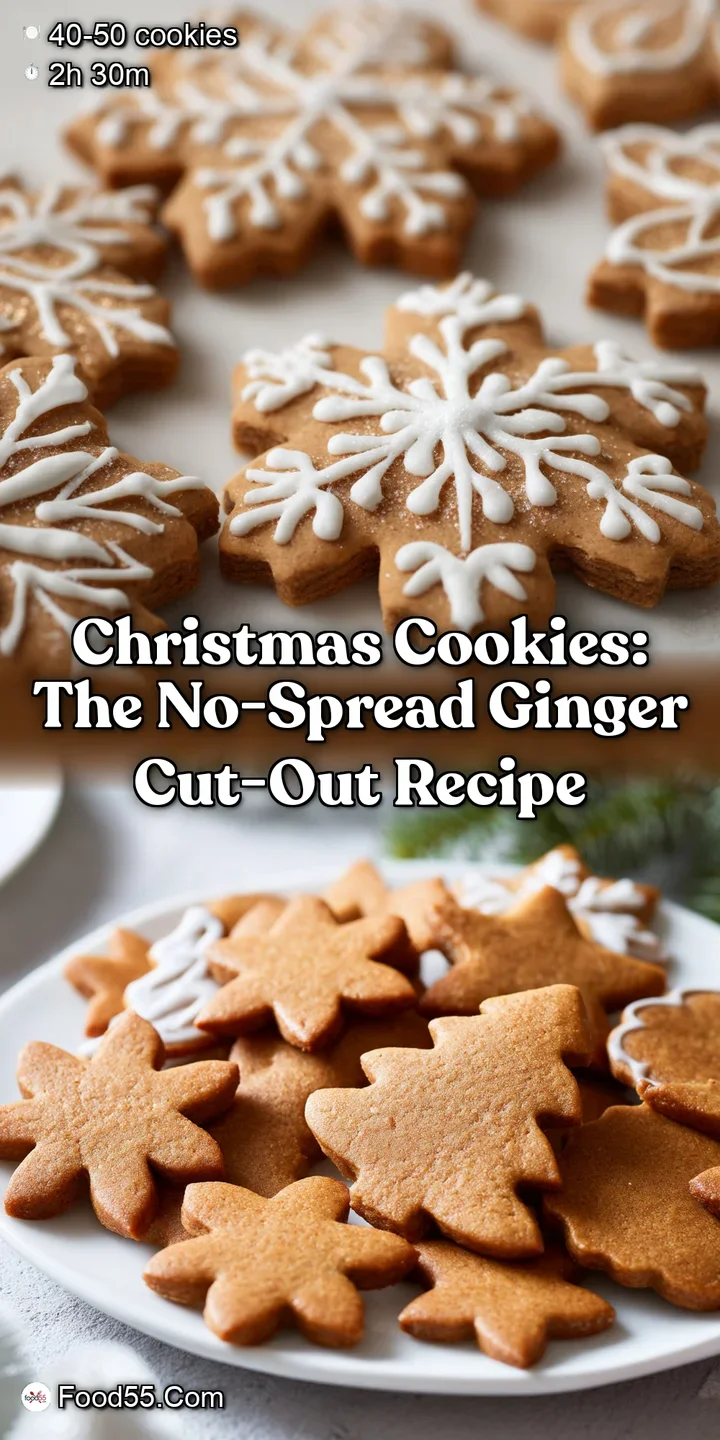
Christmas Cookies: No-Spread Ginger Cut-Outs

- The Ultimate Guide to Festive Cut-Out Baking
- The Science Behind the 'No-Spread' Christmas Shortbread
- Gathering Your Baking Arsenal: Ingredients and Swaps
- Rolling, Cutting, and Baking: The Step-by-Step Method
- Mastering the Dough: Chef's Pro Tips and Troubleshooting
- Planning Ahead: Storage Solutions for Your Holiday Treats
- Beyond the Plate: Perfect Pairings and Decorating Ideas
- Recipe FAQs
- 📝 Recipe Card
The Ultimate Guide to Festive Cut-Out Baking
If there is one scent that screams "Holiday Season," it’s this one: warm, spicy butter and vanilla hitting the cold winter air. These are the quintessential Christmas Cookies , perfectly crisp on the edges, yet soft enough in the center, ready to be slathered in bright royal icing.
Seriously, forget the fancy fruitcake this year.
This recipe is my absolute lifesaver because it’s a 'no-spread' shortbread base. It means you can tackle those ridiculously intricate snowflake cutters without worrying about them melting into amorphous blobs in the oven.
It’s also surprisingly fast, requiring only about 20 minutes of active prep before the crucial chilling takes over.
I’ve perfected this particular ginger kissed formula over years of accidental kitchen explosions (once I forgot the salt, don't ask) and now I’m handing the keys over to you. Get your stand mixer ready, because these Festive Christmas Cookies Recipes are about to become your family tradition.
The Science Behind the 'No-Spread' Christmas Shortbread
Making reliable Christmas Cookies isn't about magic; it’s about temperature control and ratio balancing. This dough is engineered to hold its shape beautifully, which is the number one request I get during the holidays.
If you've ever struggled with classic sugar cookies spreading, you need this method.
The Tradition of the Ginger Kissed Cookie
While everyone loves a plain sugar cookie, the addition of ginger and cinnamon here adds necessary depth. It makes the Christmas Cookies taste grown-up and cozy, elevating them far beyond the store-bought crunch. It's subtle, warming the back of your throat without being overly spicy.
Think of it as a hug in cookie form.
What Makes a Cookie Truly 'Jolly Good'?
A jolly good cookie, in my humble opinion, is robust enough for decorating, holds that gorgeous spice aroma, and offers a perfect snap when you bite into it. We achieve this texture by using slightly cooler butter and carefully controlling the leavening agent.
We use just a smidge of baking powder enough to prevent the cookies from being rock hard, but not so much that they puff up and lose their sharp edges. When you’re making Christmas Cookies Easy , reliability is the biggest win.
Essential Equipment Checklist for Success
You don't need a professional pastry kitchen, but a few tools make these Festive Christmas Cookies Recipes much easier.
- A quality stand mixer is vital for creaming the butter properly.
- Parchment paper is your best friend; trust me, skip the grease and flour.
- A rolling pin with adjustable guides ensures uniform thickness, which is a total game changer for even baking.
Why Chilling the Dough is Non-Negotiable
Seriously, if you skip this step, don't blame me when your reindeer look like melted slugs. Chilling is the single most important rule for these Christmas Cookies . The cold solidifies the butter, locking the fat molecules into place.
When the cold dough hits the heat of the oven, the butter takes longer to melt, allowing the flour and other structural ingredients time to set before the butter starts to run.
The Role of Flour-to-Fat Ratio in Structure
This shortbread base uses a higher ratio of flour to fat than a traditional chocolate chip cookie. That high flour content gives the dough its structure, preventing the glorious buttery melt that causes spreading. If you find your dough still spreads, you might have measured your flour incorrectly.
Always spoon your flour into the measuring cup, then level it off. Scooping directly from the bag packs the flour too tightly, yielding too much flour, which makes the dough tough.
Achieving That Perfect Crisp Texture
We bake these Best Holiday Cookies at a moderate 350°F (180°C) until the edges are just kissed with gold. Overbaking leads to hardness; underbaking leads to a soft, cakey center that’s difficult to decorate. The key is pulling them out when they look slightly underdone in the middle.
They will finish cooking on the hot baking sheet.
Gathering Your Baking Arsenal: Ingredients and Swaps
The beauty of these Christmas Cookies lies in the simplicity of the ingredients. high-quality butter and fresh spices are crucial here; you really taste the difference.
Defining the Perfect Butter: Temperature and Type
We need unsalted butter that is cool room temperature, not squishy or greasy. If you press it with your finger, it should give slightly, but your finger shouldn't sink right through. Using unsalted butter allows you to control the salt content precisely. If you must use salted, reduce the added sea salt by half.
Customizing the Spice Blend: Ginger and Cinnamon Notes
My personal favorite blend involves ground ginger and cinnamon, but you can definitely play around. I once made a batch of these Christmas Cookies with a splash of cardamom and a pinch of white pepper it was totally transformative!
Use fresh spices; those jars that have been sitting in the back of your cupboard since 2018 won't cut it.
Vegan and gluten-free Adaptations for Holiday Cookies
I always try to provide options so everyone can enjoy the holiday fun. These substitutions work seamlessly for making beautiful Festive Christmas Cookies Recipes:
| Ingredient | Viable Substitution | Notes on Texture/Flavor |
|---|---|---|
| Unsalted Butter | high-quality firm vegan butter sticks (e.g., Earth Balance) or Vegetable Shortening. | Shortening results in a slightly crispier edge, less buttery flavor. |
| All-Purpose Flour | 1:1 gluten-free Baking Blend (with Xanthan Gum). | Requires careful handling; dough may be slightly more crumbly. |
| Large Egg | 1 commercial egg replacer portion or 1 Flax Egg (1 tbsp ground flax + 3 tbsp water). | Flax adds a slight chewiness. |
Rolling, Cutting, and Baking: The step-by-step Method

Let's crack on with the hands-on part. Remember, patience is a virtue, especially when dealing with cold dough! These instructions are essential for perfect Christmas Cookies .
Phase 1: Creaming the Mix and Forming the Dough Disc
Creaming the butter and sugar is where you incorporate air, leading to a lighter, tender cookie. Do this for a full 3– 4 minutes until the mixture is visibly pale and fluffy. Add the egg and vanilla quickly; over mixing once the egg is in can develop gluten, leading to tougher cookies.
Once the dry ingredients are added, stop the mixer the second the flour disappears. Divide the dough and smash it into flat discs before chilling. This cuts down on rolling time later.
Phase 2: Rolling Dough to the Ideal Thickness
The perfect thickness is 1/4 inch (6 mm) . This is thick enough to support the weight of the icing but thin enough to bake crisply. I swear by rolling the dough between two sheets of parchment paper. No extra flour mess, and it’s easier to peel away the excess dough.
If the dough resists, warm it slightly by smacking it a few times with the rolling pin (yes, really).
Phase 3: Oven Temperatures and Timing for Golden Edges
Bake your Christmas Cookies at 350°F (180°C). If your oven runs hot, drop it to 340°F. The trays absolutely must be chilled for 10 minutes immediately before going into the oven.
This second chill is critical for preventing spreading and is the difference between a good cookie and a perfect cookie. Bake for 10– 12 minutes. The edges should look set and pale gold, but the center should still look soft and slightly matte.
Mastering the Dough: Chef's Pro Tips and Troubleshooting
Even with the best recipes for Holiday Cookie Recipes, things can go wrong. Here are the common pitfalls and my solutions.
The Dreaded Sticky Dough: Quick Fixes
Sticky dough usually means it’s too warm or you didn't add enough flour (or you melted your butter too much during mixing). Do not add more flour to the whole batch. Instead, place the entire dough disc back in the freezer for 15 minutes.
If you’re mid-roll, place the cut-out tray in the fridge immediately, then clean and lightly flour your surface again. Remember, cold dough is happy dough when making Christmas Cookies.
Preventing Over Browning on Thin Edges
If you're using delicate cutters (like little tree branches or stars), the points can burn easily. Try clustering similarly sized shapes together on one tray. If you notice a tray is baking unevenly, you can cover the browning edges with a small piece of aluminum foil halfway through the baking time.
Rotate the tray too!
Best Practices for Handling Intricate Cookie Cutters
Intricate cutters are beautiful but tricky. Dip the cutter in flour between every single press, tapping off the excess. Use a small offset spatula (or even a thin metal skewer) to gently peel the dough away from the cutter if it sticks. If you really love detailed cut-outs, I highly recommend checking out my tips for making perfect Sugar Cookies: The Best Buttery Cut-Outs Recipe , as that article goes deep into cutter management.
Chef’s Note: Never reuse warm baking sheets. The residual heat from the previous batch will immediately start melting the butter in your cold dough, leading to inevitable spread. You must let the sheet cool completely or use a different, cold sheet.
Planning Ahead: Storage Solutions for Your Holiday Treats
One of the best things about these Christmas Cookies is that they are fantastic for making ahead. The holidays are chaotic enough; take one thing off the list!
Storing Baked vs. Unbaked Cookie Dough
Unbaked Dough: This is the ultimate method. Wrap the flat discs of dough tightly in plastic wrap and place them in a zip-top freezer bag. Label and date them. They last perfectly for up to 3 months in the freezer.
Thaw overnight in the fridge before rolling and baking as usual.
Baked Cookies (Un-iced): Store in an airtight container at cool room temperature for up to 2 weeks. They will get softer over time.
How to Properly Freeze and Thaw Decorated Cookies
Yes, you can freeze iced cookies! Wait until the royal icing is rock hard ( 24 hours minimum). Layer them gently in an airtight container separated by layers of wax paper. Freeze for up to 1 month.
To thaw, transfer the container directly from the freezer to the refrigerator overnight, then move to the countertop the next morning. This gradual temperature change prevents condensation from ruining the icing.
Shelf Life: Keeping Your Ginger Kissed Treats Fresh
If you’ve decorated these festive Christmas Cookies and left them out on a counter, they are best eaten within 3 4 days for optimal texture. Keep them covered and away from any moisture. If you prefer a chewier cookie experience (like the texture of my Snickerdoodle Cookies: Tangy, Chewy Easy Baking Recipe ), you can place a slice of bread in the storage container; the cookies will absorb the moisture from the bread and soften slightly.
Beyond the Plate: Perfect Pairings and Decorating Ideas
The decorating is half the fun! These firm cookies are the ideal foundation for any level of artistic flair, making them the ultimate Cookie Swap Recipes.
For decorating, I always use royal icing made with meringue powder. It dries beautifully hard and glossy, and unlike egg-white based icing, it’s shelf stable and food safe. Divide the icing into two consistencies: a stiff outline consistency and a slightly thinner "flood" consistency for filling in the shapes.
If you’re hosting a cookie swap, pair these buttery Christmas Cookies with something decadent. A glass of cold milk is classic, but for a true holiday spread, try serving them alongside a strong coffee or a lightly sweet dessert wine. They also make a fantastic accompaniment to homemade fudge you can even use them to sandwich some thick chocolate ganache for a sophisticated treat, similar to how I approach my Fudge stripe cookies: Crisp Shortbread with Glossy Chocolate . Happy baking, my friends! Enjoy these stunning, reliable Christmas Cookies.
Recipe FAQs
Why did my cut-out cookies spread instead of holding their shape?
Excessive spreading is typically caused by the dough being too warm or having a ratio imbalance, often too much butter or not enough flour. Ensure you thoroughly chill your dough for a minimum of 30 minutes before rolling and cutting.
Additionally, place the cut-out shapes back in the freezer for 5-10 minutes just before baking to guarantee crisp edges.
How can I prevent my buttery cookies from becoming tough or dry?
The primary culprit for tough cookies is overmixing the dough after the flour is added, which develops the gluten structure too much. Mix only until the dry ingredients are just incorporated, and handle the dough minimally when rolling out.
If your cookies are dry, you may have used too much excess flour when rolling or baked them for too long.
Can I freeze the cookie dough ahead of time, and if so, how?
Yes, this sturdy shortbread dough freezes beautifully for up to three months. Shape the dough into discs, wrap tightly first in plastic wrap and then in aluminum foil, and store in the freezer. Thaw the disc overnight in the refrigerator before rolling, cutting, and baking as directed.
What is the best way to store baked and decorated Christmas cookies?
Store undecorated cookies in an airtight container at room temperature for up to two weeks. If you decorate them with royal icing, ensure the icing is completely hard (often 8+ hours) before stacking them. When stacking iced cookies, layer them gently with parchment paper to prevent scuffing the designs.
I want a different flavor; how can I adapt the ginger and cinnamon?
You can easily substitute the spice mixture for a different flavor profile without altering the structure of the cookie. Try adding 1 teaspoon of almond extract and the zest of one lemon for a bright, citrusy cookie.
Alternatively, remove the spices and add 1/4 cup of finely grated orange zest for a classic holiday flavor.
What is the secret to achieving perfectly uniform cookie thickness?
The best method is to use rolling pin guides or wooden dowels placed on either side of your dough, cut to your desired thickness (e.g., 1/4 inch). Roll the dough between two sheets of parchment paper to prevent sticking and ensure the rolling pin rests evenly on the guides throughout the process.
Can I make this recipe vegan or gluten-free while maintaining the 'no-spread' structure?
Yes, both substitutions are possible with care. For vegan cookies, swap the dairy butter for a high-quality, firm plant based butter alternative that has a similar fat content. For gluten-free, use a reliable 1:1 gluten-free baking blend that already contains xanthan gum to maintain the necessary structure and prevent crumbling.
Ginger Cut Out Christmas Cookies

Ingredients:
Instructions:
Nutrition Facts:
| Calories | 150 calories |
|---|---|
| Fat | 7 g |
| Fiber | 1 g |
