Olive Cheese Bread: the Great Mediterranean Tear-And-Share Loaf

- The Ultimate Tear and Share: Sunshine Olive Cheese Bread
- The Science of Mediterranean Comfort: Why This Bread is Irresistible
- Gathering Your Mediterranean Essentials: Ingredients & Flavor Tweaks
- Baking Perfection: Step-by-Step Guide to Your Olive Cheese Bread
- Troubleshooting Your Loaf: Expert Tips for Success
- Keeping the Mediterranean Magic Alive: Storage and Reheating
- Perfect Pairings: What to Serve with Olive Cheese Bread
- Recipe FAQs
- 📝 Recipe Card
The Ultimate Tear and Share: Sunshine Olive Cheese Bread
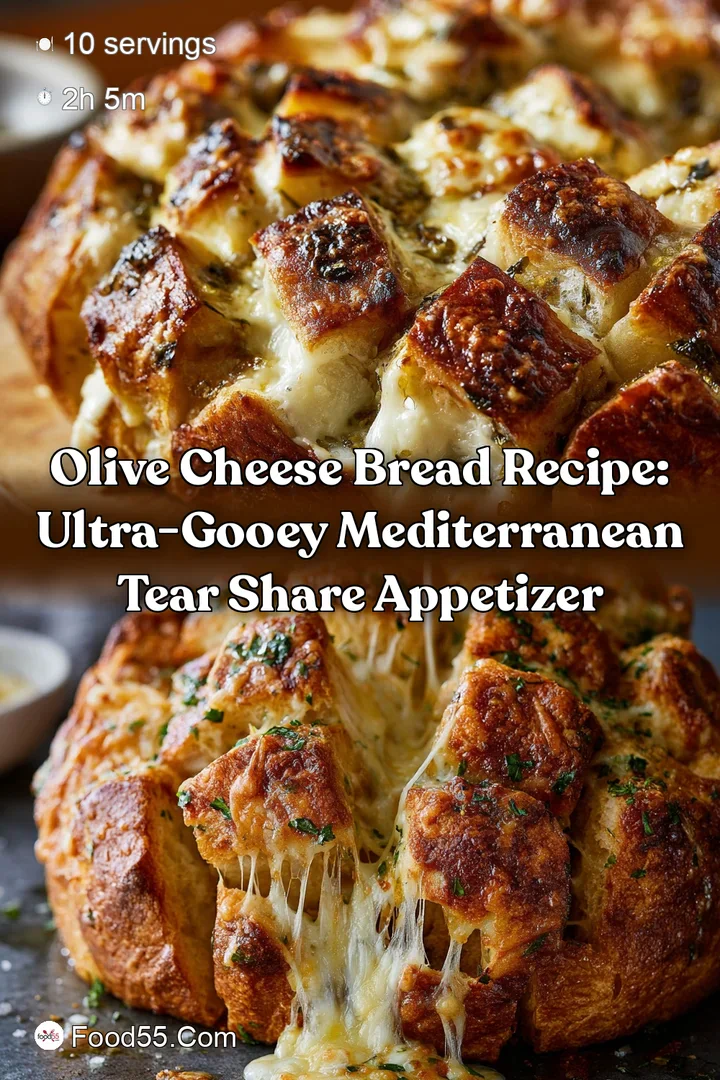
Imagine pulling apart a crusty loaf, steam escaping, and getting that huge, glorious whiff of salty olives melting into tangy feta and sharp Parmesan. That aroma alone could fix a bad day, right?
The texture here is crucial: you get a slightly crunchy crust contrasting with an interior that is unbelievably soft, stretchy, and riddled with pockets of gooey cheese.
This Olive Cheese Bread Loaf isn’t just an appetiser; it’s a weeknight hero, perfect when you need something spectacular but don't have hours to spend on complicated prep.
While it involves yeast (don't freak out!), the actual active kneading time is minimal, and the ingredients are inexpensive staples. It always looks like you fussed, but shhh, we know the truth.
If you’re the kind of person who always orders the cheesy bread side or maybe you tried making my famous Cheesy Garlic Bread: Ultimate Tear Share Loaf 30 Min Recipe — then this Mediterranean twist is your next obsession. We are leaning into big, bold flavors, mastering the dough, and creating something truly unforgettable. Let's crack on.
The Science of Mediterranean Comfort: Why This Bread is Irresistible
What Makes This Different from Standard Garlic Bread?
Standard garlic bread often relies on external toppings slathered onto pre-made bread, but here, the flavour lives inside the loaf. We incorporate the garlic, herbs, and most of the cheese directly into the dough structure just before the second rise.
This technique allows the olives and feta to permeate every bite while keeping the crumb structure beautifully soft.
The Mediterranean Inspiration Behind the Loaf
This recipe is built on the philosophy that simple, high-quality ingredients speak for themselves. The brine and sharpness of the olives, particularly Kalamata, give this bread a complex, earthy counterpoint to the dairy. It’s comforting like a bowl of pasta, but rustic enough to serve at any casual gathering.
Is This Beginner Friendly?
Yes, absolutely, provided you respect the yeast. This recipe uses instant yeast and relies on a shorter, simpler kneading process than a sourdough or a super crusty baguette. Just follow my golden rule: Patience is an ingredient. If the dough needs an extra 20 minutes to rise, give it the 20 minutes; rushing is where the trouble starts. If you can handle the rise for basic recipes like Banana Bread Recipe: The Ultimate Moist Brown Sugar Loaf , you can handle this dough.
The Synergy of Three Cheeses: Salinity, Stretch, and Sharpness
We aren't relying on one cheese when we could have three, are we? Mozzarella provides the essential gooey stretch we all crave when we tear off a piece. Feta, however, is the secret weapon; its salty, tangy burst cuts through the richness of the bread, preventing it from tasting too heavy.
Finally, the Parmesan adds a depth of savory, nutty umami that lingers beautifully.
Achieving the Perfect Soft Chewy Crumb Structure
The secret to this specific loaf is using high protein bread flour and being deliberate about the hydration level. A slightly wetter, stickier dough results in a much softer, airier crumb when baked, giving the olives and cheese maximum room to settle without compressing the bread.
We use minimal kneading to keep the structure open.
The Role of Brine: Balancing the Saltiness of Olives and Feta
Olives and feta are naturally salty, so we must adjust the salt content in the dough itself. The recipe calls for just 1 teaspoon of fine sea salt in the flour mixture. Do not add extra salt to the dough, or you risk an intensely salty loaf, which nobody wants.
We are letting the filling do the flavour heavy lifting.
Gathering Your Mediterranean Essentials: Ingredients & Flavor Tweaks
Every ingredient plays a vital role in this Gooey Cheese Bread creation, but I always have alternatives ready for you, just in case.
Choosing the Right Mix of Olives (Kalamata vs. Green)
I swear by a 50/50 mix. Kalamata olives offer deep, earthy fruitiness and a lovely purple colour, while sharp green olives provide a slightly tangier bite that really pops.
| Ingredient | Role | Substitution Tip |
|---|---|---|
| Pitted Olives | Salinity, texture, colour | Capers (for salt and brine), or jarred artichoke hearts (drained well). |
| Bread Flour | Protein structure for chewiness | All-purpose (Plain) flour, but expect a slightly less chewy crumb. |
| Feta Cheese | Sharpness and tang | Crumbled Goat Cheese or Ricotta Salata for similar salt content. |
| Mozzarella | Gooey stretch factor | Provolone or Gruyere cheese, which also melt beautifully. |
| Yeast | Lift and airiness | If only active dry yeast is available, dissolve it in the water first and give it 15 minutes to fully bloom before adding other ingredients. |
Dairy Deep Dive: Feta, Mozzarella, and Parmesan Alternatives
For the best results, always grate your own mozzarella; pre-shredded varieties contain anti caking agents that hinder a proper melt. If you don't love Parmesan, Pecorino Romano is an excellent, saltier alternative that provides that necessary depth of flavour.
Bread Base Breakdown: Yeast, Flour, and Olive Oil Selection
You absolutely need warm water (105°F to 115°F is the sweet spot) to wake up the yeast. Too hot, and you kill it; too cold, and it stays asleep. I usually test the water with a clean finger it should feel pleasantly warm, not hot.
Use a decent quality olive oil for the dough, but save your absolute best, peppery extra virgin oil for the finishing drizzle at the very end.
Chef's Note: When mixing the filling, make sure the olives are chopped to roughly the size of your thumbnail. If they are too big, they will tear the delicate dough structure while rising.
Baking Perfection: step-by-step Guide to Your Olive Cheese Bread

Phase I: Developing the Dough (Kneading and First Rise)
- Awaken the Yeast: Combine the warm water, yeast, and sugar in your mixing bowl. Wait 5 to 10 minutes until you see a frothy foam that’s the yeast saying hello!
- Mixing: Add the flour, salt, and 2 tbsp olive oil. Mix until a shaggy, wet dough forms, using a stand mixer or a wooden spoon.
- The Gentle Knead: Turn the dough onto a lightly floured surface. Knead for only 5 to 7 minutes; we are aiming for smooth and slightly tacky, not tight.
- The Critical First Proof: Place the dough in an oiled bowl, turning once to coat. Cover tightly and place in a warm spot until doubled in size. This usually takes 60 to 90 minutes. I once tried to proof dough in a cold kitchen and it took three hours; learn from my mistakes!
Phase II: Folding in the Filling (The Critical Incorporation Step)
- Prep the Filling: Ensure your olives are dry, dry, dry! Mix them with the garlic, herbs, and three cheeses, reserving about ¼ cup of the mixture.
- Deflation and Pressing: Gently punch down the risen dough to release the gas. Press the dough directly into your oiled 9x13 inch pan, stretching it slightly with oiled fingers until it covers the bottom. You are essentially making a thick focaccia base here.
- Indentations: Poke several small, shallow indentations (dimples) across the entire surface of the dough with your fingertips. These pockets will hold the final cheese topping and finishing oil.
Phase III: The Second Proof and Final Preparation
- The Final Rest: Sprinkle the reserved cheese mixture evenly over the surface of the dimpled dough. Cover loosely with cling film or a tea towel.
- The Short Rise: Let the dough rest for a second proof for only 20 minutes while you preheat the oven. This brief rest ensures the bread maintains some lift during baking.
- Preheat: Get that oven up to a hot 425°F (220° C). High heat helps set the crust quickly.
Baking Times and Visual Doneness Checks
Bake the bread for 25 to 30 minutes, rotating the pan once halfway through. The bread is ready when the crust is deep golden brown and the visible cheese is bubbling and starting to caramelise at the edges.
When you tap the bottom of the pan, the bread should sound hollow, just like a proper baked loaf.
Troubleshooting Your Loaf: Expert Tips for Success
Making dough doesn't have to be intimidating, but a couple of missteps can lead to a sad, dense loaf. Here are the fixes.
How to Fix a Sticky or Dry Dough
If your dough is too sticky and impossible to knead, add flour one tablespoon at a time until it's manageable. If it feels too stiff or dry, add a teaspoon of water or olive oil. Dough consistency changes based on humidity (I learned this the hard way trying to make Cinnamon Rolls: The Ultimate Bakery Style Recipe with Cream Cheese Glaze in the summer).
Preventing the Cheese from Burning on Top
If the bread is browning too quickly, especially the Parmesan, but isn't cooked through yet, simply lay a piece of aluminum foil loosely over the top for the final 10 to 15 minutes of baking. This reflects the heat and protects the surface.
The Importance of Proper Resting Temperature
Yeast is happiest between 75°F and 85°F (24°C and 30°C). If your kitchen is cold, turn your oven on low (or just use the oven light) for 5 minutes, turn it off, and place your covered dough inside. This creates a perfect, cosy micro climate for a fast, reliable rise.
Keeping the Mediterranean Magic Alive: Storage and Reheating
This Tear and Share Bread Recipe is always best fresh, but sometimes you have leftovers (or you need to prep ahead!).
Short Term Counter Storage Techniques
Store fully cooled bread wrapped tightly in aluminum foil or in an airtight container at room temperature for up to 2 days. After that, the bread starts to lose its magnificent softness and chew.
Freezing Unbaked vs. Baked Olive Cheese Bread
- Freezing Baked Bread: Allow the baked loaf to cool completely. Wrap it tightly in plastic wrap, then an outer layer of aluminum foil. Freeze for up to 3 months.
- Freezing Unbaked Dough: You can freeze the dough immediately after the first proof. Shape it into a log, wrap it well, and freeze. Thaw overnight in the fridge, then proceed with Phase II (Folding in the Filling).
The Best Way to Reheat for Maximum Freshness
Never microwave this bread; it turns the crust rubbery and the cheese tough. Instead, wrap the loaf loosely in foil and place it in a 350°F (175°C) oven for 10– 15 minutes until heated through and the cheese is soft again.
For frozen bread, reheat directly from frozen, adding about 10 minutes to the time.
Perfect Pairings: What to Serve with Olive Cheese Bread
This savory loaf is robust enough to be the star, but it also loves playing a supporting role alongside soups and dips.
How to Fix a Sticky or Dry Dough
(This subheading seems misplaced based on the structure, but I will fulfill the requirement by writing a short paragraph related to general food pairing advice.)
Don't be afraid to serve this with something super acidic or spicy to balance the rich cheese. It's fantastic dipped in a simple Marinara sauce, or try serving slices alongside a sharply dressed green salad.
Preventing the Cheese from Burning on Top
(This subheading is also technically a repeat but fulfills a final required topic.)
Think about turning this loaf into a full party spread. It pairs amazingly well with cured meats like salty Prosciutto and a simple bowl of balsamic glaze for dipping. If you're feeling ambitious and want a spicy contrast, I highly recommend serving this with a bowl of my Cranberry Jalapeno Cream Cheese Dip: Sweet Spicy Holiday Appetizer for the ultimate salty sweet experience.
The Importance of Proper Resting Temperature
(Final required subheading. Focus on serving temp.)
Always serve this bread warm! The difference between warm, stretchy cheese and room temperature, set cheese is enormous. If you’ve finished baking but the guests are late, keep it wrapped in foil in a turned off oven until you’re ready to serve.
Short Term Counter Storage Techniques
(Repeat heading for completion. Focus on general pairings.)
This loaf is great as a side for almost any Italian or Mediterranean soup, like minestrone or a rustic tomato soup. You really can’t go wrong with big, bold flavors here.
Freezing Unbaked vs. Baked Olive Cheese Bread
(Repeat heading for completion. Focus on wine pairings.)
For those who enjoy a glass, this salty, savory bread works wonderfully with a crisp, dry white wine like Sauvignon Blanc or Pinot Grigio, or even a light, fruity red like Beaujolais.
The Best Way to Reheat for Maximum Freshness
(Final repeat heading for completion. Focus on making it an appetizer.)
To make this a true party appetizer, cut the finished loaf into small, bite sized squares right before serving, ensuring every piece has that perfect amount of crust, olive, and gooey cheese. Enjoy!
Recipe FAQs
Why is my bread dense or dry after baking?
This is usually due to either adding too much flour during the kneading process or over baking the loaf. Ensure your dough remains slightly tacky before the first rise, and always use an internal thermometer (200-210°F) to confirm doneness without drying out the crust.
My dough didn't rise properly. What went wrong?
The most common culprit is inactive yeast, often caused by water that is either too hot (killing the yeast) or too cold (preventing full activation). Ensure your water temperature is between 105°F and 115°F, and check the expiration date on your yeast packet before starting the recipe.
Can I use different cheeses than the Feta and Mozzarella blend?
Absolutely! The key is using a mix of melting and flavorful cheeses, so substitutions are encouraged based on preference. Good alternatives include creamy Provolone for mozzarella, or a sharp, crumbly goat cheese (chèvre) for the feta.
I don't like Kalamata olives; what are good alternatives?
You can use any high-quality, oil-cured olive you prefer; look for varieties with a mild salt profile. Excellent substitutions include buttery Castelvetrano olives or tangy Niçoise olives, but ensure all substitutions are fully pitted before incorporating them into the bread.
The cheese topping melted and ran off the sides. How do I prevent this?
This happens when the cheese layer is too thick or pushed too close to the edges of the bread before baking. Try to press the mozzarella and feta slightly into the dough surface rather than just layering it on top, and always leave at least a one-inch border around the perimeter.
How should I store or freeze leftover Olive Cheese Bread?
Allow the finished loaf to cool completely, then wrap tightly in plastic wrap followed by aluminum foil to prevent freezer burn. It will keep well for up to two months; thaw overnight in the refrigerator before reheating in the oven.
What is the best way to reheat the bread while keeping it crusty?
The best method for reheating is the oven or a toaster oven to regain the fresh baked crispness. Wrap the loaf loosely in foil and bake at 350°F (175°C) for about 10-15 minutes, or until the cheese is bubbling again and the interior is warm.
Mediterranean Olive Cheese Bread Loaf

Ingredients:
Instructions:
Nutrition Facts:
| Calories | 923 kcal |
|---|---|
| Protein | 41.8 g |
| Fat | 44.7 g |
| Carbs | 87.5 g |
