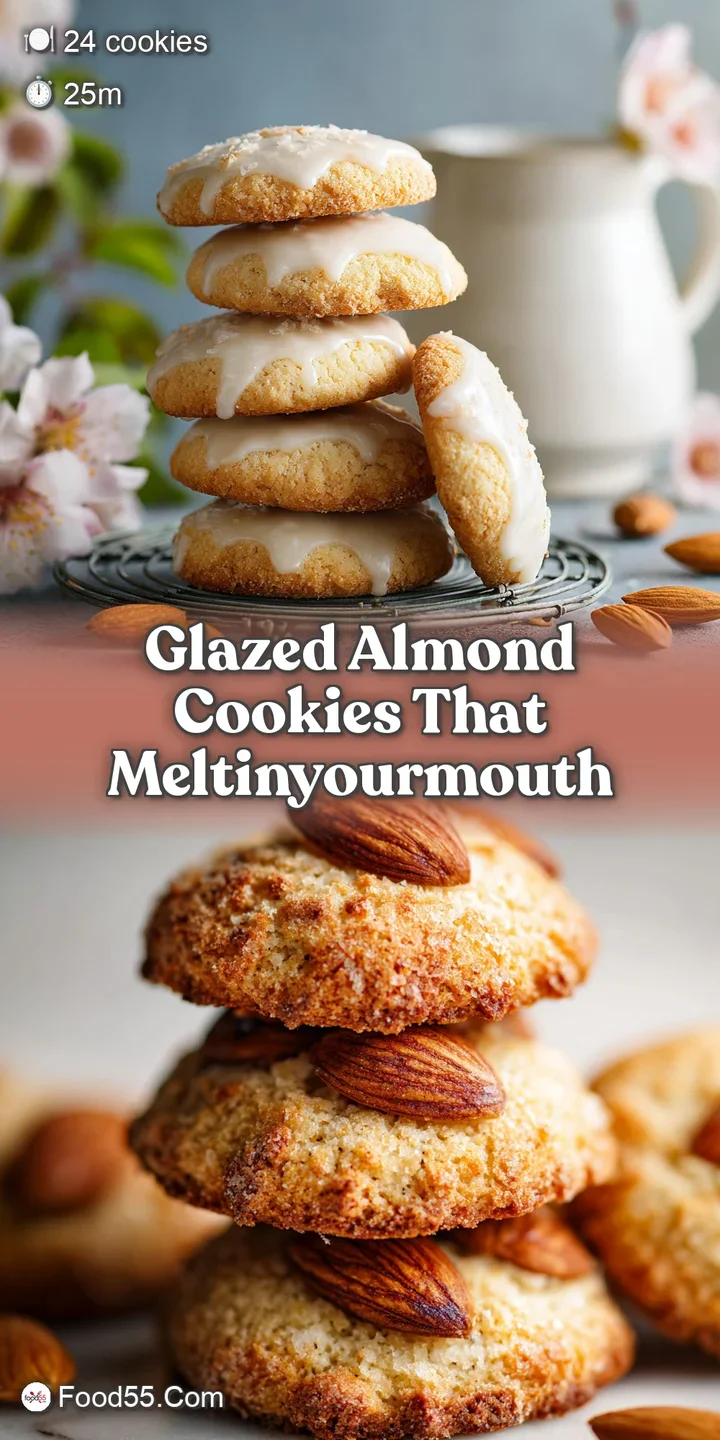
Glazed Almond Cookies That Meltinyourmouth
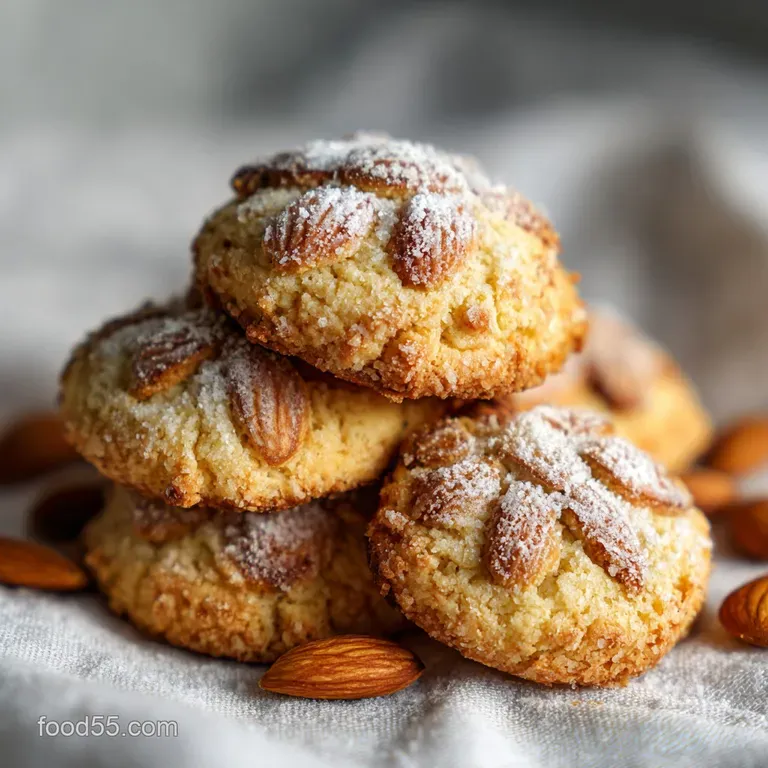
- Time: Active 15 minutes, Passive 10 minutes, Total 25 minutes
- Flavor/Texture Hook: Buttery shatter with a floral almond finish
- Perfect for: Holiday gift boxes or cozy tea dates
- Master Glazed Almond Cookies that MeltinYourMouth
- The Science of the Meltaway
- Component Analysis and Strategic Elements
- Selecting the Right Tools
- Instructions for a Velvety Dough
- Fixes for Texture and Spreading
- Adjusting the Batch Size
- Creative Variations and Flavor Swaps
- The Truth About Butter Temperature
- Guidelines for Storing Your Treats
- Elegant Pairings for Shared Moments
- Recipe FAQs
- 📝 Recipe Card
Master Glazed Almond Cookies that MeltinYourMouth
The moment the oven door cracks open, a cloud of warm, toasted almond and sweet butter hits you. It’s a scent that fills every corner of the house, signaling that something special is happening.
I remember the first time I pulled a tray of these out; the glaze was still shimmering, and the cookies were so fragile I had to wait ten grueling minutes before I could even touch them.
When I finally took a bite, the cookie didn’t just crumble it dissolved, leaving behind a velvety sweetness that lingered like a good memory.
We’ve all had those cookies that look beautiful but taste like cardboard. I made that mistake for years, overworking the dough or adding too much flour. But this recipe is different. It’s about the connection we feel when we share something truly delicate and handmade.
Whether you’re making these for a cultural exchange at work or just to bring people together on a rainy Sunday, these simple glazed almond cookies are the ultimate bridge builder. They’re honest, straightforward, and undeniably decadent.
The Science of the Meltaway
Starch Interference: Cornstarch prevents flour proteins from bonding, which stops long gluten strands from forming and ensures a tender shatter.
Powdered Sugar Dynamics: Using powdered sugar instead of granulated provides a finer particle size and includes a tiny bit of cornstarch, contributing to the signature "melt" rather than a gritty crunch.
Fat Saturation: With no egg to act as a binder, the butter coats the flour particles entirely, creating a shortbread style structure that is incredibly rich.
| Method | Time | Texture | Best For |
|---|---|---|---|
| Standard Oven | 10 minutes | Uniformly pale and tender | Traditional dainty cookies |
| Stovetop Skillet | 8 minutes | Crispy bottom, soft top | A single large "share" cookie |
| Air Fryer | 7 minutes | Drier, more brittle edge | Quick small batches |
I’ve found that the oven method is the gold standard for achieving that professional, even bake. While the stovetop skillet version is fun for a rustic shared meal, it lacks the delicate floral notes that develop during a gentle bake in the oven.
Trust me, the oven's ambient heat is what allows the almond extract to truly permeate the dough without burning off.
Component Analysis and Strategic Elements
| Ingredient | Science Role | Pro Secret |
|---|---|---|
| Butter (225g) | Provides structure and flavor | Use "cool room temp" it should dent, not oily |
| Cornstarch (65g) | Disrupts gluten formation | Sift with flour to avoid "clump spots" |
| Almond Extract | Essential aromatic profile | Use "pure" only; imitation tastes like cherries |
When selecting your elements, quality is everything. I always reach for unsalted butter so I can control the seasoning myself. If you find yourself out of a specific item, don't panic. You can swap all purpose flour for a 1:1 gluten-free blend, though the crumb might be slightly more sandy. For another classic experience, you might enjoy trying my Chocolate Chip Walnut recipe which uses a similar high fat base but with a totally different texture profile.
- 225g unsalted butter, softened but coolWhy this? Provides the fat base for the meltaway texture.
- 60g powdered sugarWhy this? Dissolves instantly into the butter for smoothness.
- 1 tsp pure almond extractWhy this? The soul of the cookie's aroma.
- 1/2 tsp vanilla extractWhy this? Rounds out the almond's sharpness.
- 190g all purpose flour (Substitute: 1:1 gluten-free Flour for a sandier texture)
- 65g cornstarch (Substitute: Arrowroot powder for a similar starch effect)
- 1/4 tsp saltWhy this? Balances the sweetness of the glaze.
- 120g powdered sugar, sifted (For the glaze)
- 1/2 tsp pure almond extract (For the glaze)
- 2 tbsp whole milk (Substitute: Almond milk for a nutty/tropical note)
Selecting the Right Tools
To get the best almond cookies recipe results, you don’t need a laboratory, but a few specific tools make life easier. A heavy duty stand mixer (such as a KitchenAid) is brilliant for creaming the butter without introducing too much air. You'll also want a fine mesh sieve.
Sifting the cornstarch and powdered sugar is the difference between a velvety cookie and one with tiny, unappetizing white lumps.
Chef's Tip: Freeze your butter for exactly 10 minutes before you start creaming. This keeps the fat from melting too quickly during the friction of mixing, ensuring the cookies don't spread into puddles in the oven.
I also highly recommend using a small cookie scoop. Consistency is key when you want the cookies that MeltinYourMouth to bake evenly. If some are large and some are small, the little ones will brown too much before the big ones are set. We want a pale, sophisticated look, not a toasted brown edge.
Instructions for a Velvety Dough
- Prep the environment. Preheat your oven to 175°C and line two baking sheets with parchment paper. Note: Parchment prevents the high fat bottoms from sticking.
- Sift dry components. Whisk 190g flour, 65g cornstarch, and 1/4 tsp salt in a medium bowl until light and airy.
- Cream the fats. Beat 225g cool room temp butter and 60g powdered sugar on medium speed for 3 minutes until pale and fluffy.
- Add aromatics. Incorporate 1 tsp almond extract and 1/2 tsp vanilla until the scent wafts up.
- Combine gently. Turn the mixer to low and add the flour mixture in two batches until no white streaks remain.
- Shape the dough. Roll the dough into 24 small balls (about 2.5cm) and place them on the sheets.
- Flatten slightly. Use the bottom of a glass dipped in flour to gently press each ball into a thick disc.
- Bake with precision. Bake for 10 minutes until the edges are just set but still pale. Note: They will look underdone; this is correct.
- Whisk the glaze. While the cookies cool, whisk 120g powdered sugar, 1/2 tsp almond extract, and 2 tbsp milk until smooth and glossy.
- Apply the finish. Dip the cooled cookies into the glaze and let them sit until the glaze is matte and firm.
Similar to the technique used in my Lemon Cranberry Cookies recipe, you want to avoid over mixing once the flour hits the butter. Over mixing leads to tough cookies, and we are aiming for that sublime, dissolving sensation.
Fixes for Texture and Spreading
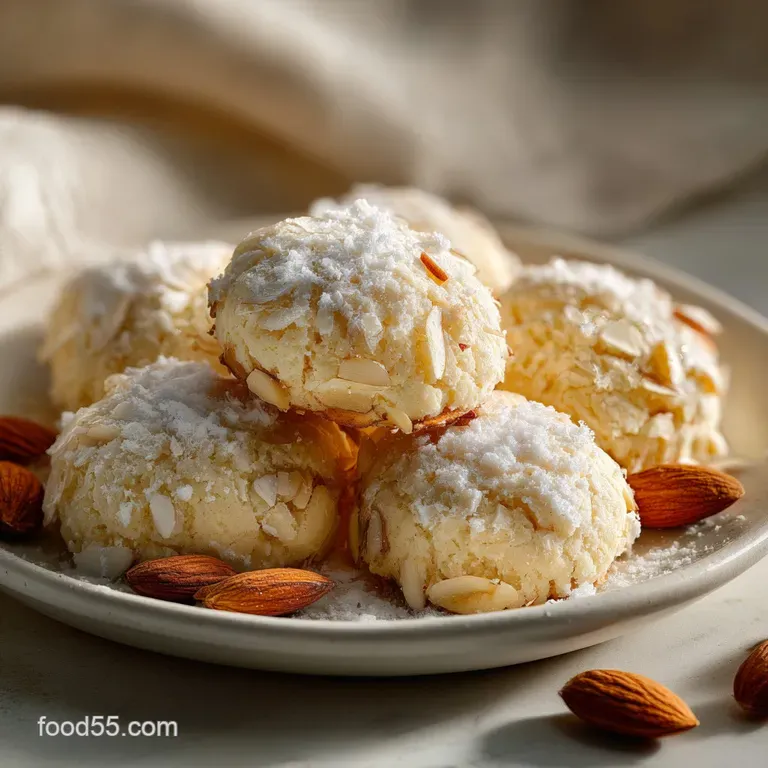
Why Your Cookies Spread Too Much
If your cookies come out looking like thin pancakes, the butter was likely too warm before it went into the oven. Butter has a very specific melting point. If it starts the baking process at room temperature (around 21°C), it will liquify before the flour has a chance to set.
Another culprit could be over creaming, which incorporates too much air that then collapses.
Why Your Dough Is Crumbly
A dry, sandy dough that won't hold a ball shape usually means the flour was measured by volume (cups) rather than weight (grams). A "cup" of flour can vary by as much as 30 grams depending on how it's packed! If it's too late and the dough is already made, try adding a teaspoon of milk to bring it back together.
| Problem | Root Cause | Solution |
|---|---|---|
| Cookies are tough | Over worked gluten | Mix flour only until just combined |
| Glaze is transparent | Too much milk | Add powdered sugar 1 tbsp at a time |
| Bottoms are burnt | Dark baking sheet | Use light colored pans or double stack them |
Common Mistakes Checklist
- ✓ Always weigh your flour and cornstarch using a digital scale for accuracy.
- ✓ Don't skip the sifting; cornstarch is notorious for forming stubborn clumps.
- ✓ Ensure the oven is fully preheated for at least 20 minutes before the first tray goes in.
- ✓ Let the cookies cool completely on the pan; they are too fragile to move while warm.
- ✓ Use pure extracts artificial almond flavor can leave a chemical aftertaste.
Adjusting the Batch Size
If you are cooking for a smaller household, you can easily halve this recipe. Since there are no eggs involved, you don't have to worry about "half an egg" math! Just cut every weight in half.
Use the same 175°C temperature but start checking for doneness at 8 minutes, as smaller batches can sometimes bake faster due to better airflow in the oven.
When scaling up for a big celebration or shared meal, double the ingredients but be careful with the extracts. I usually suggest using 1.5x the almond extract instead of a full 2x to avoid the flavor becoming overpowering.
Work in batches and keep the dough in the fridge between tray rotations to keep that butter chilled.
Creative Variations and Flavor Swaps
If you want a citrus twist, add the zest of one lemon to the dough. The acidity of the lemon cuts through the richness of the butter beautifully. For those looking to make these gluten-free, use a high-quality 1:1 blend. The texture will be slightly more "short" and crumbly, but the flavor remains heavenly.
- Toasted Almond Crunch: Press a single slivered almond into the center of each cookie before baking.
- Chocolate Drizzle: Skip the almond glaze and drizzle with melted dark chocolate for a "Joy" bar vibe.
- Spiced Almond: Add 1/4 tsp of ground cardamom to the flour for a sophisticated, warming aroma.
If you enjoy playing with fruity glazes, check out the technique in my DonutShaped Apple Snacks recipe. Applying a glaze to a warm surface requires a specific consistency that you can master with a bit of practice.
The Truth About Butter Temperature
There is a myth that "softened butter" means it should be squishy. In reality, for a meltaway cookie, the butter should be around 18°C. If you can push your finger into it and it leaves an indent but doesn't slide around, it’s ready. If it’s shiny or greasy, it’s too warm.
Pop it back in the fridge for 5 minutes.
Another myth is that you must use expensive European butter. While the higher fat content is nice, standard supermarket unsalted butter works perfectly here because the cornstarch does the heavy lifting for the texture. You don't need to overspend to get a sublime result.
Guidelines for Storing Your Treats
These cookies stay fresh in an airtight container at room temperature for up to 5 days. Because of the high fat content, they actually develop a deeper flavor by day two. If you need to store them longer, they freeze beautifully.
Place the glazed and set cookies in a single layer on a tray to freeze, then transfer to a freezer bag for up to 2 months.
To use up scraps or extra glaze, try drizzling it over morning oatmeal or using it as a dip for apple slices. If you have leftover almond dough that didn't make it into a ball, crumble it over yogurt for an instant "deconstructed" dessert. Zero waste is all about seeing the potential in the leftovers!
Elegant Pairings for Shared Moments
These simple glazed almond cookies are practically begging to be served with a hot drink. A floral Earl Grey tea or a dark, nutty roast coffee complements the almond extract perfectly.
If you're hosting a brunch, they also pair surprisingly well with a crisp Prosecco the bubbles scrub the palate between buttery bites.
For a full dessert spread, serve these alongside something fruity. They are the perfect accompaniment to the flavors found in my Apple Croissants with recipe. The contrast between the flaky puff pastry and the meltaway almond cookie creates a texture journey that your guests won't forget. Bringing people together over a tray of these is one of life's simplest, most genuine joys.
Recipe FAQs
Can I substitute granulated sugar for the powdered sugar in the dough?
No, use powdered sugar. Granulated sugar crystals are too large and will result in a gritty texture instead of the smooth, melt-in-your mouth consistency.
How to know when the cookies are done baking if they look underdone?
Check only for set edges. These cookies are meant to bake minimally; if the edges hold their shape and are just firm to the touch, they are finished, even if the center looks pale.
Is it true that using eggs makes these cookies too chewy?
Yes, eggs will develop gluten. Since this recipe relies on a high fat ratio for tenderness, skipping eggs prevents gluten formation, ensuring a delicate, shortbread like crumb.
How to store the finished glazed cookies to keep them soft?
Store in an airtight container at room temperature. For best results, allow the glaze to fully harden before sealing them, which usually takes about 30 minutes.
How to make the glaze shiny and thin instead of opaque and thick?
Increase the liquid slightly. If your glaze sets too fast, add milk or water, one teaspoon at a time, whisking vigorously until you achieve a thin ribbon consistency.
Can I use brown butter in this recipe for a deeper flavor profile?
Yes, but chill the browned butter first. After browning the butter, you must chill it until it is solid again before creaming it with the sugar. If you skip chilling, the cookies will spread uncontrollably, similar to issues seen when using soft butter in our How to Bake recipe.
What is the purpose of adding cornstarch to a cookie dough?
Cornstarch prevents gluten formation. It absorbs moisture while physically interfering with the flour proteins bonding, which directly results in the signature tender shatter.
Melt In Your Mouth Almond Cookies
Ingredients:
Instructions:
Nutrition Facts:
| Calories | 137 kcal |
|---|---|
| Protein | 0.9 g |
| Fat | 7.7 g |
| Carbs | 16.0 g |
| Fiber | 0.2 g |
| Sugar | 7.4 g |
| Sodium | 26 mg |
