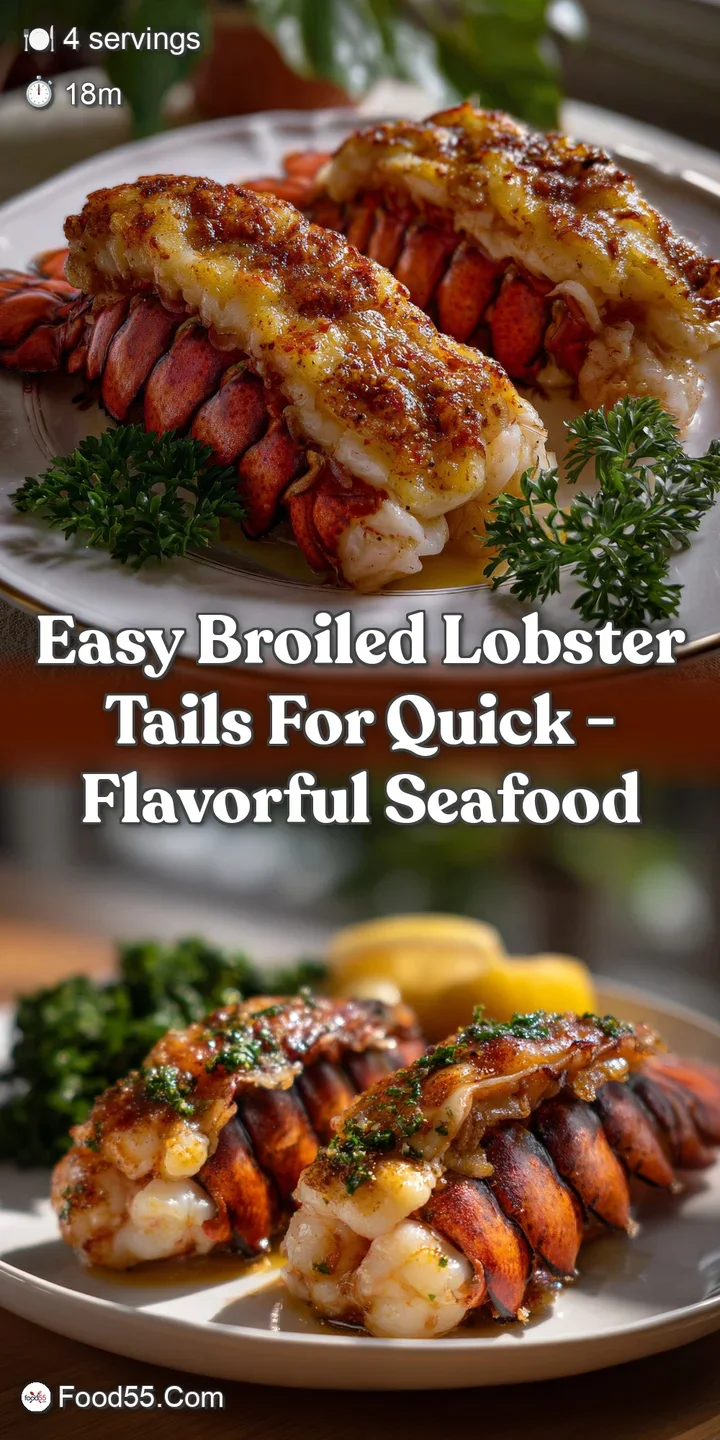
Easy Broiled Lobster Tails for Quick: 18-Minute Seafood Dinner
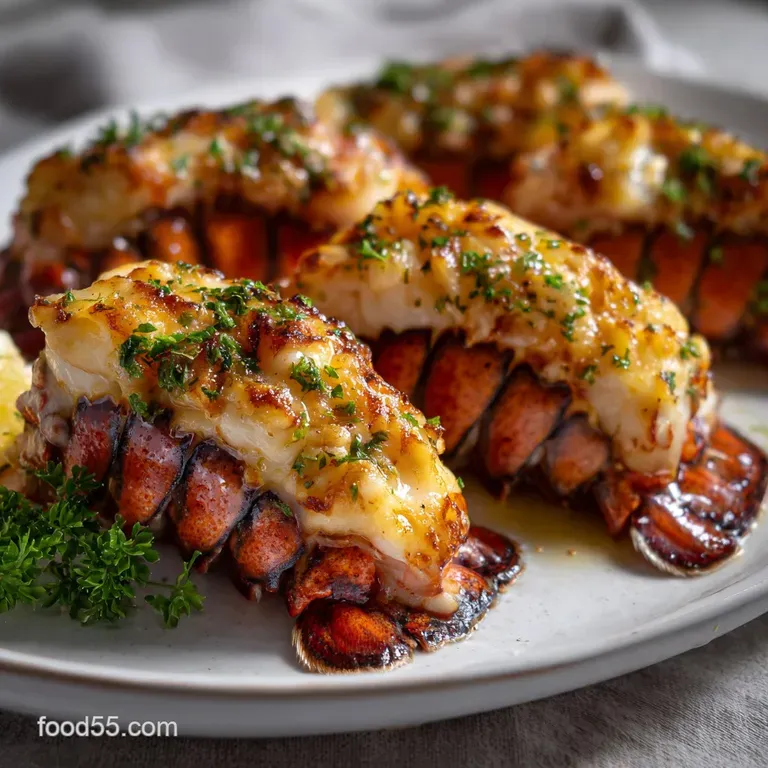
- Effort/Time: Minimal prep / 18 minutes total.
- Flavor Hook: Rich garlic-herb emulsion paired with charred, sweet oceanic meat.
- Perfect for: Weeknight luxury or a fail-proof "surf" for your surf and turf.
- Master the Ultimate Easy Broiled Lobster Tails for Quick
- The Physics of Flash Heat and Succulent Protein
- Calculating the Thermal Dynamics of Your Seafood Feast
- The Essential Chemistry of Coastal Flavor Profiles
- Precision Instrumentation for Professional Seafood Results
- Executing the Butterfly Technique with Culinary Precision
- Correcting Textural Failures and Heat Distribution Issues
- Structural Adaptations for Alternate Dietary Protocols
- ⚗️ The Scaling Lab: The Physics of Quantity
- Preserving Structural Integrity During Cooling and Storage
- Curating the Ultimate Visual and Flavor Presentation
- Recipe FAQs
- 📝 Recipe Card
Master the Ultimate Easy Broiled Lobster Tails for Quick
There is nothing quite as soul crushing as spending $80 on premium shellfish only to pull a tray of rubbery, flavorless "pencil erasers" out of the oven. I’ve been there standing over the sink, trying to salvage overcooked meat that’s fused to the shell like industrial grade epoxy.
When you're attempting Easy Broiled Lobster Tails for Quick, the margin for error is razor thin because the financial and emotional stakes are so high.
In my early days, I mistakenly treated lobster like a chicken breast, assuming "more time equals more safety." I destroyed three batches of cold water tails before I realized the physics of crustacean protein is entirely different from land based collagen.
If you apply heat for even sixty seconds too long, the actin and myosin filaments tighten into a knotted, dry mess that no amount of melted butter can save.
The revelation came when I stopped looking at the timer and started looking at the thermodynamics of the broiler. The secret to Easy Broiled Lobster Tails for Quick isn't a complex marinade; it’s the butterfly technique combined with a high fat thermal shield.
By elevating the meat, we expose it to direct infrared waves that trigger the Maillard reaction on the surface while the shell acts as a protective heat sink for the delicate underside. This creates a succulent, snapping texture that releases from the shell with a gentle tug.
The Physics of Flash Heat and Succulent Protein
- Radiant Heat Transfer: The broiler uses electromagnetic infrared waves to excite molecules on the meat's surface instantly, bypassing the slower conduction of air.
- Protein Denaturation Threshold: Crustacean proteins (specifically myosin) denature at 140°F (60°C); staying just below this peak ensures the meat remains "shimmering" and velvety rather than opaque and tough.
- Capillary Action Basting: The 4 tbsp (56g) of melted butter creates a hydrophobic barrier, trapping the lobster’s natural juices within the muscle fibers as they contract.
- The Butterfly Thermal Gap: Elevating the meat above the shell creates an air pocket that prevents the meat from "stewing" in its own liquid, allowing for a concentrated, sweet finish.
Calculating the Thermal Dynamics of Your Seafood Feast
When preparing Easy Broiled Lobster Tails for Quick, precision is your only safeguard against ruin. We are targeting a total time of 18 minutes from the moment you pick up your shears to the final garnish.
The "Quick" in Easy Broiled Lobster Tails for Quick refers to the high efficiency 8 minute cook window where the meat transitions from translucent to a vibrant, snowy white.
Ingredient Chemistry Breakdown
| Ingredient | Chemical/Physical Role (Science) | The Pro Secret (Why This Matters) |
|---|---|---|
| 4 Cold water Lobster Tails | Myosin heavy protein structure | Cold water tails grow slower, resulting in a denser, sweeter cell structure. |
| 4 tbsp Unsalted Butter | Saturated fat thermal shield | High fat content creates a "convection jacket" that prevents moisture evaporation. |
| 1 tbsp Fresh Lemon Juice | Citric acid protein tenderizer | Acid breaks down connective tissue slightly, ensuring a "tender snap" upon first bite. |
| 1/4 tsp Smoked Paprika | Phenolic compound colorant | Adds a smoky depth and promotes a visual "mahogany" char under the broiler. |
The Essential Chemistry of Coastal Flavor Profiles
For a successful Easy Broiled Lobster Tails for Quick Seafood Dinner, your mise en place must be as sharp as your shears.
- 4 Cold water lobster tails (6oz each): Why this? Cold water species have firmer, more succulent meat than warm water spiny lobsters.
- 4 tbsp (56g) Kerrygold Unsalted Butter, melted: Why this? High butterfat content provides a richer mouthfeel and better heat conduction.
- 1/2 tsp (3g) Diamond Crystal Sea Salt: Fine grains dissolve instantly into the butter emulsion.
- 1 tbsp (15ml) Fresh Meyer Lemon Juice: Higher sugar content than standard lemons helps with surface caramelization.
- 2 cloves (10g) Garlic, finely minced: Use a microplane to ensure the garlic oils are fully released into the fat.
- 1/4 tsp (1g) McCormick Sweet Smoked Paprika: Provides the essential red hue that signals "perfectly cooked."
- 1 tsp (2g) Fresh Parsley and 1/2 tsp (1g) Chives: These add volatile oils that provide a bright, herbal contrast to the heavy fats.
| Original Ingredient | Substitute | Why It Works |
|---|---|---|
| Unsalted Butter | Ghee (Clarified Butter) | Higher smoke point; prevents the milk solids from burning under the broiler. |
| Sea Salt | Kosher Salt | Similar clean salinity without the metallic aftertaste of iodized salt. |
| Fresh Chives | Dried Chives | Note: Use half the amount. Lacks the vibrant green "pop" but provides the same allium depth. |
Precision Instrumentation for Professional Seafood Results
To execute Easy Broiled Lobster Tails for Quick properly, you cannot rely on dull kitchen knives. You need a Nordic Ware Aluminum Baker's Half Sheet for even heat distribution darker pans may absorb too much heat and scorch the bottom of the shells.
For the butterfly technique, a pair of Wüsthoff Come Apart Kitchen Shears is non-negotiable. You need the leverage to crack through the calcified chitin without crushing the delicate meat underneath.
A Le Creuset Silicone Basting Brush is also superior to nylon, as it won't melt under the intense 500°F (260°C) heat of the broiler and allows you to "pave" the butter into every crevice of the lobster meat.
Chef's Note: If you're serving this as part of a larger spread, the smoky notes of the paprika in this recipe pair beautifully with a Homemade Turkey Rub recipe if you're doing a coastal Thanksgiving or a complex roast.
Executing the Butterfly Technique with Culinary Precision
1. The Butterfly Prep
Place the lobster tail on the cutting board, shell side up. Use your shears to snip down the center of the shell, stopping just before the tail fin. Be careful not to cut the meat think of it like opening a jacket.
2. The Meat Elevation
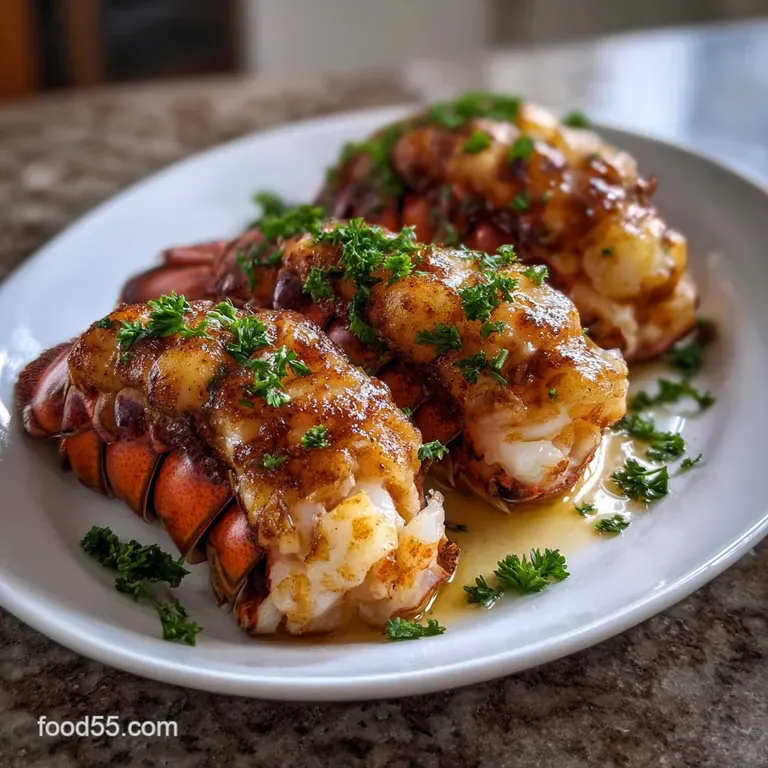
Using your thumbs, gently pry the shell open and slide your finger between the meat and the bottom shell. Lift the meat upward, keeping the end attached to the fin, and rest it on top of the closed shell edges. This is the hallmark of the Easy Broiled Lobster Tails for Quick method.
3. The Emulsion Assembly
In a small bowl, whisk the melted butter, garlic, lemon juice, salt, and paprika. You are looking for a cohesive, shimmering yellow liquid.
4. The Basting Protocol
Brush the lobster meat generously with the butter mixture. Ensure the garlic bits are evenly distributed so they can toast.
5. The Broiler Position
Adjust your oven rack so the lobster meat will be 5 6 inches away from the heat element.
6. The First Heat Cycle
Slide the pan in and broil for 4 minutes until the butter starts to bubble and hiss aggressively.
7. The Mid-Cook Baste
Open the oven and apply the remaining butter. This prevents the surface from drying out as the internal temperature rises.
8. The Final Char
Broil for another 3 4 minutes until the meat is opaque and the top shows tiny spots of golden brown caramelization.
9. The Texture Check
The meat should feel firm but springy to the touch. It should not be "shriveling" away from the shell edges.
10. The Finishing Touch
Garnish with the fresh parsley and chives immediately until the heat of the lobster releases the herbs' fragrance.
Correcting Textural Failures and Heat Distribution Issues
Why Your Lobster is Rubbery
This is almost always a result of protein over denaturation. When the internal temperature exceeds 145°F, the muscle fibers squeeze out all their moisture. It’s the same reason a Rice Pudding recipe gets grainy if boiled too hard the proteins lose their ability to hold water.
| Problem | Root Cause | Solution | Pro Protocol |
|---|---|---|---|
| Meat is Tough | Overcooked / Internal temp >145°F | Pull at 135°F; let carryover heat finish the job. | Use an instant read thermometer. |
| Meat Sticks to Shell | Membrane wasn't separated | Ensure you run your finger under the meat before lifting. | Use a spoon to gently "scoop" the meat out before broiling. |
| Burnt Garlic | Rack too high | Move rack to 6 inches below element. | Mince garlic finer so it incorporates into the butter better. |
Structural Adaptations for Alternate Dietary Protocols
While this Easy Broiled Lobster Tails for Quick Seafood Dinner is designed for the purist, variations can enhance the experience depending on your side dishes. For instance, pairing this with a Classic Pea Salad Recipe provides a cold, creamy contrast to the hot, buttery lobster.
The Spicy Cajun Twist
Replace the smoked paprika with 1 tsp of high-quality Cajun seasoning. The cayenne and oregano will bloom in the hot butter, creating a "blackened" effect that is deeply savory.
dairy-free / Paleo Option
Substitute the 4 tbsp of butter with Nutiva Organic Virgin Coconut Oil. While the flavor shifts toward the tropical, the fat content is nearly identical, ensuring the meat stays moist. Note that coconut oil will cause the lobster to brown slightly faster due to different sugar structures.
⚗️ The Scaling Lab: The Physics of Quantity
When you decide to double this Easy Broiled Lobster Tails for Quick recipe for a party, you cannot simply double everything and hit "start."
- The Evaporation Paradox: If you double the butter/lemon baste in the same small bowl, the lemon juice won't emulsify as easily. Whisk vigorously for an extra 30 seconds.
- Pan Crowding (The Steaming Trap): If you cram 8 tails onto one sheet, you create a "moisture tent." The steam released from the shells will lower the ambient temperature, preventing the meat from searing. Mandatory instruction: Use two separate pans or broil in batches.
- Carry Over Cooking: A larger tray of 8 tails has more "thermal mass." They will hold heat longer once removed from the oven. Pull them 2 minutes earlier than a single batch to avoid the rubbery texture caused by residual heat energy.
Preserving Structural Integrity During Cooling and Storage
Myth: You can't reheat lobster. Truth: You can, provided you use the "Steam Shield" method. Reheating in a microwave will turn the meat into a bouncy ball.
Instead, place leftovers in a pan with 2 tbsp of water, cover tightly with foil, and heat at 300°F (150°C) for 10 minutes. This re-hydrates the proteins.
Storage: Store in an airtight container for up to 2 days. The high fat content in the butter helps preserve the meat, but the lemon juice will eventually start to "cook" the lobster (like ceviche), changing the texture.
💡 ZERO WASTE PHILOSOPHY: Don't discard the shells. Transform: Simmer the empty shells in 4 cups of water with an onion and a carrot for 45 minutes to make a concentrated lobster stock.
Science: The shells contain chitin and residual protein that release deep umami flavors and minerals into the water, creating a base for a world class bisque.
Curating the Ultimate Visual and Flavor Presentation
The presentation of Easy Broiled Lobster Tails for Quick is half the experience. The "butterfly" isn't just for cooking; it’s for theater.
The Surf & Turf
Serve one tail alongside a 6oz filet mignon. The garlic herb butter from the lobster naturally migrates toward the steak, creating a unified flavor profile. The vibrant red of the paprika dusted shell provides a stunning visual contrast to the deep brown sear of a steak.
The Classic Pairing
If serving as a standalone meal, a bed of jasmine rice or a simple arugula salad with a vinaigrette is all you need. The acidity of the salad cuts through the 196 kcal of richness provided by the butter.
This Easy Broiled Lobster Tails for Quick method ensures that the lobster remains the star tender, buttery, and unmistakably luxurious.
Recipe FAQs
What is the primary goal of the "butterfly" technique?
Expose the meat to direct radiant heat. The technique elevates the meat above the shell, preventing the lower side from stewing. This allows the top surface to caramelize quickly while the meat remains tender.
Why must I use unsalted butter?
Why does the lobster meat become rubbery after cooking?
- Pull at 135°F for carryover heat
- Ensure your finger slides under the meat
- Use an instant read thermometer for verification
Can I use pre-shelled lobster meat instead?
Is broiling faster than baking lobster tails?
Myth: Washing raw lobster removes harmful bacteria.
Should I use cold water or warm water tails?
Quick Broiled Lobster Tails
Ingredients:
Instructions:
Nutrition Facts:
| Calories | 196 kcal |
|---|---|
| Protein | 19.3 g |
| Fat | 12.4 g |
| Carbs | 1.2 g |
| Fiber | 0.1 g |
| Sugar | 0.2 g |
| Sodium | 772 mg |
