Thanksgiving Stuffing: the Proper Sourdough Sausage Classic
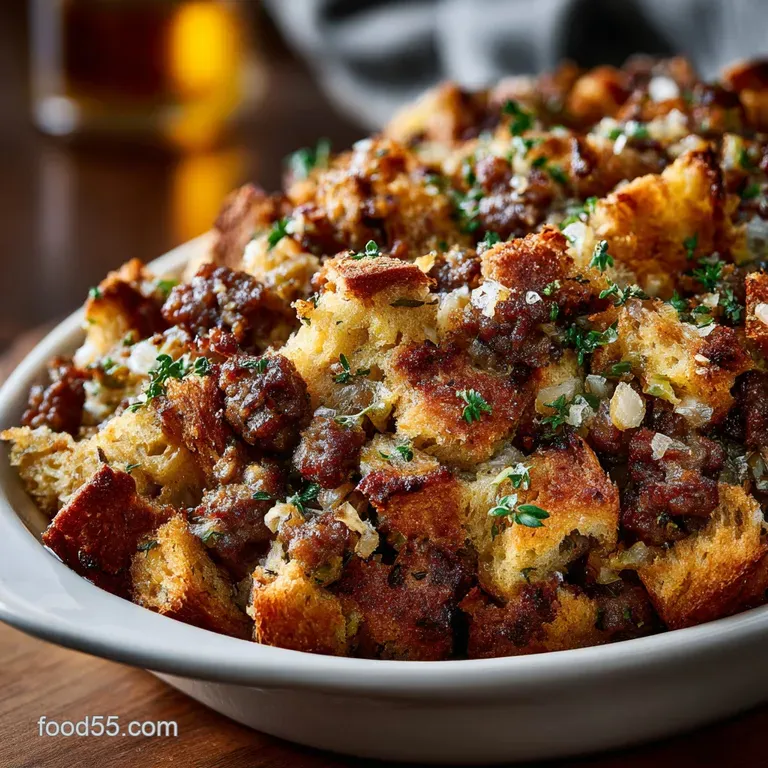
- The Definitive Sourdough & Sausage Thanksgiving Stuffing Recipe
- The Science of Perfect Stuffing: Texture and Flavour Depth
- What You'll Need: Key Ingredients for the Ultimate Dressing
- Step-by-Step Guide: How to Bake the Perfect Stuffing
- Troubleshooting and Expert Secrets for Moist, Crispy Stuffing
- Make-Ahead Strategies and Storing Leftover Thanksgiving Stuffing
- Serving Suggestions and Holiday Pairings
- Recipe FAQs
- 📝 Recipe Card
The Definitive Sourdough & Sausage Thanksgiving Stuffing Recipe
Is there any smell more comforting than fresh sage and melted butter wafting through the house on Thanksgiving morning? That crispy, golden top layer hiding a buttery, deeply savory interior is pure holiday magic. Seriously, forget the turkey; this homemade Thanksgiving Dressing is the true star of the entire meal.
This isn't one of those overly complicated, hours long holiday projects, either. We're keeping the technique simple and focusing on building deep flavor layers, which is exactly what you need when the rest of the kitchen is in chaos.
It’s shockingly easy to nail this classic pan stuffing recipe, even if you’re pulling double duty on the mashed potatoes and gravy.
I’ve made every mistake in the book soggy bottoms, dry-as-dust crusts so I’ve worked out all the kinks for you over the years. This Thanksgiving Stuffing recipe, built on sturdy sourdough and flavourful sausage, guarantees perfection every single time.
Let's crack on and learn how to make the best oven baked stuffing Thanksgiving has ever seen.
The Science of Perfect Stuffing: Texture and Flavour Depth
The Difference Between Stuffing and Dressing (And Why We Use a Casserole)
Look, I know this debate rages every November, but here is the simple truth. Stuffing is traditionally cooked inside the bird, while dressing is cooked in a separate casserole dish. I always bake mine in a pan for two crucial reasons: safety and texture.
We want that crispy top crust , which you simply cannot get when it’s crammed inside a turkey cavity. Plus, baking in the oven means you don't have to worry about the temperature reaching safe limits deep inside the bird, making this a much less stressful process.
We are making a superior pan stuffing recipe today!
Why Sourdough is the Superior Base Bread for Structure
Using the wrong bread is the #1 reason people end up with gummy stuffing. Sourdough has a much sturdier crumb and a robust crust compared to soft white sandwich bread, meaning it holds its shape perfectly, even after soaking up all that rich liquid. It provides great chewiness, excellent flavor, and critical structure.
This prevents the mixture from collapsing into an unappetizing mush once baked.
Achieving the Golden, Crispy Top While Maintaining Interior Moisture
This is where the magic (and a little science) happens. We achieve the perfect moist-to-crispy ratio by using a two-stage baking process. First, we bake the stuffing covered with foil, which steams the interior and locks in all the moisture. Then, we remove the foil for the final 15 minutes.
This exposure to high heat dries the top layer, letting the butter and sausage fat caramelize into that gorgeous, golden crust everyone fights over.
The Crucial Role of Fat Rendering from the Sausage
The sausage isn't just for flavour; it’s a critical fat source. By browning the mild Italian sausage first, we render out the fat, creating a flavourful cooking medium for the celery and onions.
This rendered fat replaces some of the butter , coating the bread cubes and infusing them with savory depth before the stock even touches them. If you skip this step, the stuffing will taste flat.
Staling vs. Drying: Preparing Your Bread Cubes for Optimal Soak
Listen up: you don't just want stale bread; you want dry bread. Stale bread is simply hard, but dry bread has truly evaporated its internal moisture, making it an absorption machine. I promise, skipping this step means your homemade Thanksgiving dressing will be soggy and dense.
Spread the cubes on a sheet pan the day before and let them air dry, or quickly bake them until firm but not toasted.
Calculating Moisture Absorption: Stock Ratios for Non-Soggy Results
The ratio of stock to bread is everything, truly. Sourdough requires quite a bit of liquid because it is so dense. We use a generous amount of chicken stock combined with a couple of eggs (the binder). The trick is to pour slowly and stop when the bread is thoroughly damp, not swimming.
Let it sit for 10 minutes before you decide if you need more liquid; the bread needs time to absorb fully.
What You'll Need: Key Ingredients for the Ultimate Dressing
Choosing the Right Sausage Meat (Mild vs. Hot Flavour Profile)
I strongly prefer mild Italian pork sausage for this specific recipe because it offers rich seasoning (often fennel and garlic) without overpowering the herbs. If you want a little kick, go for the hot Italian variety, but skip the sweet type it throws off the savoury balance. Pro Tip: If you need to make a batch without pork, using ground turkey and seasoning it aggressively with fennel seed works really well, too. You can see a variation of this in my Sausage Stuffing: The Best Crispy Oven Baked Dressing Recipe .
Herb Selection: Fresh vs. Dried Sage and Thyme Quantities
The intense, woodsy flavour of Thanksgiving is defined by sage and thyme. You absolutely must use fresh herbs here. Dried herbs are a pale comparison and require about one-third the amount.
Since fresh herbs contribute essential oils, they bloom beautifully when sautéed in the butter and sausage fat, making the whole dish smell ridiculously festive.
Substituting Chicken Stock for Homemade Broth
If you have homemade turkey or chicken broth, use it! It adds incredible, deep flavor, but low-sodium store-bought chicken stock is perfectly fine, too. Just make sure it’s low sodium so you can control the salt content yourself.
If you only have high sodium stock, reduce the added salt in the recipe by half a teaspoon initially.
Ingredient Quantities at a Glance (The Essential List)
| Ingredient | Quantity | Viable Substitution |
|---|---|---|
| Sourdough Bread | 1 large loaf (1.2 kg cubed) | Rustic country loaf or Challah |
| Pork Sausage | 450 g (1 lb) | Ground turkey/chicken (heavily seasoned) |
| Unsalted Butter | 175 g (12 Tbsp) | high-quality olive oil or rendered duck fat |
| Yellow Onions & Celery | 2 large onions, 4 ribs celery | Leeks (white parts only) |
| Fresh Sage & Thyme | 2 Tbsp Sage, 1 Tbsp Thyme | 1 tsp dried sage, 1/2 tsp dried thyme |
| Chicken Stock | 950 ml (4 cups) | Vegetable or Turkey Stock |
| Eggs | 2 large | Not recommended for substitution (needed for binding) |
step-by-step Guide: How to Bake the Perfect Stuffing
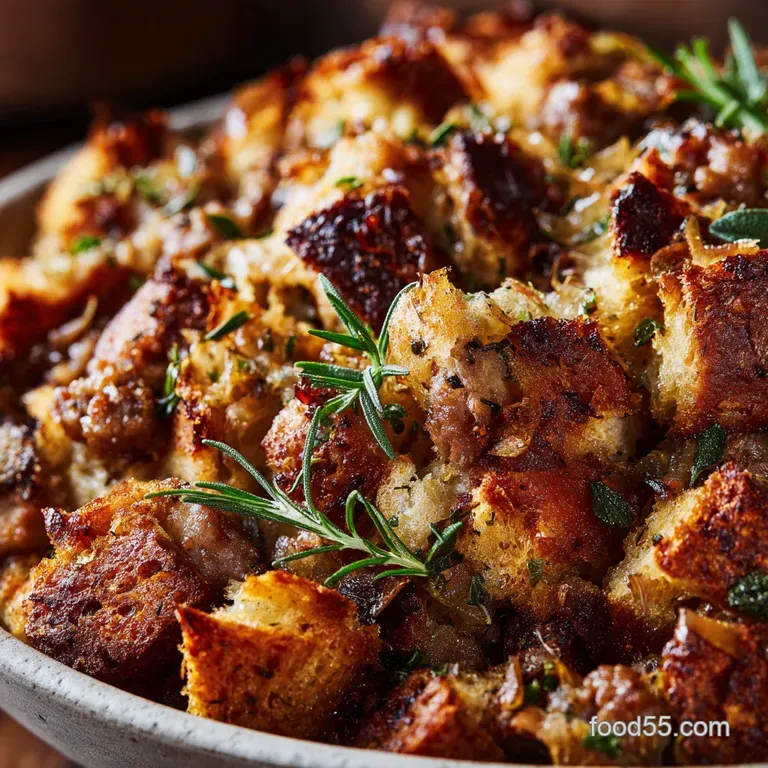
Preparing the Aromatics and Rendering the Sausage Base
Get a large, heavy skillet on the stove. This is where all the flavour starts. First, cook the sausage until it’s perfectly browned, breaking it up as you go. Scoop the sausage out with a slotted spoon and set it aside, leaving the glorious rendered fat behind. Now, melt the rest of the butter in that same pan.
Add the onions and celery and cook them low and slow until they are translucent and soft you are sweating them, not browning them, for about 8 to 10 minutes.
Finally, stir in the garlic, fresh sage, and thyme and cook for just 60 seconds until you smell that nutty, incredible aroma.
The Critical Mixing Stage: Ensuring Even Saturation of Liquid
Place all the dried bread, the cooked sausage, and the aromatic mixture into your absolute biggest mixing bowl. Toss everything gently to combine. Now, whisk your stock and eggs together in a separate bowl. Slowly pour about three quarters of the liquid mixture over the bread, tossing carefully with a spatula.
The goal is dampness, not sogginess. Let the mixture rest for 10 minutes. If, after resting, you see dry crumbs at the bottom, add the remaining stock until everything is uniformly saturated.
Loading the Baking Dish: Density and Consistency Checks
Lightly grease your 9x13 inch casserole dish. Transfer the stuffing mixture to the prepared dish. You want it packed just tightly enough so that it holds its shape, but not so compacted that air cannot circulate. If you pack it too firmly, you’ll end up with dense, doughy stuffing.
If you prefer more crispy edges, you can pile it higher in the middle and leave more surface area exposed around the edges of the pan.
Baking Time and Temperature Calibration for the Holidays
Preheat your oven to 190°C (375°F). Cover the stuffing tightly with aluminium foil and bake for 25 minutes. This crucial step ensures the centre cooks through and stays incredibly moist.
Then, pull the foil off and crank the heat slightly or simply continue baking for another 15 to 20 minutes. You’re looking for a dark, golden brown crust and an internal temperature of 75°C (165°F).
Chef's Note: If you are baking other items at a lower temperature (like 175°C / 350°F), you can still bake the stuffing, but you must add 15 to 20 minutes to the total baking time and check the internal temperature closely.
Troubleshooting and Expert Secrets for Moist, Crispy Stuffing
Fixing Stuffing That Is Too Dry or Excessively Soggy
The horror of dry stuffing is easily fixed! If you pull it out of the oven and realize it's too crumbly, cover it immediately and pour 1/4 cup of warm chicken stock over the top. Let it steam for 10 minutes.
If your stuffing is excessively soggy (gummy texture), it means you used fresh bread or way too much stock. There’s no perfect cure once baked, but you can try scooping the wettest parts into a hot, dry pan and cooking it stovetop until the moisture evaporates and a crust forms.
Ensuring the Bottom Layer Isn't Sticky or Undercooked
A sticky bottom layer usually means the casserole dish wasn't preheated or the dish wasn't properly greased, or it was packed too tightly. Make sure you use a generous amount of butter or cooking spray on the baking dish.
Another option is to line the bottom of the dish with parchment paper before filling, which makes cleanup (and unstuck bottoms) much easier.
make-ahead Strategies and Storing Leftover Thanksgiving Stuffing
Preparing the Components 24 Hours in Advance
Thanksgiving is stressful enough! You can absolutely make this dish ahead. Prepare the bread, cook the sausage and aromatics, and prepare the liquid mixture. Keep the bread/sausage/aromatic mixture separate from the liquid.
Store the solids in an airtight container at room temperature and the liquid (stock/eggs) in the refrigerator. Combine and bake 30 minutes before your guests arrive.
Safe Refrigeration and Maximum Storage Times for Cooked Stuffing
Stuffing that has been cooked outside the bird will last safely in an airtight container in the refrigerator for 3 to 4 days. Safety Warning: If you accidentally stuffed the bird and removed the stuffing, treat it as leftovers immediately and consume within 1 day, due to exposure to raw poultry juices.
Best Practices for Freezing Leftover Stuffing
Does Thanksgiving stuffing freeze well? You bet it does. Cool the cooked stuffing completely, then scoop individual portions into freezer safe containers or freezer bags, pressing out all the air. It will keep well for up to 3 months. Thaw overnight in the refrigerator before reheating.
Serving Suggestions and Holiday Pairings
Stuffing is the perfect partner to just about everything else on the holiday table. While you’re thinking about your sides, I highly recommend checking out my recipe for Thanksgiving Vegetable Side Dishes: Crispy Brussels Sprouts with Glaze — that slight bitterness cuts through the richness of this stuffing beautifully.
Reheating Stuffing Without Drying Out the Bread Cubes
Never microwave stuffing unless you want a sad, rubbery mess. The best way to reheat is in the oven. Preheat the oven to 175°C (350°F). Place the stuffing in an oven safe dish, splash a spoonful of stock or water over it, and cover it tightly with foil.
Bake for 15 to 20 minutes until piping hot throughout. The foil and the added moisture prevent it from turning into dry crumbs.
Recipe FAQs
Why is my stuffing dry and crumbly, even though I used the specified amount of stock?
Stuffing can quickly dry out if it is not properly covered during the initial bake time; ensure you are tenting the dish tightly with foil for at least the first 40 minutes to trap steam.
If your stuffing is already dry, stir in an extra few tablespoons of warmed chicken or vegetable stock and quickly cover it before returning it to the oven for a final 10-minute steam.
Can I assemble the stuffing mixture ahead of time to save effort on Thanksgiving morning?
Yes, prepping ahead is highly recommended for holiday ease. You can mix all the ingredients, including the stock, sausage, and herbs, place it in the baking dish, and refrigerate it tightly covered for up to 24 hours.
Just remember to let the dish sit at room temperature for about 30 minutes before baking to ensure even heat distribution in the center.
I have guests who are vegetarian. How can I adapt this recipe for them?
To convert this into a delicious vegetarian dressing, omit the sausage entirely and instead sauté a full cup of sliced mixed mushrooms (like cremini and shiitake) with the onion and celery.
Ensure you swap out the chicken stock for high-quality vegetable broth, which will still provide the necessary savory depth without the meat products.
What should I do if my stuffing mixture looks too wet or soggy before baking?
Sogginess often occurs if the bread wasn't sufficiently dried out before mixing, preventing proper absorption. To fix a wet mix, gently fold in about one cup of extra, newly toasted bread cubes this will soak up excess liquid without requiring a major recipe adjustment.
You can also bake the stuffing uncovered at 400°F (200°C) for the last 15 minutes to help evaporate moisture.
Is it safe to cook this sourdough stuffing directly inside the turkey cavity?
While traditional, cooking stuffing inside the turkey is discouraged by food safety experts, as the stuffing often does not reach the required internal temperature of 165°F (74°C) before the turkey is done.
For the safest and most texturally satisfying results (crispy top, moist interior), we recommend cooking the mixture separately in a baking dish as a dressing.
How long will leftover stuffing stay fresh, and can I freeze it?
Leftover stuffing should be cooled quickly and stored in an airtight container in the refrigerator, where it will remain fresh and safe to eat for 3 to 4 days. While you can freeze the cooked stuffing, the texture of the bread and vegetables may become somewhat mushy upon thawing; if freezing, ensure it is double wrapped and consumed within one month.
I don't have sourdough. Are there other types of bread that work well for this recipe?
Absolutely; the key requirement is a hearty, dense bread that won't disintegrate when wet, such as a sturdy Italian loaf, French baguette, or rustic challah bread. Regardless of the type, always cut the bread into cubes and dry them thoroughly in a low-temperature oven before proceeding with the recipe to ensure maximum absorption and structure.
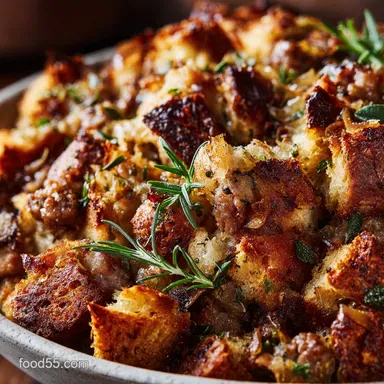
Sourdough Sausage Thanksgiving Stuffing
Ingredients:
Instructions:
Nutrition Facts:
| Calories | 420 calories |
|---|---|
| Fat | 25 g |
| Fiber | 4 g |
