Southern Black Eyed Peas Recipe: Velvety Umami Finish
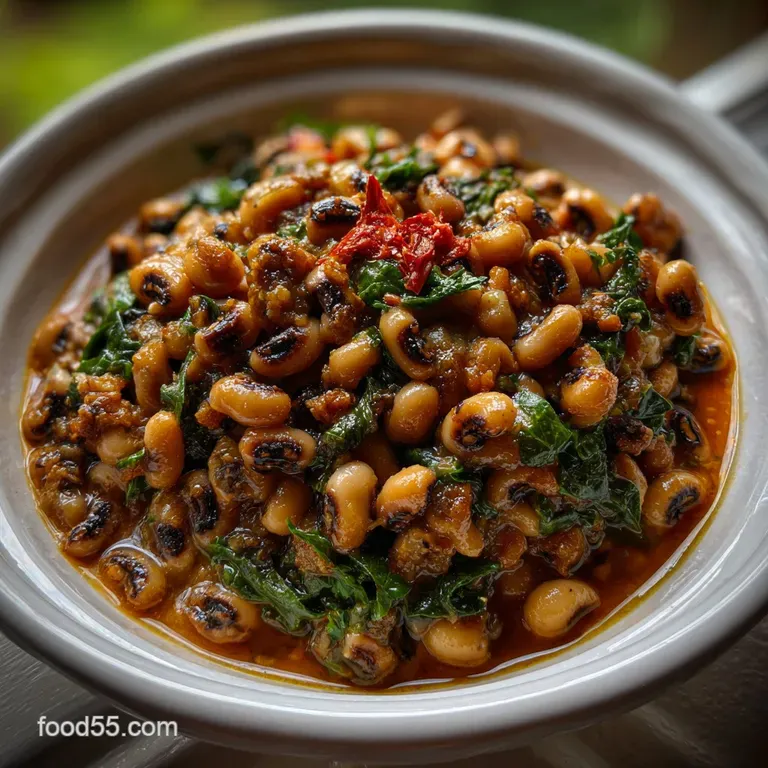
- Effort/Time: Low-effort prep, 1 hour 30 mins active/passive simmer.
- Flavor Hook: Deep umami from smoked ham hocks balanced by a bright, aromatic "Holy Trinity" base.
- Perfect for: High-protein meal-prep, New Year’s Day traditions, or a cozy make-ahead weeknight dinner.
- The Alchemy of Low and Slow: Why This Southern Black Eyed Peas Recipe Succeeds
- The Structural Physics of Legumes: Understanding the Specs
- The Molecular Foundation: Selecting Your Primary Elements
- Precision Thermal Conductors: Essential Kitchen Armory
- Atomic Execution: The Sequence of Flavor Development
- Correcting Structural Anomalies: Troubleshooting Common Failures
- Molecular Adaptations: Variations and Ingredient Swaps
- ⚗️ The Scaling Lab: The Physics of Quantity
- Preserving the Matrix: Storage and Thermal Regeneration
- The Culinary Synergy: Presentation and Pairing Protocols
- Recipe FAQs
- 📝 Recipe Card
There is nothing more demoralizing than spending two hours over a stove only to ladle out a bowl of "bullet peas" swimming in a thin, watery gray liquid that tastes like nothing but salt and disappointment.
I’ve seen enthusiasts drop $40 on high end heritage beans only to ruin the texture by introducing acid too early, effectively sealing the bean skins into a permanent, leathery armor that no amount of boiling can penetrate.
When the starch doesn't hydrate and the ham hock refuses to surrender its collagen, you aren't eating a meal; you're eating a technical failure.
I’ve been the person who rushed the sauté, thinking I could save five minutes by blasting the onions on high heat, only to end up with bitter, charred aromatics that haunted the entire pot.
I once even tried to "quick soak" beans in a rush for a New Year's party, resulting in a dish so structurally inconsistent that some peas were mush while others remained crunchier than a raw almond.
It took me years of experimenting with Dutch oven thermodynamics and pH levels to realize that Southern cooking isn't just "tossing things in a pot" it is a precise exercise in moisture migration and protein denaturation.
The breakthrough came when I stopped treating the liquid as "water" and started treating it as an emulsion. The secret to a legendary Southern Black Eyed Peas Recipe isn't a "secret spice"; it's the scientific marriage of the lipids from the ham hock and the released starches from the peas.
By controlling the simmer to a gentle convection, we allow the 1 lb smoked ham hock to slowly release gelatin, which coats each pea in a velvety, mahogany colored sauce that clings to the back of a spoon. This is the difference between a bean soup and a soul warming masterpiece.
The Alchemy of Low and Slow: Why This Southern Black Eyed Peas Recipe Succeeds
This Southern Black Eyed Peas Recipe succeeds because it respects the structural integrity of the dried legume while aggressively extracting flavor from the aromatics. We don't just boil; we build layers of flavor starting with a foundational Maillard reaction.
- Starch Gelatinization: At roughly 140°F to 160°F, the starch granules inside the 1 lb dried black eyed peas absorb water and swell, eventually bursting slightly to thicken the surrounding chicken stock.
- Collagen Hydrolysis: The prolonged simmer at 210°F converts the tough connective tissue in the smoked ham hock into liquid gelatin, providing a rich, lip-smacking mouthfeel that water alone cannot achieve.
- Aromatic Synergy: Sautéing the "Holy Trinity" (onion, celery, bell pepper) in vegetable oil breaks down cellulose, releasing sulfurous compounds and sugars that caramelize and provide a sweet savory baseline.
- Osmotic Balance: By using 6 cups chicken stock combined with 2 cups water, we create a savory mineral environment that seasons the peas from the inside out without over salting the delicate skins.
The Structural Physics of Legumes: Understanding the Specs
When you commit to this Black Eyed Peas Recipe, you are engaging with a specific set of physical constraints. The ratio of liquid to solid is calculated to account for the high absorption rate of the dried peas, which can expand up to 2.5 times their original volume.
Understanding the physics makes perfecting this Southern Black Eyed Peas Recipe much easier.
The 1 hour 30 mins cook time is the "sweet spot" where the 1 lb smoked ham hock reaches peak tenderness where the meat begins to fall away from the bone without the peas disintegrating into a uniform paste.
We are aiming for a textural duality: a bean that holds its shape under a fork but yields like butter upon the first bite.
Totaling 1 hour 45 mins from the first dice to the final seasoning adjustment, this recipe yields 7 servings, each packed with 24 g of protein and 8.2 g of fiber. It is a nutritionally dense powerhouse that relies on time, not processed additives, to develop its signature complexity.
The Molecular Foundation: Selecting Your Primary Elements
Every ingredient in this Eyed Peas Recipe serves a specific chemical or structural purpose. You cannot skip the cleaning process; picking over the dried peas is essential to remove small stones or cracked debris that would ruin the textural experience.
Ingredient Chemistry Breakdown
| Ingredient | Chemical/Physical Role (Science) | The Pro Secret (Why This Matters) |
|---|---|---|
| 1 lb Smoked Ham Hock | Collagen-to-gelatin conversion | Provides the "velvety" body and deep smoky umami. |
| 1 lb Dried Black Eyed Peas | Starch driven thickening | The starch release creates a natural emulsion with the ham hock fats. |
| 1 large Yellow Onion | Maillard reaction/Sulfide release | Becomes the "sugar" backbone once the pungency is cooked out. |
| 2 stalks Celery | Phthalide aromatic delivery | Adds a subtle "salty" herbal note that balances the heavy fats. |
- 1 lb Dried Black Eyed Peas: Why this? High starch content allows for natural sauce thickening without adding flour based rouxs.
- 1 lb Smoked Ham Hock: Why this? The bone-in aspect provides marrow and collagen for superior mouthfeel.
- 1 tbsp Vegetable Oil: Why this? High smoke point allows for searing the "Trinity" without scorching the fat.
- 6 cups Chicken Stock: Why this? Provides a base of glutamates (umami) that water lacks.
Precision Thermal Conductors: Essential Kitchen Armory
To execute this Southern Black Eyed Peas dish with masterclass precision, you need tools that manage heat distribution effectively. Using a thin, stainless steel pot will lead to "hot spots" where the starches at the bottom will scorch, imparting a burnt flavor to the entire batch.
- Lodge 6 Quart Cast Iron Dutch Oven: This is the gold standard. The heavy walls provide thermal mass, meaning once you reach a simmer, the temperature stays consistent even when you add ingredients.
- Wooden Spoon or Flat Edged Spatula: Essential for "fond" management. You need to scrape the caramelized bits off the bottom of the pot after sautéing the vegetables.
- Fine Mesh Sieve: For rinsing the 1 lb dried black eyed peas. Rinsing removes excess surface starch and dust, ensuring your broth stays clear rather than muddy.
- Chef’s Knife (8 inch): For achieving a uniform dice on the onion, celery, and green bell pepper. Uniformity ensures even cooking; you don't want crunchy onion chunks in a soft bean stew.
Atomic Execution: The Sequence of Flavor Development
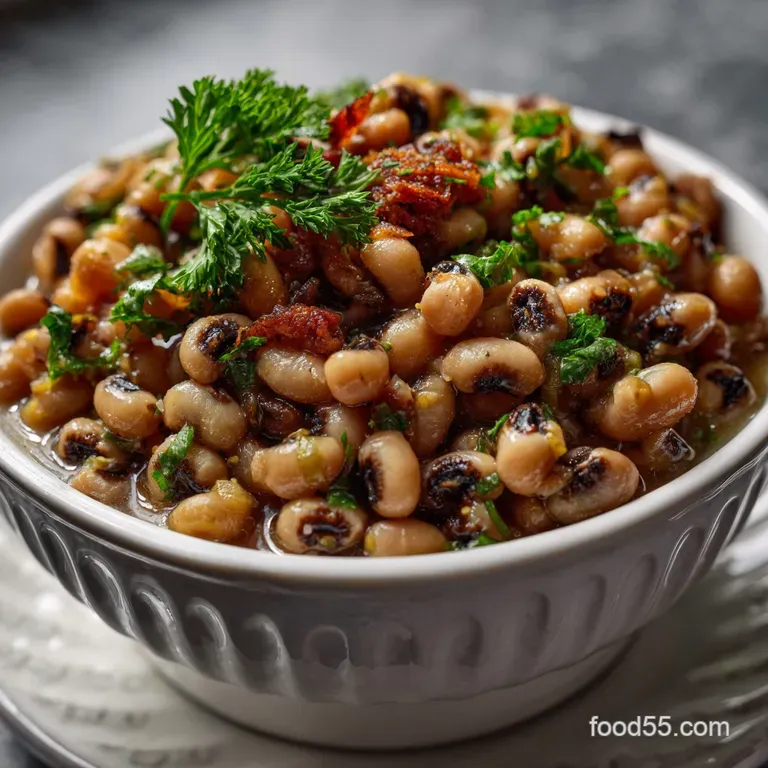
Follow these steps exactly to ensure the thermodynamics of the pot work in your favor. We are building a "flavor house" starting with the foundation and finishing with the roof. Executing this sequence is key to any successful Southern Black Eyed Peas Recipe.
- Sauté the aromatics. Heat 1 tbsp vegetable oil in your Lodge Dutch oven over medium high heat until shimmering and wisps of smoke appear.
- Sweat the "Trinity". Add the diced yellow onion, celery, and green bell pepper. Sauté for 6 minutes until the onion edges turn translucent and the sharp sulfur smell shifts to a mellow sweetness.
- Activate the garlic. Stir in 4 cloves minced garlic for 60 seconds until the fragrance is pungent and bold, but before the bits turn brown.
- Incorporate the spices. Add 1 tsp smoked paprika, 1/2 tsp cayenne, and 1/2 tsp black pepper. Toast for 30 seconds until the oil turns a deep sunset orange and the spices smell toasted.
- Deglaze and hydrate. Pour in 6 cups chicken stock and 2 cups water, scraping the bottom of the pot until all the caramelized vegetable bits (the fond) are lifted into the liquid.
- Submerge the proteins. Add the 1 lb dried black eyed peas and the 1 lb smoked ham hock along with 2 bay leaves.
- Initiate the simmer. Bring to a rolling boil, then immediately drop to low heat until only a few lazy bubbles break the surface every second.
- The Gentle Simmer. Cover and cook for 1 hour 30 mins until the peas are tender enough to mash against the roof of your mouth and the ham hock meat is falling off the bone.
- The Shredding. Remove the ham hock, shred the meat into bite sized pieces, and return it to the pot, discarding the bone and excess fat.
- Final Seasoning. Stir in 1 tsp Diamond Crystal Kosher salt. Note: Adding salt at the end prevents the bean skins from toughening during the long simmer.
Chef's Note: If the liquid looks too thin at the 1 hour 15 min mark, take a ladle of peas, mash them into a paste in a small bowl, and stir them back into the pot. This releases instant starch for a creamier texture in your Southern Black Eyed Peas Recipe.
Correcting Structural Anomalies: Troubleshooting Common Failures
Legumes can be temperamental. If your Southern Black Eyed Peas Recipe isn't looking like the velvety masterpiece you expected, one of these physical factors is likely the culprit.
Why Your Peas Are Crunchy
If you’ve simmered for two hours and the peas are still hard, you likely have "hard water" or old beans. High calcium or magnesium in water reacts with the pectin in bean cell walls, preventing them from softening.
| Problem | Root Cause | The Fix | Pro Protocol |
|---|---|---|---|
| Hard/Crunchy Peas | High pH or Old Beans | Add 1/4 tsp baking soda | Soda increases pH, breaking down pectin faster. |
| Thin, Watery Broth | Low Starch Release | Mash 1/2 cup of peas | Reintroduces starch solids to emulsify the liquid. |
| Excessive Saltiness | Liquid Reduction | Add a peeled potato | The potato absorbs excess salt; remove it before serving. |
Molecular Adaptations: Variations and Ingredient Swaps
Sometimes you need to pivot based on dietary needs or pantry availability. This Eyed Peas Recipe is robust enough to handle substitutions as long as you maintain the fat and liquid ratios. For a side that complements this perfectly, consider the bright crunch of a Classic Pea Salad Recipe to cut through the richness.
| Original Ingredient | Substitute | Why It Works |
|---|---|---|
| Smoked Ham Hock | Smoked Turkey Wing | Lower fat, but still provides the necessary collagen and smoke. |
| Vegetable Oil | Bacon Grease | Adds a deeper "camp fire" smoky flavor and animal fat richness. |
| Chicken Stock | Vegetable Broth | Maintains the volume; use a mushroom based broth for umami depth. |
| Green Bell Pepper | Poblano Pepper | Offers a slightly earthier, darker flavor with a hint of extra heat. |
If you are looking for a Vegan Black Eyed Peas Recipe Crock Pot adaptation, swap the ham hock for 2 tsp of liquid smoke and 1 tbsp of tomato paste to mimic the depth and color of the pork.
Cook on "Low" for 6 8 hours to ensure the legumes hydrate fully in the lower temperature environment.
⚗️ The Scaling Lab: The Physics of Quantity
When you decide to double this recipe for a large gathering, you cannot simply double everything and walk away. Physics changes as volume increases.
- The Evaporation Paradox: If you use a larger pot with more surface area, your 2 cups of water and 6 cups of stock will evaporate faster. Reduce your total added liquid by 10% when doubling to avoid a diluted result.
- Thermal Mass Retention: A double batch (2 lbs of peas) holds heat significantly longer. You must pull the pot off the heat 5 10 minutes earlier than a single batch, as the internal "carry over" heat will continue to cook the peas even after the flame is out.
- Spice Saturation: Scale spices (paprika/cayenne) to 1.5x, not 2x. Capsaicin and smoke flavors accumulate non-linearly; it's easier to add more heat at the end than to fix a pot that's become a spice bomb.
- Batch Sautéing: Never crowd the "Trinity" in the bottom of the pot. If doubling, sauté the vegetables in two batches to ensure they sear and caramelize rather than steaming in their own released moisture.
Preserving the Matrix: Storage and Thermal Regeneration
Storing this Southern Black Eyed Peas dish actually improves the flavor. During the cooling process, the starches and proteins undergo "retrogradation," where the flavors further meld and the liquid thickens into a rich gravy.
Following this process ensures your next serving of Southern Black Eyed Peas Recipe tastes even better.
- Fridge: Store in an airtight glass container for up to 4 days. The gelatin will set firm, looking like jelly; this is a sign of a successful collagen extraction.
- Freeze: These freeze beautifully for up to 6 months. Leave 1 inch of headspace in the freezer bag to allow for liquid expansion.
- Reheating: Thaw overnight in the fridge. Reheat on the stove over medium low, adding 1/4 cup of water or stock to loosen the starch matrix. Avoid the microwave if possible, as it can cause the peas to explode or become "rubbery" due to uneven heating.
💡 ZERO WASTE PHILOSOPHY: Don't discard the ham hock bone after shredding the meat. Transform: Simmer it again in 4 cups of water for 2 hours to create a "secondary" smoky stock. Science: Even after the first cook, the bone marrow and deep connective tissues contain residual minerals and flavor that make a perfect base for a Homemade Turkey Rub recipe or a future soup.
The Culinary Synergy: Presentation and Pairing Protocols
A Southern Black Eyed Peas Recipe is rarely served in isolation. It needs textural and acidic contrast to shine. The traditional pairing is a wedge of hot cornbread, which acts as a sponge for the mahogany broth. If you want to get creative with your starches, try serving these alongside Homemade Soft Pretzels recipe for a salty, chewy twist that stands up to the hearty legumes.
For a final touch of luxury, stir in a tablespoon of Homemade Butter recipe just before serving. The cold fat will emulsify with the warm bean starch, creating a glossy, "shining" finish that looks as professional as it tastes.
- Myth
- You must soak black eyed peas overnight.
- Truth
- Unlike kidney beans, black eyed peas have relatively thin skins. A 90 minute simmer provides ample time for full hydration and starch gelatinization without a pre-soak.
- Myth
- Adding salt at the beginning makes beans tough.
- Truth
- While excessive acid (like vinegar) definitely toughens skins, a moderate amount of salt can actually help beans cook more evenly by displacing calcium ions in the skin. However, we wait until the end in this recipe to account for the salt already present in the ham hock and stock.
This Southern Black Eyed Peas Recipe is more than just a dish; it's a lesson in patience and the science of the simmer. By respecting the 1 lb smoked ham hock's need for time and the 1 lb dried black eyed peas' need for steady hydration, you’ll produce a pot that isn't just a meal it's a technical triumph.
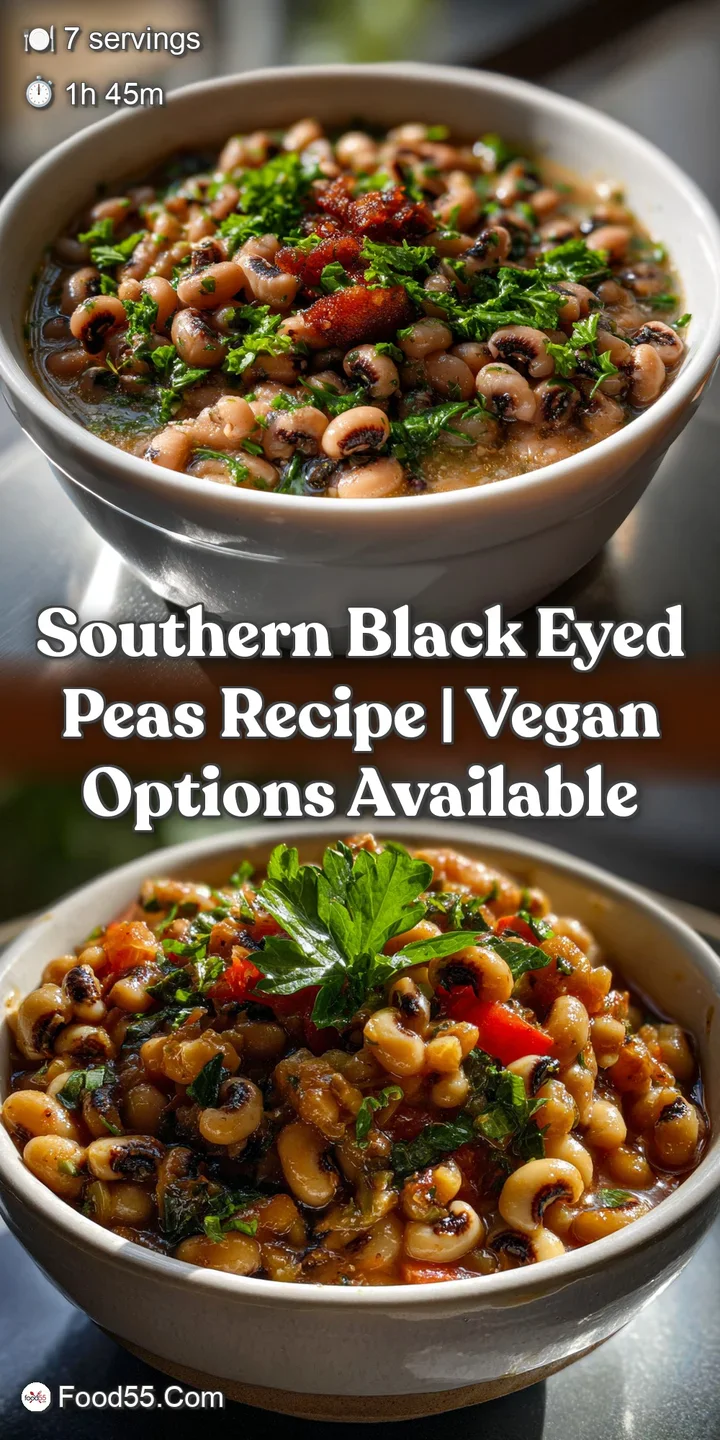
Recipe FAQs
how to make southern black eyed peas?
Sauté aromatics, then simmer peas and smoked ham hock in stock for 90 minutes. The key is maintaining a low, steady simmer after the initial boil to facilitate collagen breakdown and starch release, creating a velvety texture. If you enjoyed mastering the gentle temperature control here, apply that same precision when learning how to temper eggs for a Mint Ice Cream: Silky Smooth Homemade Custard Recipe.
how to make southern black eyed peas in crock pot?
Skip the initial sauté; add ingredients and cook on low for 6 8 hours. For the slow cooker version, you lose the crucial Maillard reaction from the initial sauté, so compensate by adding 2 tsp liquid smoke and 1 tbsp tomato paste for depth. You can see similar techniques for moisture management in our Chicken Stock: Liquid Gold Homemade Stock Recipe.
how to make southern black eyed peas and rice?
Cook peas until just tender, then fold in separately cooked long grain rice. Cooking the rice in the pea liquid will result in an overly starchy, mushy final product due to competing absorption rates. For a contrast in texture using a similar technique, review how to achieve crisp results in Japanese Fried Rice: The Classic Yakimeshi Recipe.
how to cook southern black eyed peas in crock pot?
Low heat for 8 hours is optimal for complete hydration of the dried legumes. The extended, consistent temperature ensures the pectin softens without boiling over, which is the primary failure point in slow cooker legume dishes.
A long, slow cook like this is the same principle used for tenderizing meats in braises.
how to cook southern black eyed peas with bacon?
Render the bacon first, remove the crisp bits, and sauté aromatics in the rendered fat. Rendered bacon fat offers a higher flavor saturation point than vegetable oil, adding deeper pork flavor to the Holy Trinity base. This fat/flavor addition is similar to why we use rendered fat when preparing appetizers like our Sausage Balls: Cheesy, Classic Recipe for Ultimate Brunch.
Should I soak dried black eyed peas before cooking?
No. Soaking is unnecessary for dried black eyed peas. Their skins are thinner than most other dried beans, allowing them to fully hydrate and soften within the 90-minute simmer required for the ham hock to break down. Over soaking can lead to a mealy, inconsistent texture.
When is the best time to add acid (vinegar/lemon)?
Wait until the peas are fully tender, within the last 5 minutes of cooking. Acid works by strengthening pectin, effectively halting the softening process; adding it early seals the skins, preventing hydration.
This pH timing is crucial for achieving soft legumes without toughening the exterior structure.
- Remove pot from heat source
- Stir in 1 tbsp vinegar or lemon juice
- Taste and adjust salt/heat levels
Southern Black Eyed Peas Recipe
Ingredients:
Instructions:
Nutrition Facts:
| Calories | 342 calories |
|---|---|
| Protein | 24 g |
| Fat | 7.5 g |
| Carbs | 45 g |
| Fiber | 8.2 g |
| Sugar | 4 g |
| Sodium | 580 mg |
