Springtime Easter Egg Cake Pops

Recipe Introduction
Oh my gosh, I still grin thinking about my first batch of Easter Egg Cake Pops . My friend said, they're tiny works of edible art.
I agree. These pops are pastel, crunchy, and full of buttery cake.
The idea comes from classic cake pops and Easter baking. Think decorated eggs meet a handheld cake ball. This Easter cake pop recipe borrows from party treats and seasonal candy traditions.
This is a medium difficulty recipe. Expect about 1 hour 40 minutes to 2 hours total. Active prep is shorter.
Bake time is 25 30 minutes at 350° F . It yields around 24 cake pops . Perfect for spring gatherings and classroom trays.
Main benefits? Small portions help with portion control. Each pop is roughly 200 calories. They make great kid-friendly Easter treats.
Parents love how pastel candy coated cake pops cut down on sugar per serving.
Serve them at brunch, Easter egg hunts, or dessert boards. They pair well with milk or sparkling wine. They also work as DIY Easter cake pops for craft style parties.
I once wrapped them for favors. Guests loved the tiny edible gifts.
What makes this special is shape and texture. Egg-shaped cake pops have a tender inside and crisp shell. Pastel candy coated cake pops look professional.
They’re basically a decorated cake ball with character. The egg shape Egg Cake Pops gives a fun twist.
Honestly, shaping took me a few tries. Dipping made my hands shaky at first. Chill time is your friend. A firm center keeps the coating from cracking.
That tip changed my whole approach.
These also adapt easily. Use store-bought cake to speed things up. Try lemon zest or cream cheese binder for variation. For a crowd, make extra Easter Cake Balls for backup.
If you want to make this with kids, go for it. Little hands enjoy rolling and decorating. These Cake Pops Easter treats double as a baking craft.
Ready for the ingredients and tools? Let’s move on to the shopping list and step-by-step instructions.
Ingredients & Equipment quick peek
Fun fact: baking together makes holiday memories. I learned that with my niece. We made pastel messes and laughed. These are the ingredients for Easter Egg Cake Pops you’ll actually want to bite into.
Main Ingredients
Vanilla cake (or one baked 8 9 inch cake)
- 1 1/2 cups all-purpose flour (190 g)
- 1 cup granulated sugar (200 g)
- 1 1/2 tsp baking powder
- 1/2 tsp fine salt
- 1/2 cup unsalted butter, melted and cooled (113 g)
- 1/2 cup whole milk (120 ml)
- 2 large eggs (100 110 g)
- 1 1/2 tsp pure vanilla extract
Binder / frosting
- 1/2 cup unsalted butter, softened (113 g) or 1/2 cup cream cheese, softened (115 g)
- 1 to 1 1/2 cups powdered sugar (120 180 g) , sifted
- 1 tsp vanilla extract
- Pinch of salt
Coating & decoration
- 12 oz (340 g) white candy melts or high-quality white chocolate
- 1 2 tbsp neutral oil (15 30 ml) only if needed
- Gel food coloring in pastel tones
- 24 30 lollipop sticks (4 5 in / 10 12 cm)
- Sprinkles, sanding sugar, edible shimmer
Quality tips: use fresh all-purpose flour and unsalted butter. Choose good white chocolate or candy melts for shine. Gel color not liquid. Real chocolate needs tempering.
(These ingredients make about 24 pops. If you want Easter Cake Balls instead, shape them round.)
Seasoning Notes
Keep it simple. Vanilla is the hero. For lemon zing add zest of 1 lemon. Add 1/2 tsp almond extract for grown-up nuttiness.
Best combos: vanilla plus lemon zest. Vanilla plus cream cheese binder for carrot style pops. Spice boost: 1/4 tsp cinnamon blends well in carrot versions.
Substitutions: store-bought cake saves time. Use dairy-free butter and melts for vegan DIY Easter cake pops. Cocoa powder swaps into the cake for chocolate Egg Cake Pops.
Equipment Needed
Essentials only: mixing bowls, electric mixer, spatula, measuring cups/spoons, whisk, sifter, baking pan, parchment, microwave safe bowl or double boiler, lollipop sticks.
Household alternatives: a fork for crumbling, small drinking glass to steady sticks, aluminum foil instead of parchment. A silicone egg mold helps shape egg-sized pops.
Honestly, shaping egg-shaped cake pops is messy. Chill a lot. Practice one test pop first. These tips make Cake Pops Easter prep way less stressful.
Cooking Method
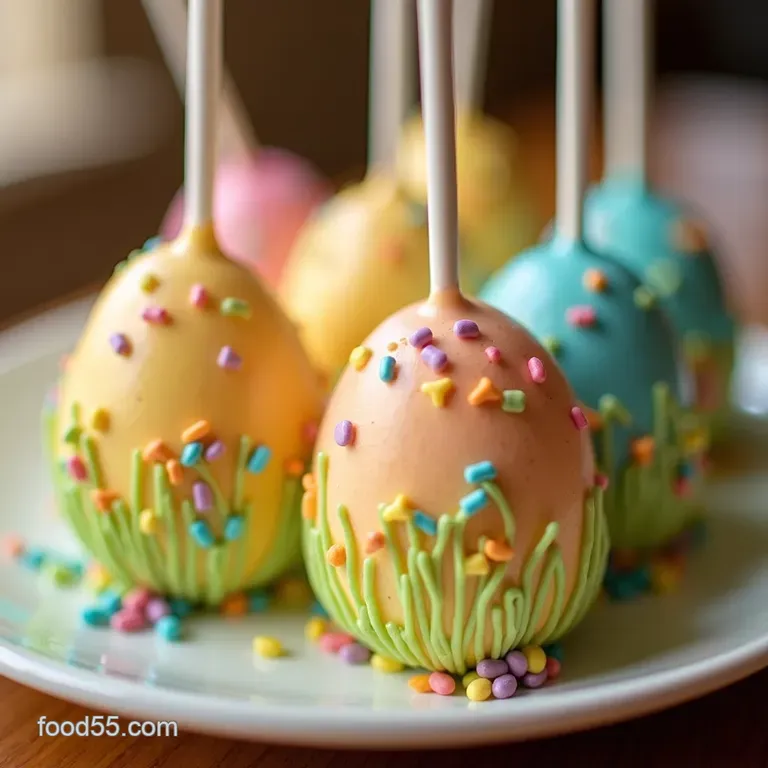
I love how small things make big memories. "Baking is love made visible." These little pastel bites think Easter Cake Balls turned into egg-shaped cake pops are perfect for that.
Quick note: keep your workspace tidy. You’ll thank me later.
Prep Steps
- Do essential mise en place: crumble cooled cake, measure 1/2 cup binder, set out 24 sticks.
- Time saving tip: use a small cookie scoop for uniform sizes. Freeze trays while you shape.
- Safety reminder: if you temper real chocolate, watch temperatures closely. Hot chocolate burns.
step-by-step Process
- Preheat the oven to 350° F ( 175° C) and bake the cake. Remove when a toothpick comes out clean and top is lightly golden, about 22– 30 minutes . Cool completely.
- Make the binder. Beat butter or cream cheese with 1 tsp vanilla. Add 1 cup powdered sugar. Stop when spreadable.
- Crumble the cake fine. Add 2 3 tbsp binder. Mix until it holds when pinched.
- Shape into eggs. Portion into 24 pieces, roll, then taper one end. Chill 20– 30 minutes until firm.
- Dip sticks into melted coating and insert. Chill 15– 30 minutes to secure.
- Melt coating until smooth. For candy melts, microwave in short bursts. For real chocolate tempering: heat to 110– 115° F (43– 46° C) , cool to 82° F ( 28° C) , then reheat to 88– 90° F (31– 32° C) . Color with gel only.
- Dip, tap off excess, and decorate. Let set 15– 30 minutes before serving.
Visual cues: cake should crumble like fine sand. Coating should be glossy when set. If coating looks streaky, it’s overheated.
Pro Tips
- Technique: chill thoroughly. Cold centers cut breakage by half.
- Shortcut: use store-bought cake to make DIY Easter cake pops fast.
- Common mistakes: don’t over thin coating. Too thin shells sag.
- make-ahead: assemble and refrigerate up to 3 days . Bring to room temp before serving.
Honestly, my first batch was a mess. Kids helped. They mostly ate sprinkles. Try these Pastel candy coated cake pops for a crowd pleasing, kid-friendly Easter treat. Trust me they vanish fast.
Recipe Notes
Serving Suggestions
Serve these as a colorful dessert plate. Place a few Easter Egg Cake Pops on a pastel napkin. Add mini cupcakes and sugar cookies for variety.
Think about presentation. Stick pops into a foam block. Or lay them on parchment in a shallow tray. For a playful display, use a small basket lined with paper grass.
Pairings matter. Kids love milk or hot chocolate. Adults enjoy a fruity prosecco or light sparkling wine. I once served them with lemonade. They disappeared in five minutes. Honestly, I wasn’t surprised.
Storage Tips
Store at room temperature for up to three days. If you used cream cheese, refrigerate instead. Let chilled pops warm five minutes before eating.
Freezing works okay for short times. Wrap each pop in plastic wrap. Place them in an airtight container. Thaw in the fridge overnight before serving.
Reheat gently if needed. Don’t microwave them. Warm a plate and rest pops briefly. This avoids sweating and dull coatings.
Variations
Want dietary swaps? Try a vegan cake base and dairy-free binder. That makes great DIY Easter cake pops . gluten-free mixes also work well.
Seasonal swaps add fun. Use lemon zest for spring brightness. Or make carrot cake for a rustic twist. I made Easter Cake Balls once with carrot spice.
They tasted like tiny carrot cupcakes.
For kids, make them simple. Skip tempering and use candy melts. These Kid-friendly Easter treats are easy to decorate. My niece helped drizzle pastel stripes.
Nutrition Basics
Each pop is roughly two hundred calories. Protein is low. Sugar is the main contributor. Consider serving smaller portions for parties.
Key benefits exist. Homemade lets you control ingredients. You can reduce sugar or use whole butter. Adding lemon zest adds vitamin C and bright flavor.
Final thoughts Making Egg-shaped cake pops is charming and forgiving. Try one test pop first. Enjoy the mess and the smiles.
Go on, make those Pastel candy coated cake pops and have fun. You’ve got this.
Frequently Asked Questions
What exactly are Easter Egg Cake Pops and are they difficult to make?
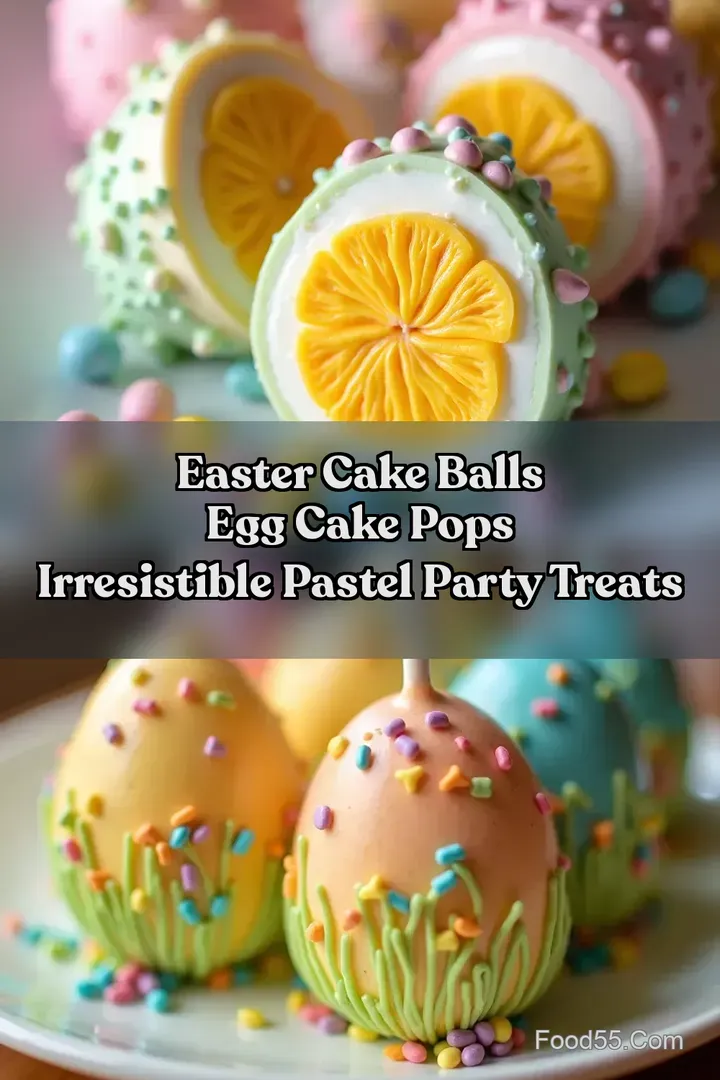
Easter Egg Cake Pops are bite sized vanilla cake centers mixed with a small amount of buttercream, shaped like little eggs, dipped in pastel candy coating or chocolate, and finished with drizzles, sprinkles or shimmer perfect for an Easter egg hunt or a spring tea party.
Difficulty is medium: the baking and crumb binding are straightforward, but shaping uniform eggs and getting a smooth, glossy coating takes some practice and patience. With a chilled centre, a steady hand for dipping, and a quick practice pop to test coating temperature, beginners can get great results.
Why does the coating crack or the cake pop fall off the stick, and how can I stop that?
Cracking and pop-off issues usually come from warm, soft centres or coating that’s too thin; always chill your shaped eggs until firm before inserting sticks and dipping. Dip the stick tip in coating first to “glue” it into the cake, avoid overheating the coating, and add oil only sparingly too thin a shell will sag and crack.
If a pop slips, re-chill and re-insert the stick with a fresh dab of coating to secure it.
Can I make Easter Egg Cake Pops ahead of time and what’s the best way to store them?
You can make them a day or two ahead; store finished cake pops in a single layer in an airtight container at room temperature up to about 3 days, which keeps the candy shell crisp.
If you used a cream cheese binder, refrigerate and bring to room temperature before serving to avoid a too-firm centre, and avoid chilling straight from cold right before serving to prevent condensation dulling the shine. For gifting, wrap individually in cellophane and tie with ribbon so decorations stay intact.
What are easy flavour variations or shortcuts if I’m short on time or want something different?
Quick shortcuts: use store-bought cake or leftover cupcakes to cut active time dramatically. For flavour swaps try lemon zest for a bright spring pop, carrot cake with cream cheese binder for a seasonal twist, or cocoa cake and tempered chocolate for a richer version; vegan, dairy-free and gluten-free swaps work well too if you use appropriate cake and coatings.
Silicone egg moulds are a handy cheat for consistent shapes if freehand shaping feels daunting.
How do I get a smooth, glossy pastel finish without the coating seizing or going grainy?
Use gel food colouring (not water based) to tint white candy melts, heat in short bursts and stir until just smooth, and thin with oil 1 teaspoon at a time only if needed over thinning makes shells slack.
Keep coatings dry and avoid steam or wet hands; if using real chocolate and you want a professional snap and shine, temper it or use the seeding method with a candy thermometer. Always dip a test pop first to check temperature and viscosity before doing the whole batch.
How many calories are in an Easter Egg Cake Pop and can they be made allergen friendly?
A typical cake pop from this recipe is roughly 200 kcal with about 11 g fat and 22 g carbs, though exact numbers depend on size and ingredients. For allergen friendly versions you can bake a gluten-free or vegan cake, swap butter for dairy-free spreads or cream cheese alternatives, and choose certified dairy-free candy melts or chocolate; always check sprinkles for cross contamination warnings.
If monitoring sugar or calories, make smaller pops, use less binder, or opt for darker chocolate coatings to reduce sweetness.
Springtime Easter Egg Cake Pops
Ingredients:
Instructions:
Nutrition Facts:
| Calories | 200 kcal |
|---|---|
| Protein | 2 g |
| Fat | 11 g |
| Carbs | 22 g |
| Fiber | 0.5 g |
| Sugar | 16 g |
| Sodium | 90 mg |
