Sweet Potato Tian: Garlic Thyme Layered Side Dish Showstopper
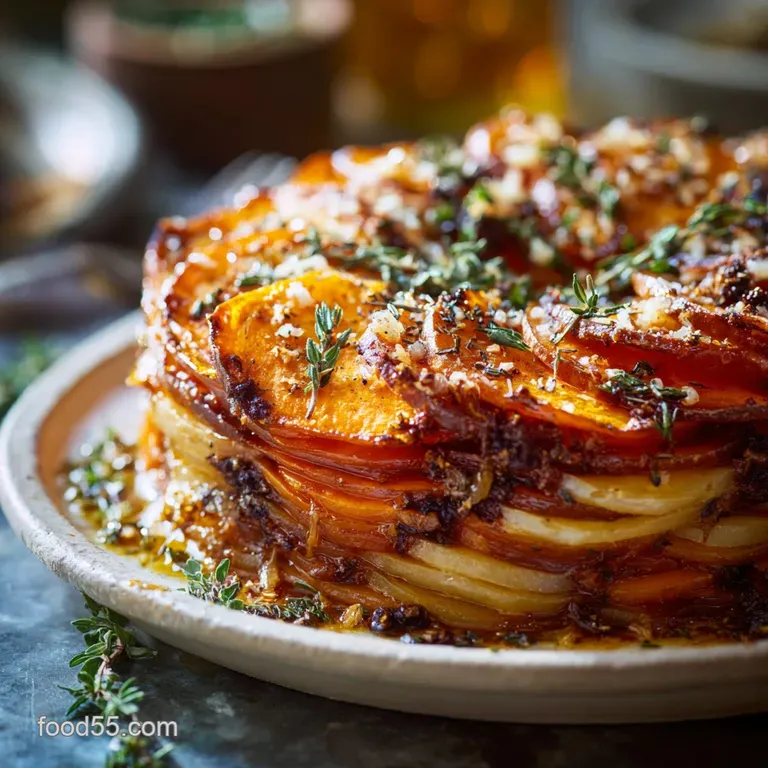
- Introducing the Elegant Sweet Potato Tian: A French Side Dish
- The Culinary Science Behind the Perfect Tian Texture
- Gathering Your Supplies: Essential Ingredients for the Sweet Potato Tian
- Ingredient Notes and Expert Substitutions
- The Method: How to Assemble and Bake Your Sweet Potato Tian
- Troubleshooting and Expert Secrets for the Best Results
- Make-Ahead Prep and Storage Guide
- Serving Suggestions: Pairing Your Tian
- Recipe FAQs
- 📝 Recipe Card
Introducing the Elegant Sweet Potato Tian: A French Side Dish
That smell, you guys. When this Sweet Potato Tian starts baking, the whole kitchen takes on this unbelievable, warm, garlicky, and slightly sweet aroma that is pure autumn magic.
It has that glorious, tender but-not-mushy center, bound together by savory cream, and a crispy, golden brown crust you will fight your dinner guests for. Seriously, it’s addictive.
It looks incredibly fancy, like something you ordered in a little Provençal cafe, but trust me, the active cooking time here is shockingly short. The beauty of this layered bake is that it just sits in the oven and does its thing, making you look like a culinary genius without any of the actual fuss.
This is my go-to recipe when I need an impressive side dish that won’t stress me out while I juggle three other things.
Forget the sticky, overly sweet casseroles of holidays past; this Tian is grown-up, sophisticated, and deeply satisfying. We are using fresh thyme and Gruyère to bring out the earthy side of the sweet potato, creating a side dish that works equally well for a Sunday roast or your next major holiday feast.
Let’s crack on with the technique!
The Culinary Science Behind the Perfect Tian Texture
What Exactly is a Provençal Tian? Defining the Layered Bake
A Tian is fundamentally a layered vegetable casserole, specifically originating from the Provençal region of France. The name actually refers to the shallow, glazed earthenware dish in which it is traditionally cooked, not just the food itself.
Unlike a runny potato soup or a dense cake, a true Tian requires the ingredients to be sliced thin, packed tight, and baked slowly to achieve both tenderness and structural integrity.
The resulting dish is less saucy than a traditional creamy gratin (like my Thanksgiving Side Dishes: Ultimate Creamy Potato Gratin with Gruyère ), favoring tightly set, distinct layers. We are aiming for something that holds its shape when sliced, yet melts in your mouth that’s the whole point.
Why Sweet Potatoes Elevate the Classic Root Vegetable Dish
Using sweet potatoes instead of standard russets introduces a complex natural sugar that caramelizes beautifully against the salty, herbed cream. This provides an instant depth of flavor that starchy potatoes just can't match.
Plus, sweet potatoes tend to soften faster than white potatoes, reducing your overall baking time, which is always a win in my book.
The Rustic Charm of Garlic and Thyme Infusion
We aren’t just throwing minced garlic into the bowl and calling it a day, okay? We gently warm the cream mixture before pouring it over the raw slices. Warming the liquid activates the aromatics in the fresh thyme, sage, and garlic immediately, allowing those flavors to permeate every single layer of the potato stack while it bakes.
This crucial step is the difference between an ordinary side and a truly unforgettable dish.
Achieving the Crispy Edges and Creamy Center
The secret here is the two-stage bake. We start covered, which essentially steams the tightly packed sweet potatoes until they are completely tender throughout. Then, we remove the foil, crank up the heat slightly, and let the remaining top layer of Gruyère and the exposed edges of the sweet potatoes brown.
That crispy edge is where all the textural contrast lives.
The Maillard Reaction: Browning the Top Layers for Flavor Depth
That gorgeous, golden brown crust isn't just for looks; it's flavor. When the top of the Tian hits that higher, uncovered heat, the Maillard reaction kicks in, converting sugars and amino acids into hundreds of complex flavor compounds.
This deep browning adds a crucial nutty, savory depth that keeps this dish from tasting too sweet, perfectly balancing the earthy herbs and salty cheese.
Optimizing Slicing Thickness for Uniform Baking
Listen up, this is where most people fail and end up with half cooked, half mushy results. You absolutely must aim for a consistent 1/8 inch thickness, about the width of a couple of stacked pennies.
Using a mandoline slicer here isn't just helpful; it’s basically mandatory for success, especially if you want that beautiful, structured presentation. Inconsistent slices means inconsistent cooking, leading to a watery, disappointing mess.
Gathering Your Supplies: Essential Ingredients for the Sweet Potato Tian
This recipe is surprisingly simple, focusing on quality ingredients that let the sweet potato really shine.
- Sweet Potatoes (about 3.5 lbs, peeled)
- Unsalted Butter (for greasing and flavor)
- Heavy Cream and Whole Milk (the binder)
- Garlic, Fresh Thyme, and Sage (the aromatics)
- Nutmeg, Kosher Salt, and Black Pepper
- Gruyère and Parmesan Cheeses (the golden crust)
Ingredient Notes and Expert Substitutions
Selecting the Best Variety of Sweet Potato for Layering
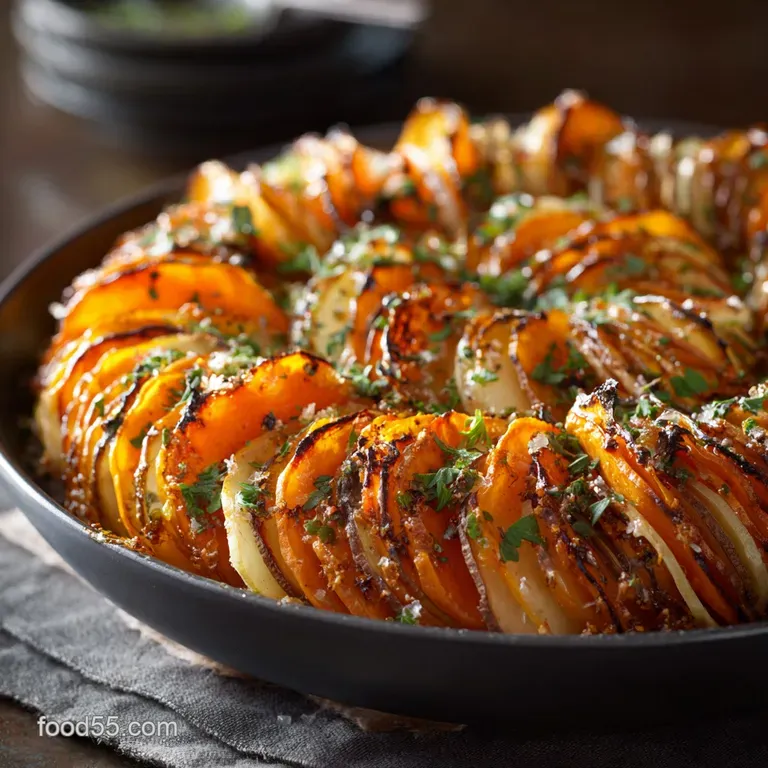
I always reach for Jewel or Garnet varieties, as they tend to be uniformly shaped, which makes slicing and layering much easier. They hold their shape well, too, so they don’t turn to complete mush during the long bake. For those looking for a slightly less sweet profile, you can absolutely substitute half of the sweet potatoes with white sweet potatoes, like the Japanese variety, for a more neutral base. If you prefer a full savory experience, you might want to check out my tips on Savory Roasted Sweet Potatoes: Crispy Edges Smoky Balsamic Glaze for different flavor profiles.
Dairy Options and low-fat Alternatives for the Binder
| Ingredient | My Top Choice | Substitution Notes |
|---|---|---|
| Heavy Cream/Milk | Full fat dairy is best for setting. | You can use half and half (single cream) or evaporated milk, but the final texture will be softer and slightly less rigid. Avoid using only milk. |
| Gruyère Cheese | Freshly grated Gruyère. | Aged White Cheddar or Comté are fantastic options; they offer that necessary sharp, nutty flavor that contrasts the sweetness. |
Fresh Herbs vs. Dried: Maximizing Aromatic Impact
While I generally allow substitutions, use fresh thyme and sage for this recipe. The oils released from fresh herbs when they warm in the cream are infinitely superior to their dried counterparts.
If you absolutely must use dried, reduce the quantity drastically (to about 1 teaspoon dried thyme and 1/4 teaspoon dried sage) and crush them lightly in your palm to release the oils before adding them to the warm cream.
Seasoning Smarts: Understanding Salt Levels in Baked Dishes
Sweet potatoes require a surprising amount of salt to balance their natural sugars. You need to season the cream mixture well and sprinkle a bit of extra salt between the layers as you assemble.
Remember that the Gruyère is also salty, so taste the cream mixture before pouring; it should taste slightly aggressive on its own to properly flavor the neutral sweet potatoes.
The Method: How to Assemble and Bake Your Sweet Potato Tian
Prep Stage: Peeling, Slicing, and Infusing the Fat
Start by preheating your oven to 375°F (190°C) and greasing that baking dish generously. Peel all your sweet potatoes, and then immediately run them through your mandoline to hit that 1/8 inch target.
While you're slicing, quickly warm your heavy cream and milk gently on the stovetop and stir in the minced garlic, salt, pepper, nutmeg, and all the gorgeous fresh herbs. That five minutes of infusion makes all the difference.
Layering Technique: Ensuring Tight, Even Packing in the Dish
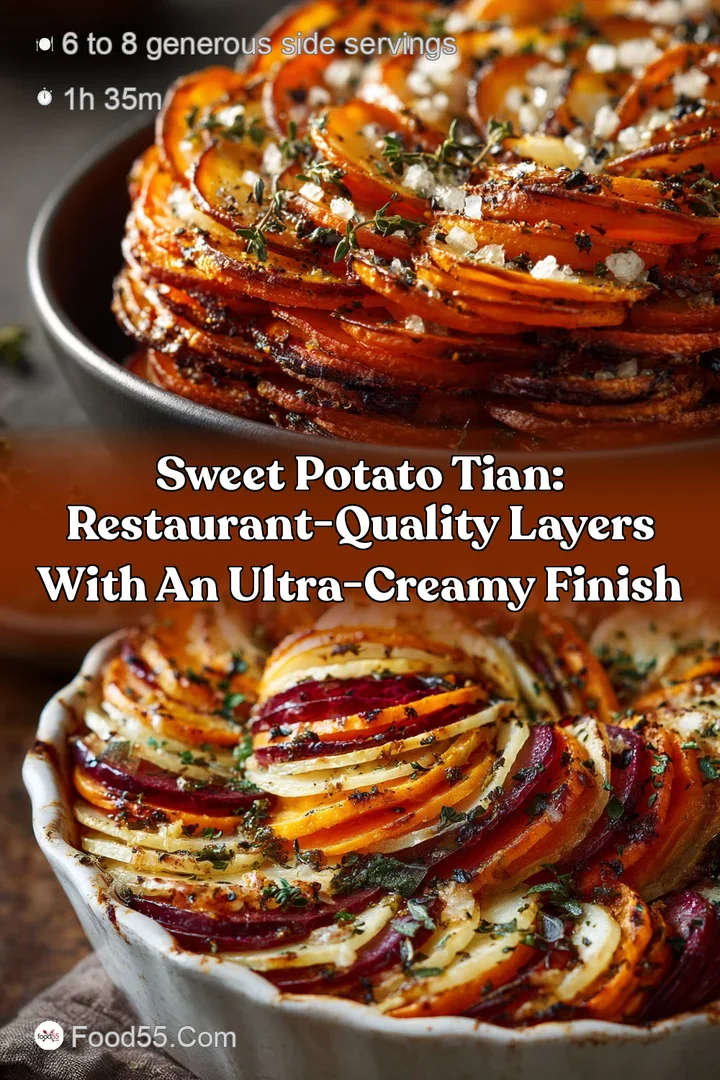
This is the artistic part! Starting from the outside edge of your dish, stand the sweet potato slices on their sides, slightly overlapping them like dominoes. Work your way inward, creating a tight, decorative spiral. The key is tight packing.
Don't just dump them in horizontally like a lazy potato gratin; the density helps the dish set properly. Sprinkle a tiny bit of extra salt every few layers to ensure deep seasoning.
Baking Times: Covering, Uncovering, and Internal Temperature Checks
Once the layers are packed, pour the infused cream mixture slowly over the potatoes. It should reach about 3/4 of the way up the sides. Sprinkle two-thirds of the cheese on top, cover tightly with foil, and bake for 40 minutes. This steam period tenderizes everything.
Remove the foil, sprinkle the remaining cheese, and return it to the oven for another 15– 20 minutes, or until deeply golden brown and bubbly. You should be able to slide a knife easily through the center without resistance.
Chef’s Note: The cream should only come up 3/4 of the way. If you completely submerge the top layer, it won't brown or set into that wonderful crust we are looking for. You’ll end up with a watery texture instead.
Troubleshooting and Expert Secrets for the Best Results
Preventing a Watery Sweet Potato Tian (The Moisture Issue)
A watery Tian happens for two main reasons: inconsistent slicing or pouring in too much liquid. If your slices are too thick or uneven, they release moisture at different rates, essentially steaming the dish rather than baking it into a set gratin.
Solution: Make sure your slices are uniform and that you only fill the cream mixture 3/4 of the way up the layers.
The Critical Importance of Resting Time Post Bake
This is where I learned the hard way (and yes, I’ve blogged about that kitchen disaster!). If you slice the Tian immediately out of the oven, the creamy binder hasn't had time to cool and solidify, causing the layers to collapse and the cream to run all over the cutting board.
Give it 10 full minutes of rest on the counter before serving. You’ll be rewarded with perfect, elegant slices.
Fixing Uneven Browning and Slicing Errors
If the top is browning too fast, loosely tent it with foil during the uncovered stage. If the top isn't browning enough after 15 minutes, pop it under the broiler for 1 to 2 minutes but watch it like a hawk!
As for slicing errors, if your sweet potatoes were too thick and the center feels hard after the total cook time, simply cover the dish again and return it to the oven for an extra 10– 15 minutes until tender.
make-ahead Prep and Storage Guide
Can You Assemble the Dish Ahead of Time?
Yes, absolutely! This is the greatest party trick of the Sweet Potato Tian. You can fully assemble the dish, including the cream mixture and layering, up to 24 hours in advance. Do not add the cheese topping yet. Cover it tightly and refrigerate.
Before baking, let it sit on the counter for 30 minutes to take the chill off, then proceed with the recipe instructions, adding about 5– 10 minutes to the initial covered baking time.
Reheating Leftovers Without Drying Them Out
Leftovers keep beautifully in the fridge for 3 to 4 days. The best way to reheat slices is in a preheated oven at 300°F (150°C). Place the slice(s) in an oven safe dish, cover loosely with foil, and warm for about 15– 20 minutes.
The low, slow heat prevents the exposed edges from becoming brittle and dry.
Freezing Cooked Tian: Dos and Don'ts
Does it freeze well? You bet. Allow the fully cooked Tian to cool completely, then slice it into individual servings. Wrap each slice tightly in plastic wrap, followed by foil, and freeze for up to 2 months.
To reheat from frozen, unwrap the foil and plastic, place the slice in a baking dish, and bake covered at 350°F (175°C) until piping hot throughout (about 30 minutes).
Be warned: the texture of the cream might change slightly upon freezing, becoming a tiny bit grainy, but the flavor is still delicious.
Serving Suggestions: Pairing Your Tian
This rich, aromatic Tian needs something bright and sharp to cut through its savory creaminess.
- Protein Pairings: It’s sublime alongside a simple roasted pork loin or a beautifully seasoned roast chicken.
- A Contrasting Side: Serve it with a sharp, vibrant salad maybe a handful of arugula or watercress tossed simply with lemon, olive oil, and shaved Parmesan.
- Holiday Variations: If you’re looking to inject a little tartness, you might love my variation, the Sweet Potato Cranberry Gratin: The Elegant Maple Kissed Holiday Side Dish , which brings in a welcome acidity.
Recipe FAQs
Why are my sweet potatoes still tough after the cooking time?
This issue usually occurs if the sweet potatoes were sliced too thickly or the layering liquid was insufficient. For a proper tian texture, slices must be uniformly thin (ideally 1/8 inch or less) to allow thorough steam penetration.
Ensure your cream or broth covers at least half the height of the layers before the tian goes into the oven.
Can I substitute regular potatoes (like Russets or Yukon Golds) for the sweet potatoes?
Yes, you can certainly use regular potatoes, but you will need to adjust the cooking time slightly as they are denser and starchier. If substituting, consider briefly blanching the starchy slices beforehand or adding a little extra liquid to ensure they soften evenly during the bake.
The flavor profile will shift from sweet savory to purely savory.
I need to prepare this dish ahead of time. What is the best make-ahead strategy?
You can fully assemble the tian layering the potatoes, aromatics, and liquid up to 12 hours in advance and keep it tightly covered in the refrigerator. Before baking, allow the dish to come to room temperature for about 30 minutes, which helps ensure even cooking.
Never bake a cold ceramic dish directly in a hot oven.
The top layer is browning too quickly, but the center isn't done yet. What should I do?
This is a common issue with layered bakes, especially in ovens that run hot. Simply tent the tian loosely with a sheet of aluminum foil once the top reaches your desired level of caramelization. This redirects the heat and allows the internal layers to finish cooking without burning the surface.
I don't have fresh thyme. What other herbs work well in this savory sweet dish?
Rosemary is an excellent and popular alternative, offering a robust, piney flavor that complements the richness of sweet potatoes beautifully. If you prefer a lighter touch, a small pinch of dried sage or marjoram would also provide a lovely, rustic Mediterranean aroma.
Can I make this Sweet Potato Tian completely dairy-free or vegan?
Absolutely; simply substitute the heavy cream with full fat coconut milk or a smooth cashew cream alternative for richness. Use a high-quality olive oil or plant based butter in place of traditional butter to achieve that lovely, golden crust. The richness of sweet potatoes carries the flavor well even without dairy.
How long can I store leftover Tian, and does it freeze well?
Leftovers should be stored tightly covered in the refrigerator and are best consumed within 3 to 4 days. Unfortunately, layered potato dishes like tian and gratin do not freeze well; the starches break down upon thawing, resulting in a mushy, grainy texture.
Sweet Potato Tian Gratin Side Dish
Ingredients:
Instructions:
Nutrition Facts:
| Calories | 810 kcal |
|---|---|
| Protein | 38.3 g |
| Fat | 36.4 g |
| Carbs | 73.9 g |
