Popular Valentine's Day Cocktail with Strawberry and Champagne

- Time: Active 5 minutes, Passive 0 minutes, Total 5 minutes
- Flavor/Texture Hook: Velvety fruit purée meets the sharp shatter of carbonated bubbles.
- Perfect for: Romantic anniversaries, brunch celebrations, or a beginner friendly evening toast.
- Popular Valentine's Day Cocktail with Strawberry and Champagne
- The Science of Why it Works
- Component Analysis and Ingredient Roles
- Elements for the Perfect Pour
- Essential Tools and Glassware
- Executing the Bubbly Pour
- Avoiding Common Mixing Pitfalls
- Smart Dietary Ingredient Swaps
- Flavor Preservation and Storage
- Elegant Presentation and Garnishes
- Cocktail Myths Debunked
- Recipe FAQs
- 📝 Recipe Card
Popular Valentine's Day Cocktail with Strawberry and Champagne
Imagine the room filling with the scent of sun ripened berries and a sharp, citrusy brightness the moment you slice into a fresh strawberry. This recipe showcases a popular Valentine's Day Cocktail with Strawberry and Champagne for a bubbly, romantic treat that feels way more expensive than it actually is.
I remember the first time I tried making this; I didn't macerate the berries correctly, and the drink ended up looking like a cloudy mess rather than the vibrant, crimson jeweled beauty it should be.
We've all been there, trying to impress someone special and ending up with a drink that’s either too sweet or, worse, completely flat. But that’s exactly why I’ve spent so much time tweaking the ratios of sugar to acid.
It’s not just about mixing booze and fruit; it’s about creating a silky base that allows the bubbles to dance rather than drown. Trust me, once you see that first pour hit the glass and watch the foam settle into a rose gold hue, you'll never go back to basic mimosas.
Right then, let's get into the details of what makes this specific drink work. We aren't just tossing things in a glass. We are layering flavors to ensure every sip is as crisp as the first. Whether you're using a vintage bottle or a reliable supermarket find, the technique matters more than the price tag.
Let's crack on and get these strawberries ready.
The Science of Why it Works
Osmotic Maceration: Superfine sugar draws moisture out of the strawberry cell walls through osmosis, creating a concentrated, velvety syrup without the need for heat.
Henry's Law: Keeping the liquid and glassware ice cold increases the solubility of carbon dioxide, ensuring the "shatter" of the bubbles lasts much longer in the glass.
| Premium Option | Budget Alternative | Flavor Impact | Savings |
|---|---|---|---|
| Vintage French Champagne | Dry Spanish Cava | Cava adds more earthy/citrus notes; slightly less toasted flavor. | Save $30-50 |
| Cointreau Liqueur | Triple Sec | Triple Sec is sweeter and less complex; lacks the deep orange peel finish. | Save $10-15 |
| Organic Heritage Berries | Standard Garden Strawberries | Standard berries need 5 mins extra maceration to release full sweetness. | Save $3-5 |
Choosing the right sparkling wine depends entirely on your palate, but for this specific strawberry and champagne mix, a "Brut" or "Extra Dry" works best to balance the added sugar. If you go too sweet with a "Doux" or "Demi Sec," the drink becomes cloying rather than refreshing.
Component Analysis and Ingredient Roles
The secret to a great cocktail isn't just the spirit; it's how the modifiers interact with the base. In this case, we are looking at how acid and sugar interact with the CO2 in the wine.
If the fruit is too chunky, it provides too many nucleation points, which makes the bubbles escape all at once, leaving you with a flat drink in minutes.
| Ingredient | Science Role | Pro Secret |
|---|---|---|
| Superfine Sugar | Texture Modifier | Use superfine (caster) sugar because it dissolves instantly in cold fruit juices without grit. |
| Fresh Lemon Juice | pH Balancer | The acid brightens the strawberry's natural color, keeping the red vibrant rather than brownish. |
| Orange Liqueur | Aromatic Bridge | It acts as an emulsifier for the berry oils and adds a floral top note that bridges the fruit and wine. |
When selecting your fruit, look for berries that are red all the way to the top. Those white shoulders near the stem mean the berry hasn't fully developed its sugars yet, which will leave your cocktail tasting thin.
Elements for the Perfect Pour
- 1/2 cup (75g) Fresh strawberries: Hulled and sliced thin to maximize surface area for maceration. Why this? Fresh berries provide a much cleaner, more floral aroma than frozen alternatives.
- 1 tbsp (15g) Superfine sugar: This is the catalyst for the syrup. Why this? It dissolves faster than granulated sugar in the cold strawberry juice.
- 1 tsp (5ml) Freshly squeezed lemon juice: Essential for cutting through the sweetness.
- 8 oz (240ml) Dry Champagne, Cava, or Prosecco: Keep this chilled to at least 40°F.
- 1/2 oz (15ml) Orange liqueur (Cointreau): Adds a layer of complexity and a silky mouthfeel.
- 2 Whole strawberries: Keep the stems on for a classic, elegant garnish.
- 2 Small sprigs of fresh mint: Give them a "slap" before garnishing to release the oils.
Essential Tools and Glassware
You don't need a full professional bar setup, but a few specific tools will make your life much easier. First and foremost, you need a fine mesh sieve. Even if you love pulp, a cocktail feels more professional when it is silky and clear.
You'll also want a tall mixing glass or even a small bowl for the maceration process.
For the glassware, flutes are the traditional choice because their narrow shape preserves carbonation by minimizing the surface area. However, if you want a more "vintage" vibe, a coupe glass works beautifully, though you'll lose the bubbles a bit faster.
Make sure whatever you use is chilled in the freezer for at least 10 minutes before serving.
Chef's Tip: Freeze your strawberries for 15 minutes before slicing. This firms up the flesh, allowing you to get paper thin slices that release their juice much faster during maceration.
Executing the Bubbly Pour
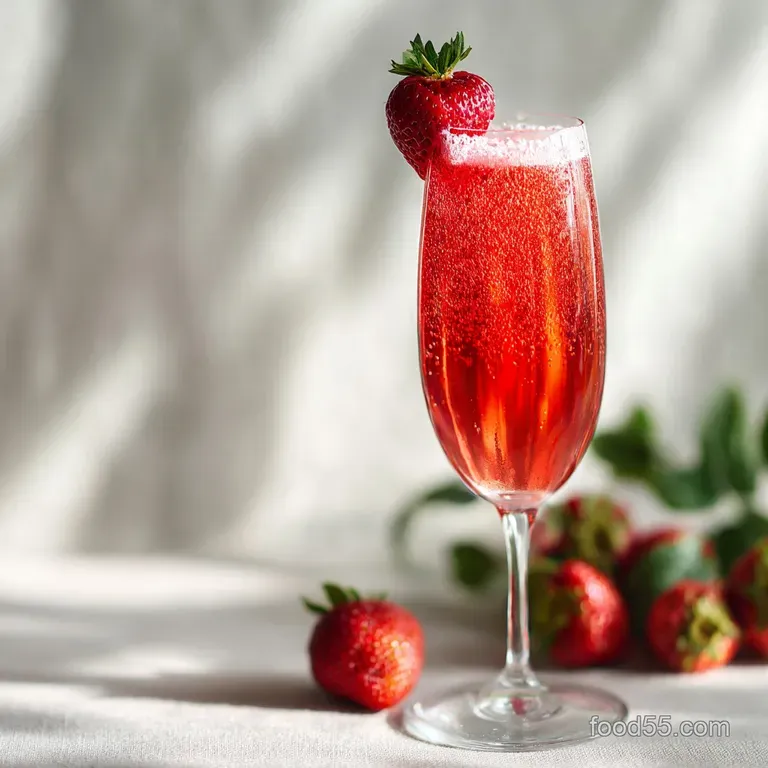
- Hulled and slice 1/2 cup (75g) Fresh strawberries into very thin rounds.
- Macerate the fruit by tossing the slices with 1 tbsp (15g) Superfine sugar and 1 tsp (5ml) Freshly squeezed lemon juice. Note: Let this sit for at least 15 minutes until a syrupy liquid forms.
- Muddle the berries gently in the bowl to release more juice, then strain through a fine mesh sieve into a small pitcher.
- Incorporate the liqueur by stirring 1/2 oz (15ml) Orange liqueur into the strained strawberry syrup.
- Chill your glasses in the freezer until they develop a frosty, opaque coating.
- Divide the syrup equally between two chilled flutes, pouring it directly into the bottom.
- Tilt the glass to a 45 degree angle to prepare for the wine.
- Pour the Champagne 8 oz (240ml) very slowly down the side of the glass. Wait until the foam subsides before adding the rest.
- Stir once very gently with a long spoon to lift the syrup from the bottom without breaking the bubbles.
- Garnish immediately with a whole strawberry and a sprig of mint for a fresh, herbal finish.
Avoiding Common Mixing Pitfalls
One of the biggest mistakes I see is people pouring the champagne straight into the middle of the glass. This creates a "volcano" effect where the carbonation reacts violently with the sugar in the syrup, causing it to overflow and leave you with a sticky mess.
Why Your Drink Is Flat
If your bubbles disappear almost instantly, your glasses might not be clean enough. Even tiny remnants of dish soap or lint from a towel can create "nucleation sites" that cause the CO2 to escape rapidly. Always rinse your flutes with cold water and air dry them or use a microfiber cloth.
Dealing With Heavy Sediment
If you find your drink is too "chunky," you likely didn't strain the macerated berries well enough. While some people like the rustic look, the sediment actually interferes with the mouthfeel. Use a spoon to press the berries against the sieve to get every drop of juice while leaving the solids behind.
| Problem | Root Cause | Solution |
|---|---|---|
| Drink is too sweet | Strawberries were over ripe | Add an extra 1/2 tsp of lemon juice to balance the sugar. |
| Sticky overflow | Poured too fast | Use the 45 degree tilt and pour the wine against the glass wall. |
| Muted fruit flavor | Berries were too cold | Let sliced berries sit at room temperature for 10 mins before adding sugar. |
Common Mistakes Checklist
- ✓ Never use "Brut Nature" unless you really love tartness; the lack of dosage can make the fruit taste sour.
- ✓ Avoid using a blender for the strawberries; it aerates the juice and creates a foam that kills the champagne bubbles.
- ✓ Don't skip the lemon juice; it prevents the strawberry syrup from oxidizing and turning a dull purple.
- ✓ Always chill the orange liqueur; adding room temperature spirits to cold champagne is a recipe for a flat drink.
- ✓ Ensure the mint sprig is fresh; wilted mint adds a "grassy" smell that ruins the floral strawberry aroma.
Smart Dietary Ingredient Swaps
If you need to adjust this for different needs, it’s actually quite flexible. Just keep in mind that changing the sugar source will change the viscosity of the syrup. Much like adjusting a sauce in a Broccoli Casserole recipe, you want to maintain the balance between the liquid and the solids.
The Zero Proof Sparkler
To make this non alcoholic, swap the Champagne for a high-quality sparkling cider or a non alcoholic sparkling wine. For the orange liqueur, use a splash of fresh orange juice and a drop of orange extract. The result is still incredibly festive and shares that same "special occasion" feel.
Low Carb Adjustments
If you are watching your sugar intake, you can replace the superfine sugar with a powdered erythritol or monk fruit sweetener. Be careful, though, as these can sometimes have a cooling aftertaste. You might want to use a dry Cava, which typically has a lower sugar content than many Proseccos.
Flavor Preservation and Storage
Cocktails are best enjoyed the moment they are made, especially when bubbles are involved. However, you can definitely prep the components ahead of time to make serving a breeze. I usually make the strawberry syrup a few hours before the "big moment" so I'm not stuck in the kitchen.
- Fridge
- Store the strained strawberry syrup in an airtight container for up to 24 hours. Any longer and the fresh flavor starts to fade into a "cooked" jammy taste.
- Freezer
- You can actually freeze the strawberry syrup in ice cube trays! Drop a strawberry ice cube into a glass of plain sparkling wine for a slow release flavor profile.
- Zero Waste
- Don't throw away the leftover strawberry pulp from the sieve. It's fantastic stirred into morning yogurt or spread over a piece of toast. You can even use the leftover lemon rinds to make a quick zest sugar for rimming the glasses.
Elegant Presentation and Garnishes
The visual appeal of a Valentine's Day drink is half the experience. To get that "shatter" of light through the glass, make sure the drink is clear. A simple trick is to wet the rim of the glass with a lemon wedge and dip it into a mix of sugar and finely grated orange zest for a shimmering, aromatic border.
For a more dramatic look, you can thread the whole strawberries onto a gold cocktail pick. If you’re feeling adventurous, try adding a single drop of rose water to the syrup. It complements the strawberry and champagne perfectly without being overwhelming. For another rich treat that pairs well with the end of a romantic meal, try my How to Make recipe for a chocolatey finish.
Cocktail Myths Debunked
One common misconception is that "the more expensive the Champagne, the better the cocktail." In reality, very expensive, aged Champagnes often have complex, yeasty notes of brioche and mushroom that can actually clash with the bright, fresh acidity of strawberries.
Save the $200 bottle for drinking straight; a mid range, crisp bottle is actually the superior choice for mixing.
Another myth is that you need a silver spoon in the neck of an open bottle to keep it bubbly. Science has proven this doesn't actually work. If you have leftover wine, the only way to save the bubbles is with a high-quality pressure seal stopper.
Even then, you’ve only got about 24 hours before the effervescence becomes too faint to enjoy in a cocktail.
Recipe FAQs
What is champagne with strawberries called?
It doesn't have one single official name. It's often called a Strawberry Champagne Cocktail, a Strawberry Mimosa, or simply Champagne with Strawberries. The key is the combination of sparkling wine and strawberries, often enhanced with a little sweetness and citrus.
What is the most popular strawberry cocktail?
The Strawberry Daiquiri is incredibly popular, but for Valentine's Day, a Strawberry Champagne cocktail often takes the top spot. While the Daiquiri is a blended, rum-based classic, the Champagne version offers a lighter, more elegant effervescence perfect for celebration.
What is Taylor Swift's signature cocktail?
Taylor Swift is often associated with a Champagne cocktail, particularly on New Year's Eve. While not exclusively strawberry, her preference leans towards bubbly drinks that offer a festive and celebratory feel, much like this Valentine's Day special.
Do champagne and strawberries go together?
Yes, champagne and strawberries are a classic pairing. The natural sweetness and slight tartness of strawberries complement the crisp, often fruity notes of champagne beautifully. This combination is a quintessential symbol of romance and celebration.
What is the best way to macerate strawberries for cocktails?
Toss thinly sliced fresh strawberries with superfine sugar and a bit of lemon juice. Let them sit for at least 15-30 minutes, stirring occasionally, until they release their juices and form a syrupy liquid. This process, similar to preparing fruit for our Vintage Fresh Cranberry Orange Relish: 12-Minute, No-Cook Holiday Classic, concentrates their flavor.
Can I use frozen strawberries instead of fresh?
No, it's best to use fresh strawberries for this cocktail. Frozen strawberries release too much water when thawed, which can dilute the drink and create a less vibrant color and flavor. Fresh berries provide the bright, clean taste and aroma needed for an exceptional cocktail.
How do I make a non-alcoholic version of this cocktail?
Swap the Champagne for a high-quality non-alcoholic sparkling wine or sparkling cider. For the orange liqueur, use a splash of fresh orange juice with a tiny drop of orange extract. The macerated strawberry base remains the same, offering a festive flavor without the alcohol, much like adjusting a recipe to suit dietary needs as seen in some Classic Cheese Rarebit Recipe: A Cheesy Delight for All Occasions variations.
Valentine S Strawberry Champagne Cocktail
Ingredients:
Instructions:
Nutrition Facts:
| Calories | 169 calories |
|---|---|
| Protein | 0.3g |
| Fat | 0.2g |
| Carbs | 16.4g |
| Fiber | 1g |
| Sugar | 14.2g |
| Sodium | 3mg |
