How to Bake a Cake: Basic Sponge Recipe
- Time: Active 20 minutes, Passive 30 minutes, Total 50 minutes
- Flavor/Texture Hook: Velvety crumb with a buttery, vanilla forward finish
- Perfect for: Birthday celebrations, weekend projects, or beginner bakers
- Master the Best Way How to Bake a Cake
- The Science of the Perfect Rise
- Essential Recipe Performance Metrics
- Curating Your Pantry Essentials
- Necessary Tools for Success
- Transforming Batter into Gold
- Fixes for Common Baking Hurdles
- Adjusting Your Recipe Scale
- Debunking Kitchen Myths
- Storing and Repurposing Scraps
- Beautiful Presentation Ideas
- Recipe FAQs
- 📝 Recipe Card
Master the Best Way How to Bake a Cake
The kitchen fills with the scent of warm vanilla and toasted sugar, a signal that something special is happening in the oven. I still remember the first time I tried to bake for a friend's housewarming, I rushed the process and ended up with a dense, sad looking disc that tasted more like a biscuit than a sponge.
It was a humbling moment that taught me one vital lesson: baking isn't just following a list, it's about understanding the rhythm of the ingredients.
We've all been there, staring through the oven glass, praying for a rise that doesn't collapse. This recipe is the result of those "oops" moments, refined into a foolproof method that delivers a silky, tender crumb every time you preheat the oven.
It's about building layers of flavor and texture that bring people together over a shared slice of joy.
You don't need a professional pastry kitchen to achieve these results. With a few simple shifts in how you handle your butter and flour, you'll move from "guessing" to "knowing" exactly when your batter is ready. Let's get into the specifics of what makes this basic cake recipe work so well.
The Science of the Perfect Rise
- Emulsification Stability: Room temperature eggs and milk bond with the creamed butter to create a stable air trap, ensuring the cake doesn't Curdle or collapse.
- Starch Gelatinization: As the batter heats, the 2.5 cups of all purpose flour absorb moisture and set the structure, preventing a gummy center.
- Leavening Activation: The baking powder reacts twice once when hitting the liquid and again in the heat to create those tiny, delicate bubbles.
- Tenderizing Agents: Sugar and fat interfere with gluten development, which is why we get a soft bite rather than a bread like chew.
| Method | Time | Texture | Best For |
|---|---|---|---|
| Standard Oven | 30 minutes | Even, tender crumb | Layer cakes and birthdays |
| Cupcake Tins | 18 minutes | Airy and light | Parties and quick treats |
| Bundt Pan | 45 minutes | Denser, caramelized edges | Brunch or casual dessert |
Selecting the right method depends on your goal for the day. If you are looking for a more specialized texture, the technique used in this How to Make recipe offers a unique homestyle variation. While the standard oven method is our focus here, these adjustments allow you to adapt the batter to whatever pans you have in the cupboard.
Essential Recipe Performance Metrics
| Component | Science Role | Pro Secret |
|---|---|---|
| Unsalted Butter | Fat for tenderness | Cream for 5 mins until pale |
| Large Eggs | Structural binder | Whisk separately before adding |
| Whole Milk | Hydration and richness | Never use cold milk from fridge |
| Fine Sea Salt | Flavor enhancer | Sharpens the sweetness of sugar |
A successful bake relies on these components working in harmony. The interaction between the fat and the sugar creates the initial aeration that the leavening agent later expands. If you're interested in how different fats change the outcome, my Pound Cake Recipe shows how a higher butter ratio creates that iconic, tight crumb.
Curating Your Pantry Essentials
- 2.5 cups (315g) All purpose flour: The backbone of the structure. Why this? Provides enough protein for height without becoming tough like bread flour.
- Substitute: Cake flour (use 2.75 cups) for a much finer, delicate texture.
- 1.5 cups (300g) Granulated white sugar: Adds sweetness and moisture. Why this? Its crystals help aerate the butter during the creaming stage.
- Substitute: Caster sugar for even faster dissolving and a smoother batter.
- 1 tbsp Baking powder: The primary lifting agent. Why this? Ensures a consistent, reliable rise throughout the baking process.
- Substitute: 1 tsp baking soda plus 2 tsp cream of tartar.
- 0.5 tsp Fine sea salt: Balances the sugars. Why this? Prevents the cake from tasting flat or one dimensional.
- Substitute: Standard table salt (use slightly less).
- 0.75 cup (170g) Unsalted butter: Softened to room temperature. Why this? Allows for maximum air incorporation during the creaming step.
- Substitute: Baking margarine for a lighter but less flavorful result.
- 3 Large eggs: Provides lift and moisture. Why this? The proteins set the cake's final shape in the oven.
- Substitute: 0.75 cup unsweetened applesauce (note: cake will be much denser).
- 1 cup (240ml) Whole milk: Adds richness and fat. Why this? The lactose helps the crust brown beautifully.
- Substitute: Full fat oat milk for a similar creamy consistency.
- 1 tbsp Pure vanilla extract: The soul of the flavor. Why this? Adds a complex, floral aroma that masks the egg scent.
- Substitute: Vanilla bean paste for those beautiful black speckles.
- 2 tbsp Neutral oil: Keeps the cake moist for days. Why this? Oil stays liquid at room temp, keeping the crumb soft.
- Substitute: Melted coconut oil for a very subtle tropical hint.
Necessary Tools for Success
Before you start, gather two 8 inch round cake pans. You'll also need a stand mixer or a hand mixer, as doing the creaming by hand is a serious workout that rarely gets enough air into the butter. A fine mesh sieve is helpful for the flour, and a silicone spatula is essential for scraping the bowl.
Don't forget the parchment paper. Cutting rounds for the bottom of your pans is the single best way to ensure your hard work doesn't stick to the tin. A wire cooling rack is also mandatory; if the cake cools in the pan, the steam will turn the bottom soggy and ruin that velvety texture we are after.
Transforming Batter into Gold
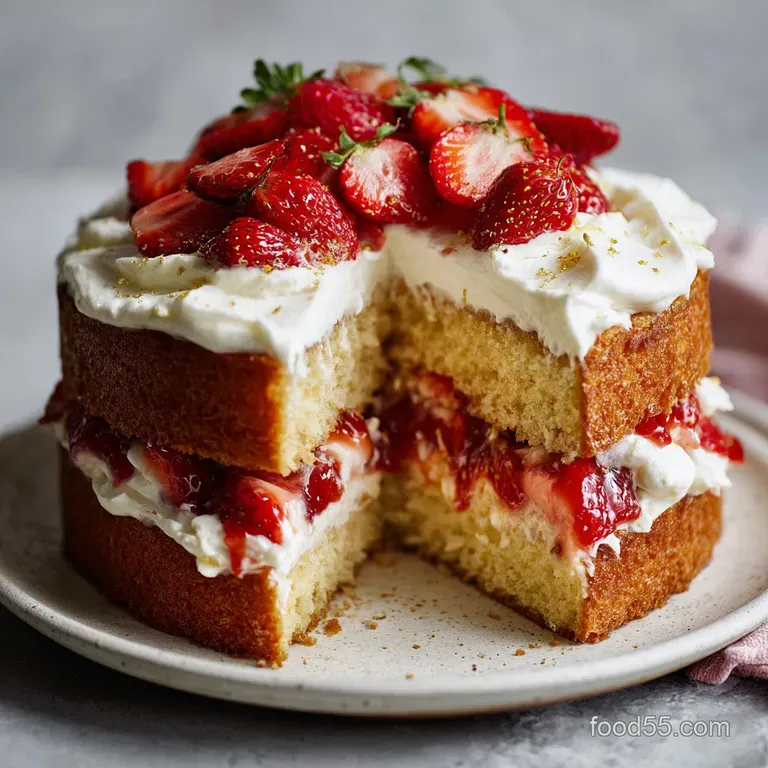
1. Preparation and Preheating
Set your oven to 350°F (180°C). Grease your pans and line the bottoms with parchment paper. Note: Preheating for at least 20 minutes ensures the heat is stable before the cake goes in.
2. Sifting the Dry
Whisk the 2.5 cups of flour, baking powder, and salt together in a medium bowl. Pass through a sieve to remove any lumps and aerate the mixture.
3. Creaming the Base
Beat the 0.75 cup of butter and 1.5 cups of sugar together for 5 minutes. Stop when the mixture is pale and fluffy, looking almost like whipped cream.
4. Emulsifying the Eggs
Add the eggs one at a time, beating well after each. Note: This prevents the fat from separating from the liquid components.
5. Adding the Liquids
Stir in the vanilla extract, neutral oil, and milk. Mix until just combined, even if it looks slightly curdled at this stage.
6. Combining the Elements
Fold in the dry ingredients in three stages, using a low speed. Stop mixing the moment no flour streaks remain to avoid overworking the gluten.
7. Dividing the Batter
Pour the batter evenly between the two prepared pans. Tap them on the counter until any large air bubbles rise to the surface.
8. The Golden Bake
Place in the center rack for 30 minutes. Bake until a toothpick comes out clean and the edges begin to pull away from the pan sides.
9. Cooling Down
Let the cakes sit in the pans for 10 minutes. Then, invert them onto a wire rack until they are completely cool to the touch.
Fixes for Common Baking Hurdles
The Sunken Center
If your cake looks like a crater, it usually means the oven door was opened too early or the leavening agent was expired. The sudden drop in temperature causes the air bubbles to pop before the flour structure has "set." Always wait until at least 25 minutes have passed before checking for doneness.
A Tough, Dense Crumb
This is almost always caused by over mixing once the flour hits the wet ingredients. When you stir flour, you develop gluten. In bread, we want that; in how to bake a cake, we want the opposite. Use a light hand and a "folding" motion with a spatula for the final steps to keep things airy.
| Problem | Root Cause | Solution |
|---|---|---|
| Greasy Bottom | Butter was too melted | Use "cool" room temp butter (65°F) |
| Cracking Top | Oven was too hot | Reduce temp by 25°F next time |
| Dry Texture | Over baked or too much flour | Use a scale for flour; check 5 mins early |
Common Mistakes Checklist
- ✓ Check your baking powder by dropping a pinch in hot water (it should bubble).
- ✓ Never use cold eggs; they will seize the butter and ruin the emulsion.
- ✓ Spoon and level your flour instead of scooping directly from the bag.
- ✓ Ensure the oven is fully preheated before the pans go inside.
- ✓ Don't skip the parchment paper, even in "non stick" pans.
Adjusting Your Recipe Scale
If you need to make a smaller treat, you can halve the recipe easily. Use a 6 inch pan and reduce the bake time by about 5 to 7 minutes. For the 3 eggs, whisk one in a cup and use exactly half of it. It sounds tedious, but precision is what makes this simple cake for beginners successful.
When doubling the recipe for a big party, work in batches for the creaming stage if your mixer is small. You don't want to overcrowd the bowl, as the butter won't aerate properly. Keep the spices and salt at 1.5 times the original amount rather than a full double to keep the flavors balanced.
| Servings | Ingredient Adjustments | Pan Size | Cook Time |
|---|---|---|---|
| 6 people | 1.25 cups flour, 1.5 eggs | 6 inch round | 23 minutes |
| 12 people | Original quantities | Two 8 inch rounds | 30 minutes |
| 24 people | 5 cups flour, 6 eggs | 9x13 sheet pan | 40 minutes |
Doubling a cake for a large gathering requires a slightly lower oven temperature. If you are using a 9x13 sheet pan for a crowd, drop the heat to 325°F (165°C) to ensure the center bakes through before the edges get too dark.
Debunking Kitchen Myths
A common misconception is that you must sift flour three times to get a light cake. While one sifting helps remove lumps, the real lightness comes from the creaming of the butter and sugar, not the flour's journey through a sieve. Focus your energy on that initial 5 minute whisking period.
Another myth is that "room temperature" means the butter should be oily or very soft. If your finger leaves a deep, greasy hole when you touch the butter, it's too warm. It should be pliable but still hold its shape. If the butter is too warm, it cannot hold the air bubbles necessary for a proper rise.
Storing and Repurposing Scraps
You can keep this sponge at room temperature in an airtight container for up to 3 days. The addition of the 2 tbsp of neutral oil helps it stay moist longer than a purely butter based cake.
If you want to freeze it, wrap the individual layers in two layers of plastic wrap and one layer of foil; it will stay fresh for up to 2 months.
Don't throw away the domes if you level your cakes! Those scraps are gold. I like to crumble them up and toast them slightly to use as a topping for yogurt, or you can mix them with a bit of frosting to make quick cake pops.
Even the "mistake" cakes can be turned into a beautiful trifle by layering them with custard and fresh berries.
Beautiful Presentation Ideas
Once your cake is cool, the fun really starts. For a simple look, a light dusting of powdered sugar over a stencil looks elegant without the work of a full frosting. If you are feeling festive, a simple American buttercream or a chocolate ganache can transform this into a showstopper.
If you are looking for a dairy-free alternative for your next gathering, consider how different fats behave. You might enjoy the texture found in this How to Bake recipe for a more vegetable forward approach. No matter how you finish it, remember that the best part of learning how to bake a cake is sharing that first warm slice with someone you love.
Recipe FAQs
How to bake a cake step-by-step?
Preheat the oven to 350°F (180°C) and prepare pans with grease and parchment. Cream the softened butter and sugar for five minutes until pale, then incorporate eggs one-by-one.
Alternate adding the dry ingredients (flour, leavening, salt) and the wet ingredients (milk, vanilla) in three stages, mixing only until just combined. Bake for 30 minutes or until a toothpick inserted centrally comes out clean.
What are the 5 main ingredients in cake?
Flour, sugar, eggs, fat (butter/oil), and a liquid (milk). These five components form the essential structure, sweetness, binding, moisture, and tenderness of nearly every standard cake recipe. For lift, you also require a leavening agent like baking powder.
How can I bake my cake?
Bake in a preheated oven at 350°F (180°C) for approximately 30 minutes for standard 8 inch layers. Place the pans on the center rack for the most even heat distribution. Check for doneness by inserting a clean wooden toothpick into the center; if it comes out without wet batter, it is finished.
What is the 3 2 1 cake rule?
No, the 3-2-1 rule is not a universal cake baking standard. This ratio is often referenced in specific recipes like certain pound cakes or quick breads, usually referring to specific measurements of flour, sugar, and butter by weight.
For general layer cakes, rely on the detailed ingredient ratios provided in your chosen recipe, like the one detailed in our foundational bake guide.
Is it true I can use cold milk to save time when mixing cake batter?
No, this is a common misconception. Using cold milk can cause the creamed butter and sugar mixture to seize up or curdle, leading to poor aeration and a dense final texture. Always use room temperature liquids to maintain a stable emulsion.
Why does my cake sink in the middle after I take it out of the oven?
The primary cause is typically underbaking or opening the oven door too early. If the structure hasn't set before the heat drops, the trapped air collapses, causing the sinkhole. To build foundational skill in temperature control, see how the same principle applies when learning mastering cake flour techniques for a lighter bake.
Can I substitute all the butter with oil for a "healthier" cake?
You can substitute some, but replacing all the butter changes the flavor and texture significantly. Butter provides flavor and helps create structure during the creaming process, resulting in a richer crumb. Oil provides superior moisture retention; for a less intense butter flavor, consider trying a recipe that uses a balance, similar to our Classic Vanilla Cake.
Basic Cake Baking Fundamentals
Ingredients:
Instructions:
Nutrition Facts:
| Calories | 344 calories |
|---|---|
| Protein | 4.9 g |
| Fat | 15.8 g |
| Carbs | 46 g |
| Fiber | 0.7 g |
| Sugar | 25 g |
| Sodium | 125 mg |
