Best Cast Iron Recipe with Garlic Steak
- Time: Active 12 minutes, Passive 55 minutes, Total 67 minutes
- Flavor/Texture Hook: Crusty, mahogany exterior with a velvety, herb infused center
- Perfect for: Date nights, celebrating milestones, or a high protein weekend treat
- Achieving the Best Cast Iron Recipe with Garlic
- Winning Features of This Skillet Meal
- Component Analysis for Peak Flavor
- Essential Ingredients for Maximum Flavor
- The Right Tools for Success
- Step-by-Step Guide to Pro Searing
- Fixing Common Cooking Hurdles
- Creative Ways to Customize Flavor
- Pro Tips for the Best Cast Iron Result
- Scientific Myths of the Skillet
- Proper Storage and Waste Reduction
- Ideas for Your Perfect Pairing
- Critically High in Sodium
- Recipe FAQs
- 📝 Recipe Card
Achieving the Best Cast Iron Recipe with Garlic
Imagine that heavy, rhythmic sizzle the moment thick protein hits a screaming hot pan. The first time I tried searing a steak, I was so terrified of burning it that I pulled it far too early, resulting in a grey, sad looking piece of meat that tasted like nothing. It was a total kitchen heartbreak.
But that failure led me to the secret of heat retention and the patience required for a real crust.
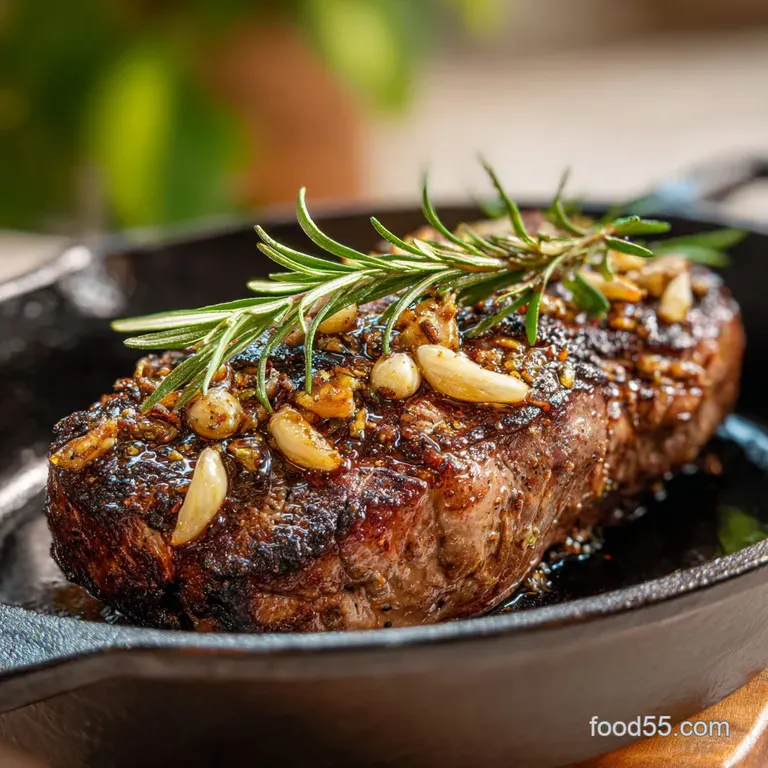
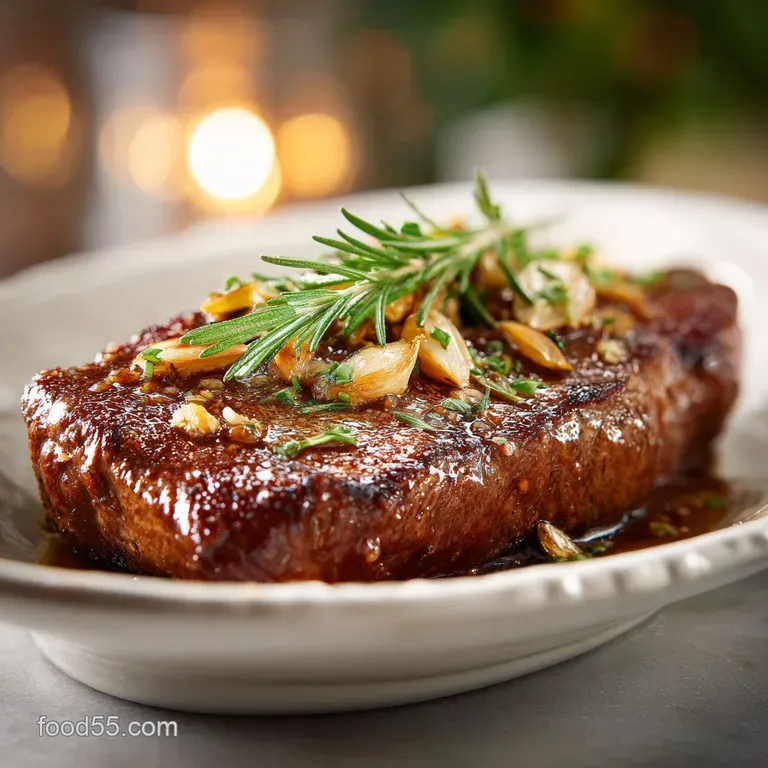
Now, when those 1.5 inch ribeyes hit the iron, the kitchen fills with the scent of toasted garlic and woody rosemary. It's a smell that brings people together and turns a regular Tuesday into a celebration. This article shares my favorite garlic and rosemary infused cast iron recipe.
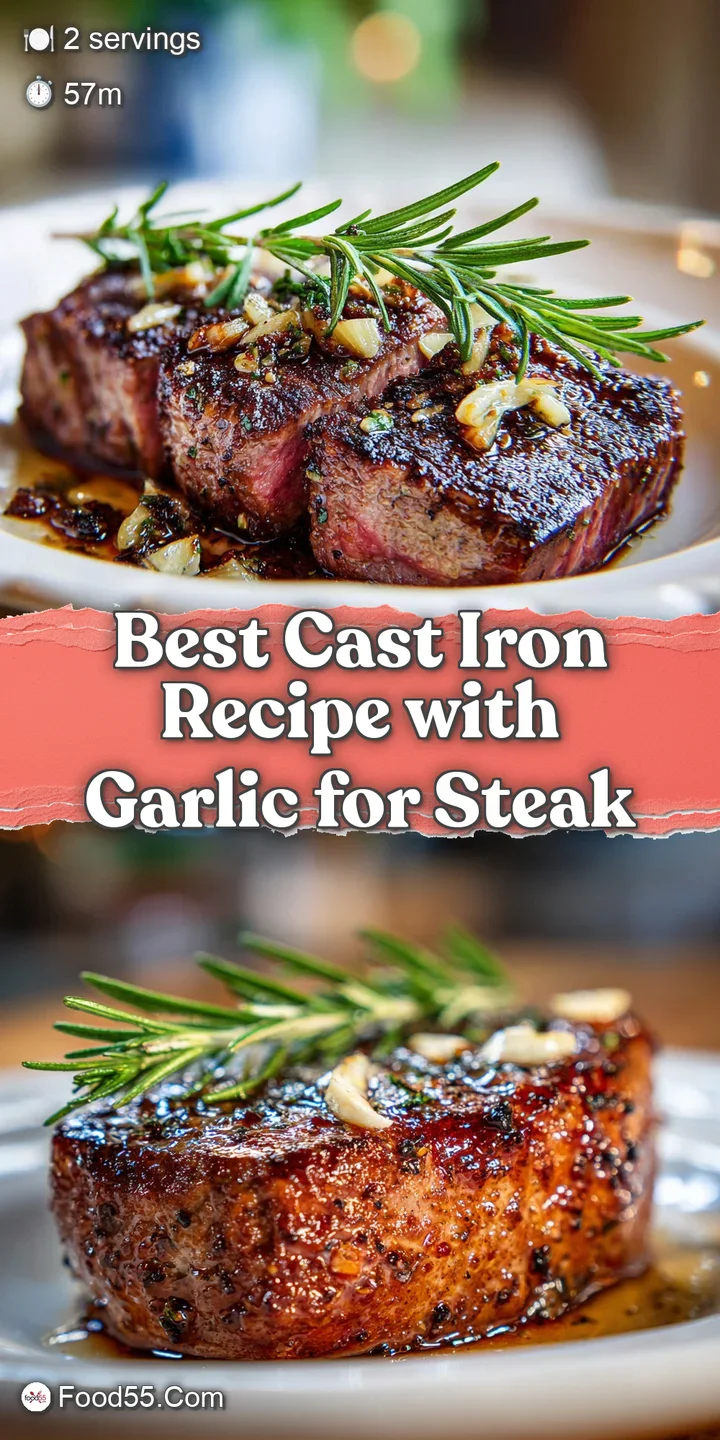
We're moving past "just okay" and heading straight for that deep, mahogany char that shatters under your knife to reveal a tender, ruby red interior.
If you're a fan of one pan wonders that deliver big flavor with minimal cleanup, you might also find a new favorite in my Hearty Ground Turkey recipe for those busy weeknights. But for tonight, we are focusing on the art of the perfect sear. Trust me, once you master the butter baste, you'll never look at a restaurant menu the same way again.
Winning Features of This Skillet Meal
Thermal Conductivity: Cast iron holds onto heat better than any other material, ensuring the pan doesn't cool down when the cold meat is added.
Maillard Reaction: The high, steady heat triggers a chemical reaction between amino acids and reducing sugars, creating that signature savory crust.
Fat Soluble Aromatics: Garlic and rosemary compounds are fat soluble, meaning they infuse directly into the butter as you baste the meat.
Carryover Cooking: Residual heat continues to cook the steak even after it leaves the pan, which is why resting is non negotiable for juicy results.
| Thickness | Internal Temp | Rest Time | Visual Cue |
|---|---|---|---|
| 1 inch | 130°F (54°C) | 5 minutes | Light pink throughout |
| 1.5 inches | 135°F (57°C) | 10 minutes | Warm red center |
| 2 inches | 140°F (60°C) | 12 minutes | Mostly pink/brown edges |
While the stovetop provides the most control for basting, some prefer finishing thicker cuts in the oven. This stovetop method is faster and gives you that hands on connection with the sizzle, but the oven is more hands off for those 2 inch "cowboy" cuts.
| Method | Cook Time | Texture | Best For |
|---|---|---|---|
| Stovetop Only | 10-12 minutes | Maximum crust | 1.5 inch steaks |
| Oven Finish | 15-20 minutes | Even edge to edge | 2+ inch thick cuts |
Component Analysis for Peak Flavor
| Ingredient | Science Role | Pro Secret |
|---|---|---|
| Avocado Oil | High Smoke Point | Unlike olive oil, this won't burn and turn bitter at 400°F (200°C). |
| Kosher Salt | Protein Denaturation | Coarse grains draw out moisture then reabsorb it, seasoning the meat deeply. |
| Unsalted Butter | Emulsion Basting | Using unsalted gives you total control over the final sodium levels during the baste. |
Essential Ingredients for Maximum Flavor
Gather these items before you turn on the heat. You'll need 2 (1.5 inch thick) Ribeye or New York Strip Steaks (approx. 12 oz each) as your base. The thickness is vital because thin steaks will overcook before you get a decent crust.
For the seasoning, use 2 tsp Coarse Kosher Salt Why this? The jagged flakes stick better to the meat surface than fine salt. and 1 tsp Cracked Black Pepper. You'll also need 2 tbsp Avocado Oil for the initial sear and 3 tbsp Unsalted Butter for the finish.
Finally, grab 5 cloves Fresh Garlic, smashed, and 3 sprigs Fresh Rosemary to create that aromatic butter sauce.
| Original Ingredient | Substitute | Why It Works |
|---|---|---|
| Avocado Oil | Grapeseed Oil | Similar high smoke point (420°F). Note: Neutral flavor profile. |
| Fresh Rosemary | Fresh Thyme | Woody, earthy notes. Note: Thyme is slightly more floral and less piney. |
| Ribeye | Top Sirloin | Leaner cut. Note: Will be tougher; don't cook past medium rare. |
The Right Tools for Success
You absolutely need a 10 or 12 inch cast iron skillet. A stainless steel pan works, but it won't hold the heat quite as well for that heavy sear we're after. A pair of long handled metal tongs is also essential so you can flip the meat and sear the fat caps without getting splattered by hot oil.
Don't guess the doneness. An instant read digital thermometer is your best friend here. It's the only way to guarantee you won't end up with a well done tragedy when you were aiming for a perfect medium rare.
step-by-step Guide to Pro Searing
Step 1: The Dry Brine and Tempering
Season the steaks with 2 tsp Coarse Kosher Salt and 1 tsp Cracked Black Pepper on all sides. Let them sit at room temperature for 45 minutes until the surface looks wet and then dry again.
Note: This allows the salt to penetrate the fibers and the surface to dry out for a better sear.
Step 2: The over High heat Sear
Heat your cast iron skillet over high heat until it just begins to wisp smoke. Add 2 tbsp Avocado Oil. Pat the steaks dry one last time with a paper towel and carefully lay them in the pan away from you until you hear a loud, aggressive sizzle.
Step 3: The Flip and the Baste
Cook for 3-4 minutes without moving them to build a crust, then flip. Immediately turn the heat down to medium and add 3 tbsp Unsalted Butter, 5 cloves Fresh Garlic, and 3 sprigs Fresh Rosemary until the butter foams and turns nut brown.
Step 4: The Finishing Touch
Tilt the pan slightly so the butter pools at the bottom with the garlic and herbs. Use a large spoon to continuously pour the hot, flavored butter over the steaks for the remaining 3-4 minutes until the internal temperature reaches 130°F (54°C).
Step 5: The Essential Rest
Remove the steaks from the pan and place them on a warm plate or cutting board. Pour the remaining pan butter over them and let them rest for 10 minutes until the fibers relax and reabsorb their juices.
Fixing Common Cooking Hurdles
Managing Kitchen Smoke
If your kitchen looks like a foggy morning in London, your pan is likely too hot or you used the wrong oil. Cast iron needs high heat, but there is a limit.
| Problem | Root Cause | Solution |
|---|---|---|
| Excessive Smoke | Low smoke point oil | Switch to avocado or grapeseed oil for over high heat cooking. |
| Grey Surface | Damp meat | Pat the steak completely dry with paper towels before searing. |
| Bitter Flavor | Burnt garlic | Add garlic only during the last 3-4 minutes of cooking. |
Common Mistakes Checklist
- ✓ Pat meat completely dry (moisture creates steam, not crust)
- ✓ Use a high smoke point oil like avocado oil
- ✓ Don't crowd the pan; cook one steak at a time if the pan is small
- ✓ Let the pan preheat for at least 5 minutes
- ✓ Use a thermometer instead of the "finger poke" test
Creative Ways to Customize Flavor
To scale this down for one person, simply use one steak and halve the oil, but keep the butter and aromatics the same to ensure you have enough liquid for basting. When scaling up for a crowd, work in batches.
If you put four cold steaks in one pan, the temperature will drop, and you'll end up boiling the meat in its own juices rather than searing it.
If you are doubling the recipe, use two pans simultaneously rather than crowding one. For the salt and pepper, you don't need to double it exactly; 1.5x the seasoning usually suffices for four steaks, as some will always fall off in the pan.
The Blue Cheese Twist
For a decadent variation, top the resting steak with a crumble of Gorgonzola. The residual heat will melt it into a funky, creamy sauce that mingles with the rosemary butter.
Using Dried Herbs Instead
Honestly, don't even bother with dried rosemary here. Dried herbs are great for stews, but in a over high heat sear, they will simply burn and taste like wood chips. If you can't find fresh rosemary, fresh thyme or even sage is a much better substitute.
Spicy Garlic Variations
If you want a little kick, add a pinch of red pepper flakes to the butter during the basting stage. It won't make the meat "hot," but it adds a lovely warmth that cuts through the richness of the ribeye fat.
Pro Tips for the Best Cast Iron Result
Chef Tip: Place the butter in the freezer for 10 minutes before you start cooking. Cold butter takes longer to break down into milk solids, giving you more time to baste before it burns.
Another trick I swear by is "standing" the steaks on their side. Use your tongs to hold the steaks upright to render the thick strip of fat along the edge. This fat becomes crispy and delicious rather than chewy and rubbery.
Scientific Myths of the Skillet
One of the biggest myths is that searing meat "seals in the juices." Science tells us this isn't true. Moisture loss happens regardless of the sear. The real reason we sear is for the Maillard reaction, which creates hundreds of new flavor compounds.
Another common misconception is that you should never use soap on your cast iron. Modern dish soaps don't contain lye, so a quick scrub with a little soap won't ruin your seasoning. Just make sure to dry it immediately and rub it with a tiny bit of oil.
Proper Storage and Waste Reduction
Store any leftover steak in an airtight container in the fridge for up to 3 days. I don't recommend freezing cooked steak as the texture becomes grainy upon thawing. To reheat, don't use the microwave. Instead, warm it gently in a pan with a splash of water or beef broth over medium low heat to keep it from drying out.
Don't toss those rosemary sprigs or garlic cloves! You can toss the leftover herb garlic butter with some pasta the next day for a quick "pantry meal." Those crispy garlic cloves are also incredible smashed onto a piece of toasted sourdough.
Ideas for Your Perfect Pairing
This steak is incredibly rich, so I usually lean toward sides that offer a bit of acidity or earthy balance. I love serving this alongside a Sauteed Mushrooms with recipe to double down on that earthy umami. The way the buttery mushrooms soak up the leftover steak juices on the plate is honestly world class.
If you want something lighter, a simple arugula salad with a heavy lemon vinaigrette cuts through the fat beautifully. Or, if you're going for the full comfort experience, a Classic Creamed Spinach Recipe provides a velvety contrast to the crunchy, salty crust of the meat. Whatever you choose, make sure you have some crusty bread nearby to mop up every last drop of that rosemary garlic butter. It's too good to leave behind.
Critically High in Sodium
2310 mg mg of sodium per serving (100% % of daily value)
The American Heart Association recommends limiting sodium intake to about 2,300mg per day for most adults. This recipe significantly exceeds that limit.
Tips to Reduce Sodium in Your Steak Recipe
-
Reduce Salt by Half-25%
Halve the amount of coarse kosher salt used to season the steaks. Start with 1 teaspoon instead of 2. You can always add more to taste after cooking, but it's much harder to take away.
-
Skip the Salt Entirely-25%
Experiment with eliminating the added salt entirely. The natural flavors of the steak, pepper, garlic, and rosemary may be sufficient for a delicious result. You'll be surprised how much you don't miss it!
-
Boost Flavor with Pepper-10%
Increase the amount of cracked black pepper to add more flavor without sodium. Consider adding other pepper varieties or a pinch of red pepper flakes for a bit of heat.
-
Embrace Herbs and Spices
Experiment with sodium free herbs and spices to enhance the flavor of your steak. Try adding smoked paprika, garlic powder, or onion powder to add complexity to the flavor profile.
Recipe FAQs
Can you put garlic in a cast iron skillet for searing steak?
Yes, absolutely, but timing is crucial. Add smashed garlic cloves and herbs only during the butter basting stage, about halfway through the cook time.
What should not be cooked in cast iron when using garlic?
Avoid cooking very acidic liquids or delicate sauces for long periods. While fine for a quick sear, long simmering tomato sauce can potentially strip the seasoning layer over time.
Should I season cast iron at 350 or 450 for optimal use?
Season at the highest practical temperature your oven reaches, usually 450°F or higher. Higher heat helps the oil polymerize faster and creates a harder, more durable layer.
When to add garlic to cast iron steak for maximum flavor infusion?
Add garlic just as you flip the steak to begin the butter baste. This exposes the garlic to high heat briefly, flavoring the fat without burning it to bitter ash before the steak is done.
Is it true that you must never wash a cast iron skillet with soap?
No, this is a common misconception perpetuated by older seasoning methods. Modern mild dish soap will not strip properly polymerized seasoning; just dry and re-oil immediately after washing.
How to ensure the butter doesn't burn during the garlic basting process?
Reduce the heat to medium immediately after adding butter and aromatics. You want the butter to foam and turn nut brown, not smoke violently, which indicates the milk solids are burning too quickly.
How to properly temper meat before putting it in the hot cast iron?
Allow the seasoned steaks to sit at room temperature for 45 minutes prior to cooking. This process, called tempering, ensures more even cooking from edge to center, a skill also key to properly setting the sauce in our Piccata Sauce Recipe.
Cast Iron Garlic Steak Method
Ingredients:
Instructions:
Nutrition Facts:
| Calories | 1062 kcal |
|---|---|
| Protein | 66g |
| Fat | 88g |
| Carbs | 1.8g |
| Fiber | 0.4g |
| Sugar | 0.1g |
| Sodium | 2310mg |
