Classic Beef Stew Recipe with Red Wine
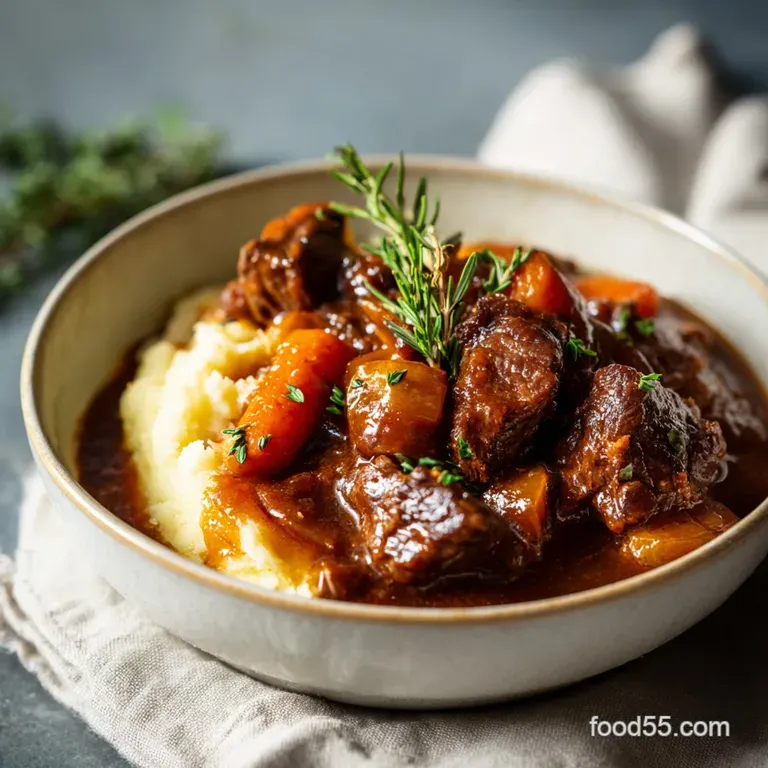
- Time: Active 20 minutes, Passive 1 hours 45 mins, Total 2 hours 5 mins
- Flavor/Texture Hook: Savory, silky gravy with fork tender beef and velvety potatoes
- Perfect for: Cozy Sunday family dinners or rainy day comfort
- Creating a Rich and Savory Beef Stew Recipe from Scratch
- Finding Comfort in This Layered Flavor Beef Stew Recipe
- Understanding the Physics of Collagen Transformation
- Selecting Ingredients for the Best Results
- Essential Kitchen Tools for Success
- Executing the Braising Technique Step by Step
- Resolving Common Texture and Flavor Issues
- Modifying the Recipe for Dietary Needs
- Organizing Prep for Future Meals
- Debunking Common Braising Misconceptions
- Finishing Touches for the Table
- Recipe FAQs
- 📝 Recipe Card
Creating a Rich and Savory Beef Stew Recipe from Scratch
The sizzle of 3 lbs beef chuck roast hitting a heavy pot is basically my favorite song. I remember the first time I tried to make this; I was so impatient that I dumped everything in at once, thinking it would all just "work out." What I got was a grey, watery mess that tasted more like a sad soup than a proper stew.
I realized that the magic isn't in the ingredients alone, but in that initial crust you form on the meat.
Now, whenever the temperature drops, my kitchen fills with the aroma of caramelized onions and fresh thyme. It's a smell that brings everyone to the table before I even announce dinner.
This beef stew recipe is about more than just filling bellies, it’s about that shared moment when you break into a tender carrot or dip a piece of crusty bread into the velvety sauce. We've refined this process over years of cold winters, and I’m so excited to share what actually works.
Forget those thin, flavorless versions you might have had at a cafeteria. We’re building layers here. We start with a hard sear, move into an aromatic base, and let the red wine do the heavy lifting.
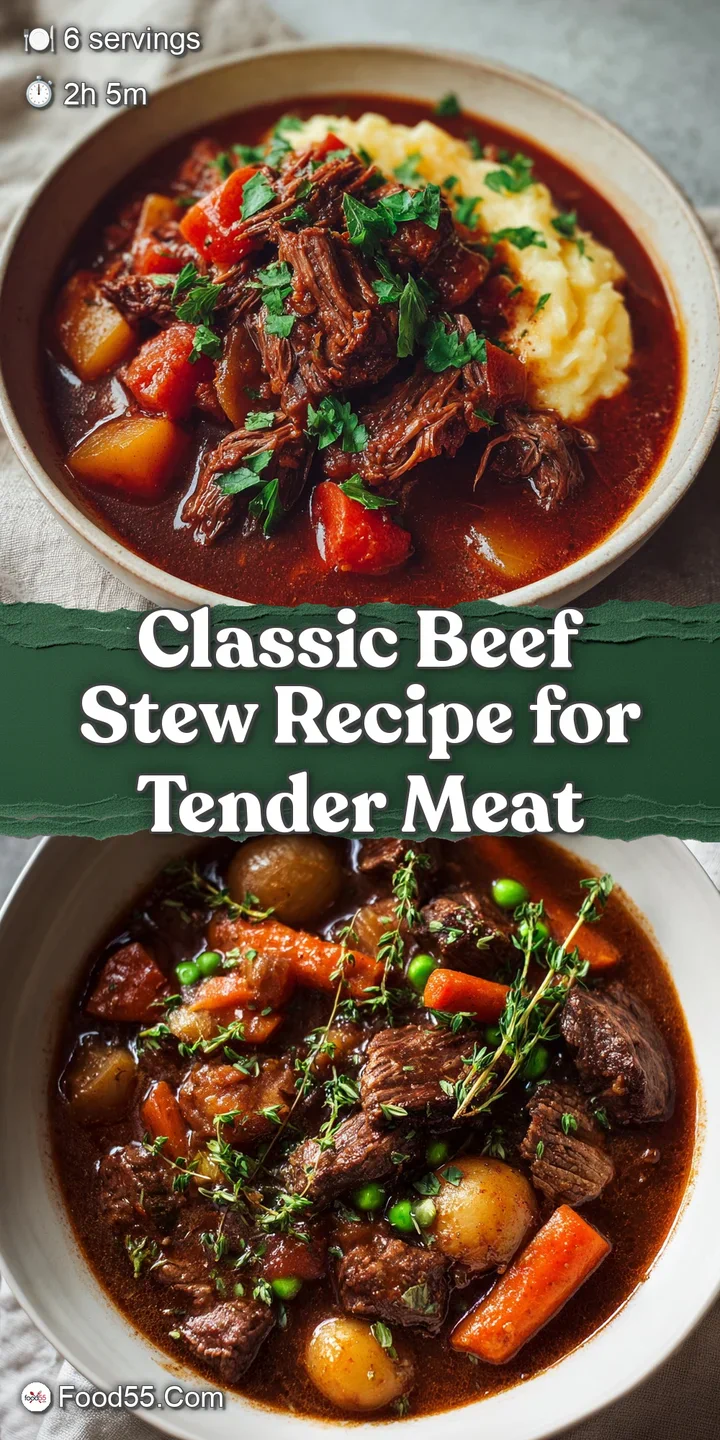
By the time it’s finished, the broth has thickened into a rich, mahogany gravy that coats the back of a spoon. It’s the kind of meal that makes you want to put your phone away and just enjoy the company of your favorite people.
Finding Comfort in This Layered Flavor Beef Stew Recipe
This version stands out because it respects the science of the sear. Many recipes tell you to "brown the meat," but we’re looking for a deep, dark crust that provides the foundation for the entire dish. This isn't just about color; it's about the Maillard reaction creating complex flavor compounds that you simply can't get from boiling. Similar to the depth found in a Slow Cooked Corned recipe, the patience you show in the first ten minutes pays off for the next two hours.
- Maillard Mastery: Searing meat at high heat creates 100+ new flavor compounds that season the entire broth.
- Collagen Conversion: Keeping the temperature at a low simmer for 1 hour 45 mins turns tough connective tissue into silky gelatin.
- Starch Emulsification: The Yukon Gold potatoes release just enough starch to thicken the liquid without needing a heavy roux.
- Acidic Balance: A full cup of dry red wine cuts through the fatty richness of the chuck roast, brightening the overall profile.
| Meat Thickness | Target Internal Temp | Total Cook Time | Visual Doneness Cue |
|---|---|---|---|
| 1 inch cubes | 195°F (90°C) | 1 hour 45 mins | Meat pulls apart with a fork |
| 1.5 inch cubes | 195°F (90°C) | 2 hours 15 mins | Veggies are tender but hold shape |
| 2 inch chunks | 195°F (90°C) | 2 hours 45 mins | Broth is thick and mahogany dark |
We often debate whether to use fresh or pre cut ingredients when life gets busy. While the flavor is always better when you chop everything yourself, I've found a few shortcuts that don't ruin the integrity of the dish.
| Component | Fresh Method | Shortcut Version | Resulting Difference |
|---|---|---|---|
| Aromatics | Fresh minced garlic | Jarred garlic paste | Slightly less punchy, more mellow |
| Base | Whole onions diced | Frozen chopped onions | Softer texture, saves 10 mins prep |
| Broth | Beef bone broth | Bouillon base + water | Saltier profile, lacks gelatinous mouthfeel |
Understanding the Physics of Collagen Transformation
The secret to why this works lies in the low and slow transition of the beef chuck roast. When you first start cooking, the muscle fibers are tight and tough. However, once the internal temperature of the meat stays between 160°F and 180°F for an extended period, the collagen (connective tissue) melts into gelatin.
This process provides that signature "melt in-your mouth" texture and gives the sauce a luxurious body.
| Ingredient | Component Analysis | Chef Science Secret |
|---|---|---|
| Beef Chuck Roast | High Collagen Source | The marbling melts to self baste the meat during the long simmer. |
| Tomato Paste | Umami Concentrator | Sautéing it briefly "caramelizes" the sugars for a deeper red color. |
| Red Wine | Solvent & Acid | Alcohol dissolves flavor compounds that water or broth cannot reach. |
Selecting Ingredients for the Best Results
- 3 lbs beef chuck roast: Trim the heavy fat but keep the internal marbling. Why this? Chuck roast has the perfect fat to meat ratio for long braising.
- 3 tbsp all purpose flour: Used for dredging. Why this? It helps brown the meat and slightly thickens the sauce later.
- 1 cup dry red wine: Use a Cabernet or Merlot. Why this? The tannins provide structure to the rich beef flavor.
- 1 lb Yukon Gold potatoes: Cut into chunky rounds. Why this? They hold their shape better than Russets and have a buttery texture.
- 4 large carrots: Sliced into thick rounds. Why this? Thick cuts prevent them from turning into mush during the long cook.
- 4 cups beef bone broth: high-quality liquid is key. Why this? Bone broth adds more protein and a richer mouthfeel than standard stock.
- 2 tbsp tomato paste: Concentrated flavor. Why this? It provides the "base note" of savory sweetness for the gravy.
| Original Ingredient | Substitute | Why It Works |
|---|---|---|
| Dry Red Wine (1 cup) | Beef Broth + 1 tbsp Balsamic | Provides the necessary acidity without the alcohol content. |
| Yukon Gold Potatoes | Red Bliss Potatoes | Both are waxy and hold together during long simmering times. |
| Neutral Oil | Beef Tallow | Tallow enhances the beefy flavor profile significantly. |
Essential Kitchen Tools for Success
You don't need a pantry full of gadgets, but a heavy bottomed pot is non negotiable. I use a 6 quart enameled cast iron Dutch oven (like a Le Creuset or Lodge). The thick walls distribute heat evenly, preventing the bottom from scorching while the top stays at a perfect simmer.
If you don't have one, a heavy stainless steel stockpot will work, but you'll need to keep a closer eye on the heat levels.
Chef Tip: Freeze your tomato paste in 1 tablespoon dollops on parchment paper. Once frozen, pop them in a bag. You'll always have exactly what you need without wasting the rest of the can!
You'll also need a sharp chef's knife for those 1 inch beef cubes. Consistent sizing means everything cooks at the same rate. A wooden spoon is better than metal for scraping up the "fond" (those little brown bits) after deglazing.
Those bits are pure flavor gold, and you want every single one of them back in your sauce.
Executing the Braising Technique step-by-step
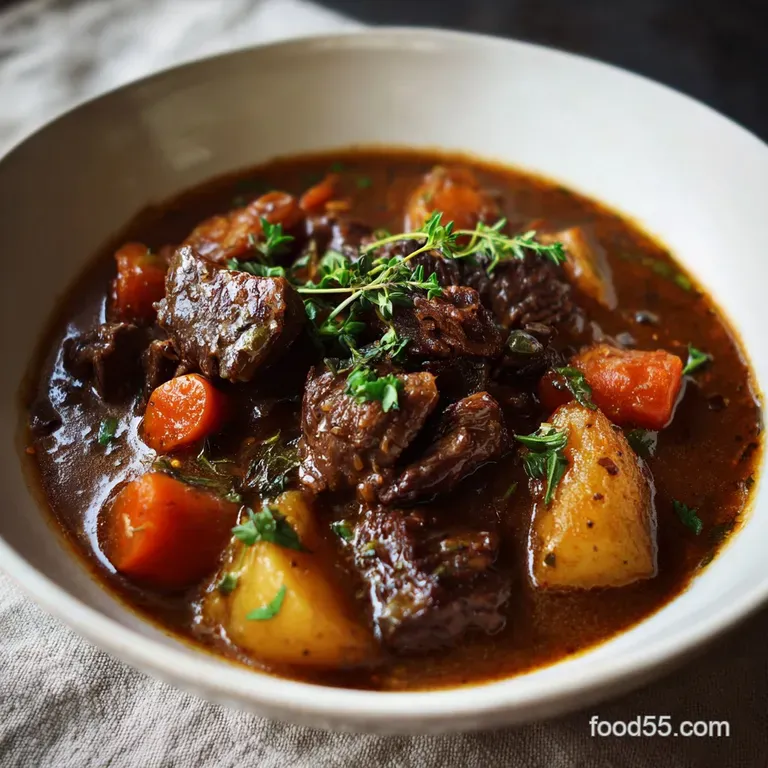
- Prep the beef. Toss the 3 lbs beef chuck roast cubes with 3 tbsp flour, 1 tsp salt, and 1/2 tsp pepper in a large bowl. Note: This light coating creates the crust.
- Sear the meat. Heat 3 tbsp oil in the Dutch oven over medium high heat. Add beef in batches until deep brown and crusty on all sides (about 8 mins per batch).
- Sauté aromatics. Remove beef. Add 2 yellow onions to the pot until softened and golden brown (about 5 mins).
- Add flavor base. Stir in 4 cloves minced garlic and 2 tbsp tomato paste. Cook for 2 mins until the paste turns a dark brick red.
- Deglaze the pan. Pour in 1 cup red wine. Use a wooden spoon to scrape the bottom until all browned bits are dissolved.
- Combine liquids. Return beef to the pot. Add 4 cups beef bone broth, 2 tbsp Worcestershire sauce, 2 bay leaves, and 3 sprigs thyme.
- Initial simmer. Bring to a boil, then reduce to low. Cover and simmer for 1 hour 15 mins until meat is starting to get tender.
- Add vegetables. Stir in 1 lb Yukon Gold potatoes and 4 large carrots. Cover and cook for another 30 mins until potatoes are easily pierced with a fork.
- Final thicken. If you want a thicker gravy, simmer uncovered for the last 10 mins until the sauce coats a spoon.
- Rest and serve. Remove bay leaves and thyme sprigs. Let sit for 10 mins before serving to let the juices redistribute.
If you find yourself short on time, you can use the same base for a Slow Cooker Pot recipe with minor liquid adjustments. The key remains that initial sear in a skillet before moving everything to the crock.
Resolving Common Texture and Flavor Issues
Achieving the Correct Broth Consistency
If your stew looks more like a soup than a hearty meal, you probably had too much liquid or didn't let it reduce. Don't panic and add more flour directly, as it will clump. Instead, take a ladle of the hot liquid, mix it with a teaspoon of cornstarch in a small bowl, and then whisk that slurry back into the main pot.
Balancing Overly Salted Gravy
Sometimes the broth reduces more than expected, concentrating the salt. A classic trick is to add another chopped potato and simmer for 10 minutes; the starch absorbs some of the salt. Alternatively, a teaspoon of sugar or a splash of cream can mask the saltiness by providing a flavor counterpoint.
| Problem | Root Cause | Solution |
|---|---|---|
| Tough Meat | Under cooked collagen | Simmer for an additional 20-30 mins on low heat. |
| Mushy Veggies | Added too early | Add potatoes and carrots only in the final 30-45 mins. |
| Bitter Aftertaste | Scorched tomato paste | Add a pinch of sugar and a splash of broth to balance. |
Common Mistakes Checklist
- ✓ Pat the beef dry with paper towels before dredging in flour to ensure a crisp sear.
- ✓ Avoid overcrowding the pan; if the meat is too close, it will steam instead of brown.
- ✓ Keep the heat at a "lazy bubble" a rolling boil will make the meat rubbery.
- ✓ Don't skip the deglazing step; the fond on the bottom of the pot is where the deep flavor lives.
- ✓ Let the stew rest for at least 10 minutes before serving to thicken the sauce naturally.
Modifying the Recipe for Dietary Needs
For a gluten-free version, swap the all purpose flour for a 1:1 gluten-free flour blend or even cornstarch for the dredge. The flavor remains identical, though the crust might be slightly less "shatter crisp" than the wheat version.
If you're looking for a lower carb option, replace the potatoes with cauliflower florets or daikon radish chunks, adding them in the last 15 minutes of cooking.
When scaling this recipe for a crowd, remember that you don't need to double the salt and spices exactly. I usually go for 1.5x the seasoning when doubling the meat and vegetables. This prevents the dish from becoming overwhelming. If you are feeding a very large group, a Homemade Ground Beef recipe might be easier to manage, but this stew is easily doubled in two separate Dutch ovens.
| Group Size | Beef Amount | Pot Size | Cook Time Adjustment |
|---|---|---|---|
| 3 People | 1.5 lbs | 4 Quart | Reduce simmer by 15 mins |
| 6 People | 3 lbs | 6 Quart | Standard (as written) |
| 12 People | 6 lbs | 10+ Quart | Increase simmer by 30 mins |
Organizing Prep for Future Meals
This is one of those rare dishes that actually tastes better the next day. As it sits in the fridge, the flavors continue to meld and the starches from the potatoes further thicken the sauce. Store leftovers in an airtight container in the fridge for up to 4 days.
When reheating, do it gently on the stovetop with a splash of water or broth to loosen the gravy.
Freezing and Quality Control
You can freeze this stew for up to 3 months. However, be aware that potatoes can sometimes get a bit "mealy" after being frozen and thawed. If you know you're making a batch specifically for the freezer, consider undercooking the potatoes slightly or leaving them out and adding fresh ones when you reheat the base.
Zero Waste Kitchen Practices
Don't throw away your onion skins or carrot peels! Toss them into a freezer bag. Once the bag is full, simmer them with water and some peppercorns to make your own vegetable scrap stock.
Also, if you have leftover gravy but no meat, use it as a base for a shepherd's pie or pour it over mashed potatoes for a quick weekday side.
Debunking Common Braising Misconceptions
One major myth is that searing "seals in the juices." Science tells us this isn't true; moisture loss happens regardless of the sear. What searing actually does is create the flavor profile through the Maillard reaction. Without it, your stew will lack the complex, savory notes that define a classic version.
Another common belief is that you must use expensive wine. In reality, any dry red that you would enjoy drinking works perfectly. The heat of the simmer cooks off the alcohol, leaving behind the fruit and acid.
Don't bother with "cooking wine" from the grocery store aisle it's usually loaded with unnecessary salt and lacks the depth of a standard bottle of table wine.
Finishing Touches for the Table
When you're ready to serve, don't just ladle it into a bowl and call it a day. A fresh element is crucial to balance the heavy, savory nature of the dish. I love a handful of chopped fresh parsley or a tiny sprinkle of lemon zest right before it hits the table. It provides a "pop" that wakes up the palate.
Serve this in wide, shallow bowls so there's plenty of room for a side of crusty sourdough or even some buttered egg noodles. There’s something so connecting about a shared pot of stew in the center of the table. It invites people to reach across, pass the bread, and linger over their meal.
Whether it’s a quiet night in or a gathering of old friends, this recipe has a way of making the world feel a little bit smaller and a lot more welcoming.
Chef Tip: Add a teaspoon of balsamic vinegar or a squeeze of lemon juice in the last 2 minutes of cooking. That tiny hit of acid brightens the entire pot and makes the beef flavor stand out even more.
Decision Guide for Your Kitchen
- If you want a thicker sauce: Mash two of the cooked potato chunks into the broth during the final simmer.
- If you want a richer flavor: Sauté 4 ounces of chopped bacon before searing the beef and use the bacon fat to brown the meat.
- If you want a lighter version: Replace the beef broth with chicken broth and use a dry white wine like Sauvignon Blanc.
Recipe FAQs
What is the secret to a good beef stew?
Searing the meat thoroughly for flavor. The deep brown crust formed during the initial sear creates complex flavor compounds via the Maillard reaction that water alone cannot produce. If you master this initial browning technique, the depth of your final gravy will be exponentially better.
What are the best ingredients for a beef stew?
Beef chuck roast, good quality bone broth, and dry red wine. Chuck roast has the necessary connective tissue (collagen) that melts during long simmering, providing tenderness and body. The wine adds essential acidity to balance the richness of the beef fat.
What is a secret ingredient for beef stew?
A small amount of tomato paste, sautéed until dark red. Cooking the tomato paste for about two minutes until it turns brick red caramelizes its sugars and concentrates the umami. This adds depth without making the stew taste overtly like tomato.
What is the best liquid for stew?
A 50/50 mix of beef bone broth and dry red wine. The bone broth provides a savory, gelatinous base, while the wine acts as an acidic solvent to pull deep flavors out of the browned meat. For low-carb needs, you can mimic the body using the same principles found when building flavor in a Slow Cooked Pot roast recipe.
How do I ensure my beef stew vegetables don't turn to mush?
Add root vegetables like potatoes and carrots in the final 30 to 45 minutes of cooking. They need less time to tenderize than the beef does. This prevents the vegetables from breaking down completely while the connective tissue in the meat finishes converting to gelatin.
Why is my stew gravy thin instead of thick?
The liquid hasn't reduced enough or the starch hasn't fully activated. If simmering uncovered for 10 minutes doesn't help, make a slurry by mixing 1 teaspoon of cornstarch with 2 teaspoons of cold water, then whisk this into the simmering stew. This thickens the sauce without leaving a raw flour taste.
Is it true that using cheap wine ruins the stew flavor?
No, this is a common misconception; cheap, dry wine works fine. The alcohol cooks off during the simmer, leaving the fruit and acid notes behind. Just ensure it is a dry red wine, not sweet, and one you would be willing to sip while cooking.
Classic Beef Stew Recipe
Ingredients:
Instructions:
Nutrition Facts:
| Calories | 792 kcal |
|---|---|
| Protein | 52 g |
| Fat | 41 g |
| Carbs | 31 g |
| Fiber | 4.5 g |
| Sugar | 6.2 g |
| Sodium | 785 mg |
