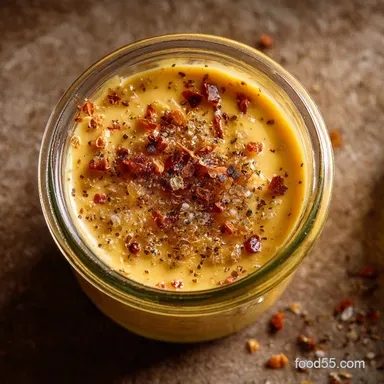
Homemade Dijon Mustard with Grape Juice

- Time: 10 min active + 24 hrs soaking
- Flavor & Texture: Pungent, smooth, and tangy
- Perfect for: Meal prep or gifting
The smell of fresh mustard seeds hits you the moment they hit the water. It's a sharp, earthy scent that promises a real kick.
You don't need fancy French equipment to get that classic bite. Just a bit of patience and a blender.
This recipe focuses on a slow soak. It removes the harsh, bitter notes you find in quick versions, leaving a balanced flavor for your classic Dijon mustard.
Dijon Mustard Recipe Specs
This is a high-acid condiment, so it stays stable without heat. The process relies on hydration and blending rather than cooking.
| Detail | Value |
|---|---|
| Prep Time | 10 minutes |
| Total Time | 24 hours 10 mins |
| Yield | 6 4-oz jars |
Ingredient Deep Dive
The flavor here is a balance of heat and acid. Most store brands use tons of salt to preserve, but we rely on the acidity of the juice and vinegar.
For the base, we use Dijon mustard seeds. These are smaller and more pungent than yellow seeds. White grape juice adds a subtle sweetness that cuts through the sharpness. White vinegar provides the necessary tang and acts as a natural preservative.
Garlic powder and turmeric are there for depth and that iconic yellow glow.
Substitutions If you can't find white grape juice, an unsweetened apple juice is a decent approximation. Start with a little less and taste, as it can be sweeter.
Ingredients List
- 1 cup (200g) Dijon mustard seeds Why this? Provides the signature pungent heat
- 1/2 cup (120ml) water
- 1/2 cup (120ml) white grape juice Why this? Balances acid with subtle sweetness
- 1/3 cup (80ml) white vinegar Why this? Adds tang and preserves the batch
- 1 tsp (6g) salt
- 1/2 tsp (2g) garlic powder
- 1/4 tsp (1g) turmeric Why this? Gives the classic yellow color
Equipment Needed
Just a few tools are required. Use a glass bowl for soaking, as plastic can retain the pungent scent of mustard.
A high-speed blender or food processor is essential to fully break down the seed hulls and prevent a gritty texture.
How to Make It
- Combine 1 cup (200g) Dijon mustard seeds, 1/2 cup (120ml) water, and 1/2 cup (120ml) white grape juice in a glass bowl.

- Cover the mixture tightly with plastic wrap and let it sit at room temperature for 24 to 48 hours until the seeds have plumped and the liquid is mostly absorbed.
- Transfer the soaked seeds into a high-speed blender or food processor.
- Add 1/3 cup (80ml) white vinegar, 1 tsp (6g) salt, 1/2 tsp (2g) garlic powder, and 1/4 tsp (1g) turmeric.
- Pulse the mixture several times to break up the seeds, then blend on high for 1–2 minutes until the texture is smooth and velvety.

- Stop the blender and scrape down the sides with a spatula to ensure no dry clumps remain, then pulse once more to achieve the desired thickness.
- If the mixture is too thick, add water one teaspoon at a time and blend until it reaches a spreadable consistency.
- Transfer the finished mustard into sterilized glass jars, leaving a small headspace at the top.

- Store the jars in the refrigerator to maintain peak flavor for up to 6 months.
Troubleshooting
If the taste is too sharp, the seeds likely didn't hydrate enough. A full 48-hour soak is the trick to mellowing out those enzymes.
For a thinner consistency, don't just add water at the end. Blend for an extra 30 seconds first, as the seeds release more liquid when processed longer.
Fixing a Bitter Taste
The bitterness comes from an incomplete soak. If it's too strong, whisk in a tiny bit of honey to mask the edge.
Handling Thin Texture
If it's too runny, it's usually due to too much initial liquid. You can't easily thicken it once blended, so stick to the measurements.
| Problem | Fix |
|---|---|
| Too Bitter | Soak seeds for a full 48 hours |
| Too Runny | Add water only one teaspoon at a time |
| Gritty Texture | Blend on high for an extra minute |
Creative Twists and Swaps
You can easily tweak your Dijon mustard to fit different moods. I like adding a tablespoon of maple syrup for a sweet-heat version that works great on salmon.
For something with more punch, stir in a teaspoon of grated horseradish after blending. If you're making a creamy sauce, this pairs well with a Cowboy Butter Sauce for a rich, savory finish.
| Original Ingredient | Substitute | Why It Works |
|---|---|---|
| White Grape Juice | Apple Juice | Similar sugar content. Note: Adds apple notes |
| White Vinegar | Apple Cider Vinegar | Similar acidity. Note: Slightly fruitier flavor |
Store and Keep Fresh
Store the jars in the fridge. The vinegar keeps it stable, but the cold prevents the pungent heat from fading over time.
Avoid using metal spoons in the jar, as the acid can react with some metals. Stick to plastic or silicone.
Serving Suggestions

This Dijon mustard is a powerhouse in vinaigrettes because it helps the oil and vinegar stay mixed.
It's also great as a glaze for roasted carrots or as a base for a honey-mustard dip. Just whisk it with a bit of mayo for a creamier texture.
Why This Works
The magic here is in the cold hydration. By soaking the seeds, you soften the hulls and neutralize the most aggressive bitter compounds before the blending even starts.
The Logic
- The Soak: Water and juice penetrate the seed, releasing the flavor without the "burn" of raw seeds.
- The Acid: Vinegar lowers the pH, which slows the enzymatic reaction that creates heat and helps lock in the flavor profile.
| Seed Type | Heat Level | Texture | Best For |
|---|---|---|---|
| Yellow | Mild | Smooth | Hot dogs |
| Brown | High | Coarse | Whole grain |
| Dijon | Sharp | Fine | Vinaigrettes |
Common Questions
What is the difference between mustard sauce and Dijon mustard?
Mustard sauce is typically a prepared condiment or a cooked sauce incorporating other ingredients. Dijon mustard is a specific style made from brown seeds and white grape juice.
How to make a Dijon mustard substitute?
Mix yellow mustard with a pinch of turmeric and a splash of white vinegar. This mimics the sharper tang and color of the original.
Is Dijon mustard vegan?
Yes, this version is vegan. It uses only mustard seeds, water, grape juice, vinegar, salt, garlic powder, and turmeric.
Can you use regular mustard instead of Dijon for deviled eggs?
Yes, you can use regular yellow mustard. The flavor will be milder and less pungent than the sharp kick of Dijon.
Which alternatives work as a substitute for Dijon mustard?
Use yellow mustard combined with extra white vinegar for a similar acidic profile. This is a reliable option when you cannot find Dijon.
Does Dijon mustard differ from regular yellow mustard?
Crafted from brown mustard seeds, Dijon offers a more refined and pungent heat. If you enjoyed learning this blending technique, you'll find a similar approach in our balsamic vinaigrette.
Why is my homemade mustard too sharp?
The seeds likely didn't hydrate enough during the soaking phase. Letting them soak for a full 48 hours helps mellow out the enzymes for a smoother taste.
Smooth Dijon Mustard