Grandmothers Corn Pudding: the Rich, Creamy, and Classic Sunday Side Dish
- The Secret to Proper Sunday Lunch Corn Pudding
- The Science of Texture: Achieving the Perfect Custard-Like Center
- Essential Ingredients for Grandmothers Corn Pudding and Smart Substitutions
- Step-by-Step Guide: Mixing and Baking Your Classic Corn Pudding
- Troubleshooting Grandmothers Corn Pudding: Common Mistakes and Expert Fixes
- Make-Ahead Strategy and Proper Storage
- What to Serve Alongside Grandmothers Corn Pudding
- Recipe FAQs
- 📝 Recipe Card
The Secret to Proper Sunday Lunch Corn Pudding
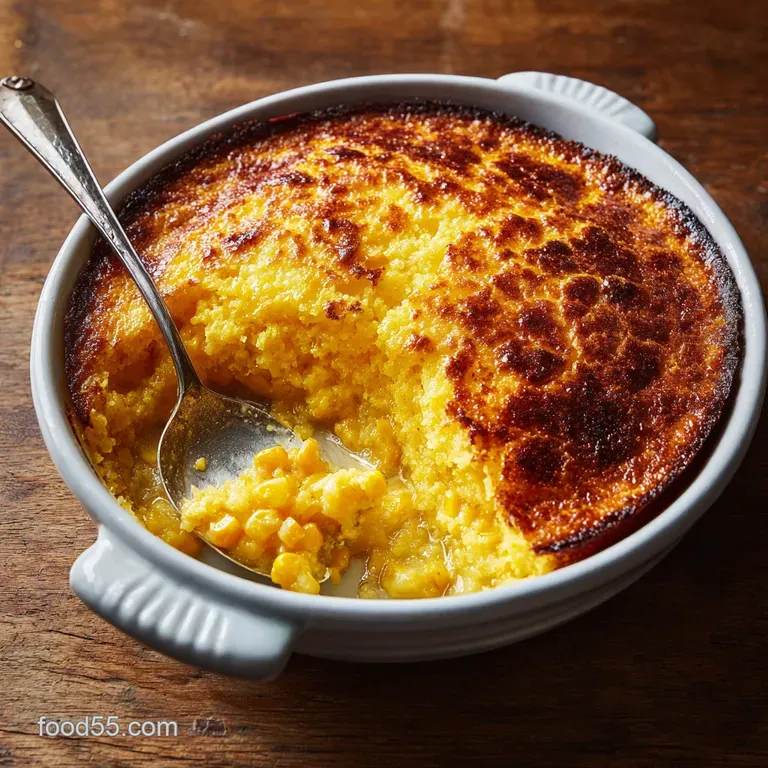
Oh, stop whatever you are doing right now. Can you smell it? That deep, comforting aroma of caramelized sugar, sweet corn, and warm butter wafting through the house that is the smell of my grandmother’s kitchen, and it’s pure heaven. This is not some dry, crumbly cornbread casserole, friend.
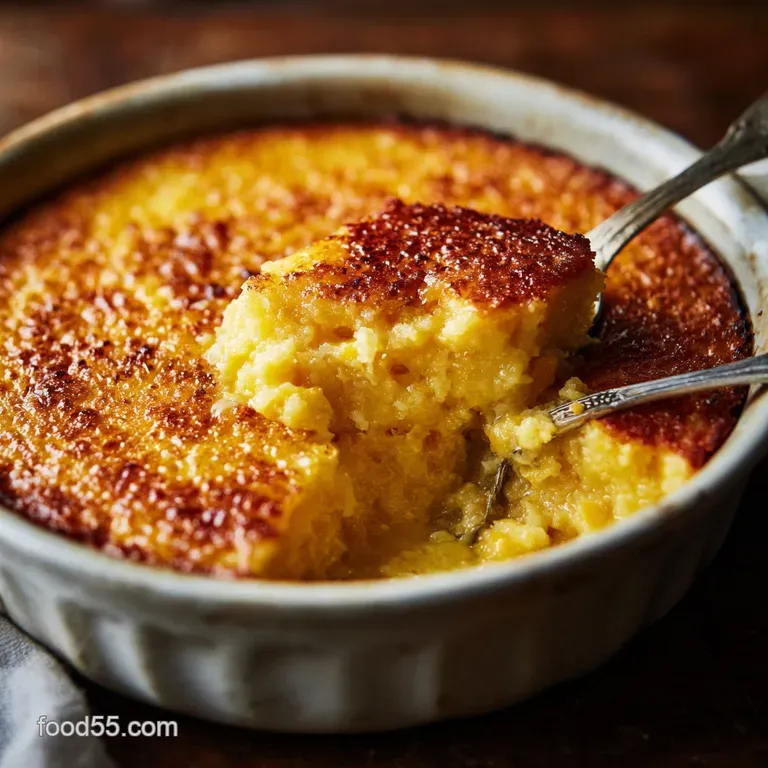
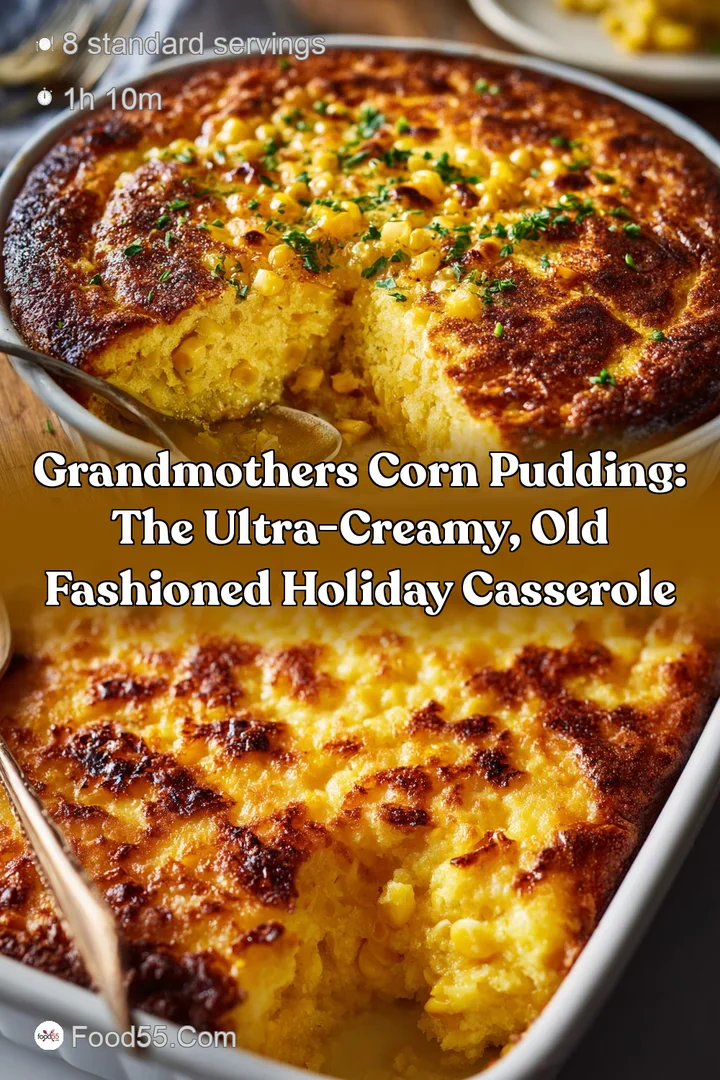
It’s a velvety, old fashioned corn pudding, impossibly rich and golden brown on top, with a center that’s practically a delicate custard.
We all love those huge, celebratory holiday sides, but sometimes they require way too much fuss, right? That’s where this Grandmothers Corn Pudding recipe becomes an absolute lifesaver.
It uses incredibly simple ingredients you probably already have, costs pennies to make, and is shockingly quick to assemble. It's the ultimate low-effort, high reward side dish, guaranteed to steal the show.
After years of trial and error (and definitely one very sad, scrambled egg version), I finally cracked the code on achieving that perfect, creamy wobble. We’re going to walk through the real tricks to nail the texture, understand the dairy ratio, and ensure your homemade corn pudding is worthy of a major holiday spread.
Let’s get cooking!
The Science of Texture: Achieving the Perfect Custard Like Center
Defining "Rich, Creamy, and Classic": Texture vs. Soufflé
When we talk about classic, southern style corn pudding (sometimes called corn custard recipe), we are aiming for a luxurious, spoonable texture, not something that can stand up on its own. It should be rich and dense enough to hold its shape when served, yet melt immediately in your mouth.
If you over aerate the eggs or use too much flour, you end up with a high, fluffy dish that deflates quickly that’s a soufflé, and while delicious, that’s not what we’re going for here.
Why Grandmothers Corn Pudding Stands Apart from Standard Casseroles
Most standard corn casseroles rely heavily on cornbread mix or large amounts of dried flour, which makes them taste exactly like... well, bread. My grandmother’s genius method uses a precise balance of heavy cream and whole milk to create the base, binding it with just enough flour to stabilize the egg custard.
The secret ingredient is really the melted butter, which coats the flour particles perfectly and prevents harsh gluten development. This technique is what keeps the final dish fudgy, not cakey.
How to Prepare Your Baking Dish for the Perfect Golden Crust
This might sound like a tiny detail, but trust me, it matters. I always use an 8x8 inch ceramic dish because the thickness of the material helps distribute the heat more gently to the edges. Before pouring in the batter, give it a thorough greasing with softened butter, especially around the corners.
This prevents the delicate egg proteins from sticking and pulling away too harshly, ensuring that beautiful, even golden brown crust we all crave.
The Role of Dairy: Why Using Heavy Cream is Non-Negotiable
This is not the time to skim on fat, folks. The high fat content of heavy cream (or double cream, for my UK friends) gives the corn pudding its signature velvety mouthfeel. Whole milk thins the batter and aids in cooking, but the cream provides the necessary richness that defines this specific old fashioned corn pudding .
If you try to substitute everything with skim milk, you risk a watery, grainy outcome. Don’t do it.
Balancing Sweetness: Integrating Corn's Natural Sugars
Canned creamed corn already brings a lot of natural sweetness and starch, which is a major time saver! We only add a quarter cup of sugar, which serves two important functions: flavor balancing and browning.
It provides a lovely counterpoint to the salt and nutmeg, and helps the top caramelize into a deep, appetizing color.
The Egg Ratio: Structuring the Pudding Without Making it Scrambled
Eggs are the backbone of this recipe; they move the dish from being a creamy liquid to a structural custard. Three large eggs are exactly the right amount for an 8x8 pan. It’s enough protein to set the pudding without making it dense or rubbery.
If you use too many, the structure will be too tight, and you will end up with dry, scrambled edges a true culinary tragedy.
Essential Ingredients for Grandmothers Corn Pudding and Smart Substitutions
The beauty of this recipe is its simplicity, but quality still matters. Always bring your eggs and dairy to room temperature first!
Choosing Your Corn: Fresh, Frozen, or Canned? (And the Creamed Corn Factor)
We use two types of corn for the perfect texture: the sweetness and liquid starch from the canned cream style corn, and the "bite" from the whole kernels.
| Ingredient | Why it's Used | Smart Substitution |
|---|---|---|
| Cream Style Corn | For sweetness, starch, and creamy texture. | Puree 12 oz of canned whole corn with 1 Tbsp sugar and 1 Tbsp heavy cream. |
| Frozen Kernels | For structural integrity and texture variation. | 3 4 fresh cobs (2 cups kernels), or canned whole kernel corn (drained). |
| Heavy Cream | Richness and velvety texture. | 1 (12 oz) can of evaporated milk. |
Fats and Flours: Binding Agents and Flavor Carriers
The small amount of all-purpose flour helps prevent the custard from splitting, and the melted butter carries the lovely savory sweet flavor throughout the dish.
| Ingredient | Why it's Used | Smart Substitution |
|---|---|---|
| Unsalted Butter | Fat base and flavor. | Salted butter, but reduce the recipe's added salt by 1/2 tsp. |
| All-Purpose Flour | Binding and stabilization. | high-quality gluten-free AP blend (with xanthan gum). |
Troubleshooting Key Flavor Notes (Salt, Sugar, and Vanilla Essence)
I know some recipes call for a dash of vanilla, but my grandmother always preferred a tiny pinch of freshly grated nutmeg and just a smidge of black pepper. The salt is crucial here; it pops the sweetness of the corn. If the dish tastes bland, chances are you didn't use enough salt.
This savory balance is key to a true Southern Corn Pudding Recipe .
Dairy Deep Dive: Best Practices for Buttermilk vs. Cream
Can you use buttermilk? Yes, but cautiously. Buttermilk is higher in acid, which can easily curdle the egg proteins if the heat is too high, especially when combining liquids. If you must use buttermilk (e.g., swapping the Whole Milk for Buttermilk), stir in 1/2 tsp of baking soda to neutralize some of the acid, then bake at 325°F (160°C) instead of 350°F (175°C).
step-by-step Guide: Mixing and Baking Your Classic Corn Pudding
Let's crack on with the actual technique. Remember, temperature is everything here!
Preparing the Base: Separating Wet and Dry Ingredients for Smooth Mixing
- Preheat and Melt: Get your oven to 350°F (175°C) and grease your baking dish. Gently melt your 6 Tbsp of butter until clear, then set it aside to cool slightly (it should be warm, not screaming hot).
- Make the Paste: In your large mixing bowl, whisk together the sugar, flour, salt, pepper, and nutmeg. Pour the slightly cooled melted butter directly onto the dry mixture and whisk hard until a thick, smooth paste or roux forms. It’s brilliant.
- Combine Dairy: Slowly whisk in the whole milk and heavy cream into that butter flour paste until the mixture is completely smooth and looks like very thin pancake batter.
The Importance of Resting the Batter Before Baking
- Whisk and Temper Eggs: Lightly whisk your room temperature eggs separately. Stream the eggs slowly into the dairy mixture while stirring constantly. This prevents the eggs from scrambling.
- Add Corn and Rest: Fold in both the canned cream style corn and the thawed kernels. Stir just until combined. Now, here’s a tip I learned the hard way: let the batter rest on the counter for 5 to 10 minutes. This gives the starch from the flour time to hydrate fully, which results in a much smoother, less grainy texture in the finished pudding.
Oven Placement and Temperature Control for Even Cooking
- Bake: Pour the batter into your prepared dish. Place the dish on the middle rack of the preheated oven.
- The Temperature: Baking at 350°F (175°C) is key for this Homemade Corn Pudding Dish . If the temperature is too high, the edges will set and dry out before the center has a chance to bake into that perfect custard.
The Jiggle Test: How to Determine Absolute Doneness
- Check for Doneness: Start checking at 45 minutes. The pudding is ready when the edges are set, lightly puffed, and golden brown. When you gently shake the pan, the very center about the size of a golf ball should still have a slight, noticeable wobble.
- Rest Time: Pull it immediately! Let it rest on a wire rack for 10 to 15 minutes. It will continue cooking and firming up during this resting period, transitioning from wobbly liquid to perfect custard.
Chef's Note: If you insert a knife near the center and it comes out with wet liquid, it needs more time. If it comes out clean near the edge , you are perfectly done.
Troubleshooting Grandmothers Corn Pudding: Common Mistakes and Expert Fixes
Why Did My Pudding Sink or Separate? (Temperature Issues Explained)
This usually means one of two things: either your oven temperature was too high (causing it to puff up like a soufflé and then collapse), or you added cold ingredients to the melted butter and dairy. When cold liquid hits warm butter, the butter fat seizes, leading to separation and an oily residue on top.
Always use room temperature eggs and dairy for custard based dishes.
Preventing a Dry Edge While Maintaining a Creamy Center
Over baking is the number one enemy of creamy corn pudding. If your edges are dry and rubbery, you simply left it in the oven too long. Next time, aim for that slight center wobble. If you notice the edges browning too quickly early on, cover the edges of the dish loosely with foil for the remaining bake time.
Adding a Boost of Savory Depth (Optional Seasoning Enhancements)
While this is Granny's classic recipe, sometimes I want a little more oomph, especially around Thanksgiving. A dash of smoked paprika or a teaspoon of dry mustard powder whisked in with the flour adds a brilliant, unexpected savory note. If you are leaning fully into savory territory, you might prefer my ridiculously rich Savory Corn Pudding: Best Ultra Creamy Cheddar Casserole Recipe instead!
make-ahead Strategy and Proper Storage
Cooling and Refrigeration: Extending the Freshness
Once baked, let the pudding cool completely before covering it tightly. It stores beautifully in the refrigerator for up to 4 days. If you are making this for the holiday, baking it the day before is totally acceptable.
Can I Freeze Corn Pudding? Best Practices for Thawing and Reheating
But does it freeze well? You bet, though the texture can become a tad grainier due to the high dairy content. To freeze, wrap the cooled pudding tightly in plastic wrap, followed by a layer of aluminum foil. It keeps for up to 3 months. To reheat, thaw overnight in the fridge.
Place the pudding in a 300°F (150°C) oven, covered loosely with foil, until heated through (about 20- 25 minutes).
Preparing the Batter 24 Hours in Advance (The Overnight Soak)
This is my favorite trick for holiday hosting! You can mix the entire batter, pour it into the prepared dish, cover it tightly with cling film, and keep it in the fridge overnight. The flour and corn soak up the liquid, which sometimes even improves the final texture.
Just pull it out about 30 minutes before baking to take the chill off.
What to Serve Alongside Grandmothers Corn Pudding
This Grandma’s Corn Pudding Casserole pairs beautifully with any large roasted protein. It’s the perfect foil for something salty, like a roast ham, or something rich, like roast beef. If you're building a whole Southern feast, this recipe is a must have alongside traditional cornbread dressing speaking of which, you should definitely check out my Southern Thanksgiving Menu: Nanas Classic Cornbread Dressing Recipe for the perfect companion dish. It’s impossible to go wrong with these classics!
Recipe FAQs
Why is my corn pudding runny or not setting up correctly?
This usually indicates underbaking or insufficient binder (eggs/starch). Ensure your oven temperature is accurate and bake until the center is just barely wobbly, achieving an internal temperature of about 190°F.
If the edges are golden but the center is still liquid, cover it loosely with foil and continue baking for 5-10 minute increments until set.
My pudding came out dry and rubbery. What went wrong?
Dryness and rubberiness are classic signs of overbaking. Since corn pudding is a custard, exceeding the necessary internal temperature will cause the custard structure to tighten and squeeze out moisture.
For a creamier result, consider baking the pudding in a water bath (bain marie) to regulate the temperature and ensure even setting.
Can I use canned or frozen corn instead of fresh or thawed?
Yes, you can easily substitute canned or frozen corn, but proper preparation is essential to prevent a watery result. If using canned corn, ensure you drain it thoroughly before adding it to the batter. If using frozen corn, thaw it completely and pat it dry with paper towels before incorporating it into the mix.
How can I prepare this dish ahead of time?
You can prepare the batter (everything mixed except the corn itself) up to 24 hours in advance and store it tightly covered in the refrigerator. For the best texture, however, wait until 30 minutes before baking to pour the finished batter into the casserole dish and put it in the oven.
Alternatively, you can bake it fully and reheat it gently before serving.
Can I make this corn pudding savory by adding cheese or spices?
Absolutely; this recipe adapts beautifully to savory variations. To start, reduce the sugar measurement by half or eliminate it entirely, and consider folding in sharp cheddar cheese, chopped chives, or diced jalapeños before baking.
A small amount of smoked paprika or cayenne pepper can also provide excellent depth of flavor.
Is using a water bath (bain marie) necessary for this recipe?
While not strictly required, using a water bath dramatically improves the final texture of custard based dishes like corn pudding. The steam and gentle, even heat ensure the pudding sets slowly from the center out, resulting in that desired silky, creamy texture without the edges drying out or curdling.
We highly recommend this step for a truly "classic" outcome.
What is the best way to store leftovers, and can I freeze corn pudding?
Store leftover corn pudding tightly covered in the refrigerator for up to 3 days, reheating gently in the oven or microwave. While you can freeze it, the custard's texture often changes upon thawing, sometimes becoming slightly grainy or watery.
If you must freeze, ensure the pudding is fully cooled, wrapped tightly, and thawed overnight in the refrigerator before reheating.
Classic Grandmothers Corn Pudding
Ingredients:
Instructions:
Nutrition Facts:
| Calories | 540 kcal |
|---|---|
| Protein | 37.7 g |
| Fat | 34.7 g |
| Carbs | 18.4 g |
