Corn Pudding: Chefs Easy Recipe for Creamy Baked Casserole Perfection

- The Ultimate Side Dish: A Deep Dive into Classic Baked Corn Pudding
- Achieving Velvety Perfection: The Science Behind This Creamy Corn Pudding
- Essential Pantry Checklist: Ingredients for a Spot-On Corn Pudding
- The Blueprint: Step-by-Step Guide to Making Your Corn Pudding Masterpiece
- Expert Chef’s Corner: Troubleshooting and Ensuring Perfect Corn Pudding Doneness
- Preparing Ahead: Storage, Freezing, and Reheating Your Baked Corn Pudding
- Recipe FAQs
- 📝 Recipe Card
The Ultimate Side Dish: A Deep Dive into Classic Baked Corn Pudding
You know that smell? It’s the sweet, nutty aroma of corn and melted butter, wafting out of the oven, settling into every corner of your kitchen. It promises pure comfort. When it’s done right, this Corn Pudding is luscious, incredibly creamy, and has that perfect velvety texture that makes you want to eat it straight out of the baking dish with a spoon.
This dish is seriously a lifesaver, especially when you need a reliable side for a big family dinner or a holiday like Thanksgiving. It’s cheap, incredibly fast to mix up, and even easier than that Jiffy Corn Casserole: The Ultimate Easy, Cheesy Thanksgiving Side we usually rely on. Plus, it always looks impressive with its golden, lightly browned top.
Forget the dry, crumbly versions that taste suspiciously like sweet cornbread crumbs; we are aiming for the golden standard here. This recipe is the classic, old-fashioned style the rich, creamy baked custard approach that puts all others to shame.
Now, let’s crack on and talk about exactly how we get that perfect texture.
Achieving Velvety Perfection: The Science Behind This Creamy Corn Pudding
The History of "Pudding" vs. "Casserole"
Honestly, the difference is mostly texture, though people argue endlessly about the name. When we talk about Corn Pudding , especially the kind my grandma used to make, we are talking about a true baked custard. It should jiggle slightly when done. The casserole version, meanwhile, is usually denser, relying heavily on cornbread mix or extra flour for structure. If you’re interested in that super rich, classic texture, check out this guide to Grandmothers Corn Pudding: The Rich, Creamy Old Fashioned Recipe .
Sweet vs. Savory: Defining Our Custard Style Approach
This specific recipe leans toward a slightly sweet, classic profile, making it a perfect foil for savory meats. We use whole milk, heavy cream, and eggs to create the actual custard binder, which completely engulfs the corn.
The creamed corn is the true secret weapon, providing essential moisture and starch without adding excessive flour.
What Makes This Recipe The Golden Glory?
It really comes down to balancing moisture and fat. We use a generous amount of butter and cream, which keeps the pudding rich and prevents that dreaded dry-out. The goal is a delicate suspension of corn kernels within a sweet, savory, and incredibly creamy base.
The Custard Base: Binding Agents and Moisture Ratios
The combination of eggs and a small amount of flour acts as the binding agent. Too many eggs and it tastes like breakfast quiche. Too much flour and you’ve made cornbread. Three large eggs and a scant three tablespoons of flour provide stability without compromising the velvetiness.
Why Freshly Grated Corn Elevates the Flavor Profile
If corn is in season, please use it! Shaving the kernels off the cob is great, but here is the key trick: once the kernels are off, run the back of your knife down the cob to scrape out all the remaining corn "milk" or pulp.
That starchy liquid is pure, intensely sweet corn flavor and it adds incredible depth to the pudding.
Preventing the Dry-Out: The Critical Role of the Water Bath (or Baking Temperature)
Traditional baked custards use a water bath (bain marie) to ensure slow, gentle cooking and prevent the edges from setting too fast. Honestly, that’s extra work and a pain to move in and out of the oven.
Instead, we use a slightly lower baking temperature 375°F (190°C) which achieves the same result, slowly setting the edges while allowing the center to cook evenly. Trust me, avoiding high heat is the single best way to prevent a grainy texture.
Essential Pantry Checklist: Ingredients for a Spot-On Corn Pudding
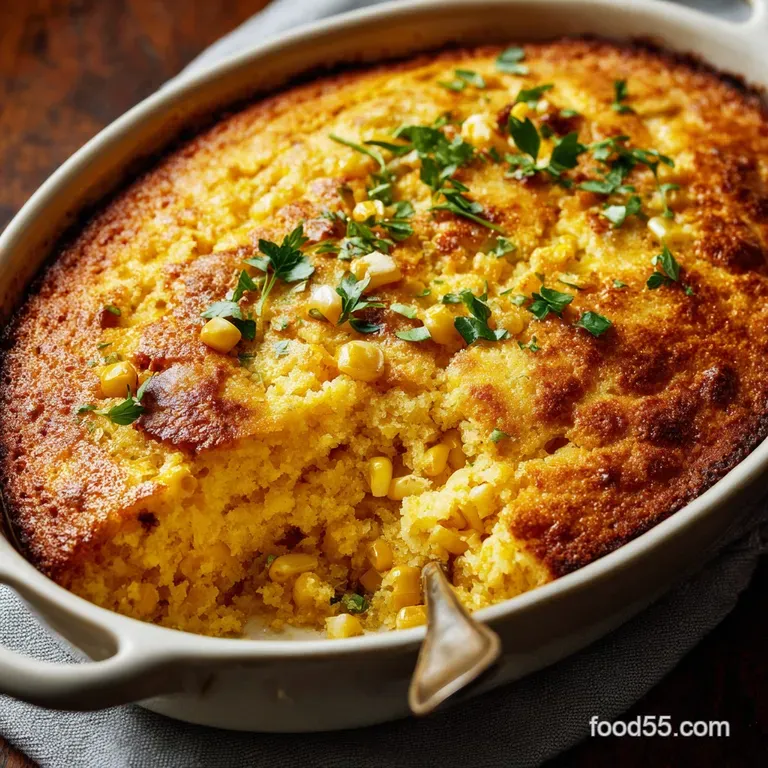
We aren't messing around with Jiffy mix here; this is Homemade Corn Pudding Casserole perfection. Having ingredients at room temperature is non-negotiable for a smooth batter.
Utilizing Canned vs. Frozen vs. Fresh Corn Kernels
You need two kinds of corn for the perfect texture. We use whole kernels (for bite) and cream style corn (for that glorious mushy texture).
| Ingredient | Role | Viable Substitute |
|---|---|---|
| Whole Kernel Corn | Texture and Pop | Frozen corn, thawed and drained well. |
| Cream Style Corn | Moisture and Starch | If desperate, blend 1 cup of whole kernels with 1/4 cup heavy cream until smooth. |
| All-Purpose Flour | Stabilizer | Cornstarch (use half the amount) or a gluten-free blend. |
| Granulated Sugar | Sweetness | Maple syrup (use 3/4 the amount) or omit entirely for a more savory dish like this Savory Corn Pudding: Best Ultra Creamy Cheddar Casserole Recipe . |
The Dairy Duo: Mastering the Cream and Butter Mixture
This is a rich dish, so we lean heavily into whole milk and heavy cream. This isn't the time to pull out skim milk unless you absolutely have to! The richness of the dairy provides the velvety mouthfeel that defines great Old Fashioned Corn Pudding .
Smart Swaps: Adjusting Sweetness and Richness
If you want a slightly lighter pudding, you can swap half of the heavy cream for evaporated milk. If you want it sweeter maybe you have a serious sweet tooth you can bump the sugar up by one or two tablespoons, but taste your raw corn first!
Recommended Baking Dish Sizes and Materials
A 9x9 inch square dish is ideal, giving you a nice thickness and surface area for browning. You can also use a 2 quart oval casserole dish. I prefer ceramic or glass; they conduct heat gently and keep the custard from scorching on the edges. Make sure you grease the dish well!
The Blueprint: step-by-step Guide to Making Your Corn Pudding Masterpiece
Right then, let's make this incredible Easy Corn Pudding Recipe .
- Prep the Battlefield: Preheat your oven to 375°F (190°C). Generously butter your chosen baking dish. Melt your 4 tablespoons of butter in a small bowl or saucepan and set it aside to cool slightly. The melted butter should not be hot when it meets the eggs.
- Combine the Dry Squad: In a large mixing bowl, whisk together the flour, sugar, salt, pepper, and that essential freshly grated nutmeg. Whisking the dry ingredients first prevents any sneaky pockets of flour from showing up later.
- Whip the Wet Wonders: In a separate medium bowl, lightly beat the eggs. Then, whisk in the whole milk, heavy cream, and the slightly cooled melted butter. This is where burstiness matters. Whisk it until it looks uniform, about 30 seconds.
- Marry the Mixtures: Pour the wet ingredients slowly into the dry ingredients, whisking until just combined. Stop whisking the second the last lumps disappear. Overmixing develops the flour’s gluten, making the texture tough.
- Add the Corn: Gently fold in the whole kernel corn and the cream style corn. The resulting batter will look loose and slightly thin this is exactly what we want for a proper, creamy custard pudding.
- Bake Until Golden: Pour the mixture into your prepared dish. Bake for 30 minutes, then check the edges. If they are browning nicely, reduce the heat to 350°F (175°C) and bake for another 20– 25 minutes.
Expert Chef’s Corner: Troubleshooting and Ensuring Perfect Corn Pudding Doneness
Preparing the Corn Mixture and Integrating Wet Ingredients
My biggest mistake when I first started making this was dumping cold milk straight into the batter. When cold dairy hits melted fat, you risk the fat seizing up. Always use room temperature eggs and dairy for the smoothest possible base.
Creating the Smooth Custard Base
If you find lumps forming when you mix the wet and dry ingredients, don’t panic! Stop whisking and let the batter sit for five minutes. The moisture will hydrate the flour. Give it a gentle whisk again, and the lumps usually disappear.
Pouring and Prepping the Baking Dish
Chef's Note: If you want a truly spectacular, golden brown crust that extends beyond the edges, dust the buttered dish with a tiny bit of granulated sugar before pouring the batter. It caramelizes slightly during baking.
The Bake Time: Achieving the Perfect Golden Crust
The top should be a beautiful, deep golden yellow. If you find the top browning too fast but the center isn’t set, loosely tent the dish with aluminum foil. This deflects the direct heat.
How to Avoid the Dreaded Crumbly Texture
The crumbly, dry texture comes from overbaking period. Remember, we are making a custard, not a brick. You must remove the pudding when the center still looks slightly underdone.
The Jiggle Test: Knowing Exactly When Your Pudding Is Done
Perform the Jiggle Test! Gently shake the baking dish. The edges should be set and firm, but the direct center (maybe a 2 inch circle) should have a slight, delicate quiver, like Jell-O.
It will continue to set up beautifully during the resting period, ensuring your Grandmas Corn Pudding Recipe comes out perfect.
Preparing Ahead: Storage, Freezing, and Reheating Your Baked Corn Pudding
make-ahead Strategy: Assembling the Mixture Day Before
This corn pudding recipe without jiffy mix is fantastic for making ahead. You can mix the entire batter, pour it into the baking dish, cover it tightly with plastic wrap, and refrigerate for up to 24 hours.
Just let it sit on the counter for 30 minutes before baking to take the chill off. You might need 5 10 extra minutes of bake time if baking straight from the fridge.
Optimal Cooling and Refrigeration Techniques
Once baked, let the pudding cool completely before covering it and placing it in the fridge. Leftovers keep well for 3 to 4 days.
Best Methods for Reheating Leftovers Without Drying Out
If reheating a large portion, cover the dish tightly with foil and place it in a 300°F (150°C) oven for about 20 minutes until heated through. For individual servings, a quick 60 second zap in the microwave usually works just fine.
Holiday Feast Complementary Dishes
This recipe is foundational for any classic Corn Pudding Thanksgiving spread. It pairs beautifully with rich, herby dressings, like our Southern Thanksgiving Menu: Nanas Classic Cornbread Dressing Recipe .
Beyond the Side: Ideas for Incorporating Leftover Pudding
If you happen to have any leftover pudding (a rare event, I know!), try gently crumbling it and serving it cold alongside a scoop of vanilla ice cream. The sweetness and creamy texture make it surprisingly dessert worthy.
Balancing the Plate: Texture and Flavor Pairings
Because this corn pudding is rich and sweet, serve it alongside something sharp or acidic. Think cranberry sauce, a light green salad with vinegar dressing, or maybe some slow roasted meat that has a slightly salty crust. That contrast is pure perfection.
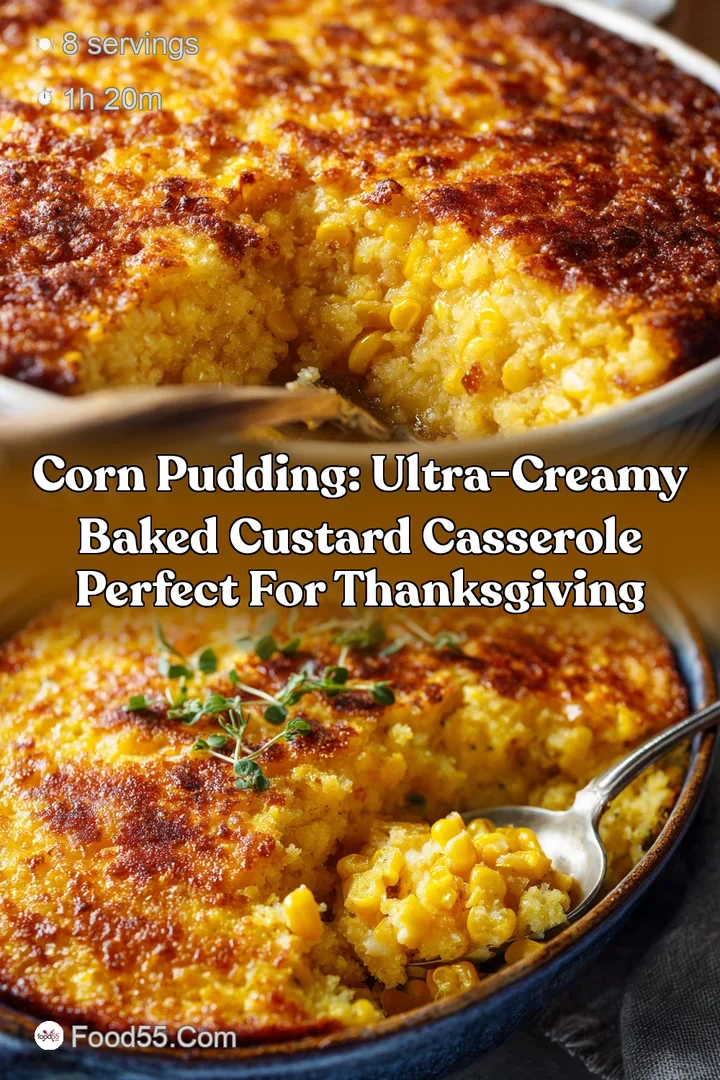
Recipe FAQs
Why did my Corn Pudding turn out dry and crumbly instead of creamy?
This dryness usually happens due to overbaking, which causes the delicate custard base to seize up and separate the liquids. Ensure you are baking until just set, and consider using a water bath (bain marie) during baking to regulate the oven temperature and prevent the edges from setting too quickly.
Can I use frozen or canned corn instead of fresh corn kernels?
Absolutely, but you must drain canned corn thoroughly to prevent excess moisture from disrupting the delicate custard ratio. If using frozen corn, thaw it completely and pat it very dry with a paper towel before mixing it into the batter.
How can I tell when the Corn Pudding is perfectly baked and done?
The edges should appear set and lightly golden brown, but the center must still have a slight, gentle wobble when the pan is nudged. Insert a knife or thin skewer about one inch from the edge; if it comes out clean, and the center is mostly set, it is ready to be removed and allowed to rest.
Is it possible to prepare a savory version of this recipe?
Yes, substitute the granulated sugar with an extra tablespoon of salt and introduce savory elements like shredded cheese (cheddar or Monterey Jack) and chopped green onions. For a spicy version, include diced jalapeños or a dash of cayenne pepper, omitting any sweet components.
What is the difference between Corn Pudding and Corn Casserole?
Corn Pudding focuses on a rich, creamy custard base, relying on eggs and milk/cream for its structure, resulting in a velvety texture similar to crème brûlée. Corn Casserole often uses a boxed mix, like cornbread or muffin mix, and relies on flour or starch for a denser, breadier, and less jiggly result.
Can this recipe be adapted to be dairy-free or vegan?
Yes, swap the dairy butter for a plant based butter substitute and replace the milk and cream with full fat coconut milk or cashew cream for similar richness. You will need to use a high-quality egg replacer (such as commercial egg replacer powder or flax egg) for structure, which may slightly alter the final texture.
What is the best way to store leftovers, and can I freeze Corn Pudding?
Store cooled leftovers tightly covered in the refrigerator for up to 3 to 4 days, reheating gently in the oven to retain moisture. Freezing is generally not recommended, as the high moisture content and delicate custard texture tend to break down and become grainy or watery upon thawing.
Easy Creamy Corn Pudding Casserole

Ingredients:
Instructions:
Nutrition Facts:
| Calories | 799 kcal |
|---|---|
| Protein | 17.9 g |
| Fat | 63.7 g |
| Carbs | 46.7 g |
