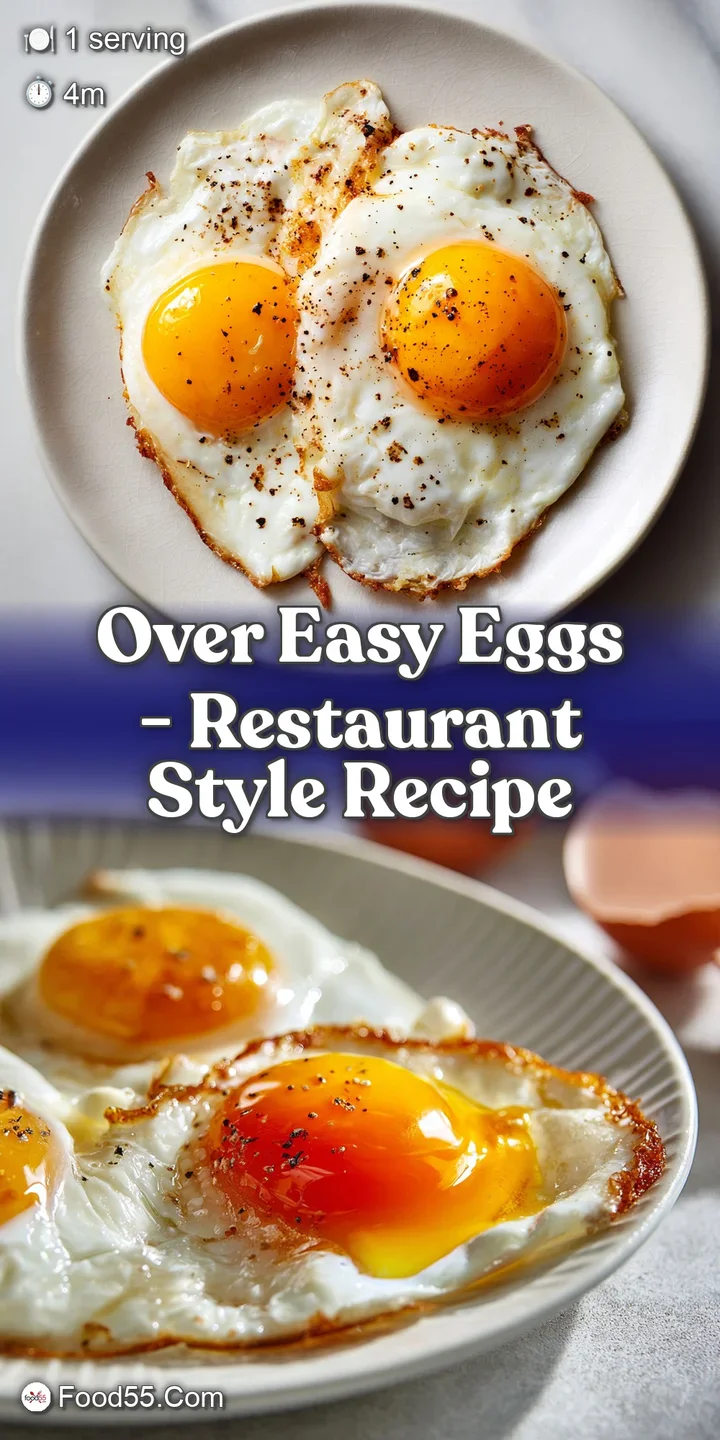
Over Easy Eggs: Perfect Every Time
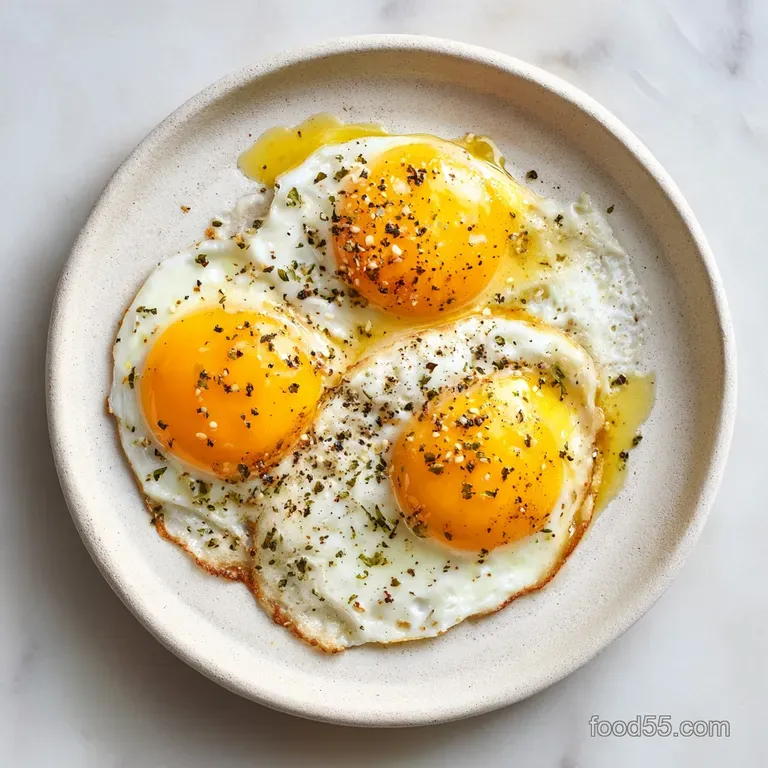
- Time: Active 1 minute, Passive 3 minutes, Total 4 minutes
- Flavor/Texture Hook: Silky whites with a warm, velvety liquid gold center
- Perfect for: A cozy weekend brunch or a high protein weekday fuel up
- The Secret to Making Silky and Perfect Over Easy Eggs
- The Physics of the Velvety Yolk
- Specifications for Achieving the Ideal Golden Center
- Minimalist Elements for Maximum Morning Flavor
- Necessary Tools for a Flawless Egg Flip
- Step by Step Guide to a Flawless Flip
- Resolving Common Issues for a Better Breakfast
- Creative Twists and Simple Dairy Free Swaps
- Handling Leftovers and Reducing Kitchen Waste
- Plating Styles for a Café Quality Experience
- Debunking Morning Egg Myths
- Recipe FAQs
- 📝 Recipe Card
The Secret to Making Silky and Perfect Over Easy Eggs
The sound of a gentle sizzle as an egg hits a warm pan is one of the most comforting noises in my kitchen. I used to be terrified of the flip, thinking I’d surely break the yolk and end up with a messy scramble.
Honestly, I spent far too many mornings scraping "accidental" scrambled eggs out of my cast iron before I realized that patience is the biggest ingredient in this recipe.
We’ve all been there, standing over the stove with a spatula, heart racing as we try to slide it under that delicate white. But once you nail that soft, pillow like texture where the yolk stays hidden but molten, it changes your whole breakfast game.
It’s about creating a connection between the heat, the fat, and the egg itself, turning a simple staple into a shared moment of joy.
If you’re used to the open faced look of a Sunny Side Up Eggs recipe, this technique is going to feel like a cozy upgrade. We are aiming for a thin veil of cooked white over the top of the yolk, ensuring every bite is warm and luscious without any "ghostly" raw slime. Let’s get into how we make over easy eggs that actually look like they came from a high end diner.
The Physics of the Velvety Yolk
Gentle Coagulation: Low heat allows the egg white proteins to bond slowly into a soft gel rather than a tough, rubbery web. This temperature control ensures the yolk stays liquid while the surrounding proteins reach the "set" stage safely.
| Method | Cook Time | Texture | Best For |
|---|---|---|---|
| Over Easy | 3-4 mins | Silky white, liquid yolk | Dipping toast or biscuits |
| Over Medium | 4-5 mins | Firm white, jammy yolk | Breakfast sandwiches |
| Over Hard | 5-6 mins | Crispy edges, solid yolk | On the-go wraps |
Choosing the right method depends entirely on your mood, but for those who live for the dip, the over easy style is the undisputed champion of the breakfast table. It provides that beautiful contrast between the tender, set exterior and the rich, flowing interior.
Specifications for Achieving the Ideal Golden Center
To make over easy eggs successfully, you need to understand that the timing is everything. Unlike a slow braised stew, eggs happen in a flash, and even ten seconds can be the difference between a liquid center and a jammy one. We are looking for precision here, using our eyes and ears as much as a timer.
- Pan Temp: 250°F to 275°F (The "Water Drop" test stage)
- Flip Window: When the whites are 75% opaque and no longer clear
- Final Rest: 30 seconds off the heat to let carryover cooking finish the top
Minimalist Elements for Maximum Morning Flavor
The beauty of this dish lies in its simplicity, so the quality of your ingredients really shines through. I always reach for the freshest eggs I can find, ideally from a local farmer, because the membranes are stronger and less likely to shatter during the flip.
It’s a small detail that makes a massive difference in your success rate.
Component Deep Dive
| Ingredient | Science Role | Pro Secret |
|---|---|---|
| 2 Large Eggs | Structural Protein | Use cold eggs; they hold their shape better in the pan initially |
| Avocado Oil | High Smoke Lubricant | Its neutral flavor lets the rich egg yolk remain the star |
| Sea Salt | Protein Tightener | Season the whites early to help them set with better structure |
Ingredients & Substitutes
- 2 large eggs: The foundation of the dish. Why this? Large eggs provide the ideal yolk to white ratio for a balanced, dipping experience.
- Substitute: Duck eggs (Use 1 instead of 2; they are richer and much larger).
- 1 tsp avocado oil: The non stick barrier. Why this? Avocado oil has a high smoke point and a clean, buttery finish.
- Substitute: Unsalted butter (Adds a nutty flavor but can brown quickly watch your heat).
- 1 pinch fine sea salt: To bring out the savory notes.
- Substitute: Kosher salt (Provides a nice crunch, but use slightly more for the same saltiness).
- 1 pinch freshly cracked black pepper: For a subtle, earthy heat.
- Substitute: White pepper (Keep the aesthetic clean while maintaining the spice).
Necessary Tools for a Flawless Egg Flip
You don't need a kitchen full of gadgets, but two specific items will make your life significantly easier. First, a heavy bottomed non stick pan is your best friend. I personally love a well seasoned cast iron skillet or a high-quality ceramic pan to ensure the eggs slide like silk.
- The Spatula: Look for a "fish spatula" or a very thin, flexible silicone turner. If the spatula is too thick, it will act like a wedge and pop the yolk before you even complete the turn.
- Small Glass Bowl: I always crack my eggs into a separate ramekin first. It’s a mistake I once made too often cracking directly into the pan and getting a stray shell stuck in the setting whites.
step-by-step Guide to a Flawless Flip

Ready to cook? Let's crack on. This process is quick, so make sure your toast is already in the toaster before you start. There is nothing worse than having your beautiful eggs go cold while you wait for bread to brown.
- Heat the pan. Place your skillet over medium low heat for about 2 minutes. Note: A preheated pan prevents sticking and ensures even cooking.
- Add the oil. Pour in 1 tsp avocado oil and swirl to coat the bottom until the oil shimmers slightly.
- The low altitude crack. Gently slide the 2 large eggs into the pan from a small bowl. Note: Keeping the eggs close to the pan surface prevents the yolk from dropping and breaking.
- Initial set. Cook for about 2 minutes until the whites are opaque and the edges look matte.
- Seasoning phase. Sprinkle your pinch of sea salt and black pepper directly over the whites.
- The slide test. Gently shake the pan; the eggs should slide freely without sticking to the bottom.
- The precision flip. Slide your thin spatula under the yolk and quickly but gently flip the eggs over until you hear a soft, muffled sizzle.
- The finish. Cook on the second side for exactly 30 seconds. Note: This brief time sets the thin layer of white over the yolk without cooking the center.
- Plating. Immediately slide the eggs onto a warm plate to stop the cooking process.
Chef's Tip: If you’re nervous about the flip, use a second spatula to help guide the egg over. It’s like a safety net for your yolk!
Resolving Common Issues for a Better Breakfast
Even the most seasoned cooks have mornings where the eggs just don't want to cooperate. Usually, it comes down to heat management or the age of the egg. If you find your whites spreading all over the pan like a puddle, your eggs might be a little older, meaning the proteins have thinned out.
Why Your Eggs Stick to the Pan
If you’re struggling to get that clean slide, it’s usually because the pan wasn’t properly seasoned or the oil wasn't hot enough when the egg hit the surface. This creates a bond between the egg protein and the metal.
| Problem | Root Cause | Solution |
|---|---|---|
| Broken Yolk | Rough flipping motion | Use a thinner spatula and a "roll" rather than a "throw" |
| Rubbery Whites | Heat is too high | Lower the flame; the whites should never brown or bubble |
| Raw "Snotty" Whites | Flipped too early | Wait until the whites near the yolk are mostly firm before flipping |
If you're looking for a completely different texture, you might want to try How To Make recipe for something creamy and soft. But for the "over easy" fans, following this checklist will keep things consistent:
- ✓ Use a non stick pan that is actually in good condition.
- ✓ Crack eggs into a bowl first to check for shells.
- ✓ Resist the urge to turn up the heat to speed things up.
- ✓ Use a thin, flexible spatula that can get under the yolk.
- ✓ Warm your plates in the oven so the eggs don't lose heat instantly.
Creative Twists and Simple dairy-free Swaps
While the classic salt and pepper combo is hard to beat, I love bringing people together with unexpected flavor profiles. Think of your egg as a canvas. A little bit of cultural exchange in the form of spices can turn a standard breakfast into something memorable.
- The Savory Upgrade: Swap avocado oil for bacon fat or duck fat. It adds an incredible depth of flavor that pairs perfectly with a crusty piece of sourdough.
- The Spiced Flip: Dust the eggs with a little smoked paprika or za'atar right before the flip. The heat of the pan toasts the spices directly into the egg white.
- The Pesto Slide: Add a teaspoon of basil pesto to the pan instead of oil. The egg fries in the oil from the pesto, creating a vibrant, herb crusted bottom.
Budget Alternatives for Daily Cooking
| Premium | Budget | Flavor Impact | Savings |
|---|---|---|---|
| Pasture Raised Eggs | Store Brand Large Eggs | Slightly paler yolk, same protein | Save $3-4 per dozen |
| Avocado Oil | Vegetable Oil | Very neutral, less buttery | Save $0.10 per serving |
| Maldon Sea Salt | Table Salt | Less "crunch", same salinity | Save $0.05 per serving |
Handling Leftovers and Reducing Kitchen Waste
Over easy eggs are definitely best enjoyed the moment they leave the pan. However, if you find yourself with an extra egg, don't toss it! While the "liquid gold" won't survive a reheat perfectly, you can still make it work.
- Storage: Keep in an airtight container in the fridge for up to 2 days.
- Reheating: Avoid the microwave at all costs! It will turn your yolk into a rubber ball. Instead, place the egg back in a warm, oiled skillet for 60 seconds just to take the chill off.
- Zero Waste Tip: If you have leftover whites from another recipe, you can actually add them to your over easy eggs to make a "protein boosted" version. Also, crushed eggshells are fantastic for your garden soil they add much needed calcium for your tomatoes!
Plating Styles for a Café Quality Experience
Presentation is where you can really show some love. I like to serve these on a wide, shallow bowl rather than a flat plate. It keeps the yolk contained once you break into it, ensuring every drop can be scooped up with your toast.
To make over easy eggs look like a restaurant dish, garnish with a tiny pinch of microgreens or some finely chives. The green pop against the white and yellow is stunning. If you're hosting a brunch, try serving these alongside some Classic Deviled Eggs recipe for an "eggs two ways" theme that always gets people talking.
Three Ways to Enjoy the Drip
- The Traditionalist: Served over two slices of buttered rye toast with a side of crispy bacon.
- The Modernist: Placed on top of a bed of sautéed kale and quinoa with a drizzle of hot honey.
- The Tex Mex: Slid onto a warm corn tortilla with black beans, avocado, and a spoonful of salsa verde.
Debunking Morning Egg Myths
Many people believe that you need to add a splash of water and a lid to make over easy eggs. That is actually the technique for "basting," which steams the top. For a true over easy egg, the heat must come from direct contact with the pan after the flip.
This creates a slightly different, more savory "fried" flavor on both sides.
Another common myth is that you must use butter for the best flavor. While butter is delicious, it contains milk solids that burn at the temperatures needed to get a clean flip. Using avocado oil or a over high heat fat gives you a much wider margin for error, especially if you're still mastering the timing.
Trust me on this the avocado oil keeps the whites pristine and allows the natural flavor of the egg to shine through.
Recipe FAQs
What is the 5 5 5 rule for eggs?
This rule is typically for hard boiled eggs, not over easy. The 5-5-5 rule suggests boiling eggs for 5 minutes, then plunging them into ice water for 5 minutes, and repeating this 5 times.
It's a method to ensure perfectly cooked hard boiled eggs, but not applicable to the delicate technique of over easy.
What exactly are eggs over easy?
Eggs cooked on both sides with the yolk remaining liquid. The term "over easy" means the egg is flipped just once after the white is mostly set, with a very brief cook on the second side. This results in a tender white and a runny, rich yolk, perfect for dipping toast.
What is the trick to cooking eggs over easy?
Use medium low heat and a thin, flexible spatula for flipping. The trick lies in gentle heat to cook the whites without overcooking the yolk, and a delicate flip to avoid breaking it. A well seasoned non-stick pan is also crucial for preventing sticking.
When should I flip my over easy eggs?
Flip when the whites are about 75% opaque and no longer clear near the yolk. You should be able to see a slight translucence remaining, but the majority of the white should appear set. Gently shaking the pan to ensure the egg slides freely is a good indicator it's ready for the flip.
Can I use older eggs for over easy?
No, fresh eggs are best for over easy. Fresher eggs have firmer whites that hold together better during cooking and flipping, minimizing spread in the pan. Older eggs have thinner whites that tend to run more, making them harder to manage for this specific technique.
How do I prevent my over easy eggs from sticking?
Ensure your pan is properly heated and lightly oiled before adding the eggs. A non-stick pan is essential, but even then, a thin layer of avocado oil or butter helps create a barrier. Preheat the pan over medium low heat and swirl the oil until it shimmers before cracking the eggs in.
What kind of spatula is best for flipping over easy eggs?
A thin, flexible spatula, like a fish spatula, is ideal. The thin edge easily slides under the delicate egg without pressing down on the yolk. Avoid thick, rigid spatulas, which are more likely to break the yolk or tear the egg white.
Over Easy Eggs
Ingredients:
Instructions:
Nutrition Facts:
| Calories | 183 calories |
|---|---|
| Protein | 12.6 g |
| Fat | 14 g |
| Carbs | 0.7 g |
| Fiber | 0 g |
| Sugar | 0.4 g |
| Sodium | 332 mg |
