Pork Belly Confit with Spices
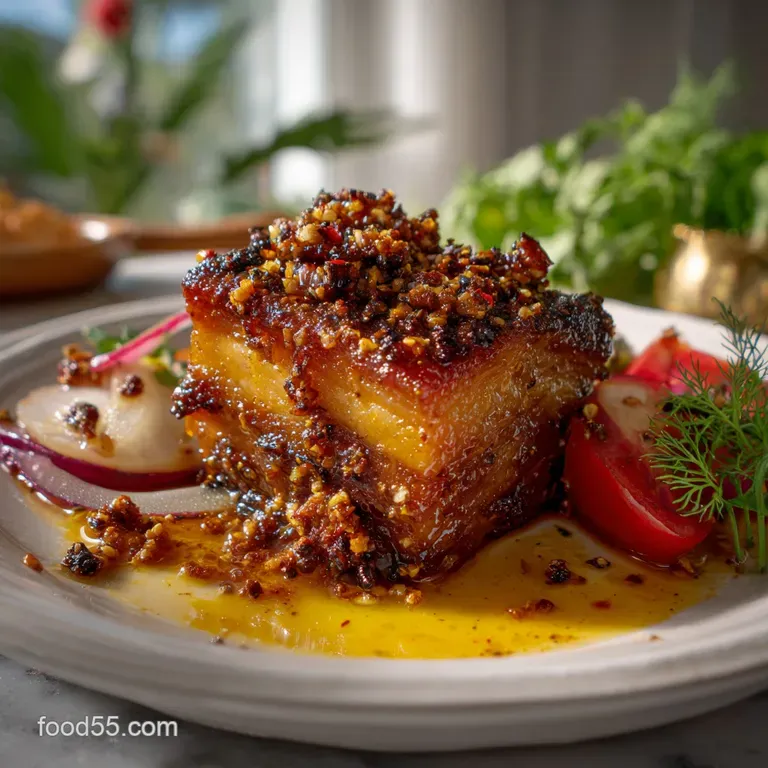
- Effort/Time: High-effort prep / 4 hour 30 mins total
- Flavor Hook: Warm, woodsy spices meet deep, salty umami
- Perfect for: Holiday-centerpieces, dinner-party-showstoppers, and weekend-family-feasts
- Master the Ultimate Pork Belly Confit With Spices
- The Thermodynamics of Slow Fat Poaching
- Precision Metrics for Your Belly Confit With Spices
- The Chemistry of Spices and Aromatics
- Necessary Tools for Confit Cooking Method
- Transforming Tough Protein into Velvety Confit With Spices
- Navigating Texture Failures and Temperature Pitfalls
- Ingredient Adaptations for Global Flavor Layers
- ⚗️ The Scaling Lab: The Physics of Quantity
- Common Myths
- Preserving Moisture and Flavor for Shared Meals
- Culinary Connections through Thoughtful Plating
- Recipe FAQs
- 📝 Recipe Card
Master the Ultimate Pork Belly Confit With Spices
There is nothing more devastating than investing forty dollars into a beautiful slab of meat only to have it emerge from the oven as a greasy, rubbery brick. I once served a "confit" to a group of friends that was so tough we practically needed a chainsaw to get through the skin an embarrassing disaster that cost me both my pride and a perfectly good Saturday.
That failure happened because I treated heat like a blunt instrument rather than a precision tool.
I destroyed three different batches of pork before I finally understood the relationship between time, temperature, and lipid saturation. I used to think "more heat equals faster fat rendering," but that's a lie that leads to dry, stringy protein fibers.
It took a deep dive into the physics of connective tissue to realize that rushing this process is a recipe for heartbreak.
The secret to this Pork Belly Confit With Spices isn't just the aromatics; it is the hydrolysis of collagen. When we maintain a steady, low-temperature environment, we allow the tough connective tissues to transform into silky gelatin without squeezing the moisture out of the muscle cells.
The result is a texture so velvety it feels like butter, capped with a mahogany colored skin that provides a distinct, audible shatter when your knife hits the surface.
The Thermodynamics of Slow Fat Poaching
- Collagen Hydrolysis: Long chain proteins break down into gelatin at 160°F–180°F, creating a mouth coating, velvety texture.
- Lipid Infusion: Fat-soluble compounds in the star anise and cinnamon migrate into the pork fat, seasoning the meat from the inside out.
- Osmotic Curing: Initial salt and sugar application draws out excess moisture, tightening the protein structure to prevent it from becoming mushy during the long poach.
- Convection Stability: Submerging meat in fat provides a thermal buffer, ensuring the Pork Belly Confit With Spices experiences zero temperature spikes that cause protein toughening.
Precision Metrics for Your Belly Confit With Spices
| Metric Type | Measurement | Rationale |
|---|---|---|
| Target Internal Temp | 195°F | The "sweet spot" where collagen fully liquefies into gelatin. |
| Oven Ambient Temp | 225°F | Provides enough energy for rendering without boiling the internal moisture. |
| Cure Duration | 12 hours | Allows the salt to penetrate to the center of a 3 lb slab via osmosis. |
The Chemistry of Spices and Aromatics
Understanding the molecular makeup of your ingredients is the difference between a flat dish and a three dimensional flavor experience.
| Ingredient | Chemical/Physical Role (Science) | The Pro Secret (Why This Matters) |
|---|---|---|
| Diamond Crystal Kosher Salt | Denatures proteins and manages osmotic pressure | Denatured proteins hold more water, resulting in a juicier final bite. |
| Ground Star Anise | Contains anethole, which is highly fat-soluble | Anethole molecules bond with the rendered lard, deeply perfuming the meat's interior. |
| Brown Sugar | Lowers the Maillard reaction threshold | Accelerates surface browning during the final sear without burning the meat. |
| Rendered Lard/Duck Fat | Acts as a non-evaporative cooking medium | Prevents moisture loss because water cannot evaporate through a dense lipid barrier. |
- 3 lbs center cut pork belly, skin-on
- Why this? The center cut offers the most even ratio of fat to lean muscle.
- 2 tbsp Diamond Crystal Kosher salt
- Why this? Larger flakes allow for better surface coverage without over salting.
- 1 tbsp Brown sugar
- Why this? Adds a touch of molasses depth to balance the salt.
- 1 tsp Red Kampot pepper
- Sub: Szechuan peppercorns for a numbing, citrusy effect.
- 1 tsp Ground star anise
- Sub: Fennel seed for a milder licorice note.
- 1/2 tsp Ground cinnamon
- Sub: Nutmeg for a more savory, nutty warmth.
- 1/2 tsp Ground cloves
- Sub: Allspice for a complex, clove cinnamon-nutmeg hybrid.
- 4 cups Rendered lard or duck fat
- Why this? These fats have high smoke points and rich, savory profiles.
- 4 Garlic cloves, smashed
- Sub: 2 shallots, halved, for a sweeter, more delicate allium note.
- 4 sprigs Fresh thyme
- Sub: Rosemary for a pinier, more aggressive herbal profile.
- 2 Bay leaves
- Why this? Provides a subtle floral background that bridges the spices and fat.
- 1 small piece Ginger, sliced
- Sub: Galangal for a more sharp, pine like citrus flavor.
Necessary Tools for Confit Cooking Method
To execute this Pork Belly Confit With Spices, you need tools that manage thermal mass effectively. I recommend using a Lodge 6 quart Enameled Cast Iron Dutch Oven because the heavy walls prevent the temperature fluctuations common in thin stainless steel pans.
You’ll also need a Microplane for fine spice grinding and a Thermapen Digital Thermometer for hitting that 195°F target exactly.
For the final crispy stage, a Lodge Cast Iron Skillet is non-negotiable; it provides the even heat distribution required to shatter the skin without scorching it. Finally, have a heavy weight ready like a foil wrapped brick or a heavy weighted press to ensure the belly stays flat during its overnight chill.
Transforming Tough Protein into Velvety Confit With Spices
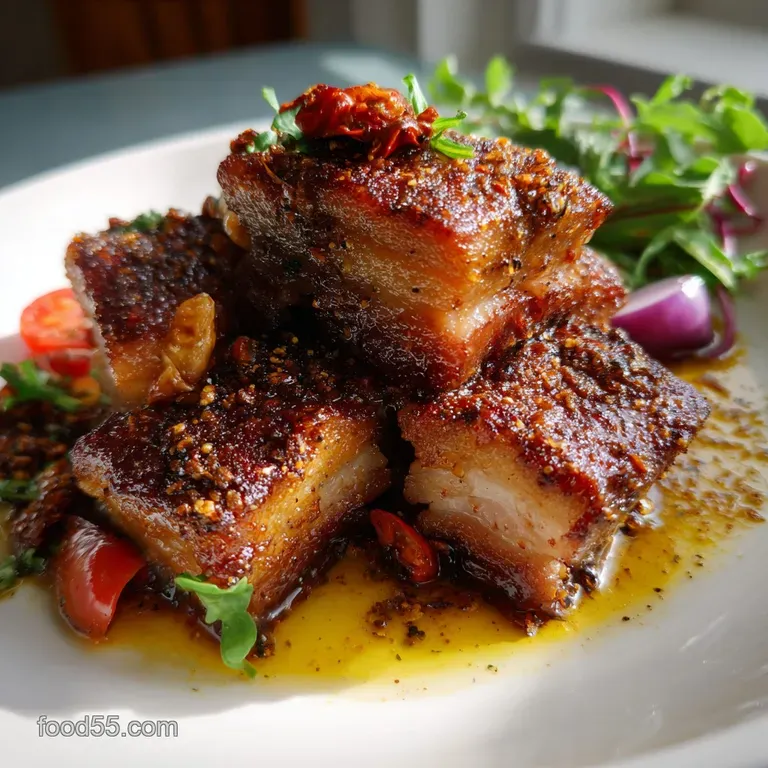
- Toast spices in a dry pan for 2 minutes until a nutty, warm aroma fills the kitchen.
- Combine spices with the salt and brown sugar in a small bowl.
- Score the skin of the 3 lbs pork belly in a 1/2 inch diamond pattern until the knife just reaches the fat layer.
- Rub the spice mixture into all sides of the meat until every crevice and scoring line is filled.
- Cure the belly in the fridge for 12 hours until the meat feels firm and looks slightly translucent.
- Rinse and dry the belly thoroughly until the skin feels tacky and completely devoid of surface water.
- Submerge the pork in 4 cups of melted lard in the Dutch oven until the meat is fully covered by at least 1 inch of fat.
- Add aromatics (garlic, ginger, thyme, bay leaves) until they are tucked safely under the fat surface.
- Bake at 225°F for 4 hours until the meat is tender enough to be pierced with a spoon.
- Chill the belly under a weighted plate for 6 hours until the fat has solidified and the meat is compressed into a uniform block.
- Sear the skin side in a hot skillet for 5 minutes until the skin is mahogany colored and sounds like a drum when tapped.
Navigating Texture Failures and Temperature Pitfalls
Why Your Pork Belly Confit With Spices Has Rubbery Skin
If the skin feels like an eraser, you’ve likely skipped the drying phase or failed to reach the 300°F+ threshold during the final sear. The skin contains a massive amount of water trapped in a collagen matrix.
If you don't drive that water out during the searing phase, the skin will never become crisp. The "hissing" you hear in the pan is water turning to steam; wait for that sound to subside before flipping.
| Problem | Root Cause | The Fix | Pro Protocol |
|---|---|---|---|
| Greasy, oily mouthfeel | Under rendered fat | Increase final cook time by 30 mins | Test with a needle; it should slide through fat with zero resistance. |
| Dry, stringy meat | Temperature spike above 212°F | Use a heavy Dutch oven to buffer heat | Check oven calibration; many home ovens swing 25°F in either direction. |
| Spices taste bitter | Spices burned during toasting | Lower heat and toast for only 60 90 seconds | Smell is the best indicator; once it's fragrant, pull it off the heat immediately. |
Meat Falling Apart During Slicing
This is a classic case of skipping the weighting and chilling phase. When the pork is hot, the gelatin is liquid. If you try to slice it then, the layers will simply slide apart. You must weight the meat while it cools to compress those layers back together. This is a great time to prep a side, like my Sauteed Mushrooms with recipe, which brings an earthy balance to the rich pork.
Ingredient Adaptations for Global Flavor Layers
| Original Ingredient | Substitute | Why It Works |
|---|---|---|
| Rendered Lard | Neutral Grapeseed Oil | Less flavorful, but allows the spices to be the sole focus. Note: Lacks the rich mouthfeel of animal fat. |
| Red Kampot Pepper | Black Peppercorns + 1/4 tsp Lemon Zest | Mimics the floral and citrus notes of Kampot pepper. |
| Fresh Thyme | Dried Thyme (1/2 quantity) | Concentrated flavor, though it lacks the bright, woodsy top notes of fresh. |
If you are looking for a more "Asian Umami Twist," consider adding a splash of soy sauce to the fat (though be careful of salt levels) or serving the pork alongside a Chinese eggplant with recipe. The silkiness of the eggplant complements the fatty pork perfectly, fostering genuine connections through a multi textured meal.
⚗️ The Scaling Lab: The Physics of Quantity
- Flavor Saturation: When doubling this recipe to 6 lbs, scale the spices to 1.5x, not 2x. Spices like star anise and clove are potent; their volatile oils accumulate non-linearly, and doubling them can lead to an overpowering, medicinal flavor.
- The Evaporation Paradox: If using a larger pot for a double batch, your surface area increases. Keep an eye on the fat level. If the fat drops below the meat line, you'll end up with "oven fried" pork rather than confit, which is much drier.
- The Square Cube Law: A larger mass of pork belly takes longer to reach the internal temperature of 195°F. Expect a 6 lb slab to take roughly 1 hour longer than a 3 lb slab.
- Carry Over Cooking: A larger mass of meat holds more thermal energy. Pull the pork out of the oven when it hits 185°F, as it will continue to climb to 195°F while sitting in the hot fat.
Common Myths
- Myth: You must use expensive duck fat for a "real" confit.
Truth: Rendered lard is more traditional for Pork Belly Confit With Spices and offers a cleaner flavor profile that lets the Kampot pepper shine.
Myth: Searing the meat before the confit "locks in juices."
- Truth: Searing is for flavor (Maillard reaction) only. Searing before the 4 hour poach often leads to bitter, over cooked exterior notes. Save the sear for the end.
Preserving Moisture and Flavor for Shared Meals
Storage: This Pork Belly Confit With Spices is a dream for make-ahead meals. You can store the cooked pork, completely submerged in its own fat, in the fridge for up to 3 weeks. The fat acts as an airtight seal (a traditional preservation method).
Once you break the fat seal, the meat should be consumed within 4 days.
Freezing: Slice the chilled, weighted pork into individual portions. Wrap each tightly in plastic wrap and store in a heavy duty freezer bag for up to 3 months. To reheat, thaw in the fridge overnight before searing.
Reheating: Never microwave confit. The rapid vibration of water molecules will turn the fat into a puddle and the meat into leather. Reheat in a skillet over medium low heat, skin side down, to simultaneously warm the meat and re-crisp the exterior.
💡 ZERO WASTE PHILOSOPHY: Don't discard the leftover spice infused fat. Transform: Use it as a base for roasting potatoes or sautéing hearty greens.
Science: The fat has undergone a process called infusion, capturing the fat-soluble flavor compounds from the pork, ginger, and star anise that would otherwise be wasted.
Culinary Connections through Thoughtful Plating
When it comes to serving, this dish is all about creating a focal point for shared meals. I love to serve thick, 1 inch slabs on a bed of bright, acidic slaw or nestled next to creamy polenta.
The acidity of a quick pickled vegetable cuts through the 104g of fat per serving, keeping the palate refreshed and ready for another bite.
For an "Elevated Pork Belly Taco," thinly slice the crisped belly and serve with a dollop of hoisin and some fresh cilantro. It’s these small, intentional touches that bring people together over a shared appreciation for craft.
Whether you’re serving this for a holiday or a quiet Sunday dinner, the effort you put into the 12 hour cure and the 4 hour poach will be evident in every velvety, spice flecked bite of this Pork Belly Confit With Spices.
Recipe FAQs
What is the minimum internal temperature required for perfect confit texture?
195°F. This temperature ensures complete hydrolysis, transforming tough collagen into lubricating gelatin for a melt-in-your mouth result. Below this, the meat will remain chewy.
Can I speed up the 12-hour curing process?
No. Rushing the cure impedes proper osmotic action, preventing salt from evenly penetrating the muscle fibers before the long poach begins.
Why did my pork belly skin turn rubbery instead of crisp?
- Ensure skin is bone dry before searing
- Wait for all pan moisture to fully evaporate
- Use a very hot cast iron skillet
Should I use duck fat or lard for the poaching medium?
Myth: Searing the pork belly before the 4-hour confit locks in moisture.
How does the initial salt/sugar rub affect the final texture?
Can I use this slow cooked fat to roast root vegetables?
Pork Belly Confit Spices
Ingredients:
Instructions:
Nutrition Facts:
| Calories | 1085 kcal |
|---|---|
| Protein | 26 g |
| Fat | 104 g |
| Carbs | 3 g |
| Fiber | 1 g |
| Sugar | 2 g |
| Sodium | 1180 mg |
