Sausage Stuffing: Proper Pub-Style Sage and Apple Dressing Recipe
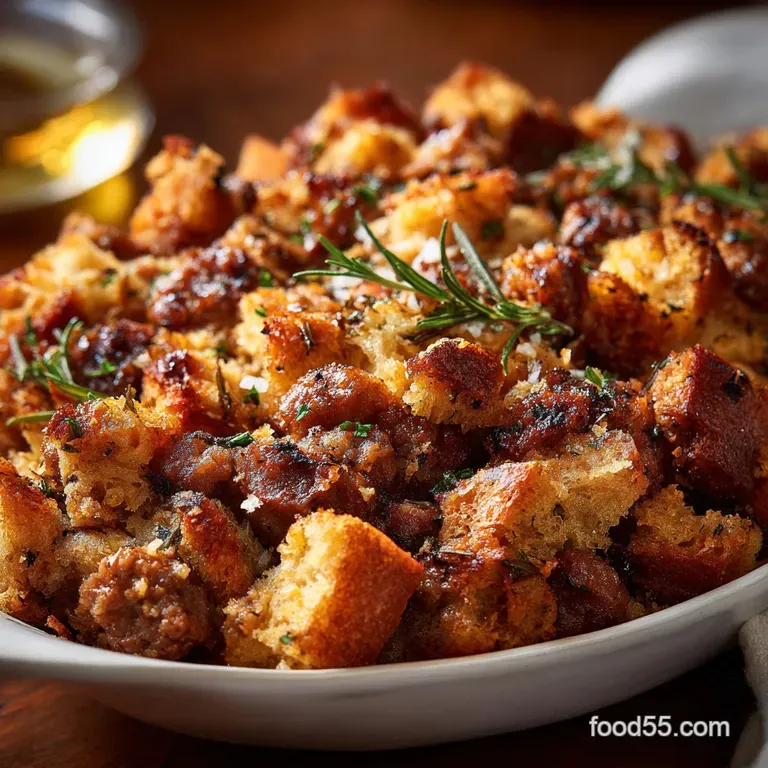
- Capturing the Essence: The Definitive Pub-Style Sausage Stuffing
- The Science of Superior Sausage Stuffing: Achieving Maximum Crunch and Moisture
- Essential Ingredients for Aromatic Sausage Stuffing and Smart Swaps
- Master the Method: Step-by-Step Directions for Golden-Crusted Sausage Stuffing
- Troubleshooting and Expert Tips for Flawless Stuffing
- Planning Ahead: make-ahead, Storage, and Reheating Guide
- Pairing Perfection: What to Serve Alongside Classic Sausage Stuffing
- Recipe FAQs
- 📝 Recipe Card
Capturing the Essence: The Definitive Pub-Style Sausage Stuffing
That smell! It hits you first, right? That deep, savory aroma of browned pork, sweet sage, and toasty bread, promising a holiday feast before the turkey even gets carved. This isn’t just a side dish; it’s the centerpiece, the absolute best part of the plate, and every single bite is pure comfort.
I used to stress over making stuffing, but this version is genuinely foolproof and surprisingly fast once the bread is dry. It requires basic, robust ingredients like good quality sausage and plenty of butter, but it delivers truly massive flavor, saving you money and sanity during the busiest cooking day of the year.
Forget the bland, soggy stuff; we are aiming for golden, crunchy perfection every single time.
So grab your biggest bowl, because we’re about to dive into the definitive guide for superior Thanksgiving Stuffing Recipe: Buttery Sausage, Apple, and Sage . Let’s make the best Sausage Stuffing Recipe you’ll ever try, filled with everything you need for the ultimate holiday side dish.
The Science of Superior Sausage Stuffing: Achieving Maximum Crunch and Moisture
The crunch, the moisture, the sheer flavor depth it all comes down to a few simple techniques that separate the good stuff from the gummy stuff. I swear, once you understand why you do these steps, you’ll never look at a box mix again. It’s brilliant, really.
Stuffing vs. Dressing: Settling the Culinary Debate
I call this recipe Sausage Stuffing, but because we are baking it in a pan (outside the bird, thank goodness), it’s technically known as "dressing." Does the name really matter? Nope, not one bit.
What matters is that cooking it separately guarantees those glorious, golden, crispy edges that everyone fights over, which you simply cannot achieve when it’s packed inside a bird.
The Unrivaled Importance of high-quality Pork
Since we’re keeping the ingredient list tight, the sausage has to be the star. Don't skimp here. A high-quality pork sausage with a natural fat content delivers all the foundational seasoning and the crucial rendered fat we need to build our flavor base. This fat is your secret weapon.
What Makes This Recipe Superior to Boxed Mixes?
Boxed mixes rely on dried herbs and powdered stock, which taste flat. We are using fresh sage and thyme, real rendered pork fat, deeply browned butter, and a sturdy bread base. This combination yields a depth of flavor that a pre-packaged mix just cannot touch, giving you that rich, savory, worlds best stuffing recipe taste. For another excellent version, check out this Homemade Stuffing: Classic Stuffing Recipe with Crispy Edges .
The Maillard Reaction: Browning the Sausage and Aromatics
Browning isn't just about color; it’s flavor development. Cooking the sausage until it’s deeply caramelized ensures those meaty, savory notes permeate the entire dish. Similarly, gently sweating the celery and onion in that rich, retained sausage fat makes them sweet and aromatic, rather than just raw.
Perfecting the Moisture Ratio (The Broth Absorption Secret)
The biggest stuffing failure is sogginess. Our recipe uses extremely dry bread and a precise amount of rich, warm stock combined with egg. The egg acts as a binder, and the warm stock ensures the dry bread absorbs the liquid evenly and quickly, preventing a dense, gluey interior texture.
Building Flavor Depth: Fat Rendering and Deglazing
We intentionally reserve some of the sausage fat in the pan after browning. When you add the butter and aromatics to this residual fat, you are effectively deglazing the pan and picking up all those tiny, flavorful browned pork bits (the fond ). This step is non-negotiable for max flavor extraction.
Essential Ingredients for Aromatic Sausage Stuffing and Smart Swaps
Getting the right ingredients makes all the difference for a moist Thanksgiving Stuffing. Here’s what you need and what you can use instead if you're running low.
Choosing Your Foundation: Best Bread Types and Preparation (Staling vs. Drying)
You need a sturdy bread with open crumb structure, like a rustic sourdough or a good baguette. Staling is mandatory. Simply leaving the cubes out overnight (12- 24 hours) works best, but if you forgot, a quick 15 minute low-temp bake in the oven will do the trick.
Chef's Note: Using soft, fresh bread will always result in gluey stuffing. The bread must be completely dry and crunchy to absorb the liquid without collapsing.
| Ingredient | Why We Use It | The Viable Swap |
|---|---|---|
| Rustic Sourdough | Sturdy, great flavor, holds shape well. | Challah bread or rustic white loaf (NOT sandwich bread). |
| Pork Sausage | High fat content, pre-seasoned with herbs. | Ground turkey or chicken mixed with fennel seed and extra sage. |
| Unsalted Butter | Controls sodium, provides rich flavor. | Salted butter (just reduce the added kosher salt by half). |
| Yellow Onion | Sweetens and provides essential aromatic base. | Shallots or sweet white onion. |
| Chicken Stock | Rich liquid binder. | Vegetable stock (if needed for dietary reasons). |
| Granny Smith Apple | Adds a necessary tart, fresh crunch. | Omit entirely, or use dried cranberries for chewiness. |
Selecting the Optimal Sausage: Flavor Profiles and Grind Consistency
I prefer a mild, high-quality sage or herb pork sausage; it’s reliable and crowd pleasing. If you like a kick, grab spicy Italian sausage! Just make sure the grind isn't too fine. We want meaty chunks, not paste.
The Role of Alliums and Herbs: Fresh Sage is Non-Negotiable
Seriously, skip the dried flakes if you can. Fresh sage and thyme are what give this Sausage Stuffing Recipe its incredible depth. The subtle pine and earthy notes bloom when sautéed in the butter and fat. The fresh parsley comes in at the end to add a bright, grassy lift.
Wetting Agents: Why Rich Stock is Better Than Water
Don't even think about using water. Low-sodium chicken stock (warmed!) provides necessary seasoning and moisture. Using warm stock helps the dry bread soak up the liquid instantly, giving you a better feel for the moisture level than cold stock would.
Master the Method: step-by-step Directions for Golden Crusted Sausage Stuffing
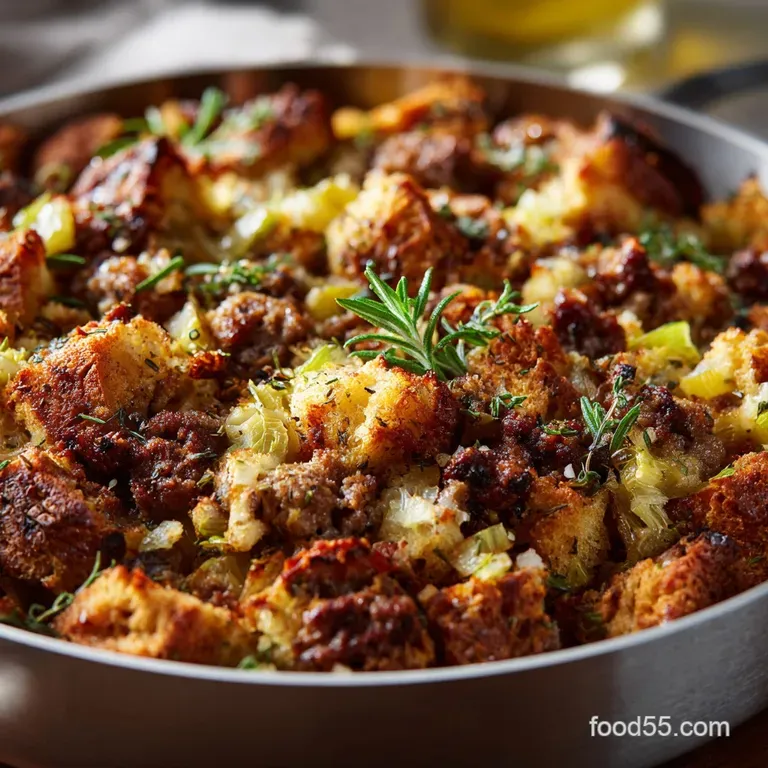
Following these steps exactly is how you achieve that perfect interior moisture with a killer, golden brown crust.
Prepping the Pork: Rendering the Sausage Meat to Perfection
- Dry the Base: Cube your sourdough or chosen bread 1 2 days ahead. Place the dried cubes in your largest mixing bowl.
- Render the Fat: Melt 2 Tbsp of butter in a large skillet over medium high heat. Add the sausage meat (casings removed!) and break it up vigorously. Cook until deeply browned, crispy, and the fat is fully rendered, about 8- 10 minutes.
- Reserve the Fat: Use a slotted spoon to transfer the cooked sausage to the bowl with the bread cubes. Crucially, reserve 2 tablespoons of the sausage fat in the skillet. Discard any excess, but that reserved fat is flavor gold.
Combining the Base: Mixing the Aromatic Soffritto
- Sauté Aromatics: Add the remaining 6 Tbsp of butter to the reserved sausage fat in the skillet over medium heat. When melted, add the diced onion and celery. Cook gently until soft and translucent you are not browning them, just softening them up (6- 8 minutes).
- Add Apple and Herbs: Stir in the diced apple, fresh sage, and thyme. Cook for another 3 minutes until the apple starts to soften slightly and you get a beautifully nutty aroma from the herbs.
- Coat the Bread: Pour the entire contents of the skillet (vegetables, apple, butter/fat) over the bread and sausage in the mixing bowl. Toss lightly to coat everything.
Hydration Check: Ensuring the Right Consistency Before Baking
- Bind the Liquid: In a separate jug, whisk together the warmed chicken stock and the lightly beaten eggs. Stir in the fresh parsley, salt, and pepper.
- Moisten Gently: Pour the stock mixture slowly over the bread mixture. Use your hands or a wooden spoon to gently toss and combine. Stop mixing immediately once the liquid is absorbed. The mixture should feel moist, but not soaking wet. It should hold its shape when you squeeze a handful, but still be loose enough to fall apart easily.
The Baking Phase: Achieving Crisp Edges and a Steamed Center
- Rest and Transfer: Let the mixture rest for 5 minutes to fully absorb the stock, then transfer it loosely into your 9x13 inch baking dish. Do not pack it down! Keeping it loose ensures a lighter, airier result.
- Bake (Covered): Cover the dish tightly with foil. Bake in a preheated 375°F/190°C oven for 25 minutes. This steams the interior, guaranteeing a moist Thanksgiving Stuffing center.
- Bake (Uncovered): Remove the foil and bake for another 15- 20 minutes, or until the top is deeply golden brown and deliciously crispy.
- Rest and Serve: Allow the stuffing to rest for 10 minutes out of the oven. You need that residual heat. Otherwise, the structure collapses, and nobody wants flat stuffing. Just give it ten minutes, seriously.
Troubleshooting and Expert Tips for Flawless Stuffing
Preventing a Soggy Stuffing Disaster
The culprit is almost always soft bread or over mixing. Fix: Make absolutely sure your bread cubes feel like croutons before you start. Use slightly less stock than suggested, toss the mix gently, and then add more stock if needed. Always better to slightly under moisten than over moisten.
Adjusting Seasoning: The Pre-Bake Taste Test
This is the huge advantage of cooking stuffing outside the bird. After step 8, pull a small spoonful of the raw mixture (avoiding the raw egg entirely, or just tasting the bread/sausage mix before adding the egg) and microwave it for 30 seconds until cooked through. Taste it! Does it need more salt? More pepper?
Now is the time to adjust before baking the whole batch.
Achieving the Ultimate Crispy Top Layer
Want next level crispy edges? After the initial 25 minute covered bake, drizzle 2 extra tablespoons of melted butter over the top surface before the final uncovered baking stage. This ensures every exposed bread cube turns golden and crunchy. We strive for crispy edges!
Planning Ahead: make-ahead, Storage, and Reheating Guide
Stuffing is an excellent make-ahead side dish, which is a lifesaver when juggling holiday schedules.
Safe Preparation Timelines: How Far Ahead Can I Assemble This?
You can assemble the entire raw mixture (through step 9, before baking) up to 24 hours ahead of time . Cover it tightly and refrigerate. When ready to bake, let it sit on the counter for 30 minutes while the oven preheats, then bake as directed.
You might need an extra 5- 10 minutes of baking time since it’s starting cold.
Freezing Raw vs. Cooked Sausage Stuffing
I prefer to freeze this Sausage Stuffing cooked. While you can freeze it raw, the raw vegetables and moisture content can compromise the bread texture when thawed.
- Freezing Cooked Stuffing: Cool the baked stuffing completely. Transfer it to a freezer safe container or tightly wrap the baking dish itself. It keeps well for up to 3 months.
Reheating Strategies for Retaining Crispness
The biggest tragedy is dry, boring leftovers. To retain that essential crunch when reheating:
- Preheat your oven to 350°F (175°C).
- If frozen, thaw overnight in the fridge.
- Place the stuffing (covered in foil) in the oven until heated through (about 20 minutes).
- Remove the foil and bake uncovered for the last 5- 10 minutes to crisp up the top layer again. You can also give it a quick blast under the broiler if you are feeling brave, but watch it closely!
Pairing Perfection: What to Serve Alongside Classic Sausage Stuffing
This robust, savory dressing demands worthy partners. It pairs beautifully with rich, slow cooked meats.
Alongside your Thanksgiving turkey, this stuffing is non-negotiable, but it’s honestly hearty enough to be a meal on its own with a simple salad.
- The Best Gravy: A thick, homemade pan gravy is absolutely essential. The rich, savory liquid pools beautifully into the crunchy bread crevices.
- Tart Contrast: The classic pairing is cranberry sauce (the chunky homemade kind, not the jelly can!). The tartness cuts through the richness of the sausage and butter perfectly.
- Bread Comparison: If you love the sturdy texture of the sourdough here, you might enjoy my other version, the Stuffing Recipe: Sourdough with Deep Caramelized Onions . Or perhaps the classic chef’s approach: Thanksgiving Stuffing: Chefs Sourdough Recipe with Sage Sausage .
Recipe FAQs
Why is my sausage stuffing dry and crumbly instead of moist?
Dryness is usually caused by not adding enough liquid (stock or broth) during the mixing phase, or using overly stale and absorbent bread. Ensure you soak the bread cubes thoroughly, mixing until the mixture resembles a shaggy paste rather than just dry crumbs.
If it’s already baked, you can try tossing it gently with a tablespoon of melted butter or warm stock and reheating briefly.
What is the best type of bread to use for this recipe?
Day-old sourdough, French baguette, or rustic Italian loaves work best as they hold their structure well after absorbing liquid. Avoid very soft breads, like brioche, or pre-sliced sandwich bread, as they tend to disintegrate into a mushy texture when soaked and baked.
For the best texture, tear the bread into chunks rather than cutting perfect cubes.
Can I prepare this sausage stuffing mixture ahead of time?
Yes, this stuffing is excellent for preparing in advance. You can fully assemble the raw mixture (without baking it) up to 24 hours ahead of time, storing it tightly covered in the refrigerator.
Before baking, allow the dish to sit at room temperature for about 30 minutes to ensure it cooks evenly and doesn't crack your baking dish.
Should I cook the stuffing inside the turkey or separately in a dish (dressing)?
For safety and texture, it is highly recommended to cook this rich sausage mixture separately outside of the bird in a baking dish (called "dressing"). Stuffing cooked inside the turkey must reach a minimum internal temperature of 165°F (74°C), which often results in dry stuffing or risks overcooking the turkey breast.
Cooking separately also guarantees those delightful crispy, buttery edges.
The flavor is good, but it tastes a bit flat. How do I fix the seasoning?
Flatness usually indicates a lack of proper seasoning, especially salt and sometimes acidity. Make sure you fully season the sausage meat and vegetables during the initial sautéing phase, tasting the mixture before adding the eggs.
A small splash of acid, like lemon juice or apple cider vinegar stirred in at the end, can often brighten all the rich, heavy flavors.
Can I freeze leftover cooked sausage stuffing?
Yes, cooked sausage stuffing freezes remarkably well. Cool the leftovers completely, then portion them into airtight, freezer safe containers or heavy duty Ziploc bags, removing as much air as possible.
It will maintain quality for up to three months; thaw it overnight in the refrigerator and reheat in the oven until steaming hot.
I don't have traditional sausage. Can I use ground meat instead?
Absolutely, you can substitute the sausage with bulk ground pork, provided you add extra seasonings like sage and a touch of fennel seed for depth. If using leaner ground meats, such as turkey or chicken, mix in one or two tablespoons of melted unsalted butter or rendered bacon fat to compensate for the lower fat content, ensuring the stuffing remains moist.
Sausage Stuffing With Crispy Top
Ingredients:
Instructions:
Nutrition Facts:
| Calories | 400 kcal |
|---|---|
| Fat | 20 g |
| Fiber | 3 g |
