Slow Cooker Beef and Potatoes Au Gratin: Ultimate Cheesy Sunday Dinner
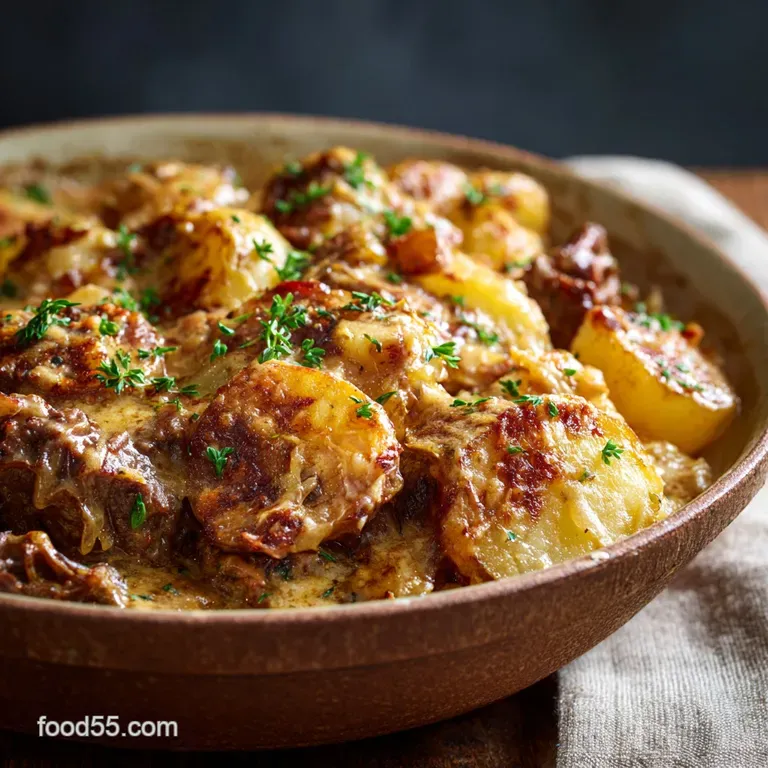
- The Ultimate Slow Cooker Beef and Potatoes Au Gratin: Layered Comfort Made Easy
- Flavor Science: Why Slow Cooking Perfects Beef and Potatoes Au Gratin
- Ingredients Checklist: Mastering the Layers of Slow Cooker Beef and Potatoes Au Gratin
- Slow Cooker Method: A Step-by-Step Guide to Maximum Flavour
- Troubleshooting Your Au Gratin: Expert Tips and Avoiding Pitfalls
- Storing, Reheating, and Perfect Pairings for Your Slow Cooker Beef and Potatoes Au Gratin
- Recipe FAQs
- 📝 Recipe Card
The Ultimate Slow Cooker Beef and Potatoes Au Gratin: Layered Comfort Made Easy
When this dish is cooking, my house smells like a five star Sunday dinner, but without any of the actual heavy lifting. That creamy, garlicky cheese sauce melts into the potatoes, embracing the deeply savory, long cooked beef until it’s fork tender.
Honestly, the aromas alone are enough to make you feel completely cozy.
This isn't just a recipe; it's a weeknight lifesaver masquerading as holiday fare. We are taking the rich flavors of a classic roast and layering them with a creamy, perfect au gratin all in one pot. You get the incredible depth of flavor for pennies compared to an actual prime rib, and the cleanup is minimal.
Ready to ditch the complicated casserole dishes and make something truly magnificent? We are using my favorite kitchen helper, the slow cooker, to turn simple, affordable ingredients into pure, layered comfort. Let’s crack on.
Flavor Science: Why Slow Cooking Perfects Beef and Potatoes Au Gratin
Why Ditch the Oven? The Case for Slow Cooking Au Gratin
Oven baked gratins, even the best ones, rely on high heat that can often dry out the edges of the potatoes or seize the cheese sauce. The slow cooker, however, operates at a lower, more stable temperature that promotes even cooking throughout the layers.
This gentle environment allows the starch from the potatoes to release slowly, thickening the rich, cheesy sauce without it curdling. This low, slow heat guarantees tenderness.
The Marriage of Sunday Roast Flavours and Creamy Gratin Texture
The real magic happens when the robust, meaty flavors of the beef melt and mingle with the homemade Béchamel sauce over several hours. As the chuck roast breaks down, its collagen converts into gelatin, infusing the cream and stock base with deep, savory notes. This results in a sauce that is fundamentally richer than any standard oven gratin, mimicking the complexity of a slow simmered gravy, like the one I make for my famous Thymeroasted rib of beef with red wine gravy: Ultimate Christmas Roast .
Achieving 'Fall Apart' Tenderness in the Beef
Chuck roast has a wonderful marbling of fat and high collagen content, making it tough when cooked quickly. The slow cooker provides the necessary time at least five hours on high or eight hours on low to melt that connective tissue. Don't rush this step.
The beef should literally shred when you press it lightly with a serving spoon.
The Physics of Potato Slicing for Optimal Creaminess
I know slicing potatoes thinly is tedious, but this is non-negotiable for a perfect au gratin. If slices are too thick, they won't cook through, especially in the center of the pot.
Uniform, thin slicing (think 1/8 inch) ensures that every piece cooks at the same rate, and crucially, they release the right amount of starch to thicken the sauce evenly without turning into potato mush.
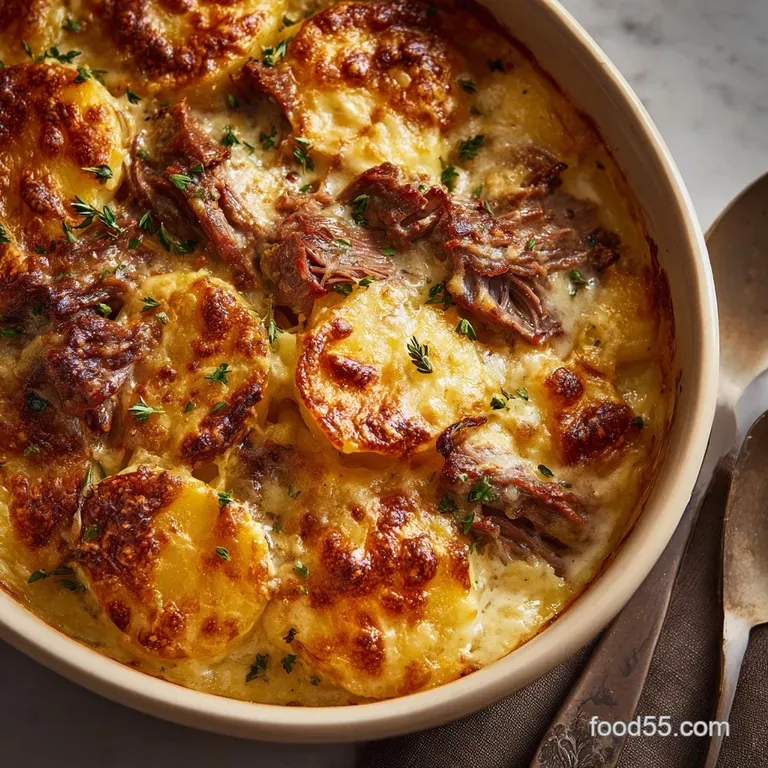
Ingredients Checklist: Mastering the Layers of Slow Cooker Beef and Potatoes Au Gratin
| Ingredient | Role | Viable Substitution |
|---|---|---|
| Chuck Steak | Robust flavor base and protein. | Use beef short ribs, pork shoulder, or thick cut stewing beef. |
| Yukon Gold Potatoes | Creaminess and structure. | Russet potatoes (will be starchier) or waxy New Potatoes (will be less creamy). |
| Sharp Cheddar | Flavor and body for the sauce. | Aged Monterey Jack or Colby. |
| Gruyère Cheese | Nutty flavor and crispy topping. | Aged Swiss, Emmental, or strong Parmesan. |
| Beef Stock | Liquid for braising and depth. | Vegetable stock, or hot water mixed with a good quality beef bouillon concentrate. |
Selecting the Optimal Beef Cut for Long Cooking (Chuck Roast vs. Stewing Beef)
I always gravitate towards a whole Chuck Roast that I cut down myself because the marbling is usually superior to pre-cut stewing beef. This extra fat renders out during the long cook time, adding immense flavor to our sauce. Stewing beef works fine, but look for pieces that aren't too lean, or you risk a dry finish.
Potato Preparation: Russet vs. Yukon Gold Debate for Au Gratin
Yukon Golds are my MVP here because they are wonderfully creamy and hold their shape better than Russets, even after five hours. If you use Russets, they tend to be starchier and fluffier, meaning they might break down completely and make your sauce thicker than intended. A mandoline is your best friend.
Seriously, borrow one if you don’t own one yet.
Crafting the Robust Savory Base (Broth, Seasonings, and Aromatics)
The sauce is what elevates this dish from simple stew to magnificent gratin. You absolutely must make a roux (butter and flour cooked together) before adding your milk and stock. This prevents the dairy from splitting under the long cooking time and gives the sauce body.
Adding Dijon mustard and a little nutmeg might sound weird, but trust me, they cut through the richness beautifully, enhancing the savory flavor profiles.
Cheese Selection for the Perfect Molten and Golden Crust
We use two cheeses here for maximum impact. Sharp Cheddar goes into the sauce for that familiar, tangy warmth and excellent melting quality. Gruyère, however, goes on the top. It provides a beautiful, nutty flavor and gets incredibly bubbly and golden when we hit it under the grill.
Crucial Chef’s Note: Never use pre-shredded cheese in your sauce. Those anti caking agents prevent smooth melting and can lead to a grainy texture. Buy a block and grate it yourself.
Slow Cooker Method: A step-by-step Guide to Maximum Flavour
Searing the Beef: The Crucial Step for Depth and Colour
This is the single most important technique for flavor development. If you throw raw beef straight into the crockpot, you miss out on the rich, complex crust developed by the Maillard reaction. Pat your beef dry, season it generously, and sear it in small batches until it’s deeply browned on all sides.
I once skipped this step to save fifteen minutes and the resulting dish tasted flat and lifeless. Never again.
Assembling the Layers: Ensuring Even Distribution and Density
Layering matters in au gratin, not just for looks, but for cooking efficiency. Start with a quarter of your sauce on the bottom this prevents the first layer of potatoes from sticking and scorching. Then alternate: potatoes, beef and aromatics, the rest of the potatoes, and finally, the remaining sauce.
Make sure the top layer of potatoes is completely submerged in sauce to prevent any gray, hard slices.
Monitoring Temperature and Timing for Perfect Potato Softness
Cook time is always a guess with slow cookers because they all run slightly differently. For this recipe, I use the HIGH setting for speed (about 4– 5 hours), but LOW (7– 8 hours) works even better for ultimate beef tenderness.
The dish is done when the potatoes near the center of the pot are easily pierced, and the beef is ready to fall apart.
The Final Cheese Melt and Critical Resting Period
Once the main cooking is done, we need that signature golden crust. If your slow cooker insert is ceramic and oven safe (check your manual!), fantastic. Just sprinkle the Gruyère and reserved cheddar on top and slide it under a preheated broiler for 3– 5 minutes.
If your insert isn't oven safe, transfer the contents carefully to a wide, shallow baking dish before broiling.
Don't skip the rest time. It’s absolutely vital for the structure of the sauce, helping it cling beautifully to the sliced potatoes and tender beef. Let it sit for 10– 15 minutes once it comes out from under the broiler.
Troubleshooting Your Au Gratin: Expert Tips and Avoiding Pitfalls
Preventing Watery Sauce: The Role of Dairy Fat and Potato Starch
If your final dish looks like soup, a few things likely went wrong. First, did you use whole milk? Lower fat milks are more prone to splitting and releasing water. Second, did you make a proper roux? The roux must be the right consistency to anchor the sauce.
Finally, ensure your slow cooker lid isn't letting too much condensation drip back into the food. Prop the lid slightly with a wooden spoon toward the end of cooking to let some moisture evaporate, concentrating that delicious sauce.
How to Avoid Undercooked Potatoes in the Center of the Pot
This usually happens because the potatoes weren't sliced uniformly thin enough, or the slow cooker was packed too densely. If you notice resistance in the center, cover the pot and cook for another 30– 60 minutes.
Next time, use the mandoline and ensure you’re not aggressively pressing the layers down as you assemble them; air pockets allow steam to circulate.
Achieving a Crispy, Golden Brown Crust Without a Broiler
If you don't have a broiler, you can still get a lovely crust! Once the potatoes and beef are cooked, transfer the gratin to an oven safe dish. Bake at 400°F (200°C) for 15 minutes instead of broiling.
This provides a slower, more even melt and allows the cheese to toast slightly, achieving a similar satisfying texture.
Storing, Reheating, and Perfect Pairings for Your Slow Cooker Beef and Potatoes Au Gratin
Best Practices for Chilling and Reheating Leftovers Safely
This dish keeps brilliantly in the fridge for up to 4 days. Freezing, however, is tricky because the potatoes and dairy sauce can become grainy upon thawing. If you must freeze it, cool the gratin completely, then portion it into airtight, freezer safe containers. Thaw overnight in the fridge.
To reheat, the microwave works, but the oven is better. Cover the dish with foil and bake at 350°F (175°C) until piping hot throughout (about 25 minutes).
Simple Green Sides to Cut the Richness
Because this Slow Cooker Beef and Potatoes Au Gratin is so incredibly rich and hearty, you need something bright and slightly acidic to balance it out.
- Steamed green beans tossed in lemon zest and a squeeze of fresh lemon juice.
- A peppery Arugula salad dressed with simple olive oil and red wine vinegar.
- A side of quick sautéed asparagus is always brilliant.
If you are looking for another hearty, quick dinner that also uses potatoes but features a different cut of beef, check out my Garlic Butter Steak and Potatoes Skillet Easy One-Pan Recipe for an opposite, fast cooking approach.
Time Adjustments for Different Slow Cooker Sizes (Low vs. High)
The times listed assume a standard 6 quart cooker filled to capacity. If you use a smaller 4 quart cooker, the food will heat faster, potentially reducing the HIGH cook time by about 30 minutes. If you are using a large 8 quart cooker, the dish will likely cook exactly to the recipe timing.
Remember, LOW and SLOW yields the most tender beef, so opt for the 7 8 hour option if you can.
Recipe FAQs
What is the best cut of beef to use for this slow cooker recipe?
Use a well marbled cut like Chuck Roast (Pot Roast) or Boneless Short Ribs. The high fat and collagen content in these cuts breaks down slowly over time, guaranteeing a tender, pull apart texture that will remain juicy during the long cooking process.
My slow cooked beef came out tough, not tender. What went wrong?
Toughness usually means the meat hasn't cooked long enough for the connective tissues to fully break down into gelatin. Ensure the cooker is set to 'Low' and allow the full recommended cooking time (usually 8-10 hours), which is necessary to achieve that signature melt-in-your mouth tenderness.
My cheese sauce turned out too runny and separated. How do I fix it?
A runny sauce may result from too much moisture released by the potatoes and beef. To fix this, remove the lid for the final 30 minutes of cooking to allow some steam to escape, or transfer the liquid to a saucepan and thicken it with a cornstarch slurry before pouring it back over the beef and potatoes.
How can I ensure the potatoes are fully cooked and not crunchy?
Potato doneness relies heavily on uniform, thin slicing; use a mandoline to ensure slices are no thicker than 1/8 inch. Also, confirm that the potatoes are fully submerged in the creamy liquid, as any exposed slices will not cook properly and may remain firm.
Can I make this dish ahead of time, and how should I store leftovers?
This dish is great for making ahead; store assembled, uncooked components covered in the refrigerator for up to 24 hours before starting the slow cooking cycle. Leftovers should be stored in an airtight container for up to 3 days and reheated slowly in the oven to preserve the structure and prevent the sauce from separating.
I need a lighter version. Can I use milk or half and-half instead of heavy cream?
While you can substitute lower fat options, they increase the risk of the sauce curdling under high heat. If substituting, we recommend stabilizing the sauce base by stirring in a tablespoon of cream cheese or incorporating a small roux into the cooking liquid before adding the dairy.
What is the best type of potato to use for an au gratin?
Use a starchier potato variety like Russet or a medium starch potato like Yukon Gold. Russets release starch that helps naturally thicken the cream sauce, while Yukon Golds hold their shape well and provide a wonderful buttery flavor.
Slow Cooker Beef Potato Gratin Recipe
Ingredients:
Instructions:
Nutrition Facts:
| Calories | 1014 kcal |
|---|---|
| Protein | 51.1 g |
| Fat | 41.3 g |
| Carbs | 95.5 g |
