Slow Cooker Creme Brulee: the Silky, Set-And-Forget Classic
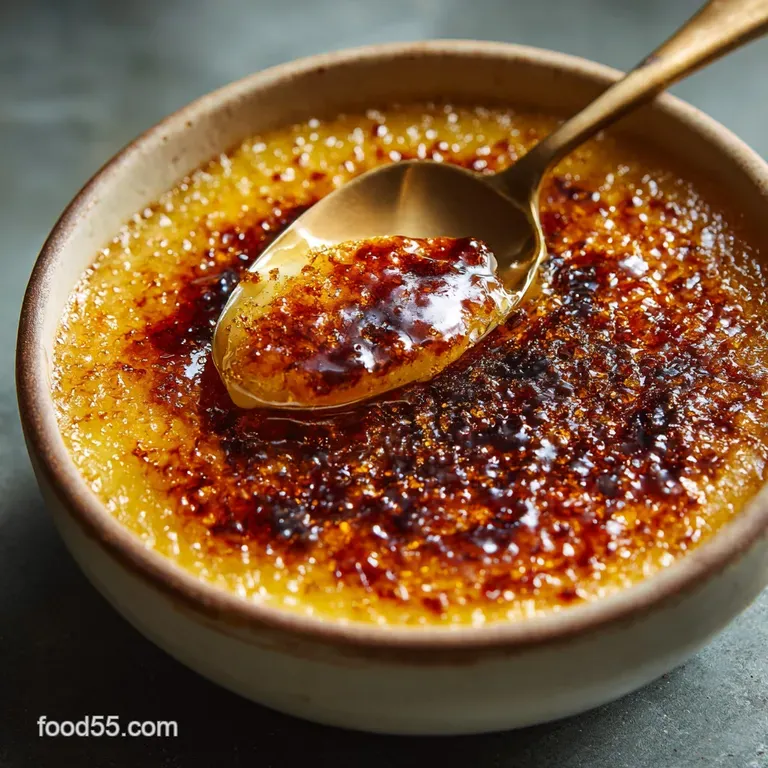
- The Silky Slow-Cooker Crème Brûlée: The Set and Forget Classic
- The Secret to Perfect Custard: Why Use a Slow Cooker?
- Essential Ingredients for the Signature Crème Brûlée Base
- Mastering the Slow Cooker Creme Brulee Technique (Step-by-Step)
- Troubleshooting and Expert Secrets for Flawless Results
- Planning Ahead: Storage and make-ahead Strategies
- Elegant Pairings and Flavor Enhancements
- Recipe FAQs
- 📝 Recipe Card
The Silky Slow Cooker Crème Brûlée: The Set and Forget Classic
I’m obsessed with the sound of it: that sharp thwack of the spoon breaking through the caramelized sugar. Then you meet the impossibly cool, quivering, silky custard underneath.
It's the moment of pure, decadent satisfaction, and it’s why Crème Brûlée is the ultimate dessert flex.
Traditionally, making this French classic is a high anxiety event involving fussy oven temperatures and the terrifying risk of sloshing water all over your delicate custards. Forget that nonsense, because the slow cooker is our secret weapon here.
It creates the most perfect, foolproof water bath (a bain marie ) you could ever ask for, making this a true set and forget dessert even for beginners.
We’re taking all the stress out of fancy French patisserie and handing the job over to the Crockpot. This Slow Cooker Creme Brulee recipe guarantees an unbelievably smooth texture every time, meaning you can finally focus on the important part: buying a ridiculously powerful kitchen torch.
Let’s get baking!
The Secret to Perfect Custard: Why Use a Slow Cooker?
Escaping the Traditional Oven Water Bath Anxiety
If you’ve ever tried to haul a roasting pan filled with hot water and delicate ramekins out of a 325°F oven, you know the terror. It’s a guaranteed mess, right? The beauty of the slow cooker is that the water bath is contained, insulated, and requires zero fuss once the lid is on.
Achieving Unparalleled Silky Texture, Effortlessly
The key to great custard is gentle heat. High heat makes eggs scramble, but low, slow, and consistent heat allows the egg proteins to set into a smooth, buttery matrix. Using the slow cooker ensures the temperature never spikes, giving us that signature, impossibly silky texture that defines perfect Crème Brûlée.
Equipment Check: Preparing Your Crockpot for Success
You don't need anything fancy here, just a standard 6 quart slow cooker. Make sure you have six appropriately sized 6 ounce ramekins that fit snugly inside the cooker base. Measure before you pour —I once tried cramming seven into a five quart cooker and ended up with a hilarious custard domino situation.
Temperature Regulation: The Slow Cooker's Gentle Heat Advantage
This device truly shines because it maintains a stable, low cooking environment. We are keeping the temperature just below the point where the cream boils or the eggs coagulate too quickly. This extended, gentle process is crucial for achieving smooth Slow Cooked Creme Brulee .
Preventing Egg Curdling: Low and Slow Coagulation
The primary enemy of custard is rapid heat, which causes the egg proteins to tighten up too fast, leading to a grainy or curdled texture. By using the low setting and a water bath, we are allowing for controlled, low and slow coagulation.
This process takes a little longer, but the result is a flawless, creamy dessert every single time.
The Essential Role of the Slow Cooker Creme Brulee 'Bain Marie'
The French term bain marie simply means water bath, and it's mandatory for custards. It acts as a thermal buffer, ensuring the heat applied to the ramekin sides is indirect and perfectly gentle. In this recipe, your slow cooker is the bain marie.
Essential Ingredients for the Signature Crème Brûlée Base
This recipe is simple, but quality matters. Since there are so few ingredients, make sure they are top-notch.
| Ingredient | Role | Viable Substitution |
|---|---|---|
| Heavy Cream | Richness, density | Half and half (will be slightly less rich) |
| Whole Milk | Lightens density | Substitute with more heavy cream for ultra richness |
| Egg Yolks | Structure, emulsification | None (they are the structure!) |
| Caster Sugar | Sweetener, caramelization | Granulated sugar (for custard); Superfine sugar is mandatory for the crust |
| Vanilla | Primary flavor profile | Almond or Lemon extract (use sparingly) |
Selecting the Right Dairy: Heavy Cream vs. Half and Half
For a true restaurant quality rich custard, you absolutely must use heavy cream. It's the high fat content that yields the mouth coating richness we crave. If you use half and half, your custard will still set, but it will be lighter and slightly less luxurious, which is still great for a lighter dessert.
The Vanilla Factor: Extract, Paste, or Fresh Bean?
Fresh vanilla bean is king; the specks look gorgeous. Vanilla bean paste is my favorite compromise; it has great flavor and visual appeal, and it’s way easier than scraping pods.
If using plain extract, add it only after the cream is removed from the heat, so the alcohol doesn’t cook off.
Demystifying the Egg Yolk vs. Whole Egg Ratio
We are using only egg yolks. Six of them! Egg whites contain mostly water, which results in a rubbery texture when cooked slowly. Yolks are rich in fat and lecithin, the emulsifiers that create that incredibly smooth, melt-in-your mouth custard.
Caramelization Candidates: Choosing Your Topping Sugar
Do not try to brûlée your custards with regular coarse granulated sugar! It takes too long to melt and you will end up burning the edges before the center liquefies. You need caster sugar (superfine sugar).
Its small crystal size melts fast and evenly under the torch, giving us that perfect, shattering Crme Brle crust.
Mastering the Slow Cooker Creme Brulee Technique (step-by-step)
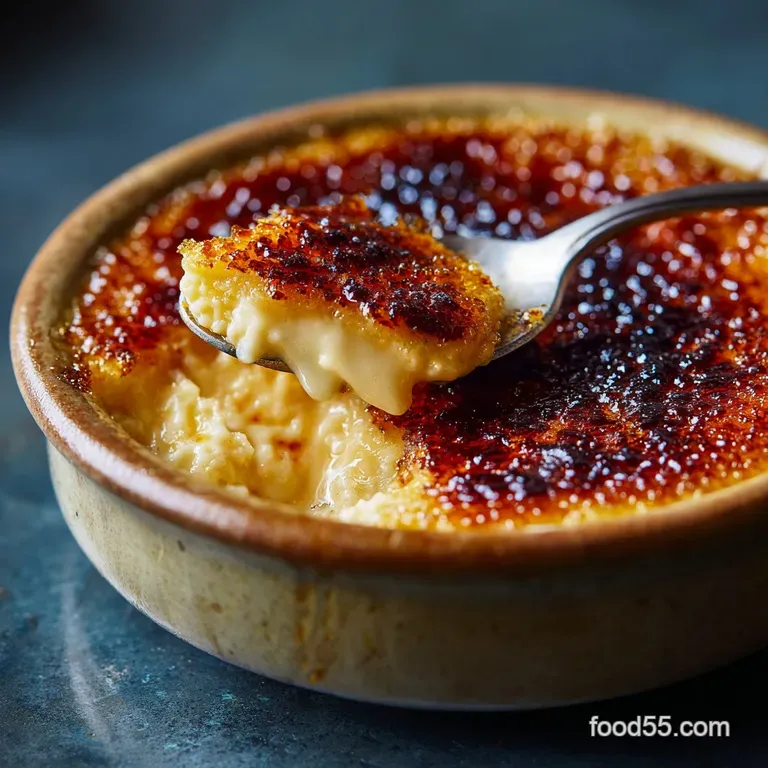
Mixing the Custard: Tempering for a Smooth Start
- Heat the Dairy: Gently heat the cream, milk, vanilla (if using paste/bean), and salt in a saucepan until small bubbles form around the edges. Do not boil! Remove it instantly from the heat.
- Blanchir the Yolks: In a separate large bowl, whisk the egg yolks and sugar until they lighten in color and thicken slightly. The mixture should be pale yellow.
- Temper: Slowly, gradually, and while whisking constantly, ladle the hot cream into the yolk mixture. Start with only a spoonful or two to raise the yolk temperature slowly. Adding too much too fast results in sweet scrambled eggs (a mistake I definitely made my first time making Creme Brulee Recipe !).
Crucial Chef’s Note: Straining is non-negotiable for a professional finish. Pour the entire tempered mixture through a fine mesh sieve into a measuring jug or bowl. This removes any tiny air bubbles or cooked egg bits.
Filling the Ramekins and Setting Up the Water Bath
- Fill Ramekins: Pour the strained custard evenly into your six ramekins.
- Prep the Slow Cooker: Place the filled ramekins carefully into the bottom of the slow cooker insert.
- Add Water: Carefully pour hot tap water into the slow cooker, ensuring the water level comes at least halfway up the sides of the ramekins.
The Low and Slow Cooking Schedule
- Cook: Cover the slow cooker and set it to LOW . Cook for 2 to 3 hours.
- Check Doneness: After two hours, gently nudge one ramekin. The edges should be set, but the very center should still have a small, defined wobble. It should resemble firm gelatin. If it looks liquid or sloshes, keep cooking and check every 15 minutes.
Chilling and Final Preparation for the Caramel Layer
- Chill: Remove the ramekins carefully and let them cool completely on the counter before covering them with plastic wrap. Chill them in the refrigerator for a minimum of 4 hours overnight is best. Do not attempt to brûlée warm custard!
- Dry the Top: Right before serving, blot the top of the cold custard with a paper towel. This absorbs any condensation, ensuring the sugar adheres and caramelizes properly.
- Brûlée: Sprinkle about 1 tablespoon of caster sugar evenly over the top of each custard. Use your torch to create the classic crust, moving the flame constantly until the sugar melts into a deep amber sheet. Serve instantly!
Troubleshooting and Expert Secrets for Flawless Results
Preventing a Rubbery Texture: Do Not Overcook
If your custard looks firm and matte, it’s probably overcooked. Remember the wobble test! If you cook it too long, it pushes the water out of the protein structure, leaving you with a dense, rubbery texture instead of that creamy silkiness.
Dealing with Bubbles and Foaming After Mixing
Even after careful whisking and tempering, you might see some tiny bubbles on the surface of your filled ramekins. This is fine. Use a small kitchen torch or the back of a spoon to gently skim off the bubbles before placing them in the slow cooker.
This guarantees a perfectly smooth surface for that caramel crust later.
The Secret to the Perfect Sugar Crust (Blowtorch vs. Broiler)
Look, I know some recipes say you can use the broiler, but it rarely results in a perfect, uniform crust. The broiler heats the custard (bad!) and melts the sugar unevenly. For true, spectacular Creme Brulee Recipe Videos results, invest in a small kitchen torch.
They are cheap, easy to use, and give you total control over the caramel color and thickness.
How Long Can Cooked Custards Last in the Fridge?
Un-brûléed custards store beautifully. You can make the bases up to 3 days in advance. Just keep them tightly covered. Always wait to sprinkle the sugar and torch them until right before serving.
If you torch them too early, the sugar will dissolve back into the custard, turning sticky and soft.
Freezing Crème Brûlée: Can It Be Done? (Spoiler: Avoid)
The short answer is: no, please don't. Custards rely heavily on egg yolks for structure. When frozen and thawed, the water separates from the fats and proteins, leading to a grainy, weepy, awful mess. This dessert is not freezer friendly.
Complementary Garnishes: Berries, Zest, and Spices
Keep it simple. The star of the show is the rich custard and the shattering sugar. I love serving mine with a few fresh raspberries or a tiny dusting of finely grated orange zest. A tiny pinch of cinnamon mixed into the sugar before torching is also a wonderful flavor boost.
Planning Ahead: Storage and make-ahead Strategies
Since the cook time for this Dessert Simple recipe is so long (the slow cooking, followed by the mandatory chilling), it’s truly the perfect make-ahead recipe.
Fridge Storage: Store the finished (but un-torched) custards tightly covered in the fridge for up to 3 days.
Serving Strategy: On the day of your party, simply pull them out of the fridge about 30 minutes before dessert time to take the chill off slightly, then sprinkle and torch! This allows you to serve a complicated looking dessert without any last minute kitchen panic.
Elegant Pairings and Flavor Enhancements
For an absolutely show stopping finish, consider adding flavor variations before you cook the custard. Try swapping the vanilla for a couple of tablespoons of strong coffee or espresso powder stirred into the hot cream. For a festive touch, infuse the cream with a small sprig of fresh rosemary before straining.
The aromatic pairing is incredible.
If you are using the slow cooker for the main course maybe whipping up a batch of incredibly tender Slow Cooker Beef Ragu Pasta The Proper SlowCooked Sunday Supper Recipe — you can easily transition into this dessert. The best part of slow cooking is letting the machine do the work while you relax.
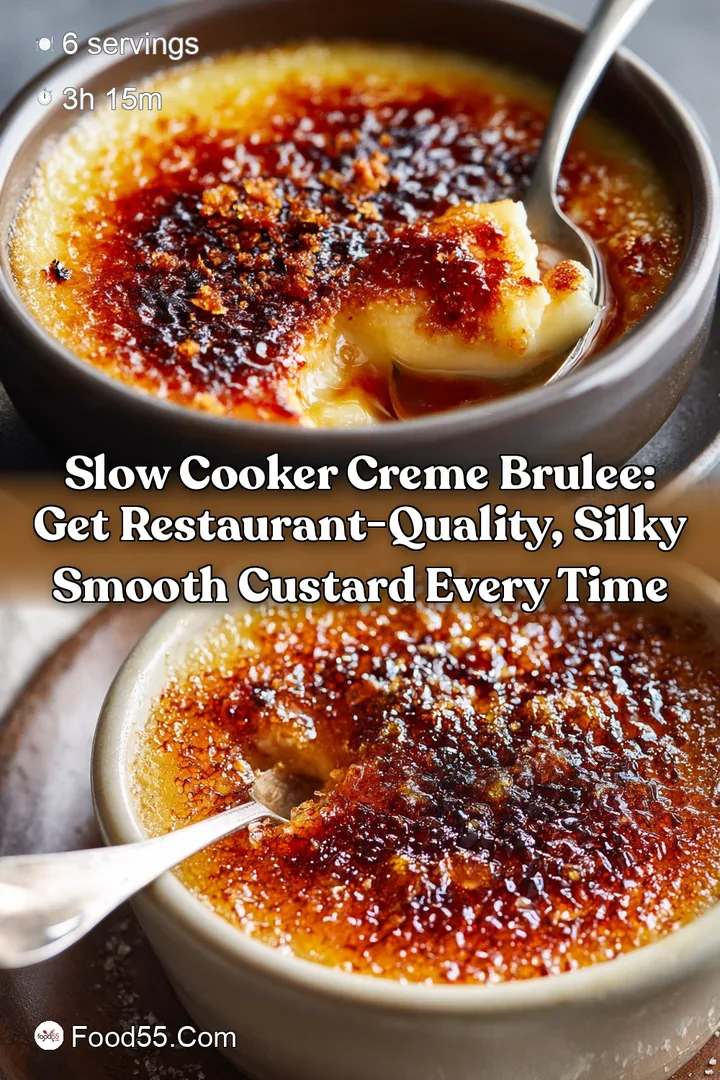
Recipe FAQs
Why is my custard weeping (liquid separating) after cooling?
Weeping, where liquid separates from the custard, often happens if the crème brûlée cooks too quickly or at too high a temperature. Ensure your slow cooker is truly on the LOW setting and that the ramekins are adequately submerged in the water bath to maintain an even, gentle temperature throughout the cooking process.
How do I know when the crème brûlée is fully set in the slow cooker?
The custard is ready when the edges appear set and slightly firm, but the center still retains a slight wobble, similar to very soft gelatin. The internal temperature should register around 175°F (80°C); overcooking will result in a tough, rubbery texture instead of a silky smooth one.
Can I skip the bain marie (water bath) when using the slow cooker method?
No, the water bath is mandatory even when utilizing the slow cooker; it acts as an essential insulating layer that prevents the heat from spiking too rapidly. While the slow cooker provides the consistent heat, the water bath ensures the delicate proteins in the custard set gently and evenly without curdling or scorching.
What is the best type of sugar and method for achieving the perfect crunchy crust?
The best crust is achieved by sprinkling a thin, even layer of fine granulated sugar or turbinado sugar just before serving, followed by the use of a kitchen torch. Hold the torch about three inches away and keep it moving constantly until the sugar melts, bubbles, and turns a deep, shatteringly hard amber brown.
Can I prepare the custard mixture ahead of time?
Yes, you can prepare the custard base up to 24 hours in advance and store it, covered, in the refrigerator before baking. Before pouring the custard into the ramekins, give the mixture a gentle whisk to recombine any settled fat, and then strain it again for maximum silkiness.
How long can I store leftover crème brûlée, and should I caramelize it immediately?
Fully cooked and cooled crème brûlée (without the caramelized sugar top) can be stored in the refrigerator, tightly covered, for up to 3 days. It is crucial only to caramelize the sugar right before you intend to serve, as the crust will quickly soften and dissolve if refrigerated or stored after torching.
Can I use non-dairy milk substitutes, like almond or oat milk?
Traditional crème brûlée relies heavily on the high fat content of heavy cream and egg yolks for its rich texture, making most non-dairy milks too thin to set properly.
If experimenting, use full fat coconut cream or a high fat plant milk blended with additional yolks or a thickener, but note the classic flavor profile will change.
Slow Cooker Creme Brulee Easy Recipe
Ingredients:
Instructions:
Nutrition Facts:
| Calories | 626 kcal |
|---|---|
| Protein | 5.5 g |
| Fat | 49.1 g |
| Carbs | 41.9 g |
