Fat Tuesday Recipe with Traditional King Cake
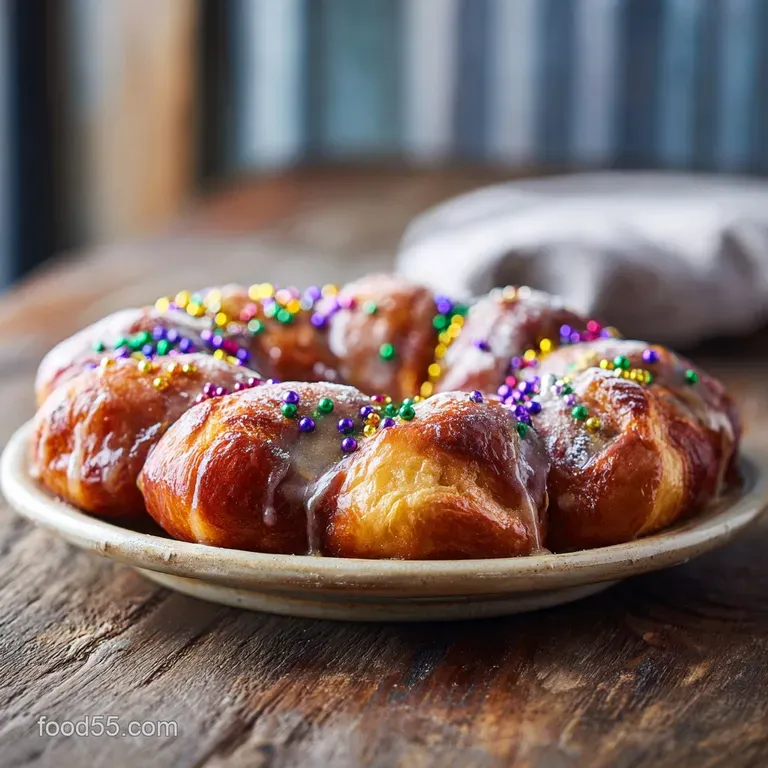
- Time: Active 45 mins, Passive 3 hours 30 mins, Total 4 hours 15 mins
- Flavor/Texture Hook: Buttery, pillowy dough with a tangy cream cheese bite
- Perfect for: Mardi Gras parties, family brunches, or beginner bakers
- Fat Tuesday Recipe with Traditional King Cake
- The Magic of Enriched Doughs
- Decoding the Essential Ingredients
- Essential Elements for Success
- Tools Every Baker Needs
- Step by Step King Cake
- Solving Common Baking Flops
- Flavor Swaps to Try
- Keeping Your Cake Fresh
- Festive Serving Traditions
- Deciphering Kitchen Myths
- Recipe FAQs
- 📝 Recipe Card
Fat Tuesday Recipe with Traditional King Cake
The first time I stood on a balcony in New Orleans, the air didn't just smell like humidity and jazz, it smelled like fried dough and warm cinnamon. I watched a local family tear into a massive, purple and green ring of cake, laughing as they searched for the hidden plastic baby.
That moment of shared joy stuck with me. This Fat Tuesday, bake an authentic King Cake with our simple recipe.
You don't need a professional bakery or a ticket to Louisiana to make this happen. I've spent years tweaking this dough because, honestly, the store-bought ones are often dry and sad. We want something that feels like a cloud but tastes like a decadent cinnamon roll had a baby with a fine French brioche.
It's about that specific, silky crumb that only comes from real butter and patience.
We're going to walk through the process together, from blooming the yeast to that final, satisfying sprinkle of colored sugar. Whether you're a seasoned pro or this is your first time working with yeast, I've got your back.
We'll focus on the textures that matter, the shatter of the sugar against the soft bread, and that velvety cream cheese filling that keeps everyone coming back for seconds.
The Magic of Enriched Doughs
Fat Barrier: Adding butter and eggs coats the flour proteins, which limits gluten development to create a tender, cake like bread instead of a chewy baguette.
Sugar Osmosis: The sugar in the dough doesn't just sweeten, it attracts moisture to keep the crumb soft for days after baking.
Yeast Fermentation: A slow rise allows the yeast to produce carbon dioxide and organic acids, which builds a complex, slightly tangy flavor profile.
Maillard Reaction: The proteins in the milk and eggs react with the sugars in the oven to produce that iconic golden brown, aromatic crust.
| Method | Total Time | Texture | Best For |
|---|---|---|---|
| Scratch Made | 4 hours 15 mins | Pillowy and rich | Authentic celebrations |
| Fridge Proof | 12 hours 30 mins | Complex and chewy | Stress free mornings |
| Bread Machine | 3 hours 10 mins | Consistent and soft | Busy weeknights |
Choosing the right method depends on how much time you have. If you're looking for the deepest flavor, the fridge proof is a game changer because cold fermentation allows the yeast to work its magic slowly. This richness reminds me of the texture in my favorite How to Make recipe which also uses high fat content to achieve that melt in-the mouth feel.
Decoding the Essential Ingredients
| Ingredient | Science Role | Pro Secret |
|---|---|---|
| Whole Milk (240ml) | Provides liquid for hydration | Warm it to exactly 43°C for optimal yeast activity |
| Unsalted Butter (113g) | Shortens gluten strands | Use high fat European style butter for a richer crumb |
| All Purpose Flour (500g) | Structural foundation | Spoon and level your flour to avoid a dry, heavy cake |
| Cream Cheese (225g) | Adds moisture and tang | Ensure it's full fat for the best structural stability |
A quick note on the milk: if it's too hot, you'll kill the yeast, and if it's too cold, it'll never wake up. Use a thermometer if you have one. It should feel like warm bath water against your wrist.
Essential Elements for Success
To get this right, you'll need 500g of all purpose flour and 240ml of whole milk, warmed to 110°F (43°C). Grab one packet (7g) of active dry yeast and 100g of granulated sugar.
You'll also need 6g of fine sea salt, 2 large eggs at room temperature, and 113g of unsalted butter, softened.
For that iconic filling, have 225g of full fat cream cheese ready, along with 100g of packed brown sugar, 8g of ground Korintje cinnamon, and 1 tsp of vanilla bean paste. The glaze requires 240g of powdered sugar, 4 tbsp of heavy cream, and 1 tsp of almond extract.
Don't forget your 3 tbsp each of purple, green, and gold sanding sugars, and of course, the plastic baby.
Chef's Tip: Freeze your butter for 10 minutes before adding it to the dough. This keeps the fat from melting too quickly during the initial mix, resulting in a lighter texture.
Tools Every Baker Needs
You don't need a lot of fancy gear, but a stand mixer with a dough hook will save your arms a lot of work. A large baking sheet lined with parchment paper is non negotiable to prevent sticking. A rolling pin is essential for getting that dough into a nice, even rectangle for the filling.
I also recommend a small offset spatula for spreading the cream cheese filling smoothly without tearing the dough. A pastry brush is handy for the egg wash, and a cooling rack will ensure the bottom of the cake doesn't get soggy while it rests. If you want something smaller and more portion controlled, try these Mini Pineapple Upside recipe which use similar baking principles on a smaller scale.
step-by-step King Cake
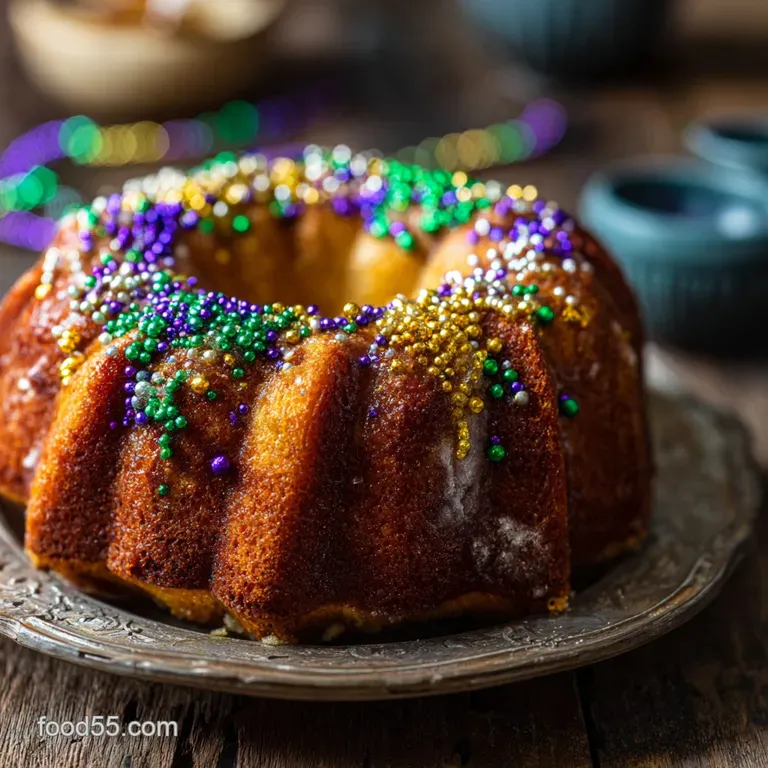
Phase 1: Bloom and Mix
Combine the warm milk, yeast, and a tablespoon of the sugar in your mixer bowl. Let it sit for about 5 minutes until it's foamy and smells like fresh bread. Note: If it doesn't foam, your yeast might be expired or the milk was too hot.
Phase 2: Building the Dough
Add the remaining sugar, salt, and eggs to the yeast mixture. Start the mixer on low and gradually add the flour 125g at a time until a shaggy dough forms.
Phase 3: The Butter Incorporation
Drop in the softened butter one tablespoon at a time while the mixer is running. Knead with the dough hook for 5 to 7 minutes until the dough is silky, elastic, and pulls away from the sides.
Phase 4: The First Rise
Place the dough in a lightly greased bowl and cover with a damp cloth. Let it rise in a warm, draft free spot for about 1 hour 30 mins until it has doubled in size.
Phase 5: Prepare the Filling
While the dough rises, whip the cream cheese, brown sugar, cinnamon, and vanilla paste together. Beat the mixture until it's completely smooth and velvety.
Phase 6: Shape and Fill
Punch down the dough and roll it out into a 10x20 inch rectangle on a floured surface. Spread the cream cheese filling over the dough, leaving a 1 inch border.
Phase 7: The Braided Ring
Roll the dough up tightly from the long side, like a jelly roll. Bring the ends together to form a ring, tucking one end into the other, and place it on your baking sheet.
Phase 8: Final Proof and Bake
Cover the ring and let it rise for another 45 minutes. Bake at 350°F (180°C) for 25 to 30 minutes until the crust is golden and sounds hollow when tapped.
Phase 9: Glazing and Colors
Whisk the powdered sugar, cream, and almond extract until smooth. Pour over the warm cake and immediately sprinkle with the purple, green, and gold sugars until the entire ring is vibrantly coated.
Phase 10: The Secret Guest
Carefully slide the plastic baby into the bottom of the cake through the crust. Note: Always warn your guests that there is a baby hidden inside to avoid any dental disasters!
Solving Common Baking Flops
Why the Dough Stays Flat
If your dough isn't rising, it's usually a temperature issue. Yeast is a living organism; it needs warmth but dies in heat. If your kitchen is cold, try putting the bowl inside an oven that is turned off but has the oven light on. That tiny bit of warmth is often all it needs.
Why the Filling Leaks Out
This usually happens if the dough isn't rolled tightly enough or if the seam isn't pinched shut. When you roll the dough into a log, make sure it's snug. Think of it like a sleeping bag. If it's loose, the steam from the melting sugar will push the filling right out the ends.
| Problem | Root Cause | Solution |
|---|---|---|
| Tough Crust | Over kneading or too much flour | Knead only until smooth; use a scale for flour |
| Soggy Center | Under baked or too much filling | Use a thermometer (190°F internal); follow filling ratios |
| Dry Dough | Milk too hot or old yeast | Keep milk at 110°F; check yeast expiration dates |
Common Mistakes Checklist
- ✓ Use room temperature eggs to ensure they emulsify properly into the dough.
- ✓ Don't skip the second rise; it's what gives the cake its light, airy structure.
- ✓ Pat the cream cheese dry if it has any surface moisture before mixing the filling.
- ✓ Wait until the cake is slightly cool before glazing so the icing doesn't just run off.
- ✓ Always warn guests about the hidden baby to prevent choking or broken teeth.
Flavor Swaps to Try
If you aren't a fan of cream cheese, you can easily swap it for a traditional cinnamon butter filling. Just mix 113g of softened butter with the cinnamon and brown sugar. It will be slightly less tangy but much more like a classic New Orleans pastry.
For a fruitier twist, add 100g of chopped pecans or dried cranberries to the filling. The crunch of the pecans adds a lovely contrast to the soft dough. If you want a really deep flavor, try adding 1 tsp of espresso powder to the cinnamon filling it won't taste like coffee, but it will make the cinnamon taste much more intense.
| Original Ingredient | Substitute | Why It Works |
|---|---|---|
| Heavy Cream | Whole Milk | Lower fat, but still creates a pourable glaze |
| Almond Extract | Lemon Juice | Swaps nutty notes for a bright, citrusy tang |
| All Purpose Flour | Bread Flour | Adds more "chew" and structure to the ring |
If you are scaling this recipe up for a big party, remember that spices don't always double perfectly. If you are making two cakes, use 1.5x the cinnamon to keep it from becoming overwhelming. For a half batch, just beat one egg, measure it, and use exactly half.
Keeping Your Cake Fresh
King Cake is definitely best on the day it's made, but it will last in the fridge for up to 3 days. Since it has a cream cheese filling, you shouldn't leave it out on the counter for more than two hours. To reheat, just pop a slice in the microwave for 10 seconds to soften the butter in the dough.
For the zero waste enthusiasts: if your cake does go a bit stale, don't throw it out! It makes the most incredible French toast you've ever had. The cinnamon and sugar are already there, so you just need a quick egg dip.
You can also freeze the unglazed cake for up to 2 months; just wrap it tightly in plastic wrap and foil.
Festive Serving Traditions
Serving a King Cake is more than just eating dessert; it's a social contract. Traditionally, whoever finds the baby in their slice is crowned "King" or "Queen" for the day and is responsible for hosting the next party or buying the next cake. It's a beautiful way to keep the celebration going throughout the season.
Pair your cake with a strong cup of chicory coffee or a glass of cold milk. The bitterness of the coffee cuts through the sweetness of the glaze perfectly. It's meant to be shared, so put it in the center of the table and let everyone pull off a piece.
The colors purple for justice, green for faith, and gold for power make it a true conversation piece.
Deciphering Kitchen Myths
One of the biggest myths is that you have to use "King Cake Flour." Plain old all purpose flour works perfectly fine as long as you don't overwork it. Another misconception is that the baby has to be baked inside.
Many bakeries actually provide the baby on the side for safety reasons, and you can simply tuck it into the bottom after baking.
Finally,, some people think that a King Cake is just a giant cinnamon roll. While the flavors are similar, the inclusion of almond extract in the glaze and the specific braiding technique used in a traditional King Cake New Orleans recipe sets it apart.
The dough is much richer and more "bread forward" than a standard breakfast roll. It's a unique cultural experience that deserves its own category.
Recipe FAQs
What is the tradition of king cake for Fat Tuesday?
Yes, it symbolizes the arrival of the Three Kings. The round shape represents unity, and it is eaten to celebrate Epiphany and the period leading up to Lent (Fat Tuesday). Whoever finds the small plastic baby hidden inside is crowned king or queen and hosts the next celebration.
What is the traditional Catholic Fat Tuesday meal?
Traditional meals focus on rich foods before Lenten fasting begins. In Louisiana, this centers around King Cake, rich pastries, and often savory Creole or Cajun dishes like jambalaya or gumbo. Many families prefer something substantial like our New Year s recipe as a hearty send off to indulgence.
What is traditionally in a king cake?
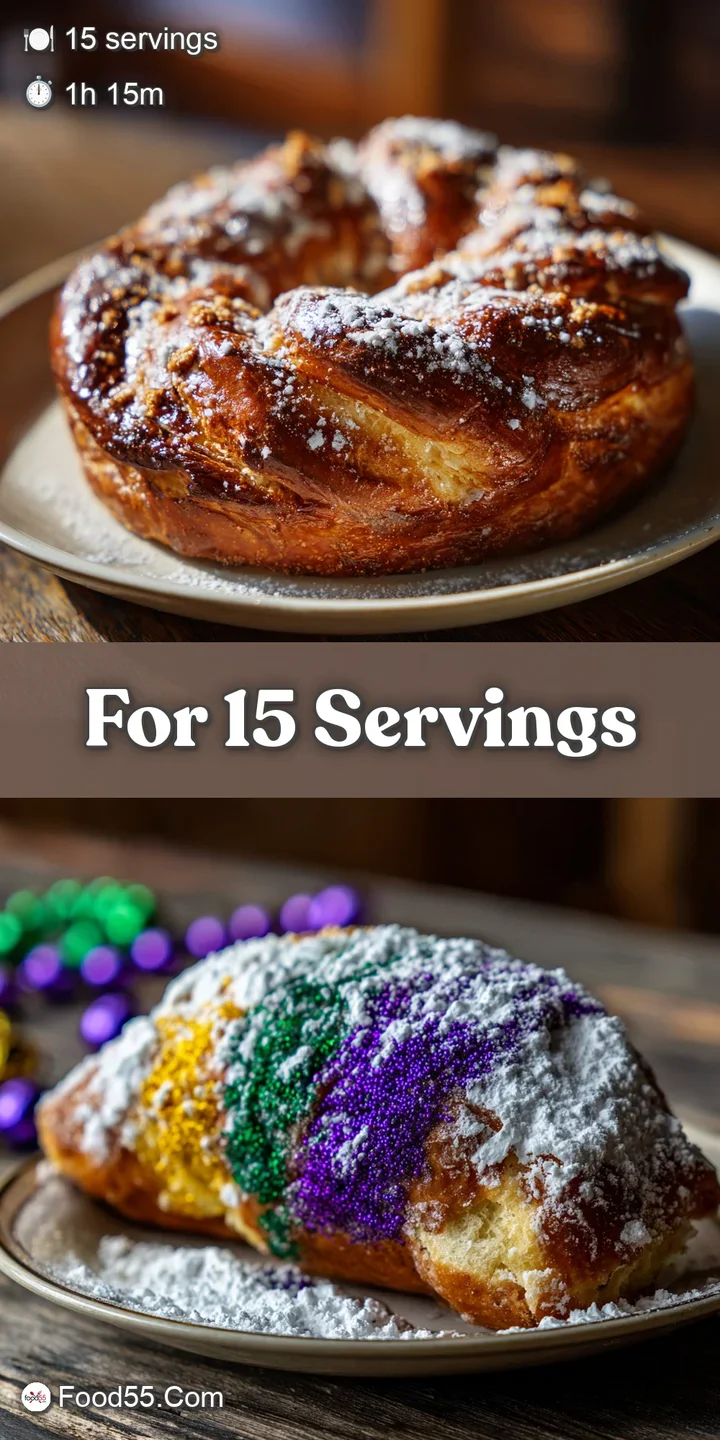
A brioche style sweet bread filled with cinnamon and cream cheese. Traditional versions feature a swirl of cinnamon sugar filling and are topped with icing and colored sanding sugars representing purple (justice), green (faith), and gold (power).
What cake do you eat on Fat Tuesday?
King Cake is the quintessential cake eaten on Fat Tuesday (Mardi Gras). While many rich treats are consumed, the King Cake serves as the centerpiece representing the celebration before Ash Wednesday begins. If you enjoy rich, yeasted doughs, mastering this one is a must.
How do I ensure my brioche dough is tender and not chewy?
Incorporate the butter slowly after the initial gluten structure forms. Adding fat too early coats the flour, inhibiting gluten development which results in tenderness. If you mastered fat incorporation here, you’ll find similar success controlling texture when you work on our Christmas Pudding with recipe, which also relies on high fat content.
Is it true that the colors on the cake have specific meanings?
Yes, the colors are symbolic of Mardi Gras tradition. Purple represents justice, green symbolizes faith, and gold stands for power. You must include these three colors when decorating for an authentic presentation.
How do I keep the cream cheese filling from oozing out during baking?
Whip the filling until it is completely smooth and stiff before spreading. Ensure the dough log is rolled very tightly and the final seam is pinched securely closed to prevent filling leakage from steam expansion.
Traditional King Cake Recipe
Ingredients:
Instructions:
Nutrition Facts:
| Calories | 387 kcal |
|---|---|
| Protein | 6.2 g |
| Fat | 14.1 g |
| Carbs | 60.0 g |
| Fiber | 1.1 g |
| Sugar | 39.4 g |
| Sodium | 213 mg |
