Creme Brulee Cheesecake: the Custard Dream

- The Ultimate Crème Brûlée Cheesecake: A Decadent Hybrid Dessert
- Essential Components: Ingredients for the Perfect Base, Filling, and Brûlée
- Substitutions and Ingredient Notes for Optimal Flavor
- Mastering the Method: Step-by-Step Guide to Baking Success
- Troubleshooting and Expert Insights: Chef's Tips for a Perfect Finish
- Preservation and Presentation: Serving and Storage Guidance
- Recipe FAQs
- 📝 Recipe Card
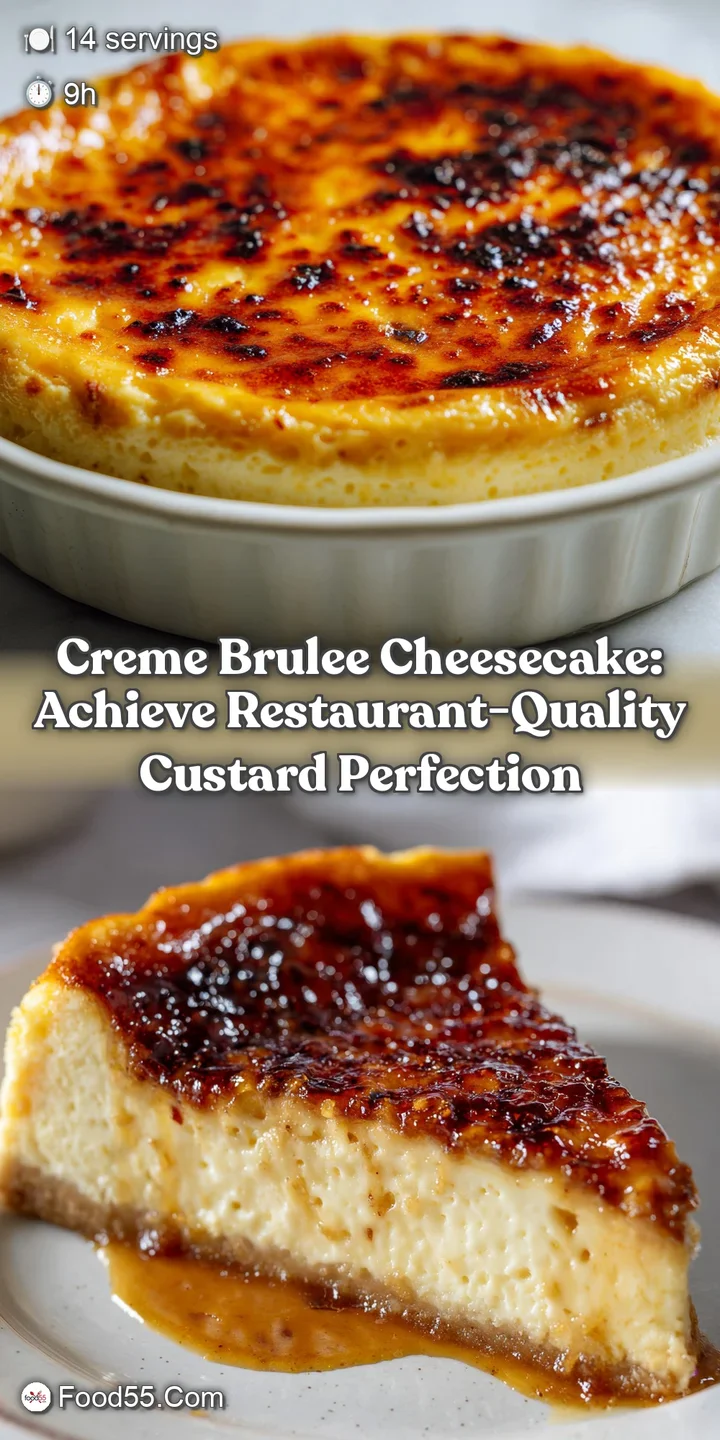
I’ve been cooking for years, and honestly, few desserts elicit the gasps and delighted silence that this one does. Imagine a fork sinking through that perfect, brittle sugar crust, resulting in a satisfying shatter before landing in a cloud of silky, dense, vanilla speckled custard.
The aroma alone warm vanilla and deep, caramelized sugar is intoxicating.
This magnificent creation, the Creme Brulee Cheesecake , is basically the result of an accidental genius meeting between a classic New York cheesecake and a French custard.
It looks intimidating, like something only a professional pastry chef could pull off, but the techniques are surprisingly straightforward, provided you nail the basics of temperature control and gentle baking. Trust me, if I can stop myself from over mixing this, so can you.
So, ditch the decision making paralysis. We are combining two of the best desserts ever invented into one incredible, crack free masterpiece. Let’s get you the real, honest truth on how to make the ultimate, show stopping Creme Brulee Cheesecake at home.
The Ultimate Crème Brûlée Cheesecake: A Decadent Hybrid Dessert
The goal here isn't just a cheesecake with sugar sprinkled on top. It’s about creating a true hybrid where the filling itself tastes like dense, rich crème brûlée custard, and the topping offers that dramatic, brittle snap.
This isn't just baking; it's a structural engineering project, and we need specific rules to guarantee perfection.
Deconstructing the Crème Brûlée Element: Vanilla and Yolk Focus
The secret weapon in achieving that deep, sophisticated custard flavor in our Creme Brulee Cheesecake is simple: more egg yolks. Traditional cheesecakes use whole eggs for structure, but adding three extra yolks introduces richness and body that is undeniable.
This gives the filling that silky mouthfeel you expect from a great Vanilla Bean Cheesecake . It also allows us to use vanilla bean paste, which gives the filling those lovely little dark specks and intensifies the flavor ten-fold.
What Sets This Recipe Apart from Standard New York Cheesecake
Standard New York cheesecake relies on high heat and structure; this recipe requires patience and humidity. We bake low and slow, ensuring the cake cooks from the outside in without boiling the center.
The result is a filling so smooth it feels like velvet, a texture often ruined by aggressive whipping or rapid cooling. This Creme Brulee Cheesecake focuses on gentle technique above all else.
Why Utilizing the Water Bath is Essential for Gentle Baking
A water bath (or Bain Marie) is non-negotiable for achieving a truly Crack Free Cheesecake . The boiling water creates a steamy, humid environment inside your oven.
This prevents the edges of the cheesecake from drying out and setting too quickly while allowing the center to cook evenly and slowly. It’s like wrapping your cake in a warm, moist cloud.
The Role of Extra Egg Yolks for Unmistakable Custard Richness
Seriously, those three extra yolks are doing the heavy lifting. They dramatically increase the fat and emulsifiers in the batter, which is what gives the final product its characteristic dense, rich, almost fudgy texture.
Without them, you end up with a lighter, fluffier texture nice, but not worthy of being called a Gourmet Cheesecake .
Essential Components: Ingredients for the Perfect Base, Filling, and Brûlée
If your ingredients are cold, your batter will be lumpy. Lumpy batter introduces weak points and means the structure is uneven. Always ensure all dairy and eggs are fully at room temperature before you start mixing.
I usually pull everything out onto the counter at least two hours before I plan to bake. This is the foundation of any Best Cheesecake Recipe .
Substitutions and Ingredient Notes for Optimal Flavor

I know sometimes you just don't have exactly what the recipe calls for. Here are the life hacks I've learned that won't compromise the final texture of your Creme Brulee Cheesecake .
Choosing the Right Graham Cracker Base for the Crust
We want a sturdy base that can hold up against the rich filling and the water bath. Graham crackers are classic, but I often prefer the finer texture and slight saltiness of Digestive biscuits.
If neither are available, vanilla wafers are a great substitute, but you may need to reduce the added sugar in the crust by half a tablespoon since they are already quite sweet.
Clarifying the Importance of High Fat Cream Cheese
Do not, under any circumstances, use light or reduced fat cream cheese for this Creme Brulee Cheesecake . The high fat content is what prevents the cake from drying out and ensures that signature dense, creamy texture. Skimping here guarantees a failure.
Sugar Selection for the Final Caramelization Layer
You need a pure sugar that melts quickly and cleanly. Standard granulated sugar works brilliantly for your Homemade Creme Brulee topping, but I prefer Turbinado (Sugar in the Raw) if I have it.
The larger crystals and molasses notes deepen the final caramel flavor, making it incredibly robust and giving you that perfect Caramel Topped Cheesecake .
Swapping Vanilla Extract for Paste or Bean Specks
While vanilla extract is fine, using vanilla bean paste truly makes this a Gourmet Cheesecake . It looks gorgeous, offering visual proof of that deep vanilla flavor. If you only have extract, use 2 teaspoons of a high-quality brand.
If you have a spent vanilla bean pod sitting in your sugar container, you are already winning!
Mastering the Method: step-by-step Guide to Baking Success
Preparing the Crust and Springform Pan Properly
This step is where most water bath disasters happen. My biggest mistake when I first started baking this was skimping on the aluminum foil. Wrap the bottom and sides of your springform pan with three tight layers of heavy duty foil. Crimp it up the sides like a little metallic bathtub.
My crust once soaked up water like a sponge; don't let that happen to your Creme Brulee Cheesecake . Press your cracker mix into the pan firmly, especially up the sides, and then let it cool completely after par-baking.
Mixing the Rich, Velvety Cheesecake Batter
Remember: low speed and minimal air. Beat the room temperature cream cheese until it is impossibly smooth, scraping the bowl often. Once the sugar is in, barely mix it. When you add the eggs, add them one at a time, mixing only until the yellow disappears.
The finished batter should look thick, velvety, and smooth, like a rich custard or maybe even a melted soft serve ice cream.
CHEF'S NOTE: After incorporating the heavy cream and vanilla, finish the mixing by hand with a spatula. You want to gently fold, not beat, avoiding the temptation to introduce air.
The Critical Low and Slow Baking Process
We bake this at a relatively cool 325°F (160°C). This low heat, combined with the humidity of the water bath, ensures that the proteins set gently. The steamy oven should smell warm and comforting. Bake for the full time, even if you feel impatient.
The Creme Brulee Cheesecake is done when the edges look set and slightly puffed, but the very center still wobbles like Jell-O when you give the pan a gentle nudge.
How to Cool the Cake Gently to Prevent Cracking
This is the second biggest secret to a Crack Free Cheesecake . Turn the oven off, crack the door open using a wooden spoon, and leave the cheesecake inside the gradually cooling oven for a full hour.
This slow temperature descent prevents thermal shock, which is what causes the cheesecake to crack as the center shrinks rapidly. Once cooled, remove the foil and chill uncovered overnight until the structure is totally firm.
Advanced Blowtorch Techniques for an Even Layer of Caramel
Do not attempt the brûlée until the cheesecake is fully chilled and you are ready to serve within the hour. Evenly sprinkle the sugar across the top. Now for the torch: hold the flame a couple of inches above the sugar and move it constantly in small circles.
The sugar will melt, turn clear, bubble, and then caramelize into a deep amber. If you leave the torch in one spot for even a second too long, it will burn. Work quickly, but watch closely until you have a smooth, dark, beautiful caramel layer on your Creme Brulee Cheesecake .
Troubleshooting and Expert Insights: Chef's Tips for a Perfect Finish
Why Your Cheesecake Cracked (And How to Fix It)
A cracked surface is almost always caused by one of two things: over mixing (too much air) or temperature shock (cooling too fast). Next time, be absolutely pedantic about using room temperature ingredients and following the slow cooling process outlined above. If it cracked this time? No worries.
A crack can be covered beautifully with fresh berries, a dusting of powdered sugar, or even an extra layer of caramel drizzle once the Creme Brulee Cheesecake is fully chilled.
Addressing Runny or Grainy Filling
If your filling is grainy, your cream cheese was too cold when you started mixing. The sugar couldn't fully dissolve, and the ingredients couldn't emulsify. If it's runny after chilling, it was likely under baked. You needed a longer cook time in the water bath until only the center wobbled.
What to Do If You Don't Own a Kitchen Blowtorch
Honestly, you need the torch for the true Creme Brulee Cheesecake experience the broiler is a weak substitute and highly risky. It melts the sugar, but the intense heat warms the cheesecake below, causing weeping and risking cracks. If you don’t have a torch, consider investing in a small one, or perhaps make a layered dessert like Slow Cooker Creme Brulee: The Hands Off Recipe for Perfect Texture next time, which offers that caramel finish without the high heat.
Preservation and Presentation: Serving and Storage Guidance
Optimal Refrigeration and Short Term Storage
Un-torched Creme Brulee Cheesecake can be stored tightly covered in the refrigerator for up to 5 days. Once you apply the caramel crust, the clock starts ticking.
The hardened sugar will start to absorb moisture from the cheesecake filling after about an hour in the fridge, losing its snappy texture. For the best result, brûlée the cake 15– 30 minutes before you plan to slice it.
Can You Freeze This Style of Cheesecake?
Yes, absolutely! Freezing works best before you add the brûlée topping. Chill the finished cake completely overnight. Wrap the whole cake (still on the base) tightly in plastic wrap, followed by a layer of foil. It will keep for up to 3 months.
Thaw it overnight in the refrigerator, unwrap it, and then apply the sugar and torch just before serving. You can also make smaller portions like Creme Brulee Cheesecake Bars and freeze those individually.
Best Pairings: What to Serve Alongside This Dessert
This dessert is rich and intense, thanks to that Caramel Topped Cheesecake finish. Keep the sides simple. I love serving it with a light, tart raspberry coulis to cut the sweetness. For those who want more contrasting texture, try offering small servings of chopped candied pecans. If you're looking for another equally decadent but classic pairing, sometimes I serve this alongside slices of Oreo Cheesecake: The Best Classic Baked Showstopper Dessert Recipe for an extreme comparison platter!
Recipe FAQs
Why did my cheesecake crack on top during or after cooling?
Cracking is usually caused by dramatic temperature changes or overbaking, which causes the dense filling to contract rapidly. Ensure you bake the cake using a water bath (Bain Marie) and allow it to cool slowly inside the turned off oven for at least an hour before refrigerating.
This gradual cooling process prevents the rapid shrinking that causes stress cracks.
What is the best type of sugar to use for the brûlée crust, and what if I don't have a kitchen torch?
Use fine granulated sugar or turbinado sugar for the best results; turbinado provides a richer color and deeper caramelized flavor. If you lack a torch, place the chilled cheesecake under a high heat broiler for 30 60 seconds, watching constantly until the sugar melts and caramelizes.
Immediately return the cheesecake to the fridge to reset the crust.
How do I prevent the graham cracker crust from becoming soggy?
The key is properly pressing and blind baking the crust until it is golden and completely firm before adding the wet filling. For extra insurance, you can brush the cooled crust lightly with a thin layer of melted white chocolate or egg wash to create a moisture barrier before pouring in the cheesecake batter.
How far in advance can I prepare this Crème Brûlée Cheesecake?
The baked cheesecake filling should be chilled for a minimum of 6 hours, ideally overnight, before serving for the perfect texture. However, the sugar crust must only be applied and torched immediately before serving.
Applying the sugar too early will result in a soft, sticky crust as moisture from the refrigerator will dissolve the caramel.
The recipe uses extra egg yolks can I substitute whole eggs instead?
The additional egg yolks are crucial for achieving the dense, silky texture and rich custard flavor that is characteristic of a true crème brûlée. Substituting whole eggs will result in a lighter, less intensely flavored cake that might not set with the same decadent creaminess.
We strongly recommend sticking to the yolk ratio for optimal results.
How do I know when the cheesecake is perfectly baked?
The cheesecake is done when the edges appear set and slightly puffed, but the very center (about a 2 inch diameter circle) still retains a slight wobble. Remove the cake at this stage, as the residual internal heat will finish cooking and setting the center as it cools down gradually.
Overbaking will result in a dry texture and increase the risk of cracking.
Can I freeze the Crème Brûlée Cheesecake?
Yes, you can freeze the cheesecake successfully, but it must be done before applying the sugar crust. Wrap the chilled, un-torched cake tightly in several layers of plastic wrap and then foil, and freeze for up to one month.
Thaw the cake slowly in the refrigerator overnight before torching the sugar just before serving.
Ultimate Creme Brulee Cheesecake

Ingredients:
Instructions:
Nutrition Facts:
| Calories | 460 kcal |
|---|---|
| Protein | 0.0 g |
| Fat | 0.0 g |
| Carbs | 0.0 g |
