Spring Onion and Bacon Scones
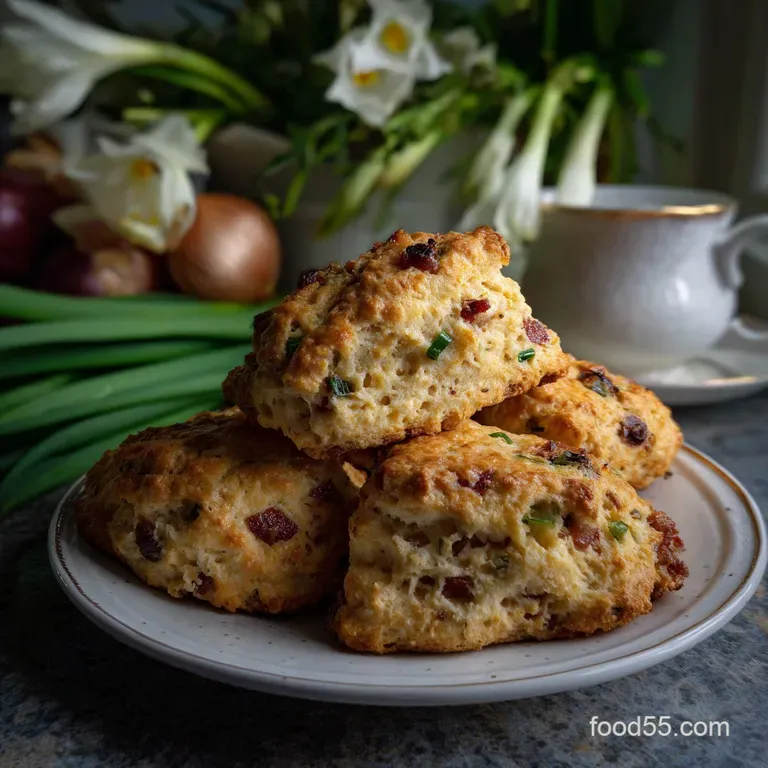
- Effort/Time: 38 minutes (active prep to golden finish)
- Flavor Hook: Smoky, mahogany-crisped bacon meets sharp white cheddar and zesty green aromatics.
- Perfect for: Shared-brunch tables, grab-and-go morning fuel, or as a side for spring soups.
- The Blueprint for Flaky Spring onion and bacon scones
- The Thermal Physics of Shattering Layers
- Essential Metrics for the Savory Baker
- Building the Flavor Foundation: Element Analysis
- Selecting the Right Arsenal for Precision Baking
- The Four-Phase Construction of Flaky Scones
- Engineering the Fix: Solving Texture Imbalances
- The Proportional Math of Batch Expansion
- Fact vs Fiction: Debunking Savory Pastry Folklore
- Flavor Preservation and Circular Kitchen Practices
- Crafting the Ideal Shared Table Experience
- Customizing Your Savory Scone Experience
- Common Questions
- 📝 Recipe Card
The Blueprint for Flaky Spring onion and bacon scones
The aroma of rendering bacon in a cast iron skillet is the ultimate signal that a shared meal is underway. I remember the first time I brought these Spring onion and bacon scones to a neighborhood gathering; the tray was empty before the coffee had even finished brewing.
There is something fundamentally connecting about breaking bread that is still warm from the oven, releasing a puff of steam scented with wood smoke and sharp onions.
To achieve that specific, shattering texture, we focus on the architecture of the dough. We aren't just mixing ingredients; we are building a series of micro layers. These onion and bacon scones rely on the contrast between the cold, solid fats and the intense heat of the oven.
When that cold butter hits the 200°C environment, it evaporates instantly, pushing the flour layers apart to create those coveted flaky pockets.
Whether you are preparing for a festive Easter brunch food spread or simply looking to bring people together on a slow Sunday morning, this recipe provides the framework. The addition of freshly cracked black pepper and sharp white cheddar ensures every bite has a complex, savory depth that lingers.
Let's crack on and master the physics of the perfect savory scone.
The Thermal Physics of Shattering Layers
The success of these Spring onion and bacon scones isn't magic it’s thermodynamics. Understanding how moisture and fat interact under heat allows us to manipulate the dough for maximum lift and tenderness.
- Steam Powered Leavening: Frozen butter grated into the flour remains as distinct "islands" of fat. In the oven, the water content in the butter (about 15 18%) flashes into steam, physically lifting the gluten sheets before the structure sets.
- Protein Shielding: By coating the flour particles with fat during the "rubbing in" phase, we limit the flour’s ability to bond with the buttermilk. This inhibits excessive gluten formation, ensuring the crumb remains velvety rather than bread like.
- Acid Base Neutralization: The buttermilk’s lactic acid reacts with the baking soda to create carbon dioxide bubbles. This happens the moment the wet and dry ingredients meet, which is why we work quickly to get the dough into the heat while the reaction is at its peak.
- Maillard Enhancement: The proteins in the bacon and the sugars in the flour undergo a Maillard reaction at temperatures above 140°C. This creates the mahogany colored crust and the deep, savory "umami" profile that defines these and bacon scones.
Essential Metrics for the Savory Baker
Precision is the bridge between a soggy biscuit and a restaurant quality bake. Follow these numeric checkpoints to ensure your Spring onion and bacon scones turn out with professional consistency.
| Metric | Target Value | Why It Matters |
|---|---|---|
| Butter Temperature | -1°C to 2°C (Frozen then grated) | Prevents fat from melting into the flour; essential for lamination. |
| Oven Temperature | 200°C (Preheated) | Instant heat is required to trigger the "oven spring" and steam lift. |
| Bacon Crispness | Mahogany brown / Sizzle subsides | Ensures fat is fully rendered so the scones don't become greasy. |
| Dough Thickness | 2.5 cm (1 inch) | Provides enough height for the center to stay moist while edges crisp. |
| Internal Temp (Optional) | 94°C | The definitive auditory/olfactory cue that the starch has gelatinized. |
Precision Checkpoints for Success
- Weight Control: 375g of all-purpose flour must be measured by scale. Volume measurements can vary by up to 20% depending on how the flour is packed, which leads to dry, sandy scones.
- The 10 Minute Chill: After shaping the dough and before baking, place the tray in the freezer for 10 minutes. This shocks the butter back to a solid state, ensuring the sharpest possible layers.
- The Egg Wash Shine: Using 1 large egg beaten with a teaspoon of water creates a protein rich glaze that traps moisture and produces a glossy, professional finish.
Building the Flavor Foundation: Element Analysis
Selecting the right materials is the first step in the culinary exchange. We use specific ingredients not just for taste, but for their physical properties in the oven.
| Ingredient | Chemical/Physical Role (Science) | The Pro Secret (Why This Matters) |
|---|---|---|
| Thick cut Smoked Bacon | Lipid rendering & Salt delivery | Provides the heavy "bass note" and fat for sautéing the onions. |
| Sharp White Cheddar | Fat-in-protein matrix | Melts to create "cheese lace" edges (frico) on the parchment paper. |
| Cold Buttermilk | Lactic acid catalyst | Denatures proteins for a tender crumb and activates the baking soda. |
| Frozen Unsalted Butter | Solid state lamination | Creates the physical separation of dough layers via steam expansion. |
Selecting Your Arsenal
- 375g All-purpose Flour: Why this? Medium protein (10 11%) provides enough structure to rise without becoming chewy.
- 115g Unsalted Butter: Why this? Controlling salt levels separately ensures the bacon doesn't make the bake overly briny.
- 240ml Cold Buttermilk: Why this? High viscosity prevents the dough from spreading too thin during the initial bake.
- 4 Large Spring Onions: Look for firm white bulbs and vibrant green tops to ensure a balance of pungent and grassy flavors in your onion and bacon scones.
Selecting the Right Arsenal for Precision Baking
To achieve the best results with these and bacon scones, you need tools that manage heat distribution and moisture.
- Lodge Cast Iron Skillet: Essential for rendering the 170g of bacon evenly. The thermal mass of cast iron prevents the pan temperature from dropping when the cold bacon is added.
- Box Grater: Used for the frozen butter. Grating creates uniform "flakes" of fat that distribute more evenly than hand cutting with a pastry blender.
- Large Stainless Steel Mixing Bowl: Keeps ingredients colder than plastic or glass during the mixing process.
- Silpat or Parchment Paper: Prevents the cheddar from sticking to the tray as it melts and caramelizes into savory "skirts" around the base of the scone.
- Bench Scraper: This is my favorite tool for the "fold and stack" method. It allows you to handle the dough without the heat of your hands melting the butter.
The Four Phase Construction of Flaky Scones
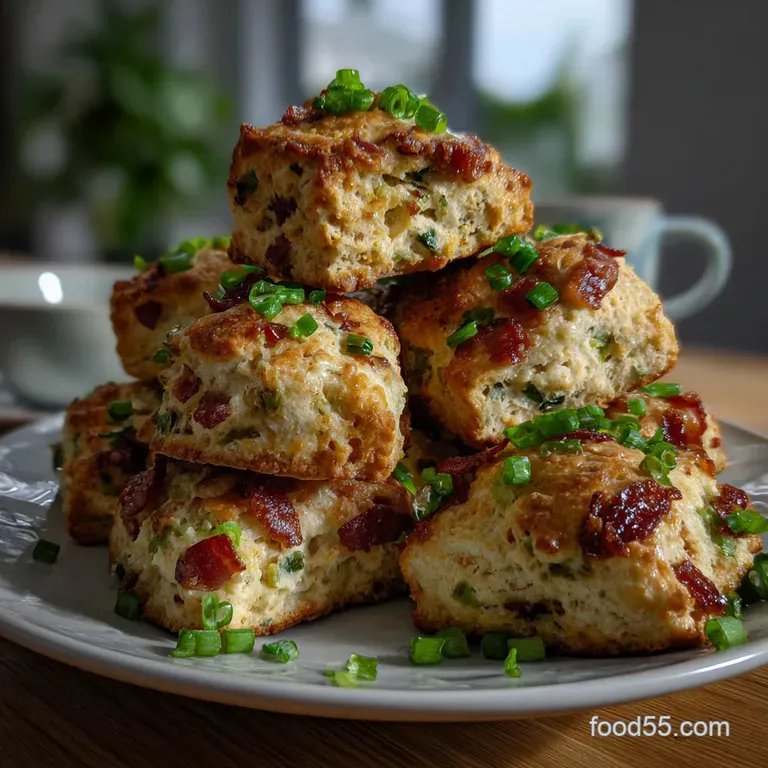
Building these Spring onion and bacon scones requires a gentle hand. We want to work the dough just enough to hold together, but not enough to develop a gluten network.
Phase 1: The Flavor Prep
- Dice 170g of thick cut smoked bacon into 1cm pieces.
- Sizzle bacon in a Lodge skillet over medium heat for 8 minutes until mahogany brown and the hissing subsides.
- Transfer bacon to a paper towel, reserving 1 tablespoon of fat in the pan.
- Sauté 50g of sliced spring onions in the bacon fat for 2 minutes until bright green and fragrant but not browned.
- Cool both ingredients completely in the fridge; adding warm ingredients to the dough will melt your butter instantly.
Phase 2: Integrating the Fat
- Whisk 375g flour, 1 tbsp baking powder, 1/2 tsp baking soda, 1 tsp sea salt, and 1/2 tsp black pepper in a large chilled bowl.
- Grate 115g of frozen butter directly into the flour mixture.
- Toss lightly with a fork until every butter flake is coated in flour and resembles coarse meal.
- Fold in 120g of grated sharp white cheddar, the chilled bacon, and the spring onions.
Phase 3: Hydration and Shaping
- Pour 240ml of cold buttermilk into the center of the dry ingredients.
- Stir with a spatula using only 5 8 strokes until a shaggy, wet mass forms with some dry flour remaining.
- Turn the dough onto a floured surface and pat into a rough rectangle.
- Fold the dough over itself (like a letter) three times. Note: This creates physical layers of fat and flour for maximum flakiness.
- Press into a circle 2.5cm thick and cut into 8 wedges.
Phase 4: The Final Bake
- Brush the tops with 1 beaten egg until glistening and fully coated.
- Bake at 200°C for 18 minutes until the tops are deeply golden and the bottoms sound hollow when tapped.
- Cool on the baking sheet for 5 minutes until the structure sets, then move to a wire rack.
Engineering the Fix: Solving Texture Imbalances
Even experienced bakers occasionally face a "scone fail." Most issues with Spring onion and bacon scones stem from temperature or hydration errors.
Why Your Scones Spread Into a Puddle
If your scones lose their shape and spread thin, the butter was likely too warm before it hit the oven. This causes the fat to leak out and lubricate the flour rather than creating steam pockets.
| Problem | Root Cause | The Fix | Pro Protocol |
|---|---|---|---|
| Flat/Spreading | Butter melted during mixing | Freeze the shaped dough for 15 mins before baking | Use a bench scraper instead of warm hands to fold the dough |
| Tough/Rubberby | Overworking the gluten | Stop mixing while flour streaks remain | Use the "folding" method rather than kneading |
| Soggy Center | Oven temp too low | Increase heat to 200°C; check with oven thermometer | Move the tray to the top rack for the final 3 minutes |
What Causes a Tough, Bread like Texture?
Over mixing is the primary culprit here. When you stir the buttermilk into the flour, gluten begins to form. If you keep stirring, those gluten strands become long and elastic great for sourdough, terrible for bacon scones.
Keep the mixing to a minimum; a few dry spots are better than a tough scone.
The Proportional Math of Batch Expansion
Doubling a recipe for a large shared meal isn't as simple as 1+1. When you increase the volume of Spring onion and bacon scones, the physics of the bake changes.
- 1. The Evaporation Paradox
- If you double the recipe, do not double the buttermilk immediately. The larger mass of dough retains more moisture; start with 1.75x the liquid and add more only if needed.
- 2. Thermal Mass & Thermodynamics
- A double batch of cold dough placed in the oven will drop the oven temperature significantly more than a single batch. Fix: Preheat your oven 15°C higher than the target, then drop it back down once the trays are inside.
- 3. The Square Cube Law
- Larger batches of dough generate more internal friction during mixing, which warms the butter faster. Mandatory instruction: Divide the dough and work in two smaller batches to keep the fat solid.
- 4. Batch Expansion Protocol
- If baking two trays at once, rotate them halfway through. The tray on the bottom rack will brown faster on the bottom, while the top tray will get more "top-down" radiant heat.
Fact vs Fiction: Debunking Savory Pastry Folklore
There are many "grandma's secrets" that don't hold up to modern food science. Let's clear the air.
- Myth: You must use a pastry cutter to incorporate the butter.
- Truth: A box grater is actually superior. It creates uniform, thin shards of frozen butter that distribute perfectly without the risk of over mixing.
- Myth: Adding more baking powder will make the scones taller.
- Truth: Too much leavening leads to a metallic, soapy taste and a structure that collapses because the bubbles grow too large to be supported by the delicate crumb.
- Myth: Scone dough should be smooth.
- Truth: If your dough is smooth, you’ve over handled it. Authentic Spring onion and bacon scones should look shaggy and slightly "messy" before they go into the oven.
Flavor Preservation and Circular Kitchen Practices
Proper storage ensures your hard work doesn't go to waste. These bacon and spring onion scones are best fresh, but they can be revived with the right technique.
Part A - Storage Protocols
- Fridge: 3 days in an airtight container. Reheat in a 175°C oven for 5 minutes to restore the "shatter" to the crust.
- Freeze: 2 months. Wrap individual wedges in plastic wrap, then place in a freezer bag. Bake directly from frozen at 190°C for 22 25 minutes.
- Microwave Warning: Never microwave a scone. It turns the fat into oil and makes the flour structure rubbery. Always use an oven or air fryer for reheating.
Part B - Zero Waste Philosophy
- Spring Onion Stems: Don't discard the dark green ends. Transform: Blend with olive oil and a pinch of salt to create a vibrant green drizzle. Science: The chlorophyll and volatile oils in the tips provide a fresh, sharp contrast to the heavy bacon.
- Bacon Fat: Don't pour it down the drain. Transform: Use the extra rendered fat to sauté vegetables or as the fat base for a Classic Pea Salad Recipe. Science: Smoked animal fats have a high smoke point and provide a "flavor memory" that ties the entire meal together.
- Cheese Rinds: If using a block of cheddar, save the hard rind. Transform: Toss it into a simmering soup or stock. Science: The rind is packed with concentrated umami (glutamates) that deepen the savory profile of any liquid.
Crafting the Ideal Shared Table Experience
A great scone is even better when paired with elements that cut through its richness. These Spring onion and bacon scones are the ultimate "social food."
For a balanced brunch, pair these with our Classic Pea Salad Recipe. The crisp peas and creamy dressing offer a textural counterpoint to the flaky pastry. If you are serving these as a late afternoon snack, a smoky Blood and Sand Cocktail recipe echoes the wood smoke notes of the bacon beautifully.
| If you want... | Do this... |
|---|---|
| Maximized Crunch | Sprinkle extra grated cheddar on top 5 mins before the bake ends. |
| A Lighter Feel | Serve with a dollop of Greek yogurt mixed with lemon zest. |
| Dinner Sophistication | Pair with our Glazed Salmon with recipe to turn the scones into a savory side. |
Customizing Your Savory Scone Experience
The beauty of this Spring onion scones recipe is its adaptability. While bacon and onion are the classic pairing, you can easily pivot the flavor profile.
To Make it Vegetarian
Replace the 170g of bacon with 150g of sun-dried tomatoes (packed in oil, drained) and a teaspoon of smoked paprika. This maintains the "mahogany" color and the smoky depth without using animal protein.
For a Spicy Kick
Fold in 1 finely diced jalapeño (seeds removed) along with the spring onions. The heat of the pepper cuts through the buttery crumb, creating a vibrant, "wake-up" flavor perfect for a spicy morning.
For an Extra Herby Finish
Add 2 tablespoons of fresh chopped chives or dill to the dry ingredients. This enhances the grassy notes of the spring onions and makes the scones feel even more like a celebration of the season.
This this recipe is about more than just food; it's about the joy of sharing something handmade. When you pull these mahogany topped Spring onion and bacon scones from the oven, you're not just serving breakfast you're creating a moment of connection.
Enjoy the process, respect the cold butter, and watch how quickly these disappear from your table.

Common Questions
Can I substitute buttermilk with regular milk?
No. Buttermilk provides necessary acidity to activate baking soda for rise. Regular milk lacks the lactic acid required for the proper acid base reaction that produces lift in these scones.
What is the minimum oven temperature required for flakiness?
200°C. Cold fat requires intense heat to vaporize into steam instantly. This rapid vaporization creates the internal pressure necessary to separate the dough layers, a process called oven spring.
Why did my scones spread into flat discs instead of rising tall?
The butter was too warm before the dough entered the oven. If the fat melts before the gluten sets, it leaks out, lubricating the flour layers instead of creating steam pockets.
- Always grate butter directly from the freezer
- Use the coldest possible buttermilk
- Work the dough as little as possible
Should I use salted or unsalted butter for this recipe?
Unsalted butter for precision control. Since the bacon already adds significant salinity, using unsalted fat allows you to perfectly calibrate the final sodium level of the scone.
Is it better to chop the bacon or dice it before rendering?
Dice it into small cubes (1cm). Dicing creates more surface area for quick rendering and ensures the small pieces distribute evenly throughout the dough matrix without sticking together.
Myth: You must let the scone dough rest before cutting.
Myth: You must let the scone dough rest before cutting. Reality: Resting actually warms the butter and encourages gluten development, resulting in tougher scones.
Can I use pre-shredded cheese instead of grating my own?
Grate the cheese fresh for superior melt quality. Pre-shredded cheese is coated in cellulose or starch to prevent clumping in the bag, which inhibits its ability to melt smoothly into the pastry.
Bacon Onion Scones Recipe
Ingredients:
Instructions:
Nutrition Facts:
| Calories | 395 kcal |
|---|---|
| Protein | 12g |
| Fat | 21g |
| Carbs | 38g |
| Fiber | 1.3g |
| Sugar | 1.8g |
| Sodium | 606mg |
