Easy Dinner Recipe with Roasted Chicken
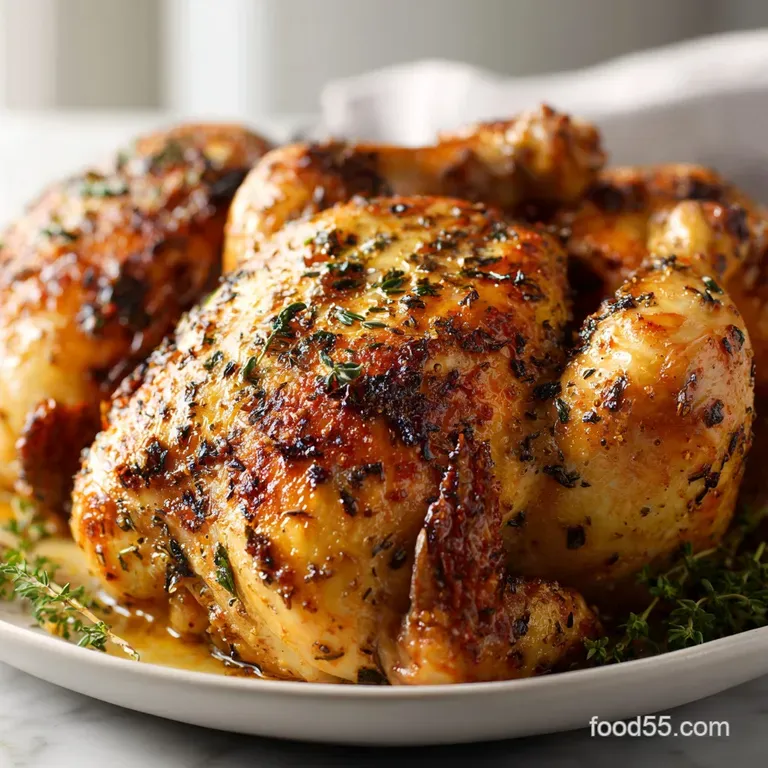
- Time: Active 15 mins, Passive 1 hours 15 mins, Total 1 hours 30 mins
- Flavor/Texture Hook: Shatter crisp skin and velvety, garlic infused meat
- Perfect for: Stress free Sunday family dinners or weekly meal prep
- Master the Ultimate Easy Dinner Recipe with Roasted Chicken
- Secrets Behind the Succulent Texture
- Simple Lessons from Kitchen Mistakes
- Vital Numbers for Roasting Success
- Quality Elements for Better Results
- Guided Path to Golden Skin
- Solutions for Common Cooking Issues
- Fresh Ideas for Variety
- Guidelines for Keeping Leftovers Fresh
- Complementary Dishes for the Table
- Critical Level of Sodium
- Recipe FAQs
- 📝 Recipe Card
Master the Ultimate Easy Dinner Recipe with Roasted Chicken
You know that specific, intoxicating scent that hits you the moment you walk through the door on a Sunday afternoon? It’s the smell of rendering chicken fat, rosemary, and caramelized garlic dancing together in a hot oven.
For years, I struggled with the "perfect" roast either the breast was dry as sawdust, or the skin was as limp and rubbery as a wet paper towel. I tried every gadget under the sun until I realized the secret wasn't a fancy pan; it was all about moisture management and heat.
I’ll never forget the time I tried to roast a bird for my first dinner party in a tiny studio apartment. I didn't pat the skin dry, and I stuffed it so full of onions that it basically steamed rather than roasted. It looked like a pale, sad boiled chicken.
We ended up ordering pizza, but that failure sent me on a mission. Now, this easy dinner recipe with roasted chicken is my absolute go to because it's foolproof, requires almost zero cleanup, and creates a meal that feels far more luxurious than the effort suggests.
We are going to treat this 1.7 kg (3.75 lb) bird with the respect it deserves, using a simple over high heat technique that ensures the skin crackles under your knife. By the time the internal temperature hits that sweet spot, your kitchen will smell like a five star bistro.
Let's get that oven preheated and walk through exactly how to make this work every single time.
Secrets Behind the Succulent Texture
Osmosis for Tender Meat
Mechanism: Salt draws internal moisture to the surface, dissolves into a brine, and is eventually reabsorbed deep into the muscle fibers. This breaks down tight protein structures, allowing the meat to retain more juice during the over high heat roasting process.
Benefits of the Maillard Reaction
Mechanism: At 140°C and above, amino acids and sugars react to create hundreds of new flavor compounds and a deep brown color. This transformation is what gives the skin its savory, complex depth and that irresistible sizzle.
Infusing Flavors with Schmaltz
Mechanism: As the chicken fat (schmaltz) renders out, it drips onto the vegetables below, frying them in animal fat. This creates a protective seal around the potatoes and carrots, keeping them creamy inside while they brown on the exterior.
| Chicken Weight | Target Temp | Resting Period | Visual Doneness Cue |
|---|---|---|---|
| 1.5 kg - 1.7 kg | 74°C (165°F) | 15 minutes | Juices run clear when thigh is pierced |
| 1.8 kg - 2.0 kg | 74°C (165°F) | 20 minutes | Leg joint moves loosely in the socket |
| 2.1 kg+ | 74°C (165°F) | 25 minutes | Skin is mahogany and pulls away from bone |
The resting period is probably the most ignored step in any easy dinner recipe with roasted chicken, but it is the difference between a juicy bird and a dry one. When you pull the chicken out, the muscle fibers are still tight and "squeezing" the juices; resting allows them to relax and soak that moisture back in.
Simple Lessons from Kitchen Mistakes
My biggest breakthrough happened when I stopped "basting" the bird. I used to think pouring juices over the top made it more moist, but all I was doing was ruining the crispy skin I worked so hard to get. Now, I leave it alone and let the dry heat do the heavy lifting.
This approach is much more reliable for a quick dinner recipe with rotisserie chicken flavor but with better home cooked quality.
| Ingredient | Science Role | Pro Secret |
|---|---|---|
| Kosher Salt | Protein Denaturant | Use coarse grains to provide more surface area for moisture extraction |
| Fresh Lemon | Acid Steam | The steam prevents the breast meat from drying out from the inside |
| Yellow Onion | Sugar Source | Onions caramelize in the schmaltz, adding a sweet base to the pan drippings |
Using the right salt is everything here. I always reach for kosher salt (like Diamond Crystal) because the hollow flakes cling to the skin better than standard table salt. If you use table salt, cut the measurement in half or you'll end up with a salt lick!
Vital Numbers for Roasting Success
- 1.7 kg (3.75 lb) whole chicken Why this? The perfect size for even cooking without the breast drying out.
- Substitute: Two smaller Cornish hens (reduce cook time by 20 mins).
- 30 g (2 tbsp) kosher salt Why this? Essential for drawing out moisture and seasoning the deep tissue.
- Substitute: Sea salt (use 1.5 tbsp).
- 5 g (1 tsp) cracked black pepper Why this? Adds a sharp, pungent bite to contrast the rich fat.
- Substitute: White pepper for a more subtle, earthy heat.
- 1 whole lemon, halved Why this? Provides aromatic steam and cuts through the richness of the schmaltz.
- Substitute: A small orange for a sweeter, floral aroma.
- 1 head of garlic, sliced crosswise Why this? Becomes buttery and sweet as it roasts in the cavity.
- Substitute: 2 tsp garlic powder rubbed into the skin if fresh is unavailable.
- 4 sprigs fresh thyme Why this? The essential woodsy herb for classic poultry flavor.
- Substitute: Fresh rosemary or dried herbs de Provence.
- 680 g (1.5 lbs) Yukon Gold potatoes, halved Why this? They hold their shape and get incredibly creamy when roasted.
- Substitute: Red bliss potatoes or sweet potatoes.
- 3 large carrots, cut into 5 cm chunks Why this? Provides a natural sweetness to the vegetable bed.
- Substitute: Parsnips or thick sliced fennel bulb.
- 1 large yellow onion, thick wedges Why this? Releases juices that prevent the pan from burning.
- Substitute: Red onion or 3 large shallots.
- 30 ml (2 tbsp) extra virgin olive oil Why this? Helps the seasonings stick and kickstarts the browning.
- Substitute: Melted unsalted butter for a richer, more traditional crust.
Quality Elements for Better Results
You don't need a pantry full of specialized tools for this easy dinner recipe with roasted chicken, but a heavy bottomed pan is non negotiable. I personally swear by a large cast iron skillet (like a 12 inch Lodge) because it holds heat like a champion and ensures the bottom of the chicken doesn't stay soggy.
If you don't have one, a heavy stainless steel roasting pan or even a sturdy rimmed baking sheet will do the trick.
Just make sure you have a reliable meat thermometer. Guessing by the color of the skin is a recipe for heartbreak; checking the temperature is the only way to be 100% sure your bird is safe and juicy. If you are looking for more ways to use these tools, my Grilled Chicken Gyros recipe also benefits from a over high heat cast iron sear.
Guided Path to Golden Skin
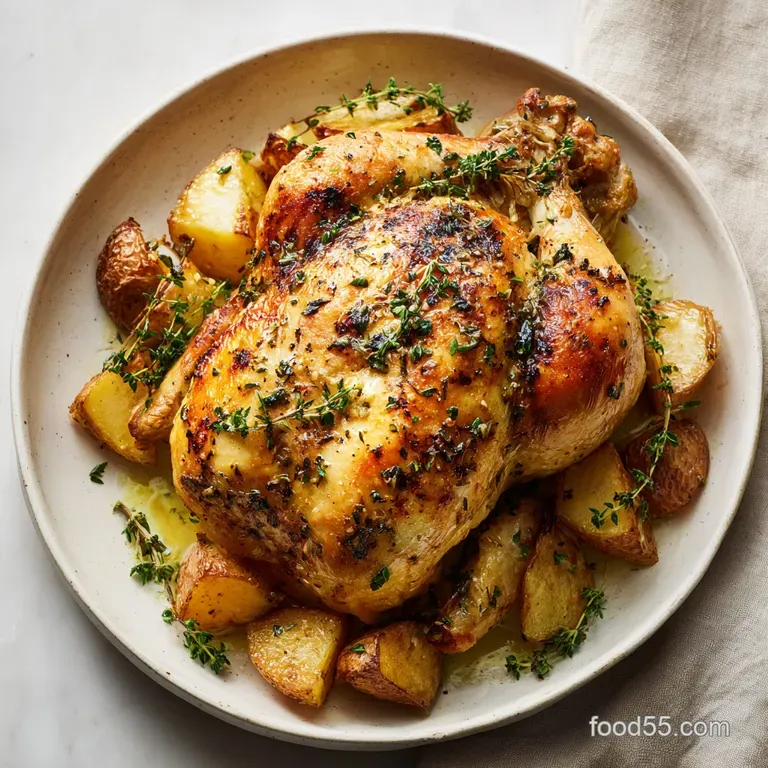
- Preheat the Environment. Set your oven to 200°C (400°F) and place your roasting pan inside to get hot. Note: Starting with a hot pan prevents the vegetables from sticking.
- Dehydrate the Skin. Pat the 1.7 kg chicken dry with paper towels until it feels like parchment paper. until no moisture remains.
- Season the Cavity. Stuff the lemon halves, garlic head, and thyme sprigs inside the bird. Note: This creates an aromatic sauna that flavors the meat from within.
- Truss the Legs. Tie the legs together with kitchen twine to ensure the bird roasts evenly. until the shape is compact.
- Oil and Salt. Rub the olive oil over the skin and sprinkle the 30 g of kosher salt and pepper everywhere. Note: Don't forget the underside of the wings!
- Prepare the Base. Toss the potatoes, carrots, and onions in a bowl with a splash of oil and salt.
- Arrange the Pan. Carefully pull the hot pan from the oven and spread the vegetables into a single layer.
- Position the Bird. Place the chicken directly on top of the vegetables. until it sits securely.
- Roast to Perfection. Slide the pan into the oven and roast for 1 hour 15 mins. until the skin is mahogany and crackling.
- Final Rest. Transfer the chicken to a board and let it sit for 15 mins before carving. Note: This allows the internal juices to redistribute perfectly.
Solutions for Common Cooking Issues
Solving Rubbery Chicken Skin
This usually happens because there was too much moisture in the oven or on the bird. If you don't pat the skin dry, the heat spends its energy evaporating that water instead of crisping the fat.
Next time, try leaving the salted chicken uncovered in the fridge for 4 hours before roasting to "air dry" the skin.
Addressing Undercooked Leg Joints
Sometimes the breast finishes before the dark meat near the bone is done. This is often because the legs were tucked too tightly or the oven has hot spots. If the breast hits 74°C but the legs look pink, carve the legs off and pop them back into the pan for another 10 minutes while the breast rests.
| Problem | Root Cause | Solution |
|---|---|---|
| Burnt Vegetables | Pan was too crowded or vegetables cut too small | Use larger chunks (5 cm) and a larger roasting pan |
| Dry Breast Meat | Chicken was overcooked or not rested | Pull bird at 71°C; carryover cooking hits 74°C during rest |
| Pale, Soft Skin | Oven temperature was too low | Ensure oven is fully preheated to 200°C before the bird goes in |
Common Mistakes Checklist - ✓ Never wash your chicken; it spreads bacteria and makes the skin impossible to crisp. - ✓ Avoid "peeking" by opening the oven door; you lose 25 degrees of heat every time. - ✓ Don't skip the trussing; loose legs cook too fast and can dry out.
- ✓ Use a thermometer in the thickest part of the thigh, not touching the bone. - ✓ Let the bird reach room temperature for 30 minutes before roasting for even heat penetration.
Fresh Ideas for Variety
If you want to move away from the classic lemon thyme profile, you can easily adapt this easy dinner recipe with roasted chicken to suit your mood. For a Mediterranean twist, swap the thyme for oregano and add Kalamata olives and cherry tomatoes to the vegetable bed during the last 20 minutes of roasting.
The tomatoes will burst and create a natural sauce that is incredible with crusty bread.
For a faster alternative on a busy Tuesday, you can use the same vegetable bed technique for an easy dinner recipe with rotisserie chicken. Simply roast the vegetables alone at 200°C for 30 minutes, then nestle a store-bought rotisserie chicken on top for the final 15 minutes to warm through and crisp up. If you're looking for something with a creamy kick, try The Creamy Garlic recipe which uses similar aromatics but in a velvety sauce format.
| Method | Cook Time | Texture | Best For |
|---|---|---|---|
| High Heat (200°C) | 1 hour 15 mins | Shatter crisp skin | Classic Sunday dinner |
| Low & Slow (150°C) | 2 hours 30 mins | Fall off-bone meat | When you have all afternoon |
| Spatchcock (200°C) | 45 minutes | Maximum skin surface | Quickest possible roast |
Guidelines for Keeping Leftovers Fresh
Storage: This roasted chicken keeps beautifully in the fridge for up to 4 days. Store the meat and vegetables in an airtight glass container. To keep the skin from getting too soggy, store it skin side up and don't stack pieces.
Freezing: You can freeze the carved meat (off the bone) for up to 3 months. I recommend freezing it in 200g portions in freezer bags for easy thawing. Note that the roasted vegetables don't freeze well as they become mushy upon thawing.
Reheating: Avoid the microwave if you want to keep the texture. Place the chicken in a 175°C oven for 10-12 minutes with a splash of water or broth in the bottom of the pan to keep it moist.
Zero Waste Tip: Never throw away the carcass! Toss the bones into a pot with some celery scraps, an extra onion, and water. Simmer for 4 hours to make a gold standard bone broth that beats anything in a carton.
Complementary Dishes for the Table
This chicken is a complete meal on its own thanks to the potatoes and carrots, but a bright, acidic side dish really makes it sing. A simple arugula salad with a heavy lemon vinaigrette cuts through the richness of the schmaltz roasted vegetables. If you have any leftover chicken the next day, it's the perfect base for my How to Make recipe — just skip the breading and top the roasted meat with marinara and mozzarella.
Another great idea for simple dinner recipes with rotisserie chicken or roasted leftovers is to shred the meat and toss it into a quick pasta. The velvety juices from the roasting pan can be whisked with a little pasta water and parmesan to create a "cheater's" sauce that tastes like it took hours.
Whatever you do, make sure you have plenty of people to share it with there’s nothing like a roast chicken to bring the whole house together.
Critical Level of Sodium
2140 mg mg of sodium per serving (93% of daily value)
The American Heart Association recommends limiting sodium intake to about 2,300mg per day for overall cardiovascular health.
Tips to Reduce Sodium in Your Roasted Chicken and Vegetables:
-
Reduce Salt by Half-25%
Instead of 2 tbsp of kosher salt, try using only 1 tbsp. You can always add a pinch more at the end if needed, but it's easier to add than to remove. This reduces sodium significantly, while still providing flavor.
-
Embrace Lemon Power-15%
Enhance the chicken and vegetables with more lemon juice and zest. The acidity brightens the flavors and can help to reduce the need for salt. Squeeze extra lemon juice over the chicken and vegetables after roasting for a burst of flavor.
-
Go Heavy on Herbs-10%
Increase the amount of fresh thyme used, or add other flavorful herbs like rosemary or oregano. Fresh herbs contribute to the overall taste and reduce your reliance on salt. Using a generous amount of fresh herbs creates a more aromatic and delicious dish.
-
Spice It Up!-5%
Add a pinch of red pepper flakes or a dash of smoked paprika to boost the flavor profile. These spices can provide depth and complexity, allowing you to reduce the amount of salt used without sacrificing taste.
-
Caramelize Onions
Take your time when cooking the onions to develop their natural sweetness. Caramelizing the onions adds depth and richness, which can help to balance the flavors and reduce the need for added salt.
Recipe FAQs
What internal temperature guarantees the easiest dinner roasted chicken is both safe and juicy?
74°C (165°F). You must pull the bird when it reaches this temperature, usually checking the thickest part of the thigh, and then allow it to rest for at least 15 minutes for the residual heat to finish the cooking process.
How to achieve shatteringly crisp skin on this easy roasted chicken?
Pat the skin completely dry before seasoning. Excess moisture steams the skin instead of crisping it; use paper towels until the surface feels like parchment paper before rubbing with oil and salt.
Is it necessary to truss the chicken legs for this recipe?
Yes, trussing is highly recommended. Tying the legs together creates a more compact shape, which ensures that the breast and thighs finish cooking around the same time, preventing uneven doneness.
How do I prevent the chicken from drying out if I roast it longer than the specified time?
Use a meat thermometer and stop the cooking process early. If you are worried about overcooking, pull the bird when the internal temp is 71°C; the carryover cooking during the 15-minute rest will bring it safely to the required 74°C.
Can I substitute the root vegetables underneath the bird with different items?
Yes, you can use most firm vegetables. They absorb the flavorful chicken drippings (schmaltz) beautifully; for something quicker and lighter, consider using fennel or onions, similar to how aromatics are used in the Chicken Marsala recipe.
Why is salting the chicken 24 hours ahead considered the secret to the best flavor?
Dry brining allows the salt to penetrate deeper tissue before surface moisture evaporates. This process breaks down muscle proteins, leading to meat that is seasoned throughout and retains significantly more moisture during the high heat roast.
How should I reheat leftover roasted chicken while preserving the texture?
Reheat in a moderate oven (175°C) with added moisture. Place the carved chicken in a dish with a splash of broth or water and cover loosely with foil; this steaming action prevents the meat from becoming dry, a technique also useful when warming up poultry for dishes like the Easiest Turkey Meatloaf recipe.
Easy Roasted Chicken Dinner
Ingredients:
Instructions:
Nutrition Facts:
| Calories | 798 calories |
|---|---|
| Protein | 65 g |
| Fat | 41 g |
| Carbs | 39 g |
| Fiber | 6 g |
| Sugar | 7 g |
| Sodium | 2140 mg |
