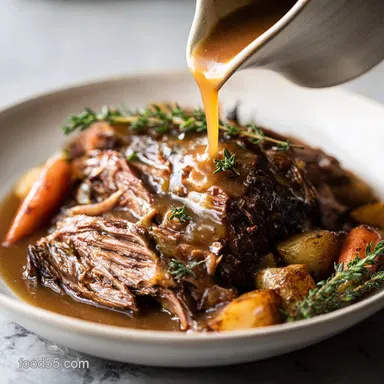
Beef Pot Roast with Beef Chuck

- Prep30 Mins
- Cook3 Hrs 30 Mins
- Servings8
- Time: 30 min active + 210 min cooking
- Flavor & Texture: Rich, savory, and tender
- Perfect for: Family Sunday dinner
Beef Pot Roast: A Comfort Classic
There is something about a slow-cooked roast that feels like a warm hug. It is a dish that has always been about gathering people around a table, filling the house with an aroma that tells everyone dinner is almost ready. It is a communal meal, meant for sharing and slow conversations.
This recipe is all about patience. You start with a tough piece of beef and, through a few hours of gentle heat, you turn it into something that melts the moment it hits your tongue. It is a reliable way to feed a crowd without spending the whole evening standing over the stove.
You can expect a deep, dark golden roast and root vegetables that have soaked up all the savory juices. It is hearty, honest food that brings a sense of connection to any meal.
Why the Texture Works
- Collagen Breakdown: Low heat melts the tough connective tissues in the beef into gelatin. This is what gives the meat that tender, succulent feel.
- Layered Flavor: Searing the meat and then sautéing aromatics in that same fat builds a deep base that you just cannot get from simmering alone.
| Method | Time | Texture | Best For |
|---|---|---|---|
| Dutch Oven | 4 hours | Rich, deep golden brown crust | Sunday feast |
| Slow Cooker | 8 hours | Very soft, pale | Easy prep |
Recipe Specs
I usually find that a 3½ lb roast is the sweet spot for most Dutch ovens. If you go much larger, you risk overcrowding the pan, which means you won't get that deep brown sear on the meat.
Chef: Pat the meat bone-dry with paper towels before seasoning. If the beef is damp, it will steam instead of sear, and you'll miss out on that dark crust.
Equipment Needed
You will need a 6-quart Dutch oven. A heavy-bottomed pot is a must here because it holds the heat evenly and prevents the bottom of the roast from scorching during the long braise.
The Grocery List
- 3½ lb beef chuck roast Why this? High collagen content for tenderness
- 2 tbsp vegetable oil
- 2 tsp kosher salt
- 1 tsp freshly cracked black pepper
- 1 large yellow onion, coarsely chopped
- 4 cloves garlic, smashed
- 2 cups beef stock (with a splash of vinegar) Why this? Acidity balances the richness
- 2 tbsp tomato paste
- 1 tbsp Worcestershire sauce
- 2 sprigs fresh rosemary
- 3 sprigs fresh thyme
- 1 lb carrots, cut into 2-inch chunks
- 1½ lb Yukon Gold potatoes, halved or quartered
- 1 cup frozen peas
- 2 tbsp cornstarch
- 3 tbsp cold water
| Original Ingredient | Substitute | Why It Works |
|---|---|---|
| Yukon Gold Potatoes | Red Potatoes | Similar waxy texture. Note: Holds shape well |
| Fresh Rosemary/Thyme | Dried Herbs | Concentrated flavor. Note: Use 1 tsp dried instead of sprigs |
Step by step
1. Creating the Flavor Crust
Preheat the oven to 325°F (160°C). Pat the beef chuck roast dry and season it well with 2 tsp salt and 1 tsp pepper. Set a Dutch oven over medium-high heat and add 2 tbsp oil. Brown the beef for 5 to 7 minutes per side.
Wait until a deep golden brown crust forms on all sides, then move the meat to a plate. You should notice a nutty, toasted aroma.

2. Building the Aromatics
Stir in the chopped onion. Sauté for 3 to 5 minutes until they turn translucent, ensuring you scrape up any brown bits. Mix in the smashed garlic and 2 tbsp tomato paste, cooking for 1 minute until the paste is a deep brick red.
3. The Low and Slow Braise
Deglaze by pouring in 2 cups beef stock (and a splash of vinegar), stirring constantly. Return the beef to the pot along with rosemary, thyme, and 1 tbsp Worcestershire sauce. Cover with a tight lid and slide it into the oven. Braise for 2 hours for a 3 lb roast, or 2.5 hours for 4 lbs.
4. Timing the Vegetables
Introduce 1 lb carrots and 1½ lb potatoes, nestling them around the beef so they are partially submerged. Cook for the remaining 60 to 90 minutes. The beef is done when it reaches 195°F to 205°F (90°C to 96°C) and a fork twists through the meat without resistance.

5. Finishing the Gravy
Transfer the roast and vegetables to a platter and tent with foil to rest. Strain the liquid into a bowl and skim the surface oil. Mix 2 tbsp cornstarch with 3 tbsp cold water, then whisk this slurry into the simmering liquid over medium heat. Stir until the sauce is a glossy, velvety gravy.
Fold in 1 cup frozen peas at the very end.

Troubleshooting
Most beef Pot roast mistakes stem from how heat is handled. Without a proper sear, the sauce loses its complexity. Thin gravy usually points to a problem with the slurry.
Fixing a Thin Sauce
If the gravy remains thin, the slurry probably hasn't cooked through. Give it another 2 minutes of bubbling to let the starch fully activate.
Preventing Grey Meat
Grey beef is a sign the pan wasn't sufficiently hot. In the future, ensure the oil is piping hot before placing the meat in the pan.
Dealing with Tough Meat
If the beef is chewy, the collagen hasn't fully broken down yet. Return it to the oven for an additional 30 minutes.
| Problem | Fix |
|---|---|
| Watery Gravy | Simmer slurry longer |
| Dull Meat Color | Increase sear heat |
| Tough Texture | Braise for more time |
The Truth About Searing
Contrary to popular belief, searing doesn't "lock in juices." Moisture loss happens regardless. The goal is the crust, which provides the rich, savory flavors essential to the dish.
Storage and Reheating
Store remaining beef Pot roast and vegetables in airtight containers; they will stay fresh in the refrigerator for 4 days, per the USDA's guidelines on leftovers.
The dish also freezes well. Transfer the meat and gravy into a freezer-compatible bag for 3 months. To reheat, simmer in a covered pot over low heat with a touch of additional beef stock. Confirm the leftovers reach 165°F (74°C) before serving.
When reheating cooked leftovers, check with a food thermometer that the center reaches 165°F (74°C); the appliance temperature and time alone do not confirm this.
Great Side Pairings

This is a complete meal on its own, but a simple side of steamed green beans or a crisp garden salad helps cut through the richness. I also like a dollop of horseradish cream on the side of the plate for a bit of a kick.
Customizing the Roast
For an earthier taste, feel free to substitute the carrots with turnip or parsnips. For a more contemporary twist, stir a splash of balsamic vinegar into the stock to add a bright tang.
This dish is best enjoyed with warm Sourdough Dinner Rolls, perfect for mopping up every bit of the savory gravy.
High Sodium Content
943 mg per portion (41% of the daily value)
The American Heart Association suggests limiting sodium intake to 2,300 mg per day
Ways to Lower Sodium
-
Swap the Beef Stock
Use low-sodium or unsalted beef broth instead of standard stock to cut down on the primary salt source.
-
Cut Back on Salt
Limit or skip the 2 tsp of kosher salt, as the broth and sauces provide plenty of sodium.
-
Moderate Worcestershire Sauce
Use a smaller amount of Worcestershire sauce or replace it with a dash of balsamic vinegar for a similar depth of flavor.
-
Opt for Salt-Free Tomato Paste
Choose no-salt-added tomato paste to avoid the hidden sodium typically found in canned pastes.
-
Enhance Fresh Aromatics
Increase the amount of fresh thyme, rosemary, and black pepper to build a rich flavor profile without extra salt.
Your Questions, Answered
Why is the sauce thin and watery instead of thick like gravy?
Check your cornstarch slurry. If the liquid did not simmer after you stirred in the cornstarch and water mixture, the starch will not activate to thicken the gravy.
How do I stop the gravy from tasting greasy when the cut is fatty?
Strain the cooking liquid and skim the fat. Use a spoon or fat separator to remove the oil floating on top before you begin thickening the sauce.
Why did the beef brown grey or dull instead of a deep crust?
Pat the beef completely dry before searing. Surface moisture creates steam in the pan, which prevents the meat from developing a deep golden brown crust.
Can I make this in a slow cooker or on high heat?
Yes, a slow cooker is a common alternative. It differs by using lower, consistent heat over a longer duration. This meal pairs perfectly with sourdough rolls to soak up the gravy.
Do lean cuts like blade or London broil work for this?
No, they often turn out dry or tough. These cuts lack the connective tissue and fat found in chuck roast, which are essential for keeping the meat tender during a long braise.
Beef Pot Roast: Dutch Oven Method