The Chefs Choice Garlic Butter and Thymecrusted Roast Beef
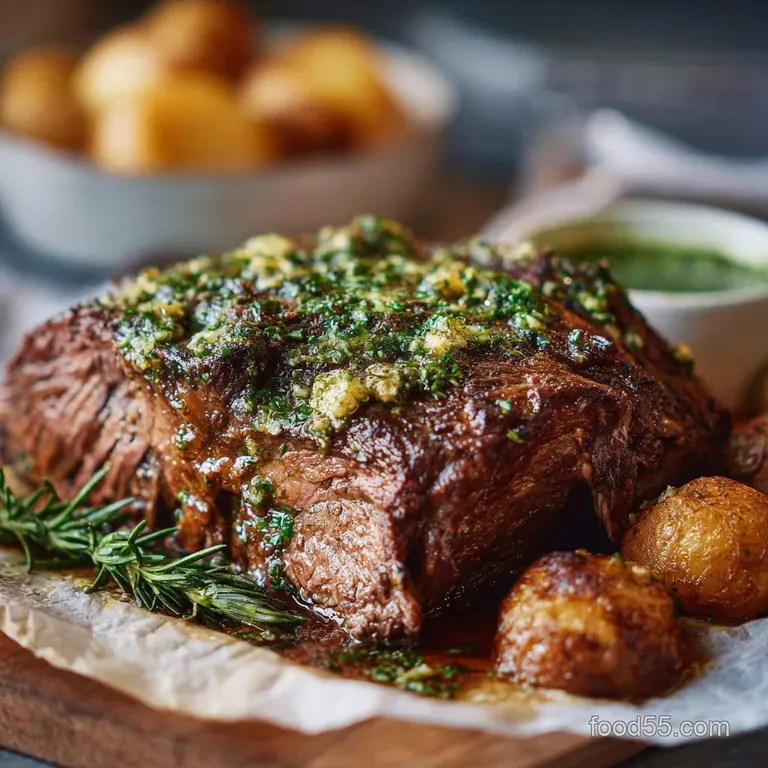
- Elevating the Classic: Why This Garlic Butter Herb Roast Beef is a Showstopper
- The Essential Shopping List for a Decadent Roast Beef Experience
- The Art of the Roast: Step-by-Step Culinary Blueprint
- Expert Tips and Troubleshooting for Your Garlic Butter Herb Roast Beef
- Making the Most of This Centerpiece: Serving and Storage
- Recipe FAQs
- 📝 Recipe Card
Elevating the Classic: Why This Garlic Butter Herb Roast Beef is a Showstopper
I’m going to be straight with you: roast beef can be a massive disappointment. We’ve all had those dried out, sad slices served at a carvery that look more like shoe leather than a Sunday lunch centrepiece. We deserve better!
That’s why I obsessed over finding the formula for the perfect roast. This Garlic Butter Herb Roast Beef recipe is the culmination of years of failed experiments and one brilliant flash of inspiration involving copious amounts of softened butter.
This isn't just about cooking beef; it’s about creating an aromatic, crispy shield that protects the meat while simultaneously infusing it with flavour. If you want a truly show stopping dinner that requires minimal actual skill but maximum impact, this is it.
Trust me, the aroma alone is enough to bring people running.
The Magic of Compound Butter: Flavor Penetration 101
Compound butter isn't just a fancy restaurant trick; it's structural engineering for flavour. When you mix softened butter with minced garlic, fresh herbs (rosemary and thyme are key here), and salt, you create a beautiful paste. When this paste hits the initial high heat of the oven, it melts slowly.
It performs three incredible tasks: First, it acts like a self basting mechanism, dripping into the crevices and keeping the surface moist. Second, it creates the perfect environment for the Maillard reaction, yielding that deep, golden brown crust we all crave.
Third, and most importantly, it carries those volatile herb and garlic oils deep into the meat fibers as the roast heats up. Right? It’s genius.
The Secret to a Perfect Medium Rare Center
People get intimidated by roast beef because they fear the internal temperature. They rely on "X minutes per pound." Stop doing that! You absolutely must rely on a thermometer. I don’t care if you think you have magic cooking fingers (I did too, and I was wrong).
The real secret is carryover cooking. Meat continues to cook once you pull it from the oven because the external heat is still transferring inward. This is crucial for Perfect Roast Beef. If you want 135°F (a perfect medium rare), you must pull the roast when it hits about 130°F.
If you wait until it hits 135°F in the oven, it will be 145°F when you finally slice it, and that’s just a tragedy.
Choosing Your Cut: Ribeye vs. Sirloin for Optimum Results
You have two main paths here for the best Roast Beef Recipes. The high fat, high price path, or the lean, manageable path.
| Cut | Best For | Flavor Profile |
|---|---|---|
| Ribeye (Prime Rib) | Special Occasions, Max Tenderness | High fat marbling, incredibly rich |
| Sirloin Tip / Eye of Round | Sunday Lunch, Great Value | Leaner, requires careful cooking, holds shape well |
I generally default to a Sirloin Tip or Eye of Round for this specific Garlic Butter Herb Roast Beef recipe. Why? Because the compound butter brings so much flavour and fat to the party that you don't necessarily need the intense marbling of a Prime Rib.
Plus, it’s far cheaper, making this a reliable show stopping dinner any day of the week, not just holidays. Ask your butcher to tie the roast if it isn’t already. Uniform shape means uniform cooking.
The Essential Shopping List for a Decadent Roast Beef Experience
The Herb Trio: Selecting Fresh Rosemary, Thyme, and Sage
Please, please, please use fresh herbs for this. Dried herbs (especially dried rosemary) are dull and dusty. The aromatic impact we are aiming for comes from the oils in the fresh leaves. I stick with rosemary and thyme because they are robust and earthy, perfect complements for beef.
If you want to add a third layer of depth, a little bit of finely chopped sage is heavenly. I’m only talking about a teaspoon, though. Sage is powerful.
Fat Matters: Salted vs. Unsalted Butter Debate
Always use unsalted butter when creating a compound rub. This is non-negotiable, particularly when aiming for perfect seasoning. Why? Because butter producers vary widely in how much salt they add.
If you use salted butter, and then also apply a heavy layer of coarse salt (which we need for the crust!), you risk over salting the exterior and making it unpleasantly sharp. Unsalted lets you control the salinity perfectly.
Must Have Tools: From Roasting Pan to Instant Read Thermometer
You need a solid, sturdy roasting pan and, ideally, a rack inside it. The rack lifts the roast up off the bottom of the pan, allowing hot air to circulate all the way around the joint. This helps form a beautiful crust on the bottom, too.
But honestly, the single most important tool is the instant read thermometer. I prefer a digital one because they are lightning fast. If you don't own one, consider it your new best friend. It will save you from dry meat disasters forever.
Choosing the Right Salt: Coarse Kosher or Flaky Sea Salt?
This isn’t the place for regular iodized table salt. It’s too fine and will dissolve immediately into the moisture, resulting in a thin, watery seasoning layer. We need coarse salt. I use coarse kosher salt because it adheres well and provides that brilliant textural bite on the crust.
Maldon flaky sea salt is also fantastic, providing that beautiful crunch, but it costs a little more. Either way, you need crystals large enough to physically stick to the roast.
Related Recipes Worth Trying
- The Best Roasted Orange Beet Salad Sunshine Vinaigrette Goat Cheese — Earthy tender roasted beets meet bright oranges and creamy goat cheese in this easy orange beet salad Dressed with a vibrant honey vinaigrette A fresh salad...
- Garlic Butter Pork Bites with Lemon Green Beans Quick 30Min Dinner — Stop queuing for dinner These luscious Garlic Butter Pork Bites with Lemon Green Beans are the ultimate quick healthy dinner recipe Perfectly seared pork in...
- Caramelised Roasted Butternut Squash Recipes Maple Glaze and Crispy Sage — Foolproof Roasted Butternut Squash Recipes Achieve perfectly tender winter squash recipes with a silky maple glaze and aromatic crispy sage Simple to nail...
The Art of the Roast: step-by-step Culinary Blueprint
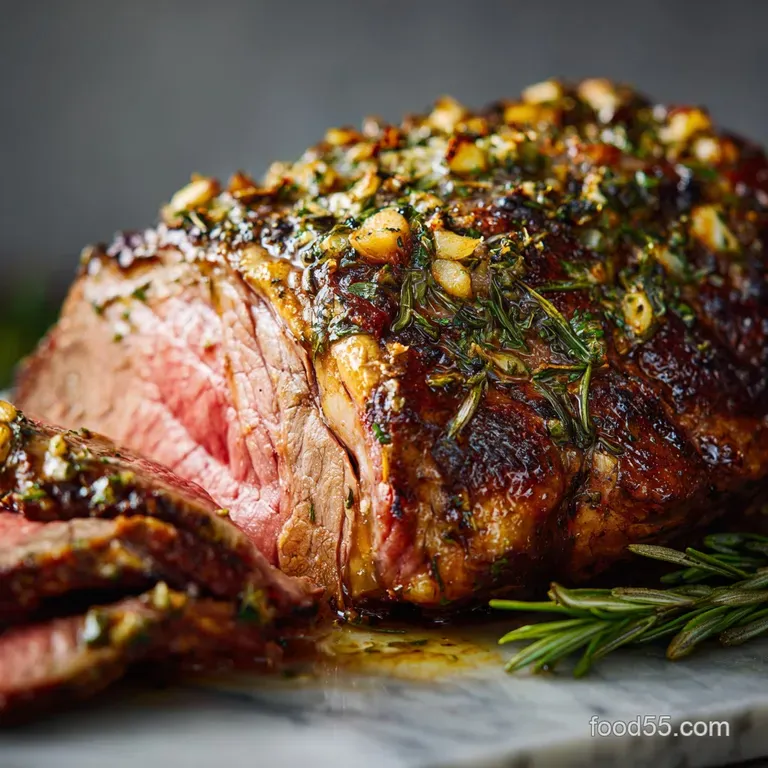
Pre-Roast Prep: Tempering and Sealing the Beef
This is where the magic (or the failure) begins. Take the roast out of the fridge at least an hour before you want to cook it. I usually aim for two hours if the kitchen is cool. This tempering process ensures that the beef cooks evenly.
If you put cold beef in the oven, the exterior overcooks dramatically while the center struggles to heat up, leading to that sad grey ring around a rare centre.
Pat the roast bone dry with paper towels aggressively dry it! Then rub it with a tiny bit of olive oil.
Creating the Aromatic Herb Butter Slather
Now for the fun part. Take your softened compound butter mixture (garlic, herbs, pepper) and literally smear it all over the beef. Don’t be shy. Get every surface coated in a thick, glorious layer. Then, grab your coarse salt and press it into the butter.
The butter acts as the adhesive for that crunchy salt crust.
High Heat Start: Achieving That Crispy, Golden Crust
We are using the reverse sear’s cousin: the high heat blast method. Preheat the oven high (450°F / 230°C). Slide the roast in on the rack. The high heat immediately sears the outside, forming that intense golden colour and crisping the butter into a gorgeous shell.
Cook at this temp for 15 minutes, maximum.
Immediately (and I mean immediately ) reduce the temperature to 350°F (180°C). Do not open the oven door during the reduction. Let it continue cooking until it nears your target temp.
Crucial Step: The Rest Period and Temperature Targets
You must use your thermometer now. Start checking around the 30-minute mark if you have a smaller roast. Insert the probe into the thickest part, avoiding the fat cap and any string.
CRITICAL WARNING: Remove the roast from the oven 5 to 10 degrees Fahrenheit below your final target temperature. It will continue cooking rapidly. If you pull it at 130°F, you'll land precisely at 135 140°F (perfect medium rare) after resting. Do not skip the rest.
Once you hit that number, pull it out, put it on a cutting board, and tent it loosely with foil. Set a timer for 15 minutes. This is non-negotiable. If you slice it now, all those beautiful, internal juices will flood your cutting board.
If you wait, they redistribute into the muscle fibres, giving you juicy slices every single time.
Expert Tips and Troubleshooting for Your Garlic Butter Herb Roast Beef
- Prep the Pan: Pour a cup of beef stock or even just water into the bottom of the roasting pan before you put the beef in. This prevents the herb butter drippings from burning and smoking halfway through the cook, and those drippings make the best gravy later.
- Invest in Good Salt: Seriously, cheap table salt will ruin the crust texture. A big box of Kosher salt lasts forever and makes every savoury dish better.
- Check Multiple Spots: When you probe the roast, check the temperature in two or three spots. One side might be cooking faster if your oven runs hot unevenly.
- Don't Overcrowd: If you try to roast potatoes and the beef at the same time, the oven temperature will fluctuate, and the roast will take longer and potentially steam instead of crisping. Cook the roast first, rest it, and then crank the oven back up for your sides.
Making the Most of This Centerpiece: Serving and Storage
Troubleshooting Dry Edges: The Butcher's Secret
Are your end slices always slightly drier than the center? That’s normal, but we can fix it. If you’re using a leaner cut like sirloin, ask your butcher for a piece of beef suet or trimmings. Place a couple of chunks of this fat underneath the roast before cooking.
As the roast cooks, that fat renders, bubbling up and basting the bottom edge, preventing it from drying out.
Storing and Reheating Leftover Roast Beef Safely
We all want perfect leftovers, but let's be realistic: roast beef is one of the hardest things to reheat without destroying the texture. Reheating it whole will absolutely take it from medium rare to grey and tough.
The best solution is to store leftovers whole and tightly wrapped in the fridge. When you want to use it, carve it paper thin (shave it, almost) against the grain. You can then use the thin slices cold for sandwiches, or drape them over hot, rich gravy for about 30 seconds to warm them up without cooking them further.
Flavor Variations: Introducing Smoked Paprika or Chili Flakes
You can easily tweak this Herb Butter Roast. Want a smoky note? Add 1 teaspoon of smoked paprika to the compound butter. If you want a little bite, stir in 1/2 teaspoon of red chili flakes. Or, for a classic touch, mix in a tablespoon of sharp prepared horseradish instead of Dijon mustard.
Serving Pairings: Gravies and Classic Side Dishes
When I make this Sunday Lunch Roast Beef, there are three non-negotiables:
- Yorkshire Puddings: They are the law. Crispy, massive, and catching all that gorgeous gravy.
- Gravy: Use the pan drippings (deglazed with a little red wine or stock) to make a rich, thick gravy. Skim the fat off first, though!
- Creamy Potatoes: Either incredibly creamy mashed potatoes or decadent potatoes au gratin. You need something soft to contrast the crusty roast.
Recipe FAQs
I'm nervous about getting the temperature right. What are the best internal temperatures for a proper Garlic Butter Herb Roast Beef?
The secret lies in removing the beef 5°F (3°C) before it hits your target, allowing for 'carryover cooking.' For that sought after medium rare pink right across the middle, pull the roast when it reaches 130°F (54°C).
Do I really need to let my roast rest for ages, or is that just an old wives' tale?
Resting is non-negotiable it's the reason professional kitchens swear by it! A mandatory 15-minute rest allows the muscle fibres to relax and redistribute the juices, ensuring the succulence stays in the beef, not pooling on your cutting board.
How do I stop the beautiful garlic butter crust from burning or sliding off during the initial high heat blast?
Firstly, pat the beef aggressively dry before you start; any surface moisture prevents the crust from adhering properly. Secondly, ensure the compound butter is softened but not melted when you apply it, pressing it firmly into the meat to create a thick, stable coat.
I can't find Eye of Round. Will this recipe work just as well with a different cut of beef?
Absolutely, this incredible garlic butter herb rub works brilliantly on almost any roasting joint! Look for a Sirloin Tip, Topside, or if you're treating yourself, a small Prime Rib, adjusting the total cooking time based on the cut’s thickness.
How long can I keep the leftover roast beef, and how should I reheat it without drying it out?
Store tightly wrapped slices in the refrigerator for up to four days (perfect for a Boxing Day sandwich!). To reheat, place slices in a pan with a splash of beef stock or gravy and warm gently, rather than blasting them in the microwave.
Garlic Butter Herb Roast Beef
Ingredients:
Instructions:
Nutrition Facts:
| Calories | 3487 kcal |
|---|---|
| Protein | 158.1 g |
| Fat | 32.4 g |
| Carbs | 2.2 g |
| Fiber | 0.9 g |
| Sodium | 2739 mg |
