Granny Smith Apple Pie: Tart & Buttery
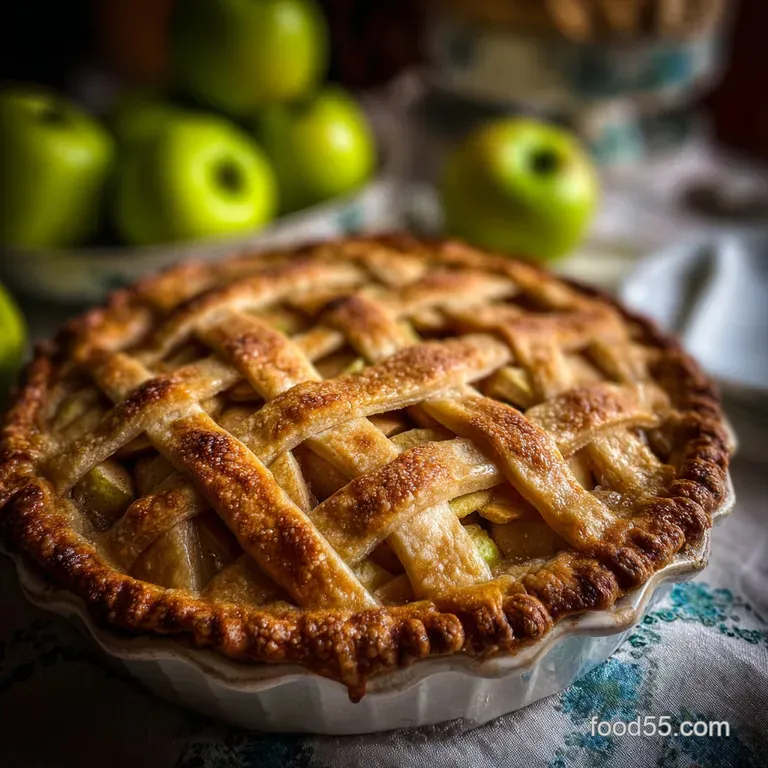
- Time: Active 25 minutes, Passive 55 minutes, Total 1 hours 20 mins
- Flavor/Texture Hook: Shatter crisp crust against velvety, cinnamon spiked tart apples
- Perfect for: Holiday centerpieces or cozy Sunday family gatherings
- Mastering the Flakiest Granny Smith Apple Pie
- The Molecular Physics of the Shatter
- The Flavor Chemistry Breakdown
- Essential Metrics for Your Baking Success
- Curating Quality Ingredients for Maximum Flavor
- Tools for a Flawless Pastry Result
- Transforming Elements into Golden Finished Pie
- Correcting Common Pastry and Filling Flaws
- Customizing for Specific Nutritional Preferences
- Adjusting for Different Batch Sizes
- Debunking Baked Good Misconceptions
- Preserving Texture and Flavor for Days
- Selecting the Best Pairings and Toppings
- Recipe FAQs
- 📝 Recipe Card
Mastering the Flakiest Granny Smith Apple Pie
There is a specific sound that defines a successful bake, and it’s the loud, glass like shatter of a chilled butter crust meeting a fork. I remember the first time I got this right. I had spent years pulling dismal, pale, weeping pies out of the oven, wondering why the bottom was always a gray puddle of dough.
I realized then that the secret wasn't just in the bake, but in the contrast between the icy fat in the pastry and the high malic acid of the apples.
When you slide this Granny Smith Apple Pie into the oven, the aroma of bubbling cinnamon and toasted butter starts to swirl through the kitchen within twenty minutes. It’s that cozy, nostalgic scent that makes everyone gravitate toward the stove.
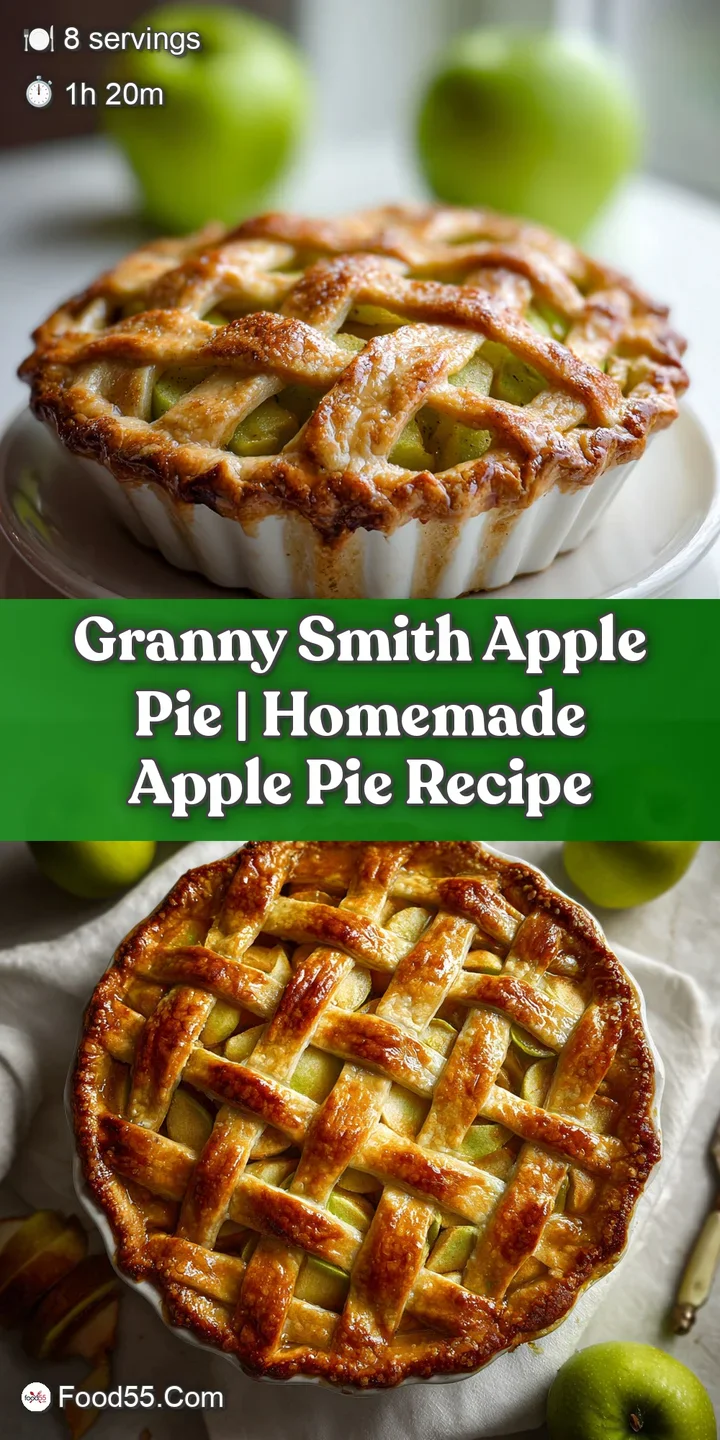
I’ve learned that the trick to that deep, mahogany glow on the top is a heavy hand with the turbinado sugar, which provides a satisfying crunch that plays against the tender, softened fruit inside.
We’re going for a bake that celebrates the sharp contrast between the bright, acidic fruit and the rich, savory pastry. It’s a recipe I’ve refined through dozens of family dinners, and it’s the one I come back to when I want to bring people together over something truly special.
Let's get into the nitty gritty of why this works so well.
The Molecular Physics of the Shatter
Steam Expansion: When the frozen, grated butter hits the high heat of the oven, the water content evaporates instantly, forcing the flour layers apart into delicate flakes.
Pectin Stability: Granny Smith apples are packed with pectin, which acts as a natural thickener that keeps the slices from disintegrating into sauce.
Cold Hydration: Using ice cold water and apple cider vinegar limits gluten development, ensuring the crust stays tender rather than chewy.
| Method | Time | Texture | Best For |
|---|---|---|---|
| Traditional Raw Fill | 55 minutes | Firm, distinct apple slices | Classic texture lovers |
| Pre Cooked Filling | 45 minutes | Velvety, jam like consistency | Avoiding "the gap" under the crust |
| Stovetop Sauté | 15 minutes | Soft, caramelized flavor | Quick bake tarts |
Choosing the traditional raw fill for this Granny Smith Apple Pie allows the juices to mingle with the cornstarch slowly, creating a syrup that clings to the fruit. If you prefer a more rustic approach with a thicker crust, you might want to look at my Rustic Apple Pie recipe for a different technique.
The Flavor Chemistry Breakdown
| Ingredient | Science Role | Pro Secret |
|---|---|---|
| Unsalted Butter | Creates flaky layers through fat separation | Grate it while frozen to keep it from melting into the flour |
| Apple Cider Vinegar | Inhibits gluten strands for a tender crumb | Use it cold to keep the dough temperature down |
| Cornstarch | Binds fruit juices into a thick syrup | Toss with the sugar first to prevent clumps in the pie |
| Granny Smith Apples | High acidity balances the heavy sugar and fat | Slice them 1/4 inch thick for the best structural integrity |
The acidity in the apples isn't just about taste; it actually helps the fruit maintain its shape during the long bake. While many people reach for a variety of apples, I find that sticking purely to the Smith Apple Pie profile gives you that iconic, sharp flavor that cuts through the richness of the butter.
Essential Metrics for Your Baking Success
Before we start mixing, let's look at the numbers. Precision is what separates a good pie from one that people talk about for weeks. We are looking for a golden brown finish and a filling that bubbles with a slow, thick viscosity.
- Prep time:25 minutes
- Cook time:55 minutes
- Total time:1 hours 20 mins
- Yield: 8 servings
- Target Internal Temp:195°F (to ensure the cornstarch is fully activated)
- Resting Time:2 hours (non negotiable for a clean slice)
Chef's Tip: Freeze your butter for 10 minutes before grating it. This prevents your hands from warming it up, ensuring those tiny pockets of fat remain solid until they hit the oven.
Curating Quality Ingredients for Maximum Flavor
This recipe relies on high-quality basics. Don't skimp on the butter; an 82% butterfat European style butter will give you a much more pronounced "shatter" in your crust.
- 315g All purpose flour: The structural base. Why this? Provides enough protein for structure without being tough.
- 225g Unsalted butter: Frozen and grated. Why this? Grating ensures even fat distribution for maximum flakiness.
- 5g Sea salt: To sharpen the flavors.
- 10g Granulated sugar: For the crust's color.
- 120ml Ice cold water: To bind the dough.
- 5ml Apple cider vinegar: For tenderness.
- 1300g Granny Smith apples: About 6-7 large. Why this? They hold their shape and provide the signature tartness.
- 150g Granulated sugar: For the filling sweetness.
- 50g Light brown sugar: Adds a hint of molasses.
- 30g Cornstarch: Our thickening agent.
- 8g Ground cinnamon: The classic spice.
- 2g Ground nutmeg: For earthy depth.
- 15ml Lemon juice: Brightens the fruit and prevents browning.
- 1 Large egg: For the egg wash.
- 15ml Heavy cream: To thin the wash for a golden glow.
- 25g Turbinado sugar: For that crunch on top.
For the fat, if you find yourself out of butter, you can use high-quality leaf lard for half the amount, which creates an even more brittle, traditional texture.
| Original Ingredient | Substitute | Why It Works |
|---|---|---|
| Cornstarch (30g) | Tapioca Starch (40g) | Gives a clearer, glossier filling but can be slightly stringy. |
| Light Brown Sugar | Dark Brown Sugar | Adds more intense molasses flavor. Note: May darken the filling. |
| Heavy Cream | Whole Milk | Provides a slightly lighter color on the crust. |
Tools for a Flawless Pastry Result
You don't need a professional kitchen, but a few specific tools make this process much smoother. I personally love using a glass pie dish because it allows you to check the browning of the bottom crust no more guessing if the base is cooked.
A box grater is my favorite "secret" tool for pie crust. Instead of cutting in the butter with a pastry blender, which can be inconsistent, grating frozen butter directly into the flour ensures every single piece of fat is the same size. You'll also want a sharp vegetable peeler and a solid rolling pin. If you're looking for a more traditional bake, you can also see my Apple Pie recipe which uses slightly different tools for a classic finish.
Transforming Elements into Golden Finished Pie
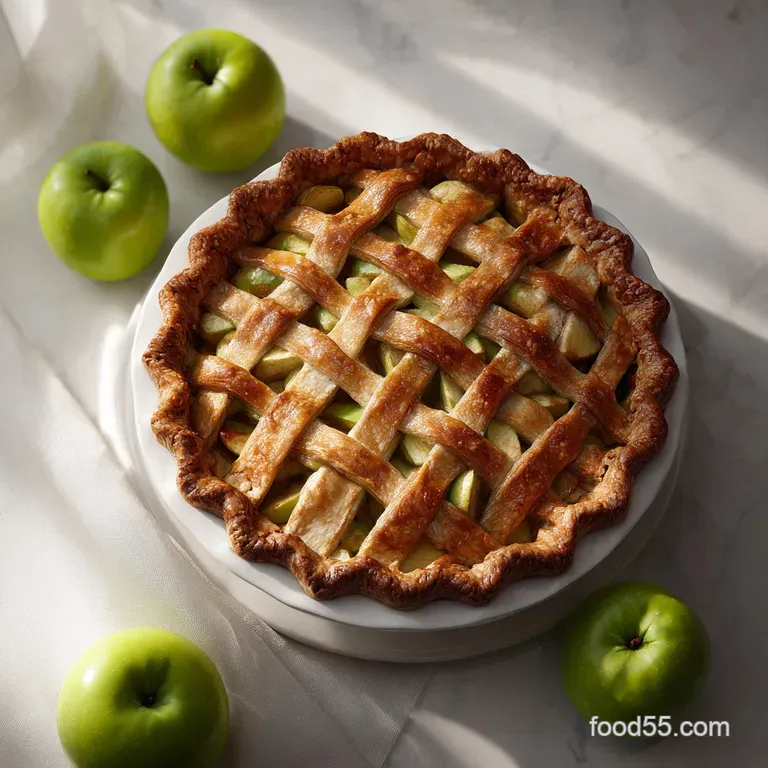
- Prep the butter. Grate 225g of frozen unsalted butter into a small bowl and put it back in the freezer for 10 minutes. Note: Keeping it frozen is the key to the shatter texture.
- Mix the dough. Combine 315g flour, 5g sea salt, and 10g sugar. Toss in the frozen butter shards.
- Hydrate. Add 5ml vinegar to 120ml ice cold water, then drizzle into the flour. Mix until the dough just barely holds together when squeezed.
- Chill. Divide the dough into two discs, wrap in plastic, and refrigerate for 1 hours. Note: This allows the flour to fully hydrate.
- Prepare apples. Peel, core, and slice 1300g Granny Smith apples into 1/4 inch wedges. Toss with 15ml lemon juice.
- Season filling. Mix 150g granulated sugar, 50g brown sugar, 30g cornstarch, 8g cinnamon, and 2g nutmeg. Toss with the apples until every slice is coated in a velvety spice mix.
- Roll out. Roll one disc to a 12 inch circle and place in the pie dish. Fill with the apple mixture, heaping it toward the center.
- Top and seal. Roll the second disc, place over the apples, and crimp the edges tightly. Cut five vents in the top until you see the fruit beneath.
- Wash and bake. Brush with egg wash (egg and heavy cream) and sprinkle with 25g turbinado sugar. Bake at 400°F for 55 minutes until the crust is deep mahogany and the filling sizzles through the vents.
- The rest. Let the pie cool completely on a wire rack for at least 2 hours before slicing.
Correcting Common Pastry and Filling Flaws
The most common issue I hear about is a runny filling. This usually happens when the oven temperature isn't high enough to "activate" the cornstarch. It needs to reach a simmer (about 195°F) to properly thicken. If you pull it out too early, you'll have delicious tasting soup instead of a set pie.
Why Your Filling is Soupy
If your Smith Apple Pie is swimming in liquid, it's likely a combination of two things: the apples were exceptionally juicy, or the pie didn't cool long enough. Cornstarch thickened fillings continue to set as they reach room temperature. Trust the process and wait those two hours!
Why Your Crust is Tough
Over working the dough is the culprit here. When you stir the water into the flour, you're developing gluten. The more you mix, the more rubbery the crust becomes. Stop the moment the dough looks shaggy and holds when pressed.
| Problem | Root Cause | Solution |
|---|---|---|
| Shrinking Crust | Dough wasn't rested enough | Let dough rest for at least 1 hour before rolling. |
| Soggy Bottom | Low bottom heat | Bake on the lowest rack or a preheated pizza stone. |
| Burnt Edges | High sugar content | Shield the edges with aluminum foil after 30 minutes. |
Common Mistakes Checklist: ✓ Using room temperature butter (this leads to a greasy, flat crust). ✓ Skipping the vinegar (the acid helps break down gluten for tenderness). ✓ Slicing the apples too thin (they will turn to mush rather than holding shape).
✓ Cutting into the pie while it's still warm (the filling won't be set). ✓ Forgetting to vent the top (steam will build up and make the crust soggy).
Customizing for Specific Nutritional Preferences
If you're cooking for friends with dietary needs, this recipe is surprisingly adaptable. For a vegan version, you can swap the butter for a high-quality plant based butter stick just make sure it's one designed for baking so it has a lower water content.
For a gluten-free twist, use a 1 to-1 gluten-free flour blend. You won't get the same long gluten strands, so the dough might feel a bit more like wet sand, but the flavor remains top tier. I often find that gluten-free crusts actually end up being more tender because you don't have to worry about over mixing.
Transitioning to a gluten-free Version
When going gluten-free, add an extra tablespoon of ice water. gluten-free flours tend to be thirstier than all purpose wheat flour. Let the dough rest for an extra 30 minutes to ensure it doesn't crack when you roll it out.
Swapping to a Vegan Profile
Replace the heavy cream in the egg wash with maple syrup or almond milk. You’ll still get a nice brown color, though it won't be quite as shiny. Coconut oil can work for the crust, but make sure it's solid (cold) and be prepared for a slight tropical hint in your Granny Smith Apple Pie.
Adjusting for Different Batch Sizes
If you are cooking for a smaller crowd, you can easily halve this recipe. For a 6 inch pie, reduce the ingredients by 50% and decrease the baking time by about 10-15 minutes. Watch for the same visual cues: the bubbling filling and the golden crust.
If you're scaling up for a large party, don't try to make one massive pie. The center won't cook before the edges burn. Instead, make two separate pies or transition this into a "slab pie" on a rimmed baking sheet. For a slab pie, you'll want to increase the dough by 1.5x and the filling by 2x.
- Downscaling (1/2): Use a smaller pan, reduce bake time by 20%, and use half an egg for the wash.
- Upscaling (2x): Bake two separate pies rather than one giant one. If using a convection oven, lower the temp by 25°F.
| Servings | Apple Weight | Pan Size | Cook Time |
|---|---|---|---|
| 4 people | 650g | 6 inch Deep | 40 minutes |
| 8 people | 1300g | 9 inch Standard | 55 minutes |
| 12 people | 1950g | 10x15 Slab | 50 minutes |
Debunking Baked Good Misconceptions
One of the biggest myths is that you need to use a mix of apples for the "best" flavor. While some enjoy the complexity, using 100% Granny Smith apples provides a specific, bold clarity of flavor that is often lost when you mix in sweeter, softer varieties like McIntosh or Gala.
Another common myth is that you must use a food processor for the dough. Honestly, I find the hand grating method far superior. A food processor can easily turn your butter into a paste, whereas the grater keeps those distinct "leaves" of fat that create the iconic flaky layers in this recipe.
Preserving Texture and Flavor for Days
This pie is a trooper when it comes to storage. You can keep it at room temperature, covered loosely with foil, for up to two days. After that, move it to the fridge for another three days.
To regain that "shatter" in the crust, always reheat slices in a 350°F oven for 10 minutes rather than using the microwave, which will make it rubbery.
For the zero waste enthusiasts, don't throw away those apple peels and cores! Simmer them with a bit of water, sugar, and a cinnamon stick to create a simple apple syrup that is incredible over pancakes or stirred into cocktails.
You can also freeze the raw dough discs for up to three months just thaw them overnight in the fridge before rolling.
- Fridge
- 5 days (wrap tightly in plastic or foil).
- Freezer
- 3 months (best if frozen unbaked).
- Reheating
- Oven at 350°F until the crust crisps back up.
Selecting the Best Pairings and Toppings
The high acidity of this Granny Smith Apple Pie makes it the perfect partner for something incredibly creamy. The classic move is a scoop of high-quality vanilla bean ice cream, but if you want to get a little fancy, try a dollop of crème fraîche.
The slight tang of the cream echoes the tartness of the apples in a way that is truly sophisticated.
The Classic Ala Mode
There's a reason this is the standard. The way the cold ice cream melts into the warm cinnamon syrup creates a "velvety" sauce on the plate. If you’re looking for a different kind of apple dessert to serve alongside it, my Classic Apple Brown recipe is a great option for those who prefer a crumble texture.
The Sharp Contrast
In some parts of the world, serving apple pie with a slice of sharp cheddar cheese is the only way to go. The savory, salty hit of the cheese against the sweet, spiced fruit is a revelation. If you haven't tried it, use a very old, crumbly white cheddar for the best experience.
The fat in the cheese rounds out the "bite" of the Smith apples perfectly.
Recipe FAQs
Are Granny Smith apples good for a pie?
Yes, absolutely. Granny Smith apples are ideal for pies because of their firm texture and bright, tart flavor. They hold their shape well during baking and provide a delicious contrast to the sweetness of the filling, preventing the pie from becoming cloying.
Can I make apple pie with Granny Smiths?
Yes, you can. Granny Smith apples are a popular choice for apple pies, offering a wonderful balance of tartness and structure that holds up beautifully to baking. Their acidity cuts through the richness of the pastry and sugar, making for a perfectly balanced flavor profile.
Do Granny Smith apples take longer to bake?
No, not necessarily longer. Granny Smith apples bake just like most other firm apple varieties. The key to a properly baked pie filling, regardless of apple type, is ensuring the apples are tender and the juices are bubbling thickly, which typically takes about 50-60 minutes at the correct temperature.
Can Granny Smith apples be used for baking?
Yes, they are excellent for baking. Their high acidity and firm texture make them a baker's favorite. They maintain their shape and provide a delightful tanginess that balances the sweetness of baked goods, preventing them from being overly sweet.
Why is my Granny Smith apple pie filling watery?
This is usually due to insufficient cooling time or not enough thickener. The pectin in the apples releases juices as they bake, and a cornstarch or flour thickener needs time to activate and bind these juices.
Allow the pie to cool completely for at least 2-3 hours before slicing to let the filling set properly.
How can I get a crispier crust on my Granny Smith apple pie?
Start with cold ingredients and minimal handling for the dough. Using ice-cold butter and water is crucial for creating flaky layers. You also want to avoid overworking the dough to prevent developing too much gluten, which can lead to a tough crust.
What spices pair well with Granny Smith apples in a pie?
Classic choices like cinnamon and nutmeg are perfect. For a deeper flavor, consider adding a pinch of ground cloves, allspice, or even a touch of cardamom. These spices complement the tartness of the apples and add warmth to the filling, much like in a Properly Spiced Apple Loaf with Brown Butter Crumble.
Granny Smith Apple Pie
Ingredients:
Instructions:
Nutrition Facts:
| Calories | 572 calories |
|---|---|
| Protein | 5.2 grams |
| Fat | 25.1 grams |
| Carbs | 84.2 grams |
| Fiber | 3.9 grams |
| Sugar | 45.8 grams |
| Sodium | 255 milligrams |
