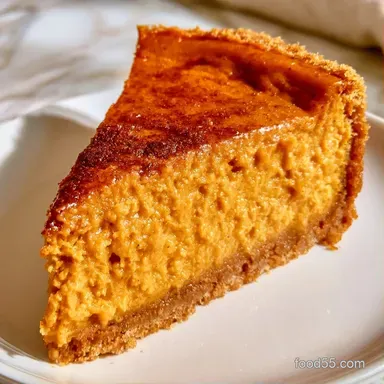
Homemade Pumpkin Cream Cheese Cheesecake
- Time: 40 min active + 7 hours chilling
- Flavor/Texture Hook: Nutty browned butter crust with a smooth, spiced center
- Perfect for: Thanksgiving dinner or autumn dinner parties
Pumpkin Cream Cheese Cheesecake
In my home, the smell of browning butter is the definitive sign that autumn has arrived. It begins with a soft sizzle and evolves into a toasted, nutty fragrance that drifts through the entire kitchen.
I learned a hard lesson last year when I used cold cream cheese; the batter turned out grainy, resembling cottage cheese. Even after an hour of effort to smooth it over, those lumps remained.
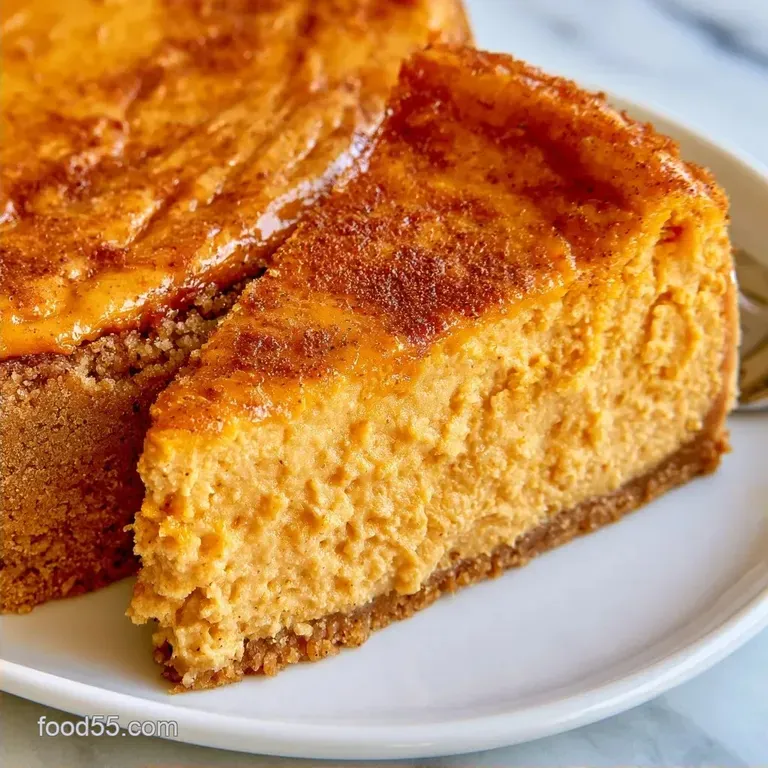
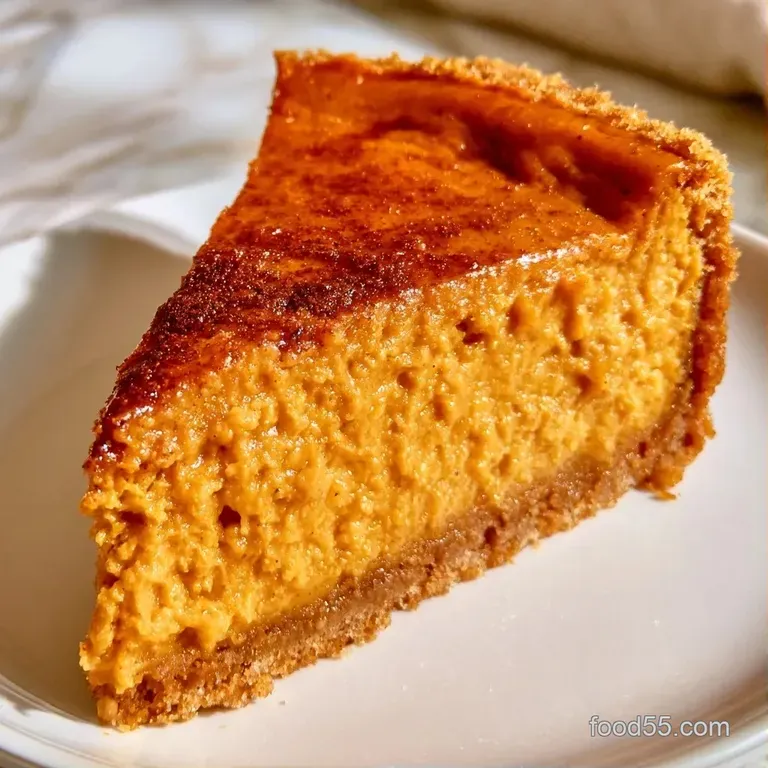
The secret to this Pumpkin Cream Cheese Cheesecake is simply patience letting the ingredients come to room temperature. When the eggs and cheese are no longer chilled, they emulsify into a perfectly smooth batter. This creates a slice with a satisfying density that isn't overly heavy, paired with a crust that provides a distinct snap under a fork.
The final dish is a bright, seasonal treat that avoids excessive sweetness. It's the sort of dessert that prompts guests to ask for the recipe mid-bite. By incorporating browned butter into the crust, we achieve a rich complexity that standard melted butter simply cannot provide.
The Trick Behind the Texture
- Room Temp Ingredients: Cold cream cheese resists blending, which leads to over mixing. When ingredients are warm, they emulsify faster and create a smooth mouthfeel.
- Low Speed Mixing: Beating eggs on high incorporates too much air. That air expands in the oven and then collapses, which is the primary cause of surface cracks.
- Browned Butter Base: Toasting the butter solids creates a nuttier flavor and a crisper structure for the crust, preventing it from getting soggy under the weight of the pumpkin.
The difference between a fresh pumpkin puree and a canned one often comes down to water content. For a more consistent result, I lean toward canned puree because it's standardized.
| Pumpkin Source | Texture | Flavor Profile | Best For |
|---|---|---|---|
| Fresh Puree | Variable/Wetter | Bright and earthy | Those who love a looser, more rustic tart |
| Canned Puree | Consistent/Thick | Deep and concentrated | This specific Cheesecake recipe |
Tools You'll Need
While you can get by with basic gear, a few key items simplify the process. A 9 inch springform pan is essential, as you cannot simply flip a cheesecake to remove it. I typically use a stand mixer like a KitchenAid to ensure the cream cheese is perfectly smooth, though a hand mixer is a viable alternative if you have a bit more patience.
For the crust, I prefer using a standard measuring cup to press the crumbs into the pan. The flat base ensures an even density, which prevents the crust from cracking when sliced. An offset spatula is also useful for smoothing out the top of the filling before it hits the oven.
What You'll Need
| Component | Purpose | Substitute Notes |
|---|---|---|
| Cream Cheese | Structure and tanginess | Mascarpone: Richer taste, though less stable |
| Pumpkin Puree | Moisture and flavor | Roasted butternut squash: Comparable texture, subtler taste |
| Graham Crumbs | Crunchy foundation | Ginger snaps: Adds a spicy note and a firmer crunch |
| All Purpose Flour | Stability | Cornstarch: Use 1 tbsp for a softer set |
For the Spiced Graham Crust 1.5 cups (150g) graham cracker crumbs 1/3 cup (75g) unsalted butter, browned and melted Why this? Imparts a toasted, nutty quality to the base 2 tbsp (25g) granulated sugar 1/2 tsp (2g) cinnamon 1/4 tsp (1g) salt
For the Pumpkin Cream Cheese Filling 24 oz (680g) cream cheese, softened Why this? Must be at room temperature to prevent lumps 1 cup (200g) granulated sugar 15 oz (425g) pumpkin puree 3 large (150g) eggs, brought to room temperature 1 tsp (5ml) vanilla extract 2 tsp
(5g) ground cinnamon 1 tsp (2g) ground ginger 1/4 tsp (1g) ground cloves 1/2 tsp (3g) salt 2 tbsp (16g) all purpose flour
Final Recipe Specs
- Prep Time: 40 minutes
- Cook Time: 1 hour 20 mins
- Total Time: 8 hours (includes chilling)
- Yield: 12 slices
- Oven Temp: 350°F (175°C) for crust / 325°F (160°C) for filling
Chef's Tip: To brown your butter, melt it in a light colored pan over medium heat. Whisk constantly until you see little brown bits forming at the bottom and it smells like toasted hazelnuts. Immediately remove it from the heat so it doesn't burn.
Step by step Process
- Prepare the crust. In a bowl, stir together the graham cracker crumbs, browned butter, sugar, cinnamon, and salt.
- Form the base. Press the mixture firmly into the bottom and 1 inch up the sides of a 9 inch springform pan. Note: A measuring cup bottom is helpful for a flat press
- Bake the crust. Cook at 350°F (175°C) for 8-10 minutes until aromatic and toasted. Allow it to cool completely.
- Whip the cheese. Beat the softened cream cheese and sugar on medium high speed until smooth and pale.
- Mix in flavors. Lower the mixer speed and blend in the pumpkin puree, cinnamon, ginger, cloves, salt, and flour until just combined.
- Blend in eggs. Add eggs one by one on low speed, mixing until the yellow streaks are gone. Note: To avoid cracks, do not over mix here
- Final step. Gently fold in the vanilla extract by hand using a spatula.
- Bake the cake. Pour the filling over the base and bake at 325°F (160°C) for 65-75 minutes until the sides are firm but the center still has a slight wobble.
- Cool gradually. Shut off the oven and prop the door open. Let the cake rest inside for 1 hour.
- Chill. Refrigerate for at least 6 hours.
Fixing Common Problems
Preventing Surface Cracks
Cracks usually happen because the cake expanded too fast or had too much air. Avoid over beating the eggs and use the slow cooling method mentioned in the steps. If a crack does happen, don't panic. A dollop of whipped cream or a layer of pumpkin puree on top hides it completely.
Fixing a Grainy Texture
Lumps are almost always the result of cold cream cheese. If you've already mixed the batter and see grains, you can carefully pass the batter through a fine mesh sieve. However, it's much easier to just ensure your cheese is truly softened before you start.
Serious Eats' testing suggests that warming the cheese slightly in the microwave for 10 seconds can help if you're in a rush.
Stopping a Soggy Crust
A "wet" bottom happens when the filling seeps into the crust or the crust wasn't baked long enough. Baking the crust for the full 10 minutes creates a barrier. You can also try a light brush of egg white on the baked crust and a second quick bake for 2 minutes to seal it.
Managing a Sunken Center
If the middle dips, it's often a sign of over mixing or under baking. Ensure you follow the "jiggle test" - the center should move like Jell , not liquid. If it sinks after cooling, it's still tasty, but it might be more like a custard than a cake.
Freezing and Storage
Store your Pumpkin Cream Cheese Cheesecake in the refrigerator for as long as 5 days. To keep it from picking up odors from other foods, ensure it's covered with plastic wrap or kept inside a cake carrier.
This cake is also great for freezing. Once chilled, wrap the cake in plastic wrap followed by a sheet of aluminum foil. It will remain fresh in the freezer for 2 months. For thawing, simply transfer it to the refrigerator the evening before serving.
Zero Waste Tip: If you have any remaining browned butter or graham cracker crumbs, combine them with a little sugar and bake into tiny clusters to add a crunchy touch to your morning yogurt.
Tasty Flavor Twists
- Maple Pecan: Fold in 1/2 cup of toasted chopped pecans and replace the vanilla with maple extract.
- Creamy Swirl: After pouring the batter into the pan, drop small spoonfuls of a classic cheesecake method batter on top and swirl with a knife.
- Low Effort Option: If you don't have 8 hours to wait, you can try a no bake pumpkin version which sets much faster in the freezer.
Dietary Swapsgluten-free: Use GF graham crackers or almond flour for the base. Less Sugar: Replace granulated sugar with a 1:1 monk fruit sweetener. Note that the texture may be slightly less dense.
Serving and Presentation
For the cleanest slices, dip a sharp knife in hot water and wipe it clean between every single cut. This prevents the filling from sticking to the blade and smudging the sides of your slice.
Pairing IdeasCoffee: A bold dark roast or a pumpkin spice latte cuts through the richness of the cream cheese. Fruit: Serve with a side of fresh blackberries or pomegranate seeds for a pop of acid and color.
Decision Shortcut Extra tang? → add 1 tbsp lemon juice to the filling Deeper spice? → increase cloves to 1/2 tsp More crunch? → add 1/4 cup crushed walnuts to the crust
To get the most accurate nutritional info, you can check the USDA FoodData Central for the specific brands of pumpkin and cream cheese you use. This Pumpkin Cream Cheese Cheesecake is best served slightly chilled, not ice cold, to let the spices really open up.
Recipe FAQs
What can I make with canned pumpkin and cream cheese?
This pumpkin cream cheese cheesecake is the ideal option. It blends the richness of cream cheese with autumn spices for a dense, creamy dessert.
How do I prepare this cheesecake from scratch?
Beat softened cream cheese and sugar until smooth and pale. Mix in pumpkin puree, spices, and flour on low, then incorporate eggs one at a time.
Why does my pumpkin cheesecake crack during cooling?
Overbaking or sudden temperature drops usually cause surface cracks. Allow the cake to cool gradually in the oven with the door slightly ajar to stabilize the texture.
Is it true that overmixing the eggs makes the cake fluffier?
No, and here's why. Adding too much air during the egg stage causes the cheesecake to puff up and then collapse, which leads to cracking.
Which techniques ensure the filling stays smooth?
Use fully softened cream cheese at room temperature. If you enjoyed mastering texture here, see how the same principle works in our baked Oreo cheesecake.
Can this specific recipe be made without baking?
No, this version requires heat. The eggs and flour must be baked to set the structure and achieve the correct consistency.
Does the crust require pre-baking for the best results?
Yes, bake it at 350°F for 8-10 minutes. This step ensures the base is fragrant and prevents the crust from becoming soggy after adding the filling.
Pumpkin Cream Cheese Cheesecake