Comforting Hoppin John with Canned Black | Quick Flavor
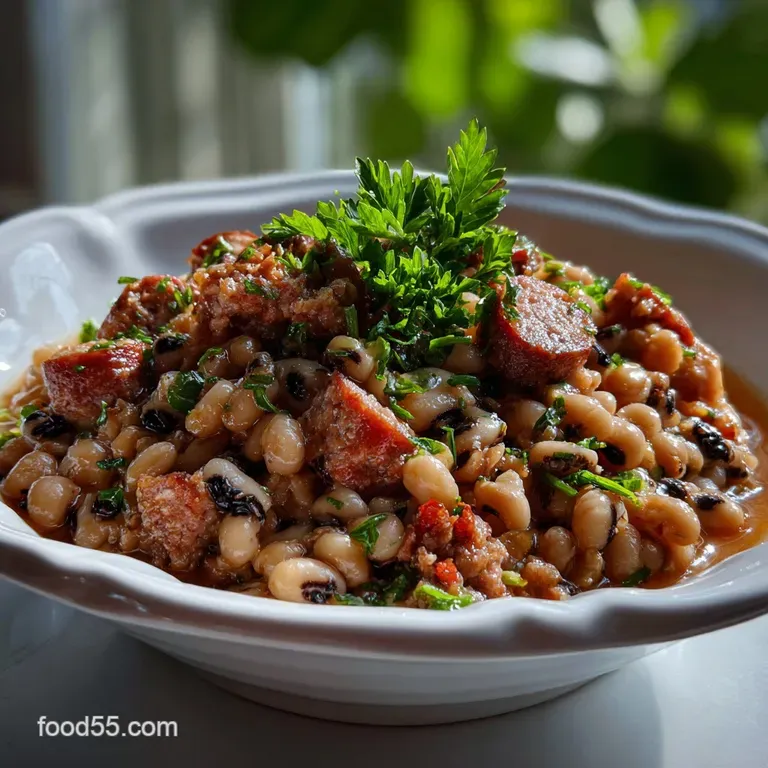
- Effort/Time: Low-effort; 40 minutes total.
- Flavor Hook: Smoky, pork-forward umami with a bright, vinegary finish.
- Perfect for: Weeknight-comfort, New Year’s traditions, or high-protein meal prep.
- Master the Ultimate Comforting Hoppin John with Canned Black
- The Science of Flavor Architecture and Texture Optimization
- Technical Specifications for Optimal Thermal Recovery
- The Alchemy of Umami: Selecting Your Elements
- Essential Tools for Optimal Heat Distribution and Flavor
- Precision Assembly: The Step-by-Step Execution Protocol
- Correcting Structural Failures and Flavor Imbalances
- Adaptive Flavor Architectures and Strategic Substitutions
- Preservation Logistics: Maintaining Texture During Cold Storage
- Strategic Pairings for a Complete Sensory Experience
- Common Myths Debunked
- Recipe FAQs
- 📝 Recipe Card
Master the Ultimate Comforting Hoppin John with Canned Black
There is nothing more demoralizing than spending three hours tending a pot of New Year’s beans only to serve a gritty, flavorless bowl of "hard rocks" to a table of hungry guests.
I’ve been there dumping a gallon of scorched liquid down the drain because I didn't respect the soaking time or the stubborn nature of dried skins. Wasted money and a ruined tradition are painful teachers.
Early in my cooking journey, I once tried to rush the bean softening process by cranking the heat on a heavy Lodge Cast Iron Dutch Oven, thinking sheer thermal force would win. Instead, I blew out the bean interiors while the skins remained like parchment paper.
It was a mushy, sandy disaster that taught me the value of controlled hydration and consistent starting points.
The secret to this Masterclass version isn't hours of soaking; it’s the strategic use of canned legumes and the Maillard reaction on the sausage. By searing the protein first, we create a complex foundation of browned compounds that mimic a long simmered bone broth.
The result is a velvety, mahogany colored sauce that coats every grain of rice with savory intensity.
The Science of Flavor Architecture and Texture Optimization
- Maillard Reaction Optimization: Searing sliced Andouille sausage at 300°F (150°C) creates hundreds of new flavor compounds through the reaction of amino acids and reducing sugars.
- Aromatic Synergy: Dicing the "Holy Trinity" (onion, pepper, celery) to uniform 1/4 inch pieces maximizes surface area for lipid soluble flavor release into the Bertolli Extra Virgin Olive Oil.
- Pectin Management: Adding Apple Cider Vinegar at the very end prevents the acid from toughening the bean skins early in the simmer, ensuring a creamy interior.
Technical Specifications for Optimal Thermal Recovery
| Metric | Value |
|---|---|
| Yield | 6 servings |
| Prep Time | 15 minutes |
| Cook Time | 25 minutes |
| Total Time | 40 minutes |
| Target Temperature | 212°F (100°C) for simmer |
| Serving Size | ~1.5 cups |
The Alchemy of Umami: Selecting Your Elements
Selecting the right components for your Comforting Hoppin John with Canned Black dictates the final mouthfeel and depth.
- 1 lb Smoked Andouille or Kielbasa sausage: Why this? High fat content (20 30%) provides the necessary lipids for a rich, emulsified sauce. Sliced into 1/2 inch rounds.
- 1 tbsp Bertolli Extra Virgin Olive Oil: Used as a starter fat before the sausage renders.
- 1 large Yellow onion (200g): Finely diced for rapid softening.
- 1 medium Green bell pepper (150g): Diced to provide a vegetal, slightly bitter counterpoint to the smoke.
- 2 stalks Celery (100g): Diced for structural aromatics.
- 3 cloves Garlic: Minced fresh. Why this? Allicin release is highest when freshly crushed, providing a sharp, pungent kick.
- 31 oz canned black eyed peas (2 x 15.5 oz cans): Rinsed and drained.
- 1.5 cups Swanson Low-sodium chicken broth: Provides the liquid base without over salting the reduced sauce.
- 1 Bay leaf: Adds a subtle floral, herbal note.
- 1 tsp Dried thyme: Earthy notes that pair with smoked meats.
- 1/2 tsp Smoked paprika: Enhances the "long cooked" aroma.
- 1/4 tsp Cayenne pepper: Just enough for a back-of-the-throat warmth.
- 1 tsp Apple cider vinegar: Brightens the heavy fats.
- Diamond Crystal Kosher Salt and freshly cracked black pepper: To taste.
- 3 cups Cooked long grain white rice: Fluffy, separate grains are essential.
- 1/4 cup Fresh parsley or green onions: Chopped for a fresh, enzymatic finish.
Essential Tools for Optimal Heat Distribution and Flavor
- Lodge 6 Quart Cast Iron Dutch Oven: The high thermal mass ensures the temperature doesn't plummet when cold beans are added, preventing a "steaming" effect.
- Wusthof Classic Chef's Knife: Essential for the precision dicing of the "Holy Trinity" to ensure even cooking.
- Oxo Wooden Spoon: Better for scraping the fond (browned bits) off the bottom of the pan than metal, which can scratch.
Precision Assembly: The step-by-step Execution Protocol

- Heat the Lodge Dutch Oven over medium high heat with Bertolli Olive Oil for 2 minutes until a faint wisp of smoke appears.
- Add the Andouille sausage rounds in a single layer.
- Sear for 4 minutes until edges are crisp and deep mahogany brown, then flip and repeat for 2 minutes.
- Remove sausage with a slotted spoon, leaving the rendered fat in the pot.
- Toss in the diced onion, green pepper, and celery.
- Sauté for 6 minutes until the onion turns translucent and the pepper's raw smell shifts to sweet.
- Stir in the minced garlic, thyme, smoked paprika, and cayenne for 45 seconds until the fragrance becomes intensely nutty.
- Deglaze the pot by pouring in the Swanson Chicken Broth, scraping the bottom vigorously until all browned bits are dissolved into the liquid.
- Fold in the rinsed canned black eyed peas, the bay leaf, and the seared sausage.
- Simmer uncovered for 15 minutes until the liquid reduces by 20% and slightly thickens to a gravy consistency.
- Stir in the Apple Cider Vinegar and season with salt and pepper until the flavors pop and the heavy smokiness is balanced by acid.
- Fold in the cooked rice (or serve the bean mixture over it) and garnish with parsley until the green pops against the earthy brown tones.
Correcting Structural Failures and Flavor Imbalances
Why Your Comforting Hoppin John with Canned Black Tastes Flat
If the dish feels heavy but unexciting, you likely have an acid imbalance. High fat dishes like Black Eyed Peas and Sausage require a "brightener" to cut through the grease and wake up the palate.
| Problem | Root Cause | The Fix | Pro Protocol |
|---|---|---|---|
| Thin/Watery Sauce | Lack of starch release | Smash 1/4 cup of beans | Use a fork to mash some beans against the pot side to release natural thickeners. |
| Bland Profile | Insufficient salt or acid | Add ACV or Salt | Increment salt by 1/4 tsp; the vinegar is the key to unlocking the smoke. |
| Burnt Garlic | Added too early | Add later | Always add garlic after the vegetables have released their moisture. |
Why Your Legumes Are Mushy
Over stirring or boiling too vigorously can rupture the delicate skins of canned pulses. This Hoppin' John with Canned Black Eyed Peas and Sausage requires a gentle simmer to maintain structural integrity. This is similar to the delicate handling required in my Chinese eggplant with recipe, where texture is the difference between a masterclass and a mess.
Adaptive Flavor Architectures and Strategic Substitutions
Making John with Canned Black Eyed Peas and Sausage means understanding how swaps change the thermodynamics and flavor of the dish.
| Original Ingredient | Substitute | Why It Works |
|---|---|---|
| Andouille Sausage | Smoked Turkey Sausage | Lower fat content; adds smoke but requires 1 extra tbsp oil for sautéing. |
| Chicken Broth | Vegetable Stock | Shifts flavor to a lighter, more vegetal profile; less "meaty" depth. |
| White Rice | Quinoa | Adds nutty flavor and increased protein; same absorption ratio. |
Chef's Note: If you're looking for a slower, more hands off approach to protein, the logic in this recipe pairs excellently with the techniques in my Slow Cooker Chicken recipe.
⚗️ The Scaling Lab
When doubling this Comforting Hoppin John with Canned Black recipe for a crowd, physics intervenes.
- The Evaporation Paradox: If you double the broth to 3 cups in the same pot, the surface area remains the same. The liquid will take twice as long to reduce. Reduce the broth to 2.5 cups instead to maintain the "gravy" texture.
- Flavor Saturation: Do not double the Cayenne or Smoked Paprika. Use a 1.5x ratio for spices. Capsaicin (heat) accumulates aggressively in larger volumes.
- Pan Crowding: Doubling 1 lb of sausage to 2 lbs in one skillet will cause the meat to steam in its own juices rather than sear. Mandatory instruction: Sear the sausage in two separate batches to maintain a pan temp above 300°F (150°C).
- Thermal Mass: A double batch holds heat longer. Pull the pot off the stove when the liquid is slightly thinner than you want; the carryover heat will continue to thicken the starches for 10 minutes.
Preservation Logistics: Maintaining Texture During Cold Storage
Comforting Hoppin John with Canned Black Eyed Peas and Sausage is one of those rare dishes that actually improves on day two as the spices permeate the legumes.
- Fridge: Store in an airtight container for up to 4 days. The rice will absorb more liquid as it sits.
- Freeze: You can freeze the bean and sausage mixture for up to 3 months. Note: Do not freeze the rice mixed in, as it will become mushy upon thawing.
- Reheating: Add a splash of broth or water before microwaving or heating on the stovetop. This restores the emulsion of the sauce.
💡 ZERO WASTE PHILOSOPHY:Parsley Stems: Don't discard them! Finely mince the stems and sauté them with the onions. Science: Stems contain more concentrated aromatic oils than the leaves.
Sausage Fat: If you have leftover fat in the pot, save it in a jar. Transform: Use it the next morning to fry eggs. Science: The fat is infused with smoked paprika and garlic oils, providing a "built-in" seasoning.
Strategic Pairings for a Complete Sensory Experience
To round out this Black Eyed Peas and Sausage recipe, you need textures that contrast the soft, creamy beans.
- Crunch Factor: A side of buttery cornbread with a "shattering" crust provides the perfect tactile contrast.
- Umami Boost: If you want to lean into the savory side, these Sauteed Mushrooms with recipe offer an earthy depth that complements the smoked meat perfectly.
- Acid Balance: A simple slaw with a vinegar dressing helps reset the palate between bites of the rich Easy Hoppin John with canned peas.
Common Myths Debunked
- Myth: Canned beans are "pre-cooked" and don't need simmering.
Truth: While safe to eat, simmering them for 15 minutes allows the osmotic pressure to draw the sausage infused broth into the center of the bean, transforming the flavor from "canned" to "homemade."
Myth: You must use a ham hock for authentic flavor.
- Truth: Smoked Andouille provides the same collagen and smoky phenols but in a fraction of the time, making this Quick Hoppin John recipe much more accessible for modern kitchens.
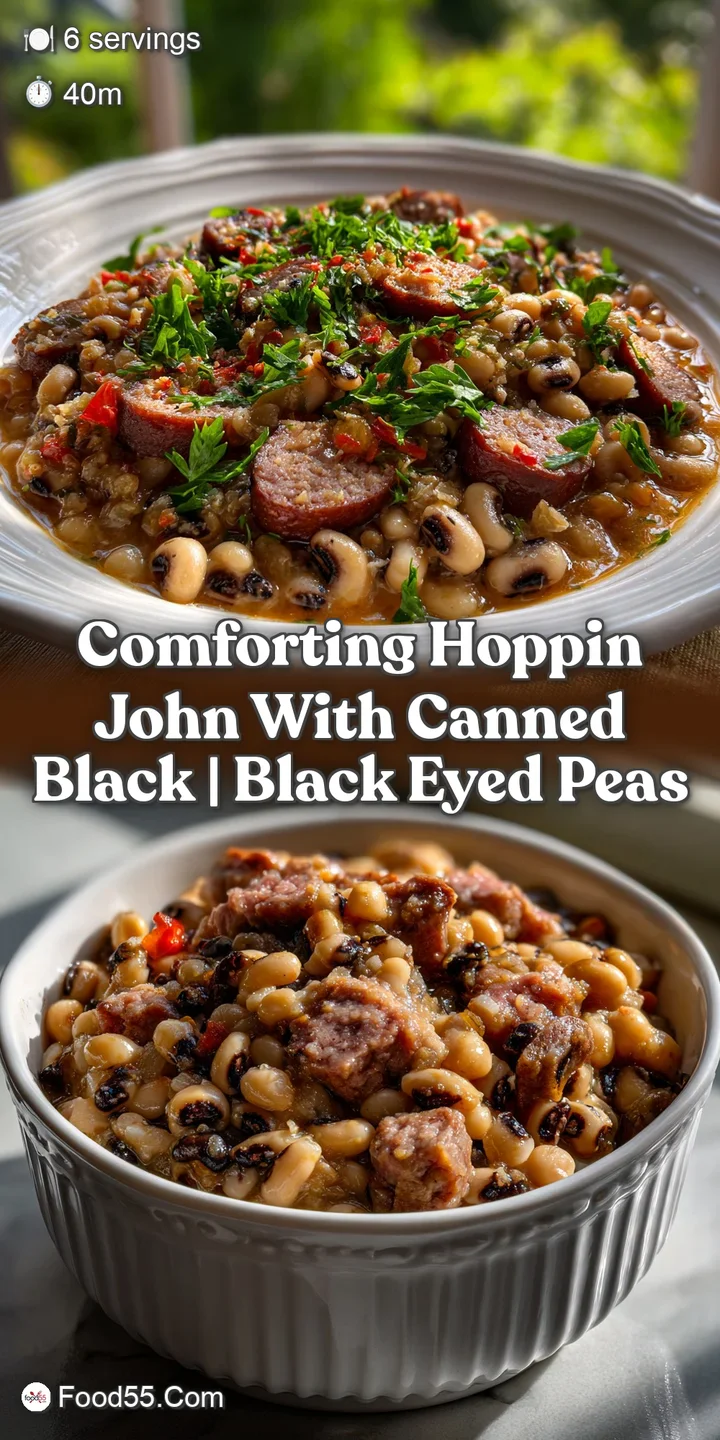
Whether it's New Year's Day or a random Tuesday, this Comforting Hoppin John with Canned Black delivers a soul warming experience without the technical hurdles of dried legumes. It's about working smarter with the ingredients we have. Trust the sear, respect the acid, and enjoy the sizzle.
Let's crack on!
Recipe FAQs
Why is searing the sausage critical before adding liquids?
Searing creates the Maillard reaction foundation. Browning the protein generates hundreds of complex flavor compounds that mimic slow reduction, deepening the final broth's umami profile. This technique of building flavor from surface browning is key to achieving depth quickly, similar to the foundational flavor construction required for our Stuffing Recipe: Sourdough with Deep Caramelized Onions.
Can I skip rinsing the canned black eyed peas?
No. Rinsing removes excess starch and salt. The canning liquid contains high levels of sodium and starch residue which can make the final sauce gummy or excessively salty. This ensures a clean starting point for the broth.
What causes the sauce to separate or become grainy?
Over agitation or boiling causes delicate starches to break. When cooking canned legumes, vigorous boiling ruptures the cell walls, releasing excessive starch into the liquid, leading to an unappealing, glue like texture instead of a silky sauce.
- Maintain a gentle simmer, not a rolling boil
- Add acid (vinegar) only at the end
- Stir only when incorporating new ingredients
Is it better to use chicken broth or water?
Chicken broth adds essential savory backbone immediately. Water dilutes the flavor components created by the sausage sear, requiring much more salt and seasoning later. The broth provides an immediate base of glutamates that water lacks entirely.
Does soaking dried beans work better than using canned?
Soaking provides better texture control for dried beans, but takes hours. Canned beans offer consistency and speed, which is the goal for this 40-minute recipe. The required long simmer for dried beans negates the quick cook benefit provided by the sausage sear.
Can I substitute the Apple Cider Vinegar with Lemon Juice?
Yes, use lemon juice as an acid replacement. While both provide the necessary tartness to balance the fat, lemon juice introduces brighter citrus notes compared to the sharper, fermented tang of ACV. This balancing act with acid is a principle also used to elevate tartness in dishes like our Cranberry Sauce: Classic Easy make-ahead Recipe with Orange.
Myth: You must cook this dish for hours to develop flavor.
Myth: You must cook this dish for hours to develop flavor. Reality: The intense heat searing of the Andouille sausage initiates the Maillard reaction, rapidly creating flavor depth equivalent to long simmering in under ten minutes.
Quick Hoppin John Sausage

Ingredients:
Instructions:
Nutrition Facts:
| Calories | 478 kcal |
|---|---|
| Protein | 19.4 g |
| Fat | 24.2 g |
| Carbs | 45.8 g |
| Fiber | 6.2 g |
| Sugar | 3.8 g |
| Sodium | 840 mg |
