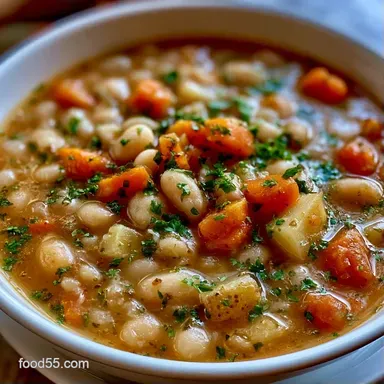
Slow Cooker White Bean Soup: Velvety and Hearty
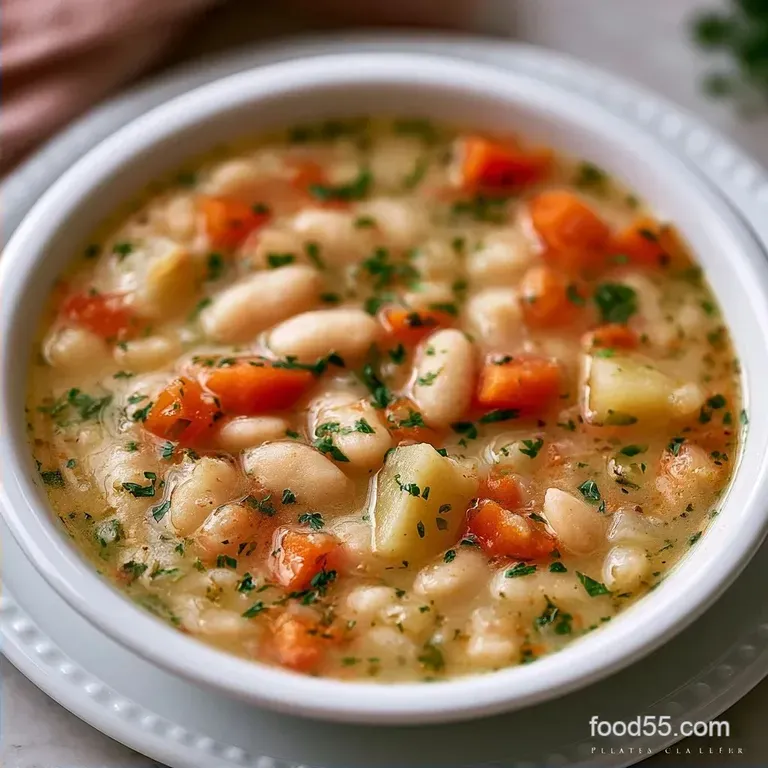
- Time:15 minutes active + 6 hours cooking = Total 6 hours 15 mins
- Flavor/Texture Hook: Velvety bean base with a bright, citrusy finish
- Perfect for: Low effort weeknight dinners or meal prep for the week
Slow Cooker White Bean Soup
The smell of dried thyme and rosemary hitting hot vegetable broth is a sensory trigger that always takes me back to my grandmother's kitchen in the countryside. She used to tell me that a bean soup wasn't just a meal, it was a way of honoring the land.
In those old European traditions, white beans were the "poor man's meat," a sustainable staple that kept whole families warm through the winter. There's something deeply grounding about a pot that simmers for hours, filling the house with a savory, earthy aroma that promises comfort before you even take a bite.
I used to think these rustic dishes were too simple, but I've learned that the magic is in the patience. When you let the heat work slowly, the beans don't just soften, they transform. This recipe is all about that transformation, turning humble local ingredients into a vibrant, filling meal.
It's the kind of dish that feels like a hug in a bowl, especially when you add a splash of fresh lemon at the end to wake everything up.
You can expect a soup that is thick and satisfying but doesn't feel heavy. The combination of Great Northern beans and Yukon Gold potatoes creates a base that is naturally velvety.
By using a slow cooker, we ensure the beans cook evenly without breaking apart, and the kale adds a fresh, forest green pop of color that keeps the dish from looking too monochromatic. Trust me on this, it's the easiest way to get a high impact, nutrient dense meal on the table.
The Soak Truth
Many people believe you absolutely have to soak dried beans overnight or they'll stay hard forever. Honestly, for a slow cooker, that's not strictly true. While soaking can reduce the cooking time and help some people with digestion, the long, steady heat of a crockpot handles dried beans just fine as long as you have enough liquid.
The key is using the right bean variety. Great Northern beans are smaller and have a thinner skin than kidney beans, which means they hydrate and soften more readily. If you're worried about the "hardness" factor, the most important thing is ensuring your beans are fresh.
Old beans that have sat in a pantry for three years may never soften, no matter how long you cook them.
For those who prefer a quicker start, you can do a "quick soak" by boiling the beans for two minutes and letting them sit for an hour. But for this specific recipe, the 6 hour high heat cycle is designed to do the heavy lifting for you. According to the guides at Serious Eats, the slow transition of heat allows the starches to release more gradually, which is actually what gives this soup its signature body.
Why It Works
The secret to this soup isn't a fancy thickener, but simple physics and a bit of patience.
- Natural Thickeners: The Yukon Gold potatoes release starch as they break down, which blends with the bean proteins to create a silky texture without needing heavy cream.
- Slow Hydration: The low and slow heat allows water to penetrate the center of the dried beans without overcooking the exterior, preventing a mushy outer layer.
- Acid Balance: Adding lemon juice at the very end cuts through the earthy, heavy notes of the legumes, creating a brighter flavor profile similar to a lemon chicken orzo soup.
- Residual Wilting: Adding the kale after the heat is off prevents the greens from turning a dull, olive brown, keeping the color vibrant and the texture slightly snappy.
| Method | Time | Texture | Best For |
|---|---|---|---|
| Fast (Stovetop) | 2 hours | Thinner, more liquid | Quick cravings |
| Classic (Slow Cooker) | 6 hours | Velvety, integrated | Deep flavor, meal prep |
Recipe Details
Before we get into the gear, let's look at how the ingredients actually function in the pot. I like to think of the soup in layers: the base aromatics, the hearty core, and the bright finish.
| Ingredient | Science Role | Pro Secret |
|---|---|---|
| Great Northern Beans | Protein & Structure | Rinse until water runs clear to remove excess dust |
| Yukon Gold Potatoes | Starch Release | Keep cubes uniform for consistent breakdown |
| Fresh Kale | Color & Micronutrients | Stem them carefully to avoid woody bits |
| Lemon Juice | pH Balance | Add only at the end to keep the flavor sharp |
The Ingredient List
I highly recommend sourcing your kale and carrots from a local farmer's market if you can. The difference in color and sweetness is noticeable.
- 2 tbsp unsalted butter Why this? Adds a rich, silky mouthfeel to the base
- 1 medium yellow onion, diced Why this? Provides a sweet, aromatic foundation
- 3 medium carrots, diced Why this? Adds natural sweetness and orange hue
- 2 stalks celery, diced Why this? Essential savory "mirepoix" element
- 4 cloves garlic, minced Why this? Adds a pungent, deep aromatic layer
- 1 lb dried Great Northern beans, rinsed and sorted Why this? Holds shape well while remaining creamy
- 2 medium Yukon Gold potatoes, peeled and cubed Why this? High starch content for natural thickening
- 1 tsp dried thyme Why this? Earthy, woody notes that pair with beans
- 1 tsp dried rosemary Why this? Piney aroma for a rustic feel
- 1 tsp salt Why this? Enhances all other flavors
- 1/2 tsp black pepper Why this? Subtle heat and bite
- 8 cups low sodium vegetable broth Why this? Controls sodium while providing depth
- 1 bay leaf Why this? Adds a subtle, floral background note
- 2 cups fresh kale, chopped Why this? Vibrant green contrast and iron
- 1 tbsp fresh lemon juice Why this? Brightens the entire flavor profile
- 1/4 cup fresh parsley, chopped Why this? Fresh, herbal finish
Quick Substitutions:
| Original Ingredient | Substitute | Why It Works |
|---|---|---|
| Great Northern Beans | Cannellini Beans | Similar texture. Note: Slightly creamier, slightly larger |
| Yukon Gold Potatoes | Russet Potatoes | Higher starch. Note: May break down more, making soup thicker |
| Fresh Kale | Swiss Chard | Similar greens. Note: Milder flavor, softer texture |
| Vegetable Broth | Chicken Broth | More savory. Note: Changes dish from vegetarian to meat based |
Gear You Need
You don't need a professional kitchen for this, but a few specific tools make the process way smoother.
- 6 Quart Slow Cooker: This is the standard size that fits 1 lb of beans and 8 cups of broth comfortably without overflowing.
- Immersion Blender: This is a lifesaver. Instead of transferring hot soup to a countertop blender (which is dangerous), you can cream the beans right in the pot.
- Chef's Knife: For a clean dice on the carrots and celery.
- Fine Mesh Strainer: To rinse those beans thoroughly before they hit the pot.
Step by step
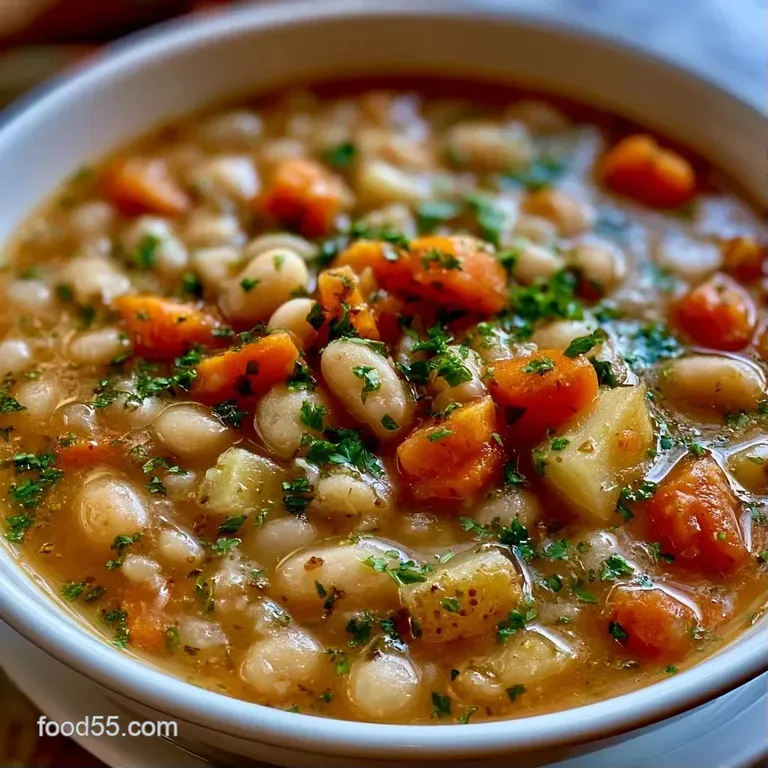
Right then, let's get this moving. The beauty of this process is that once the lid goes on, you're basically done until dinner time.
- Prep the aromatics. Roughly chop the onion, carrots, and celery. Make sure the pieces are roughly the same size so they cook evenly.
- Load the base. Add the rinsed beans, cubed potatoes, and minced garlic to the slow cooker.
- Season and liquid. Pour in the broth and stir in the thyme, rosemary, salt, and pepper. Submerge the bay leaf in the center of the liquid. Note: Pushing the bay leaf down prevents it from sticking to the lid.
- The long simmer. Secure the lid and set the slow cooker to High for 6 hours or Low for 8 hours. Do not lift the lid during the process. Lifting the lid releases heat and can add 20-30 minutes to the cook time.
- Texture check. Once beans are tender, remove the bay leaf. Use an immersion blender to pulse 3-4 times, blending a small portion of the beans to create a creamy base. Wait until the beans are soft enough to smash with a fork before blending.
- The green finish. Stir in the chopped kale and lemon juice. Let the residual heat wilt the greens for 5 minutes before serving. Note: This keeps the kale from overcooking and turning brown.
- Final touch. Garnish with fresh chopped parsley.
Chef's Note: If you want an even more velvety texture, blend a larger portion of the potatoes along with the beans. It creates a consistency similar to a creamy broccoli cauliflower cheese soup without any dairy.
Fix Common Errors
Even the best home cooks run into issues. Most "bean failures" come down to temperature or acidity.
Thin Broth Issues
If your soup looks more like a clear broth than a creamy stew, you likely didn't blend enough of the beans. The thickness comes from the starches in the potatoes and the proteins in the beans. Simply pulse the immersion blender a few more times.
Beans Still Hard
This usually happens if you added salt too early in a stovetop pot, but in a slow cooker, it's usually a sign of old beans or a "cool spot" in your crockpot. If they're still hard after 6 hours, give them another hour on high.
Bitterness in Kale
If the soup tastes slightly bitter, you might have included too many of the thick, woody stems from the kale. Always strip the leaves away from the center rib before chopping.
| Problem | Root Cause | Solution |
|---|---|---|
| Soup is too salty | Broth reduction | Stir in 1/2 cup of unsalted water or a splash of cream |
| Kale is mushy | Added too early | Stir in greens only during the last 5 minutes |
| Bland flavor | Lack of acid | Add an extra teaspoon of fresh lemon juice |
Common Mistakes Checklist:
- ✓ Did you remember to remove the bay leaf? (It's a choking hazard!)
- ✓ Did you avoid lifting the lid? (Keeping the steam in is vital)
- ✓ Are the potato cubes uniform? (Prevents some from being mush and others raw)
- ✓ Did you rinse the beans? (Removes dust and metallic tastes)
- ✓ Is the lemon juice added at the end? (Preserves the brightness)
Swaps and Ideas
Since this is a base recipe, you can easily tweak it to fit your mood or what's in the fridge.
Easy Slow Cooker White Bean Soup can be kept vegetarian, but adding a bit of smoked meat transforms the profile completely. If you're making a Slow Cooker White Bean Soup with Ham, add 1 cup of diced smoked ham during the last 30 minutes of cooking.
This ensures the ham stays tender and doesn't become rubbery.
For those wanting a Slow Cooker White Bean Soup with Kale and Sausage, brown some Italian sausage in a pan first, then add it to the slow cooker at the start. The fat from the sausage renders into the broth, adding a savory depth that is incredible.
If you're in a rush, a Slow Cooker White Bean Soup with Canned Beans is possible; just reduce the cook time to 3-4 hours on low and increase the amount of potato for thickness.
If you want a Slow Cooker White Bean Soup with Chicken, add shredded rotisserie chicken at the end with the kale. For a Slow Cooker White Bean Soup Vegetarian version, stick to the schema, but feel free to add a pinch of smoked paprika for that "meaty" flavor without the meat.
This Homemade Slow Cooker White Bean Soup is essentially a blank canvas. Whether you're aiming for the Best Slow Cooker White Bean Soup for a dinner party or just a simple Slow Cooker White Bean Soup Recipe for yourself, the core principles remain the same.
Scaling the Batch
Adjusting the volume of a slow cooker recipe isn't always a straight multiplication.
Scaling Down (Half Batch): If you're using a smaller 3 quart slow cooker, halve all ingredients. However, don't halve the cooking time by 50%. Instead, reduce it by about 20%. The beans still need a certain amount of time to reach the internal temperature required to break down their fibers.
Scaling Up (Double Batch): When doubling, be careful with the salt and dried herbs. Start with 1.5x the amount of salt and rosemary, then taste at the end. Liquids usually don't need to be fully doubled because there's less evaporation in a crowded pot.
Reduce the broth by about 10% to avoid a watery soup.
Cooking Time Adjustments: If you're using a very large commercial slow cooker, the heat distribution might be different. Stick to the "High" setting for 6 hours, but start checking the bean tenderness at the 5 hour mark.
Truth About Bean Myths
Let's clear up a few things that people always argue about in the comments.
Myth: Salt makes beans stay hard. Many old school cooks say you can't salt beans until they're soft. In reality, salt can actually help the skins soften. The real culprit for hard beans is usually "hard water" (high mineral content) or beans that are simply too old.
Myth: Slow cookers destroy nutrients. Actually, the slow, steady heat is quite gentle on the vegetables. While some Vitamin C in the kale might be lost if you overcook it, the slow process helps make the nutrients in the beans more bioavailable.
Storage and Waste
This soup actually tastes better the next day because the flavors have more time to meld and the starches settle.
Fridge & Freezer: Store leftovers in airtight glass containers in the fridge for up to 5 days. For the freezer, let the soup cool completely and freeze in portions for up to 3 months.
When reheating, you might find the soup has thickened into a porridge; just stir in a splash of water or broth to bring it back to a velvety consistency.
Zero Waste Tips: Don't throw away your veggie scraps! Save the onion skins, carrot ends, and celery tops in a freezer bag. Once you have a full bag, simmer them in water for two hours to make your own vegetable broth for the next batch of soup.
Also, any leftover kale stems can be finely diced and sautéed with garlic as a side dish.
Serving Tips
To make this dish look as vibrant as it tastes, you need to focus on color balance. The base is a pale, creamy white, so we need high contrast accents.
- 1. Forest Green
- The chopped kale and fresh parsley provide the primary contrast. Always add these at the very end so they don't fade.
- 2. Bright Yellow
- A sprinkle of fresh lemon zest on top right before serving adds a pop of color and a hit of citrus aroma.
- 3. Deep Red
- A pinch of red pepper flakes or a drizzle of paprika oil creates a stunning visual contrast against the white beans.
The Final Presentation: Serve this in a wide, shallow bowl. Top with a swirl of extra virgin olive oil and a crack of fresh black pepper. Pair it with a thick slice of toasted sourdough bread rubbed with a raw garlic clove for the ultimate rustic experience.
This combination of textures - the velvety soup, the crunchy toast, and the snappy kale - makes the meal feel complete.
Recipe FAQs
Is there a difference between white beans and cannellini beans?
Yes, but they are very similar. Cannellini beans are slightly larger and creamier, while Great Northern beans have a thinner skin and a more neutral flavor.
Which beans should not be cooked in a slow cooker?
Avoid kidney beans and soy beans. These contain lectins that require a full boil to neutralize, which slow cookers typically do not reach.
What are some common mistakes to avoid when making bean soup?
Lifting the lid too often. Every time you open the slow cooker, heat escapes and significantly increases the time needed for the beans to tenderize.
How to make the soup creamy without adding dairy?
Pulse a small portion of the beans with an immersion blender. This releases starches that naturally thicken the liquid. If you enjoyed creating a rich texture here, see how building a deep flavor profile works in our homemade chicken stock.
Can I substitute the fresh kale with frozen?
Yes, frozen kale works perfectly. Add it during the final 5 minutes of cooking to let the residual heat warm the greens through.
Is it true that you must soak dried beans before putting them in a slow cooker?
No, this is a common misconception. Great Northern beans cook beautifully from dry in a slow cooker as long as they are thoroughly rinsed and sorted.
How to reheat the soup if it becomes too thick?
Stir in a splash of water or broth. This restores the velvety consistency after the starches have settled during refrigeration.
Slow Cooker White Bean Soup