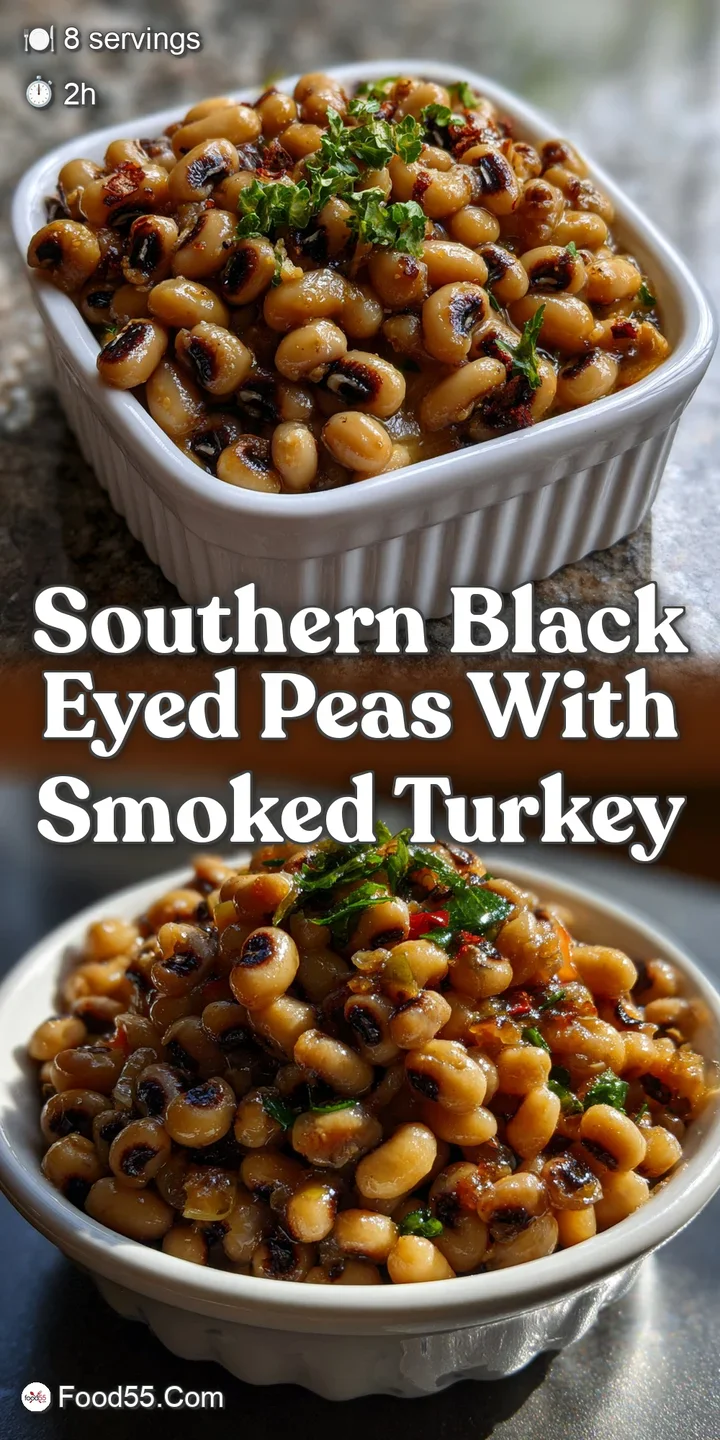
Southern Black Eyed Peas | Velvety & Smoke-Infused
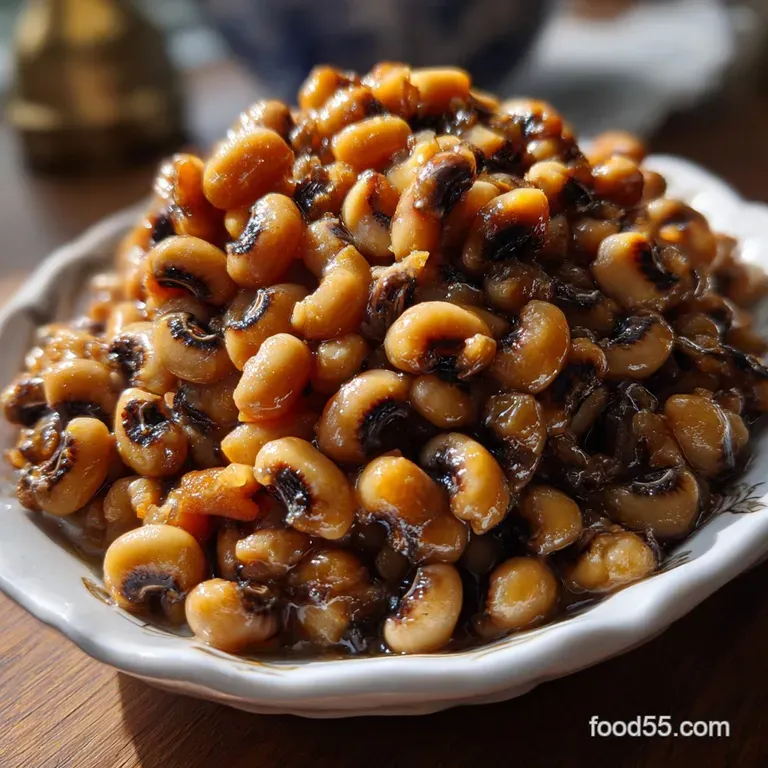
- Effort/Time: Low-active effort; 2 hour total-cook.
- Flavor Hook: Deeply savory umami with a persistent, smoky heat.
- Perfect for: New Year’s Day traditions and hearty-family-dinners.
- Soul Food Science: Mastering the Ultimate Southern Black Eyed Peas
- The Thermodynamic Magic of Slow-Simmered Legumes
- Temporal and Nutritional Benchmarks for Success
- The Alchemy of Umami: Selecting Your Elements
- The Precision Toolkit: Gear for Heat Distribution
- Thermal Execution: The Multi-Stage Simmer Protocol
- Troubleshooting Texture and Flavor Imbalances
- ⚗️ The Scaling Lab: The Physics of Quantity
- Flavor Architecture: Adapting the Bean Profile
- Preservation and Molecular Stability Protocols
- Curating the Plate: Texture and Contrast Pairings
- Recipe FAQs
- 📝 Recipe Card
Soul Food Science: Mastering the Ultimate Southern Black Eyed Peas
There is nothing more frustrating than spending two hours over a stove only to end up with a pot of gray, gritty beans and meat that feels like chewing on a salt cured shoe. I remember my first solo attempt at a Southern Black Eyed Peas recipe; I didn't account for the age of the dried legumes, and even after boiling them into oblivion, the centers remained stubbornly chalky while the skins disintegrated.
It was a texture nightmare that cost me a full afternoon and a perfectly good smoked turkey wing.
I used to think that "low and slow" was just a vague suggestion, but after destroying several batches, I realized the physics of the bean. You aren't just boiling food; you are managing starch gelatinization and the slow hydrolysis of collagen.
If the heat is too aggressive, the beans rupture before the interior softens. If the liquid isn't acidified or seasoned at the right moment, the flavor remains one-dimensional and flat.
The secret to this Southern Black Eyed Peas dish isn't a "magic" ingredient; it's the specific scientific revelation of building a flavor base and managing osmotic pressure. By sautéing our aromatics first, we create a fat-soluble foundation for the spices.
Then, by simmering the Southern Black Eyed Peas with bone-in smoked turkey, we create a natural emulsion of gelatin and fat the legendary "pot liquor" that coats every bite in a velvety, mahogany colored sauce.
The Thermodynamic Magic of Slow Simmered Legumes
- Collagen Hydrolysis: Smoked turkey wings release gelatin over 90+ minutes, creating a viscous, lip-smacking mouthfeel that water alone cannot achieve.
- Starch Gelatinization: Controlled heat allows the starch granules inside the Southern Black Eyed Peas to absorb liquid and swell uniformly without the seed coat bursting.
- Maillard Reaction: Sautéing the yellow onion and celery before adding liquid creates complex sulfur compounds that deepen the savory profile.
- Aromatic Infusion: Fat from the olive oil captures the capsaicin in the cayenne and the piperine in the black pepper, distributing heat evenly throughout the pot.
Temporal and Nutritional Benchmarks for Success
| Metric | Value | Technical Note |
|---|---|---|
| Prep Time | 15 minutes | Includes sorting, rinsing, and dicing aromatics. |
| Cook Time | 1 hour 45 mins | Required for full collagen breakdown and bean tenderness. |
| Total Time | 2 hours | Non-negotiable for flavor development. |
| Yield | 8 servings | Based on 1 lb of dry Southern Black Eyed Peas. |
| Calories | 298 kcal | Nutrient dense protein and fiber profile. |
| Protein | 23 g | Primarily from turkey wings and legume density. |
The Alchemy of Umami: Selecting Your Elements
Ingredient Chemistry Breakdown
| Ingredient | Chemical/Physical Role (Science) | The Pro Secret (Why This Matters) |
|---|---|---|
| Dry Black Eyed Peas | Starch heavy legumes requiring hydration | Sorting removes stones; rinsing removes excess saponins. |
| Smoked Turkey Wings | Source of collagen and guaiacol (smoke flavor) | Provides structural body to the "pot liquor" via gelatin. |
| Chicken Stock | Umami rich liquid medium | Adds depth that plain water lacks; balances sodium levels. |
| Yellow Onion | Disulfides and sugars for foundational sweetness | Finely dicing increases surface area for better caramelization. |
The Essential Components
- 1 lb dry black eyed peas, sorted and rinsed: Why this? Dry beans allow for better control over texture and flavor absorption than canned.
- 6 cups chicken stock: Use Swanson Chicken Broth for consistent salinity levels.
- 1 lb smoked turkey wings: Why this? These provide the essential smoky depth without the high saturated fat of pork hocks.
- 1 large yellow onion, finely diced: Provides the aromatic base.
- 2 stalks celery, diced: Adds a subtle herbaceous note that cuts through the smoke.
- 3 cloves garlic, minced: Releases allicin for a sharp, savory bite.
- 1 tbsp olive oil: Use a high-quality oil like Bertolli Extra Virgin to sauté the base.
- 1 tsp smoked paprika: Enhances the wood fired profile of the turkey.
- 0.5 tsp cayenne pepper: Provides a back-of-the-throat warmth.
- 2 dried bay leaves: Adds a floral, tea-like complexity during the simmer.
- 0.5 tsp salt: Diamond Crystal Kosher Salt is preferred for its hollow crystals and even dissolution.
- 0.5 tsp black pepper: Freshly cracked for maximum volatile oil release.
The Precision Toolkit: Gear for Heat Distribution
To cook Southern Black Eyed Peas correctly, you need a vessel with significant thermal mass. A Lodge 6 Quart Enameled Cast Iron Dutch Oven is the gold standard because it holds heat steadily, preventing the temperature fluctuations that cause beans to cook unevenly.
Unlike thin stainless steel pots, the heavy lid creates a pressurized environment that speeds up the softening of the turkey wing connective tissue.
You will also need a over high heat silicone spatula for scraping the "fond" (brown bits) off the bottom of the pot, and a fine mesh strainer for the initial rinsing of the Black Eyed Peas.
For a perfect dice on your aromatics, a sharp Wüsthof 8 inch Chef’s Knife ensures clean cuts, preventing the vegetables from bruising and turning bitter.
Thermal Execution: The Multi Stage Simmer Protocol
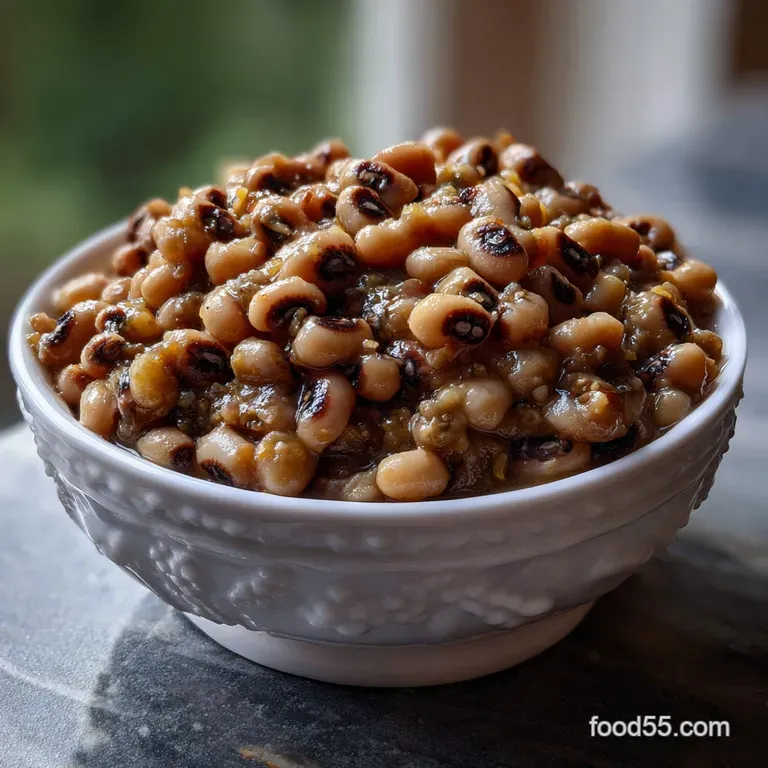
- Sort the dry Southern Black Eyed Peas. Note: Removes small stones or shriveled debris.
- Rinse the peas under cold water for 60 seconds until the water runs clear and foam subsides.
- Heat the Lodge Dutch Oven over medium high heat with 1 tbsp olive oil.
- Sauté the diced onion and celery for 6 minutes until the onion edges turn translucent and the sharp scent becomes sweet.
- Stir in the minced garlic, smoked paprika, and cayenne pepper for 45 seconds until the spices bloom and the aroma fills the kitchen.
- Pour in the 6 cups of chicken stock and add the 1 lb smoked turkey wings.
- Bring the liquid to a rolling boil until large bubbles break the surface vigorously.
- Add the rinsed Black Eyed Peas, salt, black pepper, and bay leaves.
- Reduce heat to low and cover until the liquid maintains a gentle, lazy simmer.
- Cook for 1 hour 45 mins until the peas are buttery soft and the turkey meat begins to fall away from the bone.
Chef’s Note: If you want a creamier "pot liquor," use the back of a wooden spoon to smash about 1/2 cup of the beans against the side of the pot during the last 15 minutes of cooking. This releases extra starch into the liquid.
Troubleshooting Texture and Flavor Imbalances
Why Your Eyed Peas Stay Tough
If your beans are still crunchy after 2 hours, the culprit is often "hard water" or old beans. High mineral content in water can react with the bean skins, preventing them from softening. This is a common hurdle when making a black eyed peas recipe.
| Problem | Root Cause | The Fix | Pro Protocol |
|---|---|---|---|
| Crunchy Centers | Old legumes or acidic environment too early. | Add 1/4 tsp baking soda. | Soda raises pH, weakening the pectin in the bean skins. |
| Greasy Surface | Excessive fat rendered from turkey skins. | Skim the surface with a wide spoon. | Chill the pot slightly; fat solidifies for easier removal. |
| Flat Flavor | Lack of salt/acid balance. | Add 1 tsp apple cider vinegar. | Acid brightens the heavy, smoky notes instantly. |
Lack of Depth in Flavor
If the dish tastes like "wet beans," you likely didn't sauté your aromatics long enough. The chemical transition from raw onion to caramelized onion is vital. This is why this Southern Black Eyed Peas recipe emphasizes the 6 minute sauté. For an even more complete meal, consider serving these alongside my Fried Green Tomatoes recipe to add a necessary acidic crunch to the plate.
⚗️ The Scaling Lab: The Physics of Quantity
When doubling this Southern Black Eyed Peas with smoked turkey for a large gathering, you cannot simply double everything and walk away.
- The Evaporation Paradox: In a larger pot, the ratio of surface area to volume changes. Reduce the added stock by 10% (use 10.5 cups instead of 12) to ensure the liquid reduces into a rich sauce rather than remaining a thin soup.
- Flavor Saturation: Scale spices (cayenne, paprika) to 1.5x only. Spices accumulate non-linearly in large batches; 2 full teaspoons of cayenne may overwhelm the dish.
- Thermal Mass: A double batch of cold stock and beans will take 20 minutes longer to reach a boil. Do not start your timer until the pot is at a full rolling boil.
- Carry Over Heat: A large Dutch oven retains immense energy. If you are making this as a Southern Thanksgiving Menu recipe, pull the pot off the heat when the beans are "al dente." The residual heat will finish them to perfection during the rest.
Flavor Architecture: Adapting the Bean Profile
While the stovetop method is traditional, modern tools can save time.
Southern Black Eyed Peas Instant Pot Version
To adapt this for an electric pressure cooker, reduce the stock to 4 cups (less evaporation occurs). Cook on High Pressure for 25 minutes with a natural release for 15 minutes. This method forces hydration into the Black Eyed Peas much faster.
Southern Black Eyed Peas Crock Pot Version
For the slow cooker, use the full 6 cups of stock. Sauté the aromatics in a pan first (crucial for flavor), then transfer everything to the crock pot. Cook on Low for 6 8 hours. This results in the most tender turkey meat imaginable.
Vegetarian/Vegan Swap
| Original Ingredient | Substitute | Why It Works |
|---|---|---|
| Smoked Turkey Wings | Smoked Paprika + Liquid Smoke | Replicates the wood fired notes without the animal protein. |
| Chicken Stock | Vegetable Broth + Soy Sauce | The soy sauce adds the missing "glutamate" (umami) punch. |
| Olive Oil | Smoked Olive Oil | Adds an extra layer of "char" flavor to the aromatics. |
Preservation and Molecular Stability Protocols
Storage: These Southern Black Eyed Peas actually taste better on day two. The starches continue to thicken the liquid, and the smoke permeates the beans deeper. Store in an airtight container in the fridge for up to 5 days.
Freezing: This recipe freezes beautifully. The cellular structure of the bean holds up well to ice crystal formation. Freeze in portions for up to 3 months. When reheating, add a splash of water or stock to loosen the starch heavy sauce.
💡 ZERO WASTE PHILOSOPHY: Don't discard the turkey bones! Transform: Simmer the picked clean bones in 4 cups of water for another 2 hours. Science: You'll extract a secondary "remouillage" stock that is packed with minerals and can be used to cook rice or as a base for a How to Boil recipe.
Curating the Plate: Texture and Contrast Pairings
The Classic Pairing
Traditionally, Southern Black Eyed Peas and rice (often called Hoppin' John) is the gold standard. The rice provides a neutral, fluffy counterpoint to the creamy, dense peas. Serve with a side of hot sauce the vinegar and heat cut through the rich turkey fat.
The New Year’s Tradition
In the South, these peas represent "coins" for prosperity. To complete the "luck" plate, pair them with collard greens (for "greenbacks") and cornbread (for "gold"). The sweetness of the cornbread is a scientific foil to the salt and smoke of the Southern Black Eyed Peas, creating a balanced palate profile that has sustained generations.
Whether it's a family dinner or a holiday feast, this black eyed peas recipe is the centerpiece of comfort.
Recipe FAQs
how to make southern black eyed peas?
Sauté aromatics, add peas/smoked turkey/stock, simmer 1 hour 45 minutes. Fat captures spice solubility during the initial sauté, distributing heat evenly. If you enjoyed mastering that initial flavor layering, see how the same principle of building a flavor base works in our Classic Southern Hushpuppy Recipes Easy Crispy Golden Corn Fritters.
how to make southern black eyed peas in crock pot?
Sauté aromatics, then slow cook on low for 8 hours. Reduced moisture loss in the crock pot requires the full 6 cups of stock to prevent drying. The low, constant heat ensures perfect collagen hydrolysis over time.
how to make southern black eyed peas and rice?
Cook peas separately, serve over steamed long grain white rice. Rice absorbs the savory "pot liquor" while its neutral starch balances the smoky, creamy texture of the legumes. This pairing creates a complete protein profile.
how to cook southern black eyed peas in crock pot?
Sauté first, then cook low for 8 hours, or high for 4-5 hours. Sautéing the onion and garlic first caramelizes their sugars, creating non-water soluble flavor compounds that infuse better under moist, low heat. This ensures the peas don't taste watery. You can apply this same essential flavor building step before making our Classic Southern Potato Salad Recipe: A Family Favorite.
how to cook southern black eyed peas with bacon?
Use bacon fat to sauté aromatics, then use less salt overall. Bacon introduces significant sodium early in the cooking process, requiring careful management of added seasoning later.
If you enjoyed the fatty texture from rendered bacon, you might also appreciate the deep, sweet fat profile in our Easy Cracker Barrel Fried Apple Recipe: A Southern Comfort Classic.
Do I need to soak black eyed peas before cooking?
No. Soaking is optional for this slow simmered method. Skipping the soak reduces the cooking time variance caused by hard water or mineral leeching into the soaking liquid. Relying on long, slow simmering ensures uniform hydration and prevents skin rupture.
Can I use canned black eyed peas instead?
No. Canned beans lack the necessary starch for a creamy sauce. Canned legumes have already gelatinized their starch structure in the canning brine, preventing the essential "pot liquor" from emulsifying correctly. Canned beans will remain soupy rather than developing the desired velvety texture.
Southern Black Eyed Peas Masterclass 2
Ingredients:
Instructions:
Nutrition Facts:
| Calories | 298 kcal |
|---|---|
| Protein | 23 g |
| Fat | 6.2 g |
| Carbs | 38 g |
| Fiber | 6.5 g |
| Sugar | 3.1 g |
| Sodium | 845 mg |
