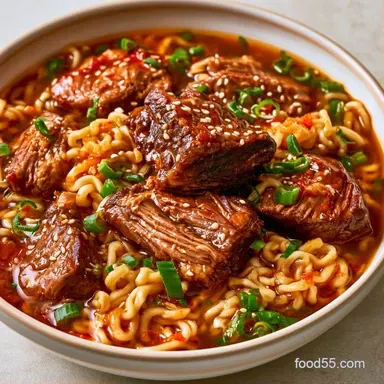
Tender Beef Short Rib Ramen

- Prep20 Mins
- Cook3 Hrs
- Servings4
- Time: 20 min active + 180 min cooking
- Make it when: you have a free afternoon for a high-impact dinner
- Pairs with: spicy pickled radish or steamed edamame
- Make ahead: the beef and broth keep for 4 days in the refrigerator
Beef Short Rib Ramen
Achieving that rich, dark ramen shop taste doesn't require simmering a pot for a full day. While many believe an overnight braise is the only way to get tender ribs, a pressure cooker breaks down the connective tissue in a fraction of the time.
A hard sear and a focused blend of aromatics create a concentrated, savory broth that tastes as though it simmered for ages, even though it reaches the table in about three hours.
The resulting bowl balances the richness of beef fat with the sharpness of rice vinegar and the heat of gochujang, offering a modern take on a classic comfort dish.
How It Comes Together
- Pressure-Cooked Collagen: High pressure forces the collagen in the ribs to melt into gelatin quickly. This creates a rich mouthfeel and fork-tender meat in 90 minutes.
- Concentrated Braise: Using the braising liquid as the broth base ensures the noodles and soup carry the same deep, glossy amber flavor as the beef.
| Cooking Method | Time | Texture | Best For |
|---|---|---|---|
| Pressure Cooker | 3 hours | Fall-apart tender | Fast, deep flavor |
| Stovetop Braise | 8 hours | Slow-melted | Low and slow traditionalists |
Essential Gear
A pressure cooker (like an Instant Pot) is the main tool here for the braise. You'll also need a heavy skillet for the sear, a fine-mesh strainer to clean the broth, and an ice bath for the eggs.
What You Need
| Ingredient | What It Does | Best Swap |
|---|---|---|
| Bone-in Short Ribs | Provides richness and structure | Chuck roast (cut into chunks) |
| Star Anise | Adds a subtle, licorice-like depth | Cloves (use half the amount) |
| Gochujang | Adds fermented heat and color | Sriracha + a pinch of sugar |
The Main Components
- 3 lbs bone-in beef short ribs Why this? Bone-in cuts provide the most gelatin for the broth
- 2 tbsp neutral oil
- 1 medium yellow onion, finely diced
- 3 tbsp fresh ginger, peeled and minced
- 4 cloves garlic, minced
- 2 cups beef stock
- 2 tbsp rice vinegar
- 1/2 cup reduced-sodium soy sauce
- 2 tbsp brown sugar
- 1 stick cinnamon
- 2 whole star anise
- 400 g ramen noodles
- 4 cups low-sodium beef broth
- 2 tbsp reduced-sodium soy sauce
- 4 large eggs
- 2 cups baby bok choy, halved
- 4 stalks green onion, thinly sliced
- 1 tbsp gochujang
- 1 sheet nori, cut into rectangles
- 1 tsp toasted sesame seeds
Recipe Specs
- Yield: 4 servings
- Prep time: 20 minutes
- Cook time: 180 minutes
- Total time: 200 minutes
- Beef Doneness: Fork-tender (internal temp 145°F/63°C)
Key Steps
Achieving the Rich brown Crust
- Pat the short ribs completely dry with paper towels. Note: Moisture prevents browning
- Heat 2 tbsp neutral oil in a skillet over high heat until shimmering.
- Sear the ribs on all sides until a dark, rich brown crust forms, about 3-4 minutes per side, then transfer the ribs to the pressure cooker.

Mastering the Pressure Braise
- Sauté the diced onion, minced garlic, and minced ginger in the remaining beef fat in the skillet until fragrant.
- Stir in 2 tbsp brown sugar and cook until it caramelizes slightly.
- Add 2 cups beef stock, 2 tbsp rice vinegar, 1/2 cup reduced-sodium soy sauce, 1 stick cinnamon, and 2 whole star anise to the pressure cooker.
- Return the seared ribs to the pot, lock the lid, and cook on High Pressure for 90 minutes.
- Allow a 15-minute natural pressure release before venting the remaining steam.

Refining the Broth
- Carefully remove the tender ribs with a slotted spoon.

- Pour the braising liquid through a fine mesh strainer into a pot, discarding the solids.
- Bring the liquid to a simmer and skim any excess fat from the surface.
- Whisk in 4 cups low-sodium beef broth and 2 tbsp reduced-sodium soy sauce to balance the intensity.
Executing the Perfect Finish
- Boil the 400 g ramen noodles according to package directions (usually 2-3 minutes) until just underdone (al dente), then drain.
- Simultaneously, cook 4 large eggs in boiling water for exactly 6.5 minutes, then immediately shock them in an ice bath; peel and halve the eggs. Note: Use pasteurized eggs to lower risk since yolks remain soft

- Divide the noodles among four deep bowls.
- Pour the steaming broth over the noodles.
- Top each bowl with a piece of braised beef (cooked until fork-tender), a halved egg, blanched bok choy, and sliced green onions.
- Garnish with nori rectangles, 1 tsp toasted sesame seeds, and a dollop of gochujang.
Troubleshooting
When making beef short rib ramen, the most common issues involve the texture of the meat or the salt balance of the broth. If the ribs feel tough, it's usually because the connective tissue hasn't fully broken down. A quick extra pressure cycle usually fixes this.
If the broth tastes too salty, don't add more water, as that dilutes the flavor. Instead, add a splash more rice vinegar or a squeeze of lime to cut through the sodium with acidity.
Fixing Tough Meat
Check the ribs with a fork. If they don't slide apart, return them to the pressure cooker for 15-20 more minutes on High Pressure.
Balancing the Broth
Taste the soup before adding the final soy sauce. If it's already punchy, skip the extra soy and add a pinch of sugar to mellow it out.
Preventing Mushy Noodles
Always undercook the noodles by 30 seconds. They continue to cook in the hot broth after you pour it in.
| Problem | Root Cause | Solution |
|---|---|---|
| Meat is chewy | Under-braised collagen | Pressure cook for 20 more mins |
| Broth is too salty | Excessive soy reduction | Add rice vinegar or a pinch of sugar |
| Noodles are soft | Overboiled before plating | Drain 30 seconds early |
Storage and Reheating

Store the braised beef and broth in separate sealed containers in the refrigerator for up to 4 days. The broth freezes well for up to 3 months. If freezing the beef, keep it submerged in its own braising liquid to stop it from drying out.
To reheat, gently simmer the broth on the stove. Reheat the beef in a small pan with a splash of broth to keep it moist. To ensure safety, leftovers should reach an internal temperature of 165°F (74°C), as per USDA FSIS guidelines. Always cook fresh noodles right before serving.
Creative Twists
Modify this beef short rib ramen by replacing the gochujang with miso paste for a saltier, fermented profile without the heat. For a woodland-inspired twist, add sliced shiitake mushrooms during the sauté step.
For a gluten-free version, substitute the soy sauce with tamari (labelled gluten-free) and ensure your ramen noodles are made from buckwheat or brown rice. For this gluten-free version, also use products labelled gluten-free for the broth or stock.
| Original | Substitute | Impact |
|---|---|---|
| Soy Sauce | Tamari (labelled gluten-free) | gluten-free; slightly richer flavor |
| Gochujang | Miso Paste | Less heat; more earthy, salty notes |
| Bok Choy | Spinach | Faster cook time; milder taste |
Final Presentation
Plating is where you can really showcase this dish. Depending on the vibe of your dinner, try these three levels.
Simple
Place the noodles in a bowl, pour the broth, and lay the beef and eggs on top. It's a casual, cozy look.
Polished
Arrange the bok choy and nori against the side of the bowl. Place the beef in the center and nestle the egg halves on either side for a clean, balanced composition.
Restaurant
Use a wide, shallow bowl. Place a single, precise dollop of gochujang on top of the beef. Use tweezers to place the green onion curls and sesame seeds with surgical precision.
| Level | Key Tweak | Visual Vibe |
|---|---|---|
| Simple | Casual heap | Homey |
| Polished | Symmetrical layout | Modern |
| Restaurant | Precision garnishing | High-end |
If you want a side to accompany the meal, these Pull-Apart Rolls with Honey recipe provide a great crusty contrast to the rich broth.
CRITICAL: Very High in Sodium
4720 mg of sodium per serving (205% of daily value)
American Heart Association recommendation: no more than 2,300 mg of sodium per day
Tips to Reduce Sodium
-
Swap the Soy Sauce
Replace the reduced-sodium soy sauce with coconut aminos, which typically contains significantly less sodium while providing a similar savory flavor.
-
Use Unsalted Broth
Substitute both the beef stock and low-sodium beef broth with homemade unsalted beef stock or water infused with roasted vegetables.
-
Moderate the Gochujang
Reduce the amount of gochujang and compensate for the flavor by adding more fresh red chili flakes or a pinch of smoked paprika.
-
Choose Low-Sodium Noodles
Check the label for salt-free ramen noodles or rinse pre-cooked noodles thoroughly under warm water to remove surface sodium.
-
Enhance with Aromatics
Double the amount of fresh ginger, garlic, and rice vinegar to create a bolder flavor profile that reduces the need for salty seasonings.
Frequently Asked Questions
How to prepare the beef short ribs for this ramen?
Pat the ribs completely dry with paper towels before searing. This helps a dark, deep golden brown crust form in the skillet.
Is it necessary to peel the ginger, or can the skin stay on?
Peel the ginger before mincing it. Leaving the skin on can introduce bitterness and woody bits into the broth.
How can the spice level be adjusted for mild or very low heat tolerance?
Reduce or omit the dollop of gochujang added as a garnish. Since it is added at the end, you can easily control the heat for each bowl.
What should be done with the foam that rises when the ribs first boil?
Skim the excess fat and foam from the surface with a spoon while the liquid simmers. This creates a clearer, cleaner-tasting broth.
Beef Short Rib Ramen Instant Pot