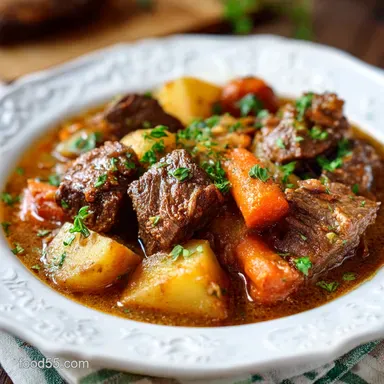
Fall-Apart Beef Stew

- Prep15 Mins
- Cook3 Hrs 30 Mins
- Servings6
- Time: 15 min active + 210 min cooking
- Flavor & Texture: Rich, savory, and velvety
- Perfect for: Cold Sunday afternoons or meal prep for the week
Classic Beef Stew
Few things beat the scent of beef browning in a hot pot on a chilly afternoon. That rich, caramelized aroma fills the air, signaling that something warm and comforting is on the way. It requires some patience, but the reward is meat so tender it barely needs a fork to break apart.
You’ll be left with a thick gravy and tender root vegetables. It’s a wonderful excuse to gather everyone around the table, turning a rainy day into a cozy occasion.
The Logic Behind It
- Batch Searing: Browning the meat in small groups prevents the pot from crowding. If the meat is too close, it steams in its own juices instead of searing, which means you lose that deep brown flavor.
- Collagen Breakdown: Using chuck allows the connective tissue to melt into gelatin over several hours. This naturally thickens the sauce and gives the meat a tender, pull-apart texture.
| Method | Time | Texture | Best For |
|---|---|---|---|
| Stovetop | 3.5 hours | Consistent, glossy | Precise control over heat |
| Oven | 3.5 hours | Evenly tender | Set and forget convenience |
Recipe Specs
| Component | Purpose | Substitute Notes |
|---|---|---|
| Beef Chuck | Supplies fat and collagen | Stew meat is fine, though chuck is more flavorful |
| Tomato Paste | Deepens color and flavor | Tomato sauce is an option, but use 3x the amount |
| Yukon Gold | Maintains structure while cooking | Russets are okay but break down more easily |
The Grocery List
- 2 lbs beef chuck, cut into 1-inch cubes
- 1/4 cup vegetable oil
- 3 tbsp all-purpose flour Why this? Aids in browning the meat and thickening the gravy
- 1 tsp salt (kosher)
- 1/2 tsp ground black pepper
- 3 cups beef broth with lemon juice Why this? The acidity helps balance the richness
- 2 tbsp tomato paste
- 4 cloves garlic, minced
- 1 medium yellow onion, diced
- 2 bay leaves
- 1 tsp dried thyme
- 3 large carrots, sliced into thick rounds
- 1½ lbs Yukon Gold potatoes, cubed
- 1 cup frozen peas
- 2 tbsp fresh parsley, chopped
| Original Ingredient | Substitute | Why It Works |
|---|---|---|
| Yukon Gold Potatoes | Parsnips | Similar heartiness. Note: Provides a sweeter, peppier taste |
| All-purpose Flour | Cornstarch slurry | gluten-free alternative. Note: Add at the end; doesn't help with searing |
| Dried Thyme | Dried Oregano | Comparable earthy profile. Note: Use slightly less as oregano is more pungent |
Kitchen Gear Needed
- Large Dutch oven or heavy-bottomed pot with a tight lid
- Wooden spoon or silicone spatula
- Tongs for flipping meat
- Paper towels (for drying the beef)
- Meat thermometer
Cooking Steps
Phase 1: The Sear
- Use paper towels to pat the beef cubes completely dry. In a bowl, toss them with 3 tbsp all-purpose flour, 1 tsp kosher salt, and 1/2 tsp black pepper until lightly coated. Note: Dry meat browns faster and better
- Set a Dutch oven to medium-high and warm 1/4 cup vegetable oil. To avoid overcrowding, sear the beef in 3 separate batches. Let each piece sit undisturbed for 3–5 minutes until a dark golden crust forms and the beef detaches effortlessly from the surface. Transfer the browned meat to a plate.

Phase 2: Building Depth
- Using the leftover fat, sauté the diced yellow onion for 5 minutes until translucent. Mix in the minced garlic and 2 tbsp tomato paste, cooking for another 2 minutes until the paste turns a dark brick red.
- Stir in 3 cups beef broth with lemon juice. Use a wooden spoon to deglaze the pot, scraping up the browned bits (fond) from the bottom. Note: This is where the deep flavor lives

- Put the seared beef and any resting juices back into the pot. Add 2 bay leaves and 1 tsp dried thyme.
Phase 3: The Low Simmer
- Get the liquid boiling, then promptly drop the temperature to low. Cover with a tight-fitting lid and let it simmer gently for 2 hours. For oven braising, set the temperature to 160°C (320°F).
- Stir in the cubed Yukon Gold potatoes and sliced carrots. Cover and continue simmering for 45–60 minutes.

- Test the beef with a fork; it should fall apart without resistance and reach an internal temperature of 63°C (145°F).
Phase 4: Final Touches
- Fold in the frozen peas during the final 5 minutes of cooking.

- Sprinkle with chopped fresh parsley before serving.
Fixing Common Problems
If the sauce feels a bit thin, don't panic. It happens if the beef wasn't floured heavily or if the vegetables released a lot of water. A quick fix is to smash a few potato chunks against the side of the pot, which releases starch and thickens the liquid.
When the beef stays tough, it usually means the heat was too high. If the liquid boils aggressively, the muscle fibers tighten up. A gentle simmer is the only way to get that melt-in-your-mouth feel.
Sauce and Texture Fixes
| Problem | Root Cause | Solution |
|---|---|---|
| Sauce is too watery | Not enough starch or over-diluted | Mash 2 potato cubes into the sauce or simmer uncovered for 15 mins |
| Beef is tough | Cooked at too high a temperature | Lower the heat and simmer for another 30–60 minutes |
| Vegetables are mushy | Added too early in the process | Add carrots and potatoes during the last hour of cooking |
| Taste is too acidic | Too much lemon juice or tomato paste | Stir in a pinch of sugar or a small knob of butter |
Keeping and Reheating
Place any extra portions in an airtight vessel and refrigerate for 3 to 4 days, as recommended by USDA food safety guidelines. The broth continues to permeate the vegetables overnight, making the flavor even richer.
This meal freezes well. Divide it into freezer-safe containers, leaving one inch of space at the top to allow for liquid expansion and avoid cracking the lid. It stays good for up to 3 months.
To reheat, use the stove over medium-low. Stir in a small amount of beef stock or water, since the potatoes absorb the liquid while sitting. Warm it through until the internal temperature hits 165°F (74°C) to ensure safety.
Serving Suggestions

Because this is a hearty meal, it pairs perfectly with something that can absorb the extra gravy. A thick piece of toasted sourdough or some buttered noodles are great choices. For a bread option, these Sourdough Dinner Rolls are excellent for dipping.
A simple serving of steamed greens, such as kale or spinach, brings a touch of freshness to the plate. I personally enjoy a side of crisp apple slices or a light arugula salad to balance the savory depth of the beef.
Easy Swaps
Root Vegetable Feast
If you want more variety, replace half the potatoes with parsnips or turnips. They add a slightly peppery, earthy sweetness that fits the fall vibe. Just make sure to cut them into similar sizes so they cook at the same rate.
Gluten-free Version
Skip the flour during the searing process. To get the sauce thick, mix 1 tbsp of cornstarch with 1 tbsp of cold water to make a slurry. Stir this into the pot during the last 15 minutes of simmering. For this gluten-free version, also use products labelled gluten-free for the broth or stock.
Extra Hearty Style
For a thicker, more porridge-like consistency, add a diced pearl onion or a handful of mushrooms during the sauté phase. This adds more layers of umami and makes the meal feel even more substantial.
High in Sodium
856 mg of sodium per serving (37% of daily value)
American Heart Association recommendation: no more than 2,300 mg of sodium per day
Tips to Reduce Sodium
-
Swap the Broth
Replace the standard beef broth with low-sodium or no-salt-added beef broth to drastically reduce the primary source of salt.
-
Reduce Added Salt
Omit or significantly reduce the kosher salt, as the broth and tomato paste already contain sodium.
-
Low-Sodium Tomato Paste
Check the label and select a no-salt-added tomato paste to avoid unnecessary hidden sodium.
-
Enhance with Herbs
Increase the amount of dried thyme and fresh parsley, or add a pinch of crushed red pepper to boost flavor without adding salt.
-
Boost Acidity
Add an extra squeeze of fresh lemon juice or a teaspoon of apple cider vinegar at the end to brighten the flavor and mimic the taste of salt.
Recipe FAQs
How do I make beef stew from scratch?
Pat beef cubes dry, toss in flour, sear in batches, then simmer with vegetables and broth.
Tip: use a Dutch oven for the most consistent heat.
What can I use beef stew meat for besides beef stew?
Use these cuts for any braised dish or slow-cooked pot roast.
Tip: serve the stew with sourdough rolls to soak up the sauce.
How long should stewing beef be cooked for?
Simmer the meat for 2 hours before adding the root vegetables for another 45 to 60 minutes.
Tip: ensure the beef breaks apart easily with a fork before serving.
Why is the beef dry or tough even after a long cook?
Tough meat usually means the collagen hasn't fully melted into gelatin yet.
Tip: continue simmering on low until the internal temperature reaches at least 63°C (145°F).
How can I add more flavor to my stew?
Sear the beef in small batches to create a dark golden crust.
Tip: scrape the bottom of the pot after adding broth to release the savory browned bits.
Why do the vegetables turn mushy when the stew cooks for a long time?
Vegetables break down if they simmer as long as the meat.
Tip: add carrots and potatoes only during the final hour of cooking.
Can you thicken the sauce if it stays thin after cooking?
Simmer the liquid without the lid for a short period to reduce it.
Tip: tossing the beef in flour before searing provides the primary thickening base.
Fall-Apart Beef Stew