Olive Bacon and Cheese Bread Recipe
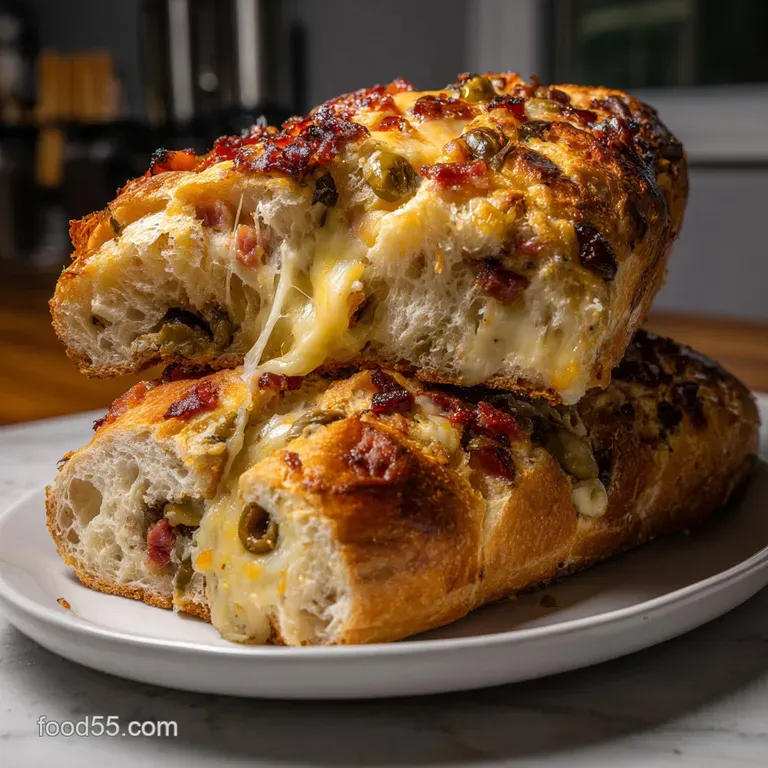
- Time: Active 45 minutes, Passive 2 hours 30 mins, Total 3 hours 15 mins
- Flavor/Texture Hook: Shatter crisp crust with a soft, molten cheese interior
- Perfect for: Cozy weekend brunches or a show stopping side for dinner parties
- Share This Olive Bacon and Cheese Bread
- Essential Timing and Recipe Details
- Selecting Quality Ingredients for Success
- Best Tools for Your Loaf
- Simple Steps for Perfect Baking
- Fixing Your Common Baking Hurdles
- Variations for Savory Bread Lovers
- Storing Bread and Reducing Waste
- Serving Your Fresh Savory Loaf
- Comparing Oven and Stovetop Methods
- Recipe FAQs
- 📝 Recipe Card
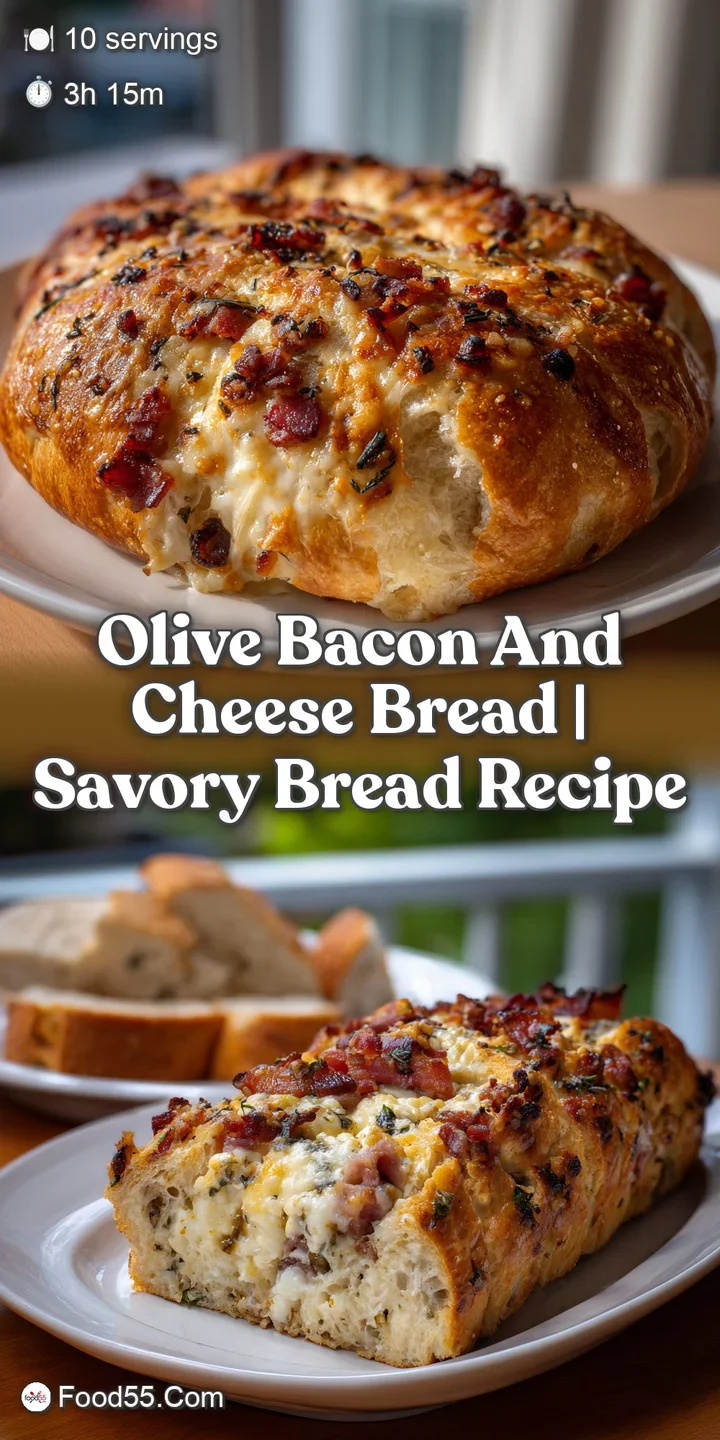
Imagine the sizzle of thick cut bacon hitting a hot Lodge Cast Iron Skillet, the smoky aroma drifting through the house and pulling everyone into the kitchen. That is the soul of this Olive Bacon and Cheese Bread.
It is not just a side dish; it is a centerpiece that celebrates the joy of sharing a warm, hand torn loaf with the people you love most. I have made this for countless neighborhood potlucks, and it never fails to be the first thing that disappears from the table.
We are going for a rustic, artisan style finish here. You do not need to be a professional baker to get that crackling crust and airy crumb. By using a few simple techniques, like folding the dough instead of heavy kneading, we keep the texture light despite the heavy, savory bits tucked inside.
Trust me on this, once you smell that Sharp White Cheddar melting into the crumb, you will never want to go back to store-bought loaves again.
This recipe is all about layers of flavor. We start with a foundation of high protein flour, then build up with the brine of Kalamata olives and the richness of bacon. It is a convivial process, perfect for a slow Sunday afternoon when the rhythm of the kitchen provides its own kind of therapy.
Let’s get our hands floury and create something that brings people together.
Share This Olive Bacon and Cheese Bread
There is something deeply satisfying about a Savory Bread that requires no butter because it is already packed with so much goodness. When you pull this loaf out of the oven, the house smells like a Mediterranean bakery mixed with a classic breakfast diner.
The Sharp White Cheddar creates these little "cheese lace" skirts where it hits the hot pot, providing a crunch that contrasts beautifully with the velvety interior.
I remember a mistake I once made early on. I tried to use low-fat cheese and pre pitted canned olives. The result was, frankly, a bit sad. The bread lacked that punchy, salty kick that makes this specific Olive Bacon and Cheese Bread recipe so memorable. Now, I always insist on hand cubing the cheese.
Those 1/2 inch pieces of Cabot Sharp White Cheddar stay somewhat intact, creating molten pockets that are absolutely brilliant when encountered mid bite.
Whether you are serving this alongside a bowl of soup or using it for the most indulgent grilled cheese sandwich of your life, this bread delivers. It is about cultural exchange through food taking the salty staples of a Mediterranean diet and pairing them with the smoky comfort of bacon.
It is a loaf designed for connections, meant to be broken by hand and passed around the table with plenty of laughter.
Essential Timing and Recipe Details
Precision matters when we are working with yeast, but do not let the clock intimidate you. Most of the time listed is passive, meaning you can go about your day while the biology of the dough does the hard work.
We are aiming for a total time of 3 hours 15 mins, which includes the bulk fermentation and the final proof.
| Metric | Checkpoint |
|---|---|
| Water Temp | 105°F (Warm to the touch, not hot) |
| Bacon Weight | 225g (Measured before dicing) |
| Flour Protein | 12.7% (Crucial for structure) |
While the bake time is roughly 45 minutes, your senses are the best guide. You are looking for a deep mahogany color on the crust. If you tap the bottom of the loaf, it should sound hollow like a small drum.
That hollow thud is the signal that the moisture has evaporated sufficiently, leaving behind a light, airy structure rather than a gummy center.
Selecting Quality Ingredients for Success
Building a great Cheese Bread starts with the integrity of your components. We are using King Arthur Bread Flour because its high protein content creates a strong gluten network. This is vital because we are asking the dough to hold up 150g of olives and a significant amount of bacon.
A weaker flour would collapse under that weight, leaving you with a flat, dense brick.
The Component Analysis
| Ingredient | Science Role | Pro Secret |
|---|---|---|
| Bread Flour (500g) | Structural integrity | Use a kitchen scale for 500g; cups are too inconsistent. |
| Active Dry Yeast (7g) | Fermentation and lift | Dissolve in water with 5g sugar to "bloom" and verify it's alive. |
| Sharp White Cheddar (175g) | Fat and moisture | Cube it by hand; pre shredded cheese has starch that prevents melting. |
| Kalamata Olives (150g) | Acid and salt | Pat them dry before adding to avoid "purple" streaks in the dough. |
For the bacon, go for thick cut varieties. We want 225g of diced pieces that can stand up to the long bake. If the bacon is too thin, it simply dissolves into the dough. You want to feel that meaty texture when you bite into a slice.
Using Diamond Crystal Sea Salt also makes a difference; its flaky texture distributes more evenly than fine table salt, preventing any localized "salt bombs" in your Olive Bacon and Cheese Bread.
For the Savory Inclusions
The 225g of diced bacon should be fried until it is about 80% cooked. It will finish rendering its fat inside the loaf, which actually flavors the surrounding dough. This is a subtle way to ensure the smoky notes permeate every crumb. If you use the Effortless Bread Machine recipe for other projects, you know how inclusions can change dough consistency; here, the bacon fat acts as a natural softener.
For the Foundation
The 350ml of filtered water is our hydration source. At roughly 70% hydration, this dough is tacky but manageable. If you find the dough is too wet, resist the urge to dump in more flour immediately.
Often, a few minutes of resting a process called autolyse allows the flour to fully hydrate and the dough to become less sticky on its own.
Best Tools for Your Loaf
You do not need a garage full of gadgets, but a few specific items will make your life much easier. A Lodge Cast Iron Dutch Oven is my top recommendation for baking. It mimics a professional steam injection oven by trapping the moisture escaping from the dough.
This steam keeps the surface of the loaf supple for longer, allowing for a massive "oven spring" before the crust finally hardens and crisps.
A sharp bench scraper is another must have. It helps you manipulate the dough without it sticking to your hands. When dealing with the 150g of halved Kalamata olives, a small offset spatula can also help tuck any escaping olives back into the folds of the dough.
Finally,, use a digital thermometer to check the internal temperature of the bread; 205°F is the "sweet spot" for a fully cooked interior.
Simple Steps for Perfect Baking
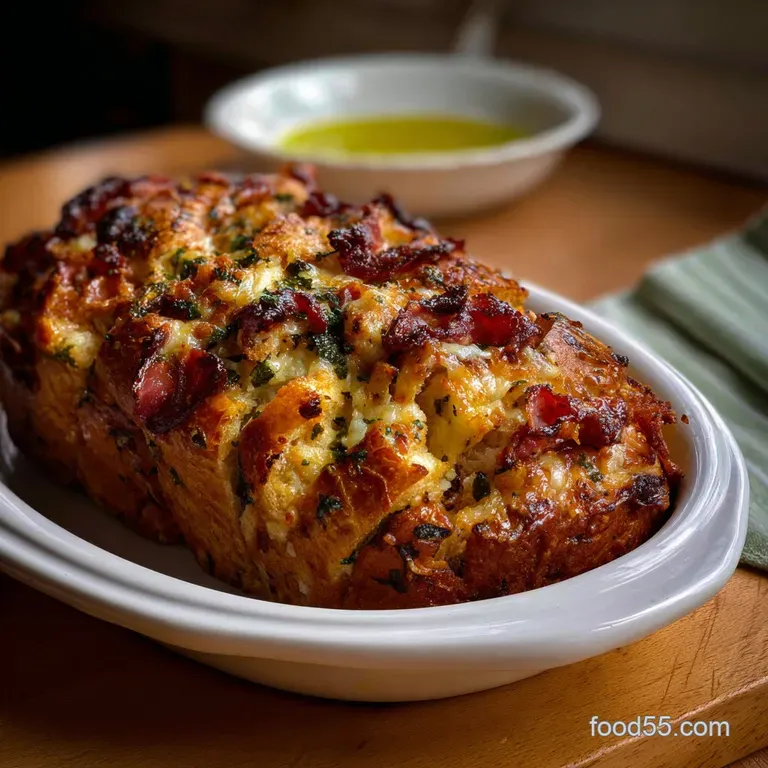
Right then, let's crack on with the process. Follow these stages to ensure your bacon and cheese are perfectly distributed.
Phase 1: Preparing Inclusions
- Fry the bacon. Sizzle the 225g diced bacon in a skillet until golden but not brittle. Drain on paper towels. Why this? Removing excess grease prevents the dough from becoming too oily.
- Prep the olives. Halve 150g of Kalamata olives and pat them very dry. Note: Excess brine will turn your dough an unappealing grey color.
- Cube the cheese. Cut 175g of Sharp White Cheddar into 1/2 inch cubes. Keep these in the fridge until the very last moment.
Phase 2: Developing Dough
- Bloom the yeast. Stir 7g active dry yeast and 5g sugar into 350ml warm water (105°F). Wait 5 minutes until a foamy head appears.
- Mix the base. In a large bowl, whisk 500g bread flour and 10g sea salt. Pour in the yeast mixture and stir until no dry flour remains.
- First rest. Cover the bowl with a damp cloth and let it sit for 30 minutes. This allows the gluten to begin forming without any physical effort.
Phase 3: Fold and Rise
- Incorporate inclusions. Gently fold in the bacon, olives, and cheese. Use a "stretch and fold" technique pulling the edge of the dough up and over the center.
- Bulk fermentation. Cover and let rise in a warm spot for 1 hour 30 mins until doubled in size.
- Final shaping. Turn the dough onto a floured surface. Shape into a round boule and place onto parchment paper. Let it proof for another 30 minutes.
Phase 4: over High heat Bake
- Bake the bread. Pre heat your Dutch oven at 450°F. Carefully lower the dough (with parchment) into the pot. Bake covered for 25 minutes, then uncovered for 20 minutes until the crust is dark gold and the cheese is bubbling.
Fixing Your Common Baking Hurdles
Even the best of us hit a snag now and then. Bread is a living thing, influenced by the humidity in your kitchen and the age of your flour. But don't worry, most issues have a very simple fix.
Dough is Too Sticky
If your dough feels like it is trying to glue your fingers together, it likely hasn't developed enough tension. Instead of adding flour, try wetting your hands with cold water. This prevents the dough from sticking to you while you perform your folds.
If it is still unmanageable, give it an extra 15 minutes to rest; time is often the best "kneader" there is.
Bread is Gummy Inside
This usually happens if you cut into the loaf while it is still steaming hot. I know the aroma of the Olive Bacon and Cheese Bread is tempting, but that internal steam is still finishing the cooking process. If you slice it too early, the steam escapes instantly, leaving the starches collapsed and gummy.
Wait at least 1 hour before slicing!
| Problem | Cause | Fix | Pro Tip |
|---|---|---|---|
| No Rise | Dead yeast or cold water | Check expiration; use 105°F water | Bloom yeast with a pinch of sugar first. |
| Burnt Bottom | Heat concentration | Place a baking sheet on the rack below | Use a double layer of parchment paper. |
| Inclusions Fall Out | Poor folding technique | Use "stretch and fold" method | Lightly flour the inclusions before adding. |
Variations for Savory Bread Lovers
While this specific Olive Bacon and Cheese Bread recipe is my favorite, you can certainly play around with the profile. If you want a bit of heat, try swapping the Sharp White Cheddar for Pepper Jack and adding a teaspoon of crushed red pepper flakes to the flour.
It provides a lovely warmth that pairs beautifully with the salty olives.
The Mediterranean Twist
For a lighter version, you can omit the bacon and use sun dried tomatoes instead. I like to use a Goat Cheese Bacon and Olive Quick Bread approach for a different texture entirely, but keeping it as a yeast bread ensures that classic chewy crust. This variation is fantastic when served with a bright Creamy Broccoli Cauliflower recipe for a full meal.
Keto Bread Swaps
If you are looking for a Keto Olive Bacon and Cheese Bread, you will need to replace the 500g of bread flour with a mix of almond flour, coconut flour, and xanthan gum. Note: The texture will be significantly denser and more "cake like" than a traditional yeast loaf, but the flavors of the bacon and cheese still shine through brilliantly.
Storing Bread and Reducing Waste
To keep your bread fresh, store it in a paper bag at room temperature for up to 3 days. Avoid plastic bags, as they trap moisture and turn that beautiful crust soft and rubbery. If you want to keep it longer, this bread freezes exceptionally well.
Slice it first, then wrap the slices tightly in foil and place them in a freezer bag for up to 2 months. You can pop a frozen slice directly into the toaster for a quick snack.
Don't ever throw away the crumbs or small end pieces! Those leftover bits are gold. Pulse them in a food processor to make the most incredible savory breadcrumbs you have ever tasted. Use them to top a mac and cheese or as a coating for chicken cutlets.
Even the rendered bacon fat from the skillet can be saved in a jar in the fridge to sauté vegetables later zero waste is all about respecting the ingredients.
Serving Your Fresh Savory Loaf
This loaf is a communal experience. I love placing the whole round boule in the center of the table on a wooden board and letting everyone dig in. It is fantastic on its own, but if you want to take it to the next level, serve it with a small bowl of high-quality olive oil and a splash of balsamic vinegar.
For a more formal gathering, slice the bread thick and toast it under the broiler for a minute. Then, rub a raw clove of garlic over the warm surface. The heat from the bread melts the garlic slightly, adding another layer of aroma.
This bread also makes the ultimate base for an avocado toast the saltiness of the olives and the crunch of the bacon provide a perfect counterpoint to the creamy avocado.
Comparing Oven and Stovetop Methods
While the Dutch oven is the gold standard for this recipe, you might be curious about other ways to achieve a great loaf. Some people swear by using a heavy skillet on the stovetop for "flatbread" versions, but for a full artisan boule, the oven is hard to beat.
| Feature | Dutch Oven (Recommended) | Stovetop Skillet (Alternative) |
|---|---|---|
| Crust Texture | Shatter crisp and thick | Softer, more charred spots |
| Crumb Structure | Airy with large holes | Denser and more uniform |
| Flavor Profile | Toasted and complex | Smokier from direct contact |
Debunking Baking Myths
Myth: You must knead the dough for 10 minutes to develop gluten. Truth: Long fermentation and the "stretch and fold" method develop gluten just as effectively as heavy kneading. This is why our Olive Bacon and Cheese Bread stays so light despite the heavy inclusions.
Myth: Sugar kills yeast if it touches it directly. Truth: In small amounts, sugar is actually "food" for the yeast. It helps the yeast activate faster and contributes to the browning of the crust through caramelization.
Whatever path you take, the goal is the same: bringing people together through the simple, honest act of baking. This bread is a testament to how a few humble ingredients flour, water, salt, and yeast can be transformed into a feast when you add a little heart and some smoky bacon. Enjoy the process, and even more, enjoy the connections you make while sharing the results. For another great way to use these flavors, try a How to Make recipe for a sandwich base. Happy baking!
Recipe FAQs
Can I substitute the bread flour with all-purpose flour?
No, this is highly discouraged. Bread flour's higher protein content (around 12.7%) is crucial for developing the necessary gluten structure to support the heavy olives and bacon inclusions.
Why is my crust coming out soft instead of shatter crisp?
You likely cut the loaf too soon after baking. The bread needs time to cool; slicing while steamy prevents moisture from fully evaporating, which ruins the crust texture. Wait at least an hour, or use a Dutch Oven for the best spring.
How can I ensure the cheese melts evenly without burning?
Yes, cubing the cheese by hand helps significantly. Pre-shredded cheeses often contain starch meant to prevent clumping, which also inhibits smooth melting. You want those 1/2 inch cubes to create molten pockets, similar to the effect achieved when making Manicotti Recipe: Creamy Ricotta, Homemade Goodness!.
What is the best way to keep the olives from turning the dough purple?
Thoroughly patting the olives dry before incorporation is key. The excess brine contains pigments that will stain the crumb gray or purple during the long fermentation process. If you prefer a milder flavor, you could try using sun-dried tomatoes instead.
I want to make this ahead of time; what components can I prep in advance?
Yes, you can prep the bacon and olives up to 24 hours ahead. Fry the bacon until 80% done and drain thoroughly, then store both inclusions separately in the refrigerator. This speeds up your active time significantly on the baking day.
My dough won't rise during the bulk fermentation phase. What happened?
This almost always relates to water temperature or yeast viability. Ensure your initial water temperature was exactly 105°F water that is too hot will kill the yeast, leaving you with a flat dough. If you are mastering this skill, see how temperature precision is used when finishing a Homemade Pierogi Grandmas Secret Potato Cheese Recipe.
Is there a way to make this recipe in a lower effort style?
You could adapt the inclusions into another dough base. While this recipe relies on specific folding, you could use a less intensive base dough, such as the one used for our How to Make the Ultimate Knob Sandwich: A Delicious Layered Treat!, though the final texture will be less airy.
Olive Bacon Cheese Bread
Ingredients:
Instructions:
Nutrition Facts:
| Calories | 339 kcal |
|---|---|
| Protein | 12.3 g |
| Fat | 13.5 g |
| Carbs | 40.2 g |
| Fiber | 1.8 g |
| Sugar | 0.7 g |
| Sodium | 845 mg |
