Sourdough Pumpkin Scones with Maple Glaze

- Time: 20 mins prep + 30 mins in the fridge
- Key Profile: Warm cinnamon spice with a velvety center
- Perfect for: Autumn brunch or cozy weekend mornings
Sourdough Pumpkin Scones
Every October, my kitchen fills with the aroma of damp earth and toasted cinnamon. I can still picture my grandmother, her hands white with flour, working frozen butter into the mixture with focused precision.
She always cautioned me that the butter must remain cold, or the scones would collapse into greasy, flat discs.
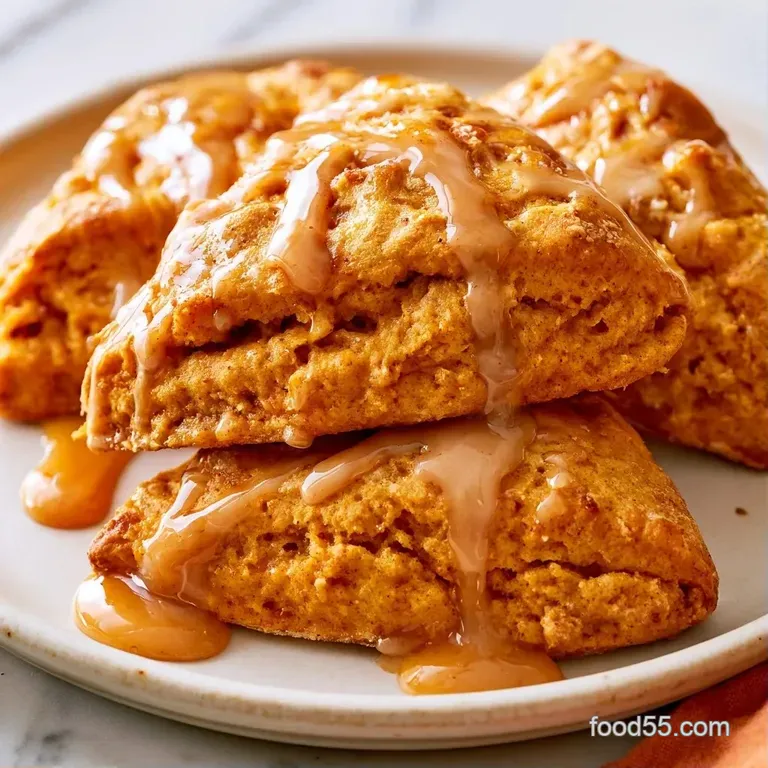
For years, I fought to master that technique. I frequently overmixed the dough until it was rubbery or allowed the butter to melt, producing something closer to a pancake than a scone. But these Sourdough Pumpkin Scones are something special. They possess a crisp, shattering crust that reveals a soft, spiced interior.
These feel like a cozy embrace on a drizzly Tuesday. By utilizing sourdough discard, we keep the starter out of the trash and add a rich depth of flavor that plain flour simply cannot provide. They are sturdy enough to support a thick layer of butter, yet airy enough to eat several before your coffee is even poured.
What Makes This Work
- Acidic Lift: The sourdough discard provides lactic acid, which relaxes the gluten and helps the baking powder react more vigorously. If you like that vibe, my pumpkin spice sourdough does something similar with its crumb.
- Cold Fat Pockets: Frozen butter creates tiny steam vents in the oven. This is what pushes the dough upward and creates those distinct, flaky layers.
- Moisture Balance: Pumpkin puree adds a lot of water, so we use a chilled discard and a short chill time to keep the dough manageable.
Ingredient Deep Dive
The flour provides the structure, but the sourdough discard is the real star here. It brings a subtle tang that cuts through the sweetness of the brown sugar and the richness of the butter.
Using a chilled discard is a must, as room temperature starter can make the dough too slack, causing the scones to spread instead of rise.
Pumpkin puree acts as both a flavor agent and a hydrating element. It's what gives these Sourdough Pumpkin Scones their vibrant orange hue and that seasonal, earthy sweetness. Pair it with cinnamon, ginger, and cloves, and you've got the classic autumn profile.
Buttermilk adds another layer of acidity. This works in tandem with the sourdough to ensure the texture stays tender. The raisins provide little bursts of concentrated sweetness that contrast with the savory notes of the sourdough.
Finally, the maple glaze ties everything together, adding a glossy finish and a woody sweetness that complements the pumpkin.
Recipe Specs
- 1 tbsp (12g) baking powder Purpose
- Main leavening agent (Alternative: 3 tsp baking powder + 1/4 tsp baking soda)
- 1 tsp (2g) ground cinnamon Purpose
- Essential autumn warmth (Alternative: Cassia cinnamon for a bolder taste)
- 1/2 tsp (1g) ground ginger Purpose
- Adds a bright, spicy edge (Alternative: Freshly grated ginger)
- 1/4 tsp (1g) ground cloves Purpose
- Deep, aromatic quality (Alternative: Allspice)
- 1/2 tsp (3g) salt Purpose
- Offsets the sugar (Alternative: Kosher salt)
- 1/3 cup (80g) pumpkin puree Purpose
- Key seasonal ingredient (Alternative: Sweet potato puree)
- 2 tbsp (30ml) buttermilk Purpose
- Adds lift and moisture (Alternative: Milk mixed with lemon juice)
- 1 large egg Purpose
- Binds the mixture (Alternative: Flax egg)
- 1/2 cup (75g) raisins Purpose
- Sweet, chewy bites (Alternative: Dried cranberries)
- 1 cup (125g) powdered sugar Purpose
- Ensures a smooth texture (Alternative: Icing sugar)
- 2 tbsp (30ml) pure maple syrup Purpose
- Signature autumn sweetness (Alternative: Honey)
- 1 tbsp (15ml) heavy cream Purpose
- Controls the consistency (Alternative: Whole milk)
- 1/2 tsp (2g) vanilla extract Purpose
- Harmonizes the flavors (Alternative: Maple extract)
Equipment Needed
While a pro kitchen isn't required for these Sourdough Pumpkin Scones, certain tools simplify the process. Grab a large mixing bowl for your dry components and a medium-sized one for the wet ingredients.
Using a pastry cutter to incorporate the butter is ideal; however, you can substitute it with a sturdy whisk or a pair of forks. A spatula is also necessary for gently folding the dough to keep it from becoming overworked.
To ensure the scones don't stick and to keep cleanup simple, use a baking sheet covered in parchment paper. Lastly, a bench scraper or sharp knife is perfect for slicing the dough into neat wedges.
Key Steps
- Combine the flour, baking powder, cinnamon, ginger, cloves, and salt in a large mixing bowl. Note: Mixing the spices thoroughly avoids concentrated pockets of cloves.
- Use a pastry blender to cut the frozen butter cubes into the flour until the texture resembles coarse crumbs with a few pea-sized pieces of butter remaining. Note: Move quickly to keep the butter cold.
- In a separate bowl, beat together the cold sourdough discard, pumpkin puree, buttermilk, brown sugar, and egg until smooth.
- Stir the wet ingredients into the dry mixture, folding gently with a spatula just until the flour streaks disappear. Note: Avoid overmixing once the dough forms.
- Gently fold in the raisins.
- Transfer the dough to a floured surface and pat it into an 8 inch circle, roughly 1 inch thick.
- Refrigerate the dough for 30 minutes to ensure a good lift. Note: This firms up the butter again for a better rise.
- Slice the dough into wedges and bake for 15 minutes until the sides are lightly browned and the tops are set.
- Mix the powdered sugar, maple syrup, heavy cream, and vanilla extract to make a glaze, then drizzle it over the cooled Sourdough Pumpkin Scones.
Solving Common Problems
The biggest hurdle with Sourdough Pumpkin Scones is usually the dough consistency. Because pumpkin puree varies in moisture, you might find your dough is either too sticky to handle or too dry to hold together.
If it feels like it's sticking to everything, a bit more flour on your hands and the work surface usually does the trick.
Another common issue is the "pancake effect," where the scones don't rise and instead spread outward. This almost always happens because the butter melted before the scones hit the oven. Keeping your discard and butter ice cold is the only way to prevent this.
If your scones come out tough, you likely overmixed the dough. When you stir too much, you develop too much gluten, which turns a tender scone into something that feels like a dinner roll. The goal is a shaggy, barely combined mass.
Fixing Sticky Dough
When the pumpkin is extra wet, the dough clings to the spatula. Use a bench scraper and a light dusting of flour to pat it into the circle.
Preventing Heavy Scones
Avoid kneading the dough. Use a folding motion, lifting the bottom of the dough over the top until the flour is just gone.
Avoiding Flat Tops
Ensure the dough is chilled for the full 30 minutes. This locks the fat in place.
| Problem | Root Cause | Solution |
|---|---|---|
| Scones spread flat | Butter was too warm | Freeze butter and chill dough 30 mins |
| Tough, bready texture | Overmixed the dough | Fold gently; stop at flour streaks |
| Glaze is too runny | Too much cream | Whisk in more powdered sugar |
| Bottoms are soggy | Oven temp too low | Use a preheated sheet or higher rack |
Preservation Guidelines
After your Sourdough Pumpkin Scones have cooled fully, keep them in an airtight container. They will remain fresh in a cool area for roughly 2 days, though the texture will begin to shift as the pumpkin's moisture redistributes.
For extended storage, these freeze beautifully. Place each scone in a separate piece of parchment before sliding them into a sturdy freezer bag. They will maintain their quality for up to 3 months.
To minimize waste, put any remaining sourdough discard toward other Sourdough Discard Pumpkin Recipes, such as muffins or pancakes. Any leftover glaze can be kept in a small jar in the refrigerator for a week; it's perfect for drizzling over toast or pumpkin bread.
Presentation Tips
Since these Sourdough Pumpkin Scones are often for a brunch or a holiday morning, presentation matters. Arrange them on a wooden platter with a few cinnamon sticks and fresh pumpkin miniatures for a seasonal look.
If you're serving these for a crowd, reheat them in a 300°F (150°C) oven for 5-8 minutes. This brings back the crispness of the exterior without drying out the center. Serve them with a side of salted butter or a dollop of maple cream.
To keep them fresh on a buffet, avoid stacking them. Spread them out on a tray so the glaze doesn't smudge and the sides stay crisp. A small bowl of extra maple syrup on the side allows guests to customize their sweetness.
Creative Twists
If you want to change the flavor profile, try swapping the raisins for dark chocolate chunks or toasted pecans. For a more savory lean, omit the brown sugar and raisins, and add a pinch of sage and some sharp cheddar cheese.
You might also like my sourdough cinnamon rolls for a brunch crowd, as they use similar spice profiles but a softer, yeasty texture. For a gluten-free version, use a 1:1 gluten-free flour blend and add an extra 1/2 teaspoon of xanthan gum to ensure the scones don't crumble too much.
The glaze can also be swapped. Instead of maple, try a brown butter icing by whisking browned butter into the powdered sugar and cream. This adds a nutty, toasted flavor that pairs beautifully with the Sourdough Pumpkin Scones.
| Goal | What to change |
|---|---|
| Spicier flavor | Add 1/2 tsp ground nutmeg |
| Sweeter taste | Increase brown sugar by 1 tbsp |
| Crunchier top | Sprinkle coarse sugar before baking |
Right then, you've got everything you need to get these Sourdough Pumpkin Scones on your table. Trust me on this, the wait during the chilling phase is the hardest part, but it's the only way to get that height. Let's crack on and get baking.
Recipe FAQs
Why is chilling the dough necessary?
It ensures the butter remains frozen until it hits the oven. This prevents the scones from spreading and creates steam pockets for a taller, crumbly texture.
Can I swap raisins for dried cranberries?
Yes, they are a great alternative. The tartness of cranberries balances the warm spices and brown sugar beautifully.
How to keep the scones tender?
Fold the wet and dry ingredients gently with a spatula. Stop mixing the moment the flour streaks disappear to avoid overworking the gluten.
Is it true that sourdough discard makes the scones too dense?
False. The lactic acid in the discard relaxes the gluten, which actually creates a softer crumb. If you enjoyed mastering this acidity, see how the same principle works in our active starter guide.
What happens if my butter melts before baking?
The scones will likely spread and become flat. Using frozen cubes is essential for achieving those distinct, flaky layers.
Sourdough Pumpkin Scones in 65 Minutes